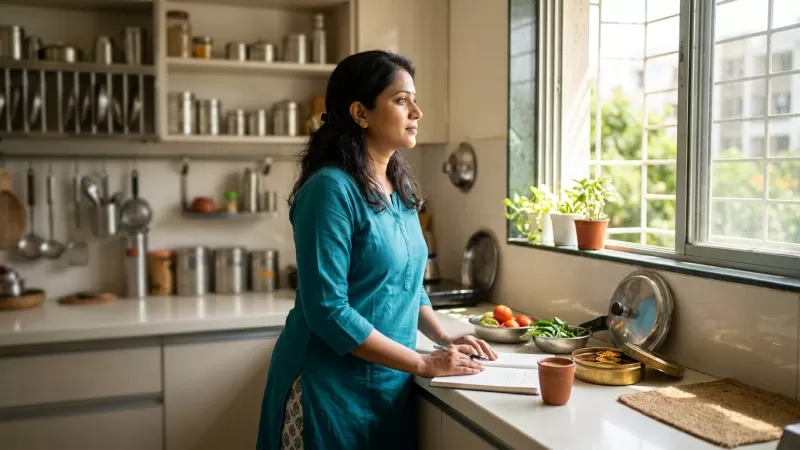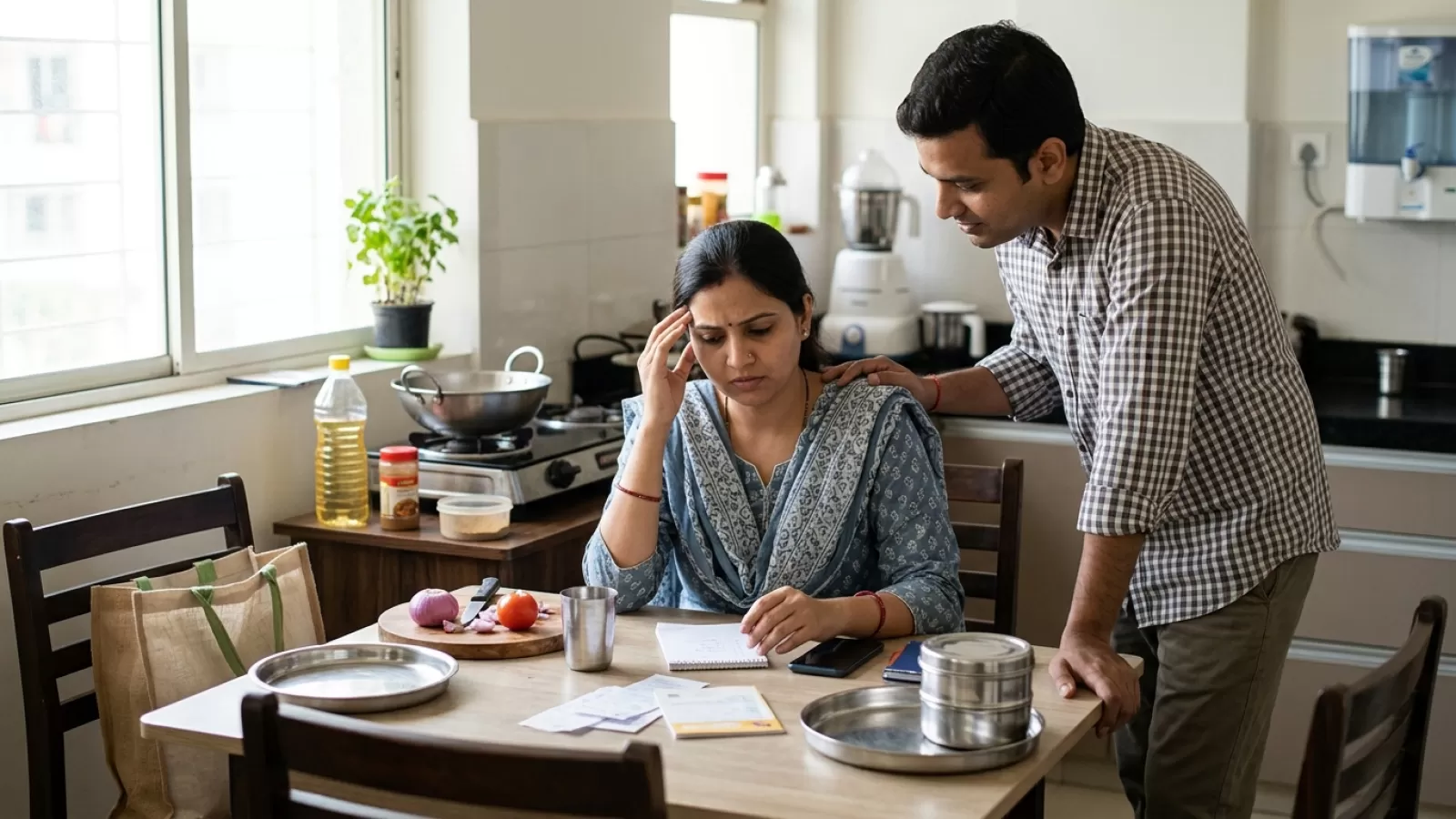
Even a small thing — a snapped shoelace before leaving for work or a power cut right as you're about to finish a washing machine cycle — can feel overwhelming in many Indian homes. When small problems feel big India, it is rarely about the problem itself. Often, it’s the final straw that lands on a mind already loaded with small, silent pressures.
These days, you might notice how a minor inconvenience, like a slow internet connection during a WFH meeting or your child’s spilled glass of dahi, sets off a reaction much bigger than the incident deserves. You find yourself snapping, sighing loudly, or carrying that moment with you all day. There is nothing strange about it. In India, daily life is so packed with responsibilities that even the smallest things can tip the balance.
When Minor Troubles Start to Feel Like Major Disasters at Home
In many Indian households, it’s common for small problems to feel enormous — especially when everyone is already stretched thin. Take the example of a Mumbai family where the morning rush means three people sharing one bathroom, tiffin boxes to pack, and a child searching for a missing sock. If the gas cylinder runs out at 8am, the reaction is rarely calm. The frustration isn’t just about the cylinder — it’s about the week’s worth of little stresses that have nowhere else to go.
These overwhelming feelings build up quietly. There are the endless WhatsApp messages from relatives, the pressure to keep the home running smoothly, and the worry about elderly parents’ health. When small things feel huge India, it is often because the weight of unspoken stress has been building for days or weeks. Nobody sets out to get angry over a misplaced house key or a spilled cup of chai. But in a house where everyone is trying to manage everything, even a tiny mishap can feel like a personal failure.
Getting perspective on problems India is not always easy when you are in the middle of it. Most families don’t talk openly about their emotional load. Instead, each person quietly adds their own worries to the household mix. Over time, even little things start to feel like tests of your patience — and sometimes, your worth.
Why Accumulated Stress Makes Small Problems Feel Big India
There’s a reason why disproportionate stress Indian adults is such a familiar theme. Daily life here is full of choti-choti hassles: crowded commutes, water supply timings, neighbours’ loud music, or the pressure to cook three fresh meals even on long workdays. None of these on their own is a crisis. But together, they fill up your mental space.
Psychologists who work with Indian families often find that reactions to minor events are rarely about the event itself. The nervous system carries the load of unsolved worries — about money, kids’ studies, job security, and family expectations. When one more small inconvenience lands, it becomes the tipping point. That’s when small problems feel big India, and it’s not a sign of weakness but a signal that your container is already full.
There is also a cultural layer. In many homes, adults are expected to manage everything — work, home, children, elderly care — without any complaint. Admitting that a spilled sabzi or a forgotten birthday has shaken you can feel shameful. So, the stress stays hidden and stacks up, making it even harder to get perspective on problems India.
For working women balancing office and home, or for seniors who feel invisible in a busy household, even a small slight or missed call can feel huge. The tricky part is, the real issue is not the spilled chai or the late bus, but the exhaustion nobody wants to talk about.
Everyday Signs That You’re Carrying More Than You Think
- Intense reactions to minor inconveniences: If you find yourself yelling when the milk boils over or feeling like crying when the maid is late, it’s usually not about that one thing.
- Lingering shame or guilt over small mistakes: Many adults replay their reactions for days — feeling bad about snapping at a family member or obsessing over a forgotten errand.
- Physical signs of stress: Headaches, back pain, or a knotted feeling in your stomach, especially after a minor household mishap.
- Difficulty letting go of small setbacks: You may notice yourself thinking over and over about a misplaced sock or a slow internet connection, unable to move on.
- Feeling disconnected or numb: Sometimes, the load is so much that when something small goes wrong, you just shut down and stop caring for a while.
Steps That Help When Small Problems Feel Big India
- Name what’s really happening: When you notice a strong reaction, ask yourself if it’s really about the spilled dahi or if it’s just the last straw. Sometimes saying it aloud (“I think I’m just exhausted”) can help soften the feeling.
- Take a short break, even if it feels impossible: Step out to the balcony, splash water on your face, or sit in silence for three minutes. In Indian homes, this isn’t always easy — but even a few breaths in the kitchen can help your body reset.
- Share the load, even a little: Many families have quietly discovered that asking for help with small things (like folding laundry or making chai) can take the edge off. It’s not about the task, but about not being alone in it all.
- Let go of the guilt: If you’ve snapped or cried over something small, try not to carry shame for days. In many homes, people apologise or make up with a cup of chai or a shared joke. This is enough. You do not have to punish yourself.
- Revisit routines during high-stress phases: When life is overwhelming, it’s okay to simplify meals (khichdi, poha, or store-bought roti), skip non-urgent chores, or say no to extra commitments. Getting perspective on problems India often starts with reducing the overall load, not just managing your reaction.
How Disproportionate Stress Indian Adults Shows Up in Real Routines
Look around any Indian city during the early evening. On a humid summer day, a working professional commuting in Bengaluru might finally reach home after a long bus ride, only to find there’s no electricity and the inverter is low. The smallest thing — a child asking for a snack — can feel like an insult. In that moment, the frustration is not just about the snack or the power cut. It’s about carrying the weight of a tough workday, traffic, and the expectation to come home smiling.
In joint families, this pattern repeats in quieter ways. A senior may feel invisible after being interrupted during a story, or a homemaker might hold back tears when nobody notices her effort. The moment that triggers emotion is often a minor one — but it lands on the soft spots created by days of carrying more than anyone realises.
Many families have their own rituals for releasing this load: an evening walk, a quiet moment with chai on the balcony, or a shared silly TV show. These routines are less about solving problems, and more about giving everyone a tiny window to breathe. That’s usually all anyone needs to get perspective on problems India — at least, enough to survive the next day.
When It Makes Sense to Reach Out
If you find that small problems feel big India almost every day, or if you are unable to enjoy things you usually love, it may be time to talk to someone. This could be a trusted friend, family member, or, if you feel safe, a counsellor. There is no need to wait for a crisis. In many Indian homes, help comes in small, everyday ways — a neighbour who listens, a sibling who checks in, or a family doctor who knows the household. If you notice physical symptoms like constant headaches or chest pain, do check with your doctor, as sometimes stress shows up in the body first.
Common Questions
Every home has its share of small annoyances and emotional overloads. You’re not alone if you find yourself reacting strongly to things that seem minor on the surface. Let’s talk through some of the most common questions people have about why small things feel huge India and what can help in real life.
Why do Indian adults often react intensely to small problems and feel disproportionate distress about minor inconveniences?
The pressure to juggle work, home, extended family, and social expectations means that most Indian adults carry a heavy mental load. Even small disruptions, like a forgotten grocery item or a short power cut, can set off intense reactions because they land on pre-existing stress. In many homes, there is little space or time to process these feelings, so everything builds up until something tiny tips the balance. The reaction is rarely about the small problem itself — it’s the last drop in an already full bucket.
What is the best way to regain perspective on a problem that feels enormous in the moment but is probably manageable?
When small problems feel big India, take a moment to pause — even if it’s just a few slow breaths in the kitchen or a quiet minute in the bathroom. Try to name what you’re really feeling (“I’m tired and frustrated, not just upset about the spilled chai”). Many families find that sharing the feeling, even briefly, with someone at home helps shrink the problem back to size. Sometimes, stepping away and doing a familiar task like making chai or watering plants can help you reset.
How do you distinguish between problems that deserve significant emotional attention and ones that feel big because of accumulated stress?
In most Indian homes, problems that keep coming back or impact your health and relationships over weeks likely require more attention. If a problem is new or feels out of proportion to what happened—like crying over a burnt sabzi after a hard day—it's probably the stress talking. When in doubt, ask yourself if the same issue would bother you on a restful day. If not, it’s likely the build-up, not the event.
How do Indian adults learn to respond to small daily problems without the response becoming a source of additional shame or self-criticism?
Many adults in India grew up seeing their own parents or relatives brush off small outbursts with humour or a shared snack. Apologising with a cup of tea or simply moving on is a common way to break the cycle of shame. Over time, families tend to develop rituals—like evening walks or unwinding together—that help everyone cool off. Remember, it is normal for emotions to spill over, and forgiving yourself quickly is part of daily survival.
What stress habits most reliably prevent small problems from feeling catastrophically large?
Simple routines matter most. Eating regular meals, getting a bit of movement (even chores count), and making time for a small pleasure like reading or evening chai can keep your stress bucket from overflowing. Many Indian families find that talking openly about daily hassles, sharing chores, or even watching a silly TV serial together helps keep things in perspective. When you feel your load rising, returning to these habits is often the best first step.