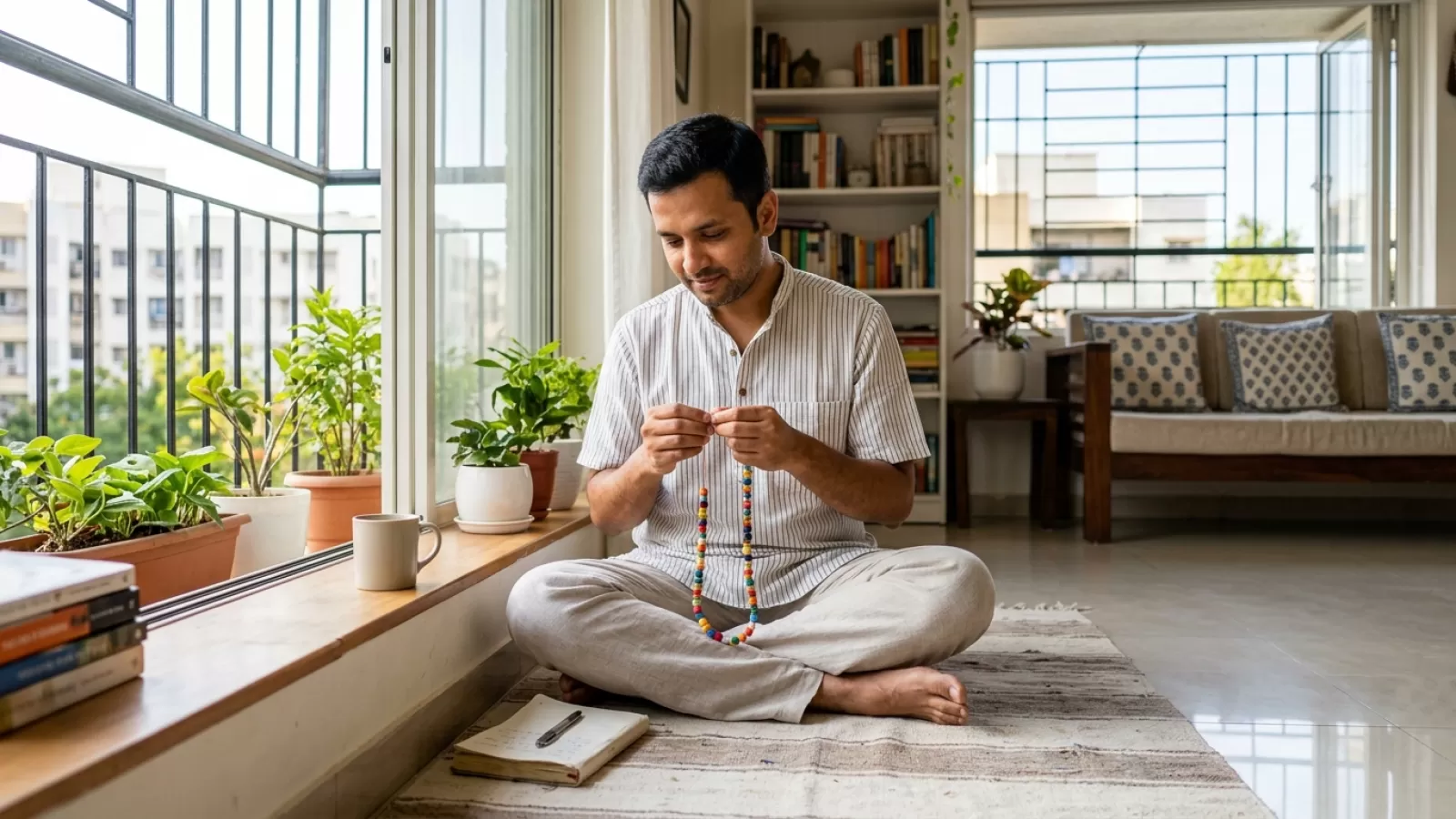
In many Indian households, the end of the day comes not with quiet, but with a sudden stop. Even after dinner is cleared and the TV is switched off, the mind keeps running. It’s not unusual for an adult to finish a hectic day, settle into bed, and find that rest is nowhere near—the mind is still sorting through work meetings, family WhatsApp groups, or tomorrow’s dabbas. The body is tired, but the mind refuses to slow down.
Evening calm habits before sleep India are not always part of our daily routines. Instead, the line between daytime busyness and nighttime rest is blurred. In many homes, there’s barely a pause between the last WhatsApp message and the moment you try to close your eyes. No wonder the mind finds it hard to settle.
Why Many Indian Adults Lie Awake Restless at Night
For most working adults in Indian cities and towns, the day is packed. There’s work (often extending late), family to attend to, meals to prepare, and sometimes even late-night chores like folding laundry or packing school bags. The home, which should offer comfort, can feel bustling until very late. Joint families might have four or five adults sharing a space, and everyone is on their own schedule. Evenings are rarely calm.
The tricky part is, there’s almost no wind-down phase. After dinner, people might jump straight into screen time, wrap up leftover work, or keep chatting with relatives. There’s very little that signals to the mind and body: “It’s time to slow down now.” Instead, the transition from activity to sleep is abrupt. The body may be on the bed, but the mind is still in the office, the kitchen, or tomorrow’s planning.
Evening calm habits before sleep India are rarely discussed. Many families accept restless sleep as just part of life. But in reality, this pattern is what makes falling asleep so difficult, even when you’re exhausted.
The Underlying Causes: Why the Mind Refuses to Slow Down
There are a few reasons why so many Indian adults struggle to slow the mind before sleep. For starters, the Indian evening is often the busiest part of the day. After working hours, people dive into household chores, social calls, or helping children with homework. There is little time set aside for a peaceful transition.
Even when work-from-home became common, evenings didn’t get quieter. If anything, the boundaries blurred further. Many adults find themselves replying to emails at 9pm, or catching up on office calls while stirring dal. Quiet evenings are rare, especially in homes where multiple generations share space or where city life adds noise even late at night.
Sleep researchers often find that Indian adults rarely have a dedicated bedtime routine for calm. Instead, the mind is trained to stay alert and multitask right until the last moment. Add to this the blue light from phones and constant notifications, and the mind gets no gentle signal that it’s time to rest.
There’s also the cultural tendency to push through tiredness. Many adults feel guilty taking time for themselves in the evening, thinking of it as selfish or lazy. So, the mind never gets permission to slow down.
Clues You’re Not Slowing Down Before Bed
- Long periods of lying awake despite exhaustion: Many adults in India report lying in bed for an hour or more, unable to fall asleep even after a tiring day.
- Racing thoughts about work, family, or unfinished chores: The mind tends to replay the day or start planning tomorrow, making it hard to switch off.
- Restlessness in the body: Tossing and turning, shifting pillows, or feeling the urge to check the phone one last time.
- Difficulty recalling the last calm moment before bedtime: In many homes, there is no clear memory of a peaceful transition between activity and rest.
- Reliance on distractions: Falling asleep with the TV on, scrolling social media, or listening to loud music to “force” sleep.
Practical Evening Habits That Gently Calm the Mind
- Introduce a soft wind-down window: In many Indian homes, even ten minutes between cleaning up after dinner and going to bed can help. Use this time for a slow walk on the terrace, soft conversation with a loved one, or quietly sipping dahi or warm milk. The key is to create a gentle signal for your mind—"we're shifting gears now."
- Dim the lights gradually: Bright tube lights keep the brain alert. Try switching to a lamp or dimmer light after dinner. This subtle change often helps the mind realize that the day is ending, especially during hot Indian summers when the sun sets late.
- Replace noisy screens with softer sounds: Instead of loud TV or endless scrolling, play soft instrumental music or bhajans at low volume. Many families have quietly discovered that a few minutes of soft music helps everyone, from grandchildren to grandparents, begin to unwind.
- Gentle self-care rituals: Washing your face with cool water, changing into comfortable nightwear, or even lightly massaging your feet with oil for a minute helps send a signal to your brain that it's time to slow down. Indian adult bedtime routine calm doesn't have to be elaborate or expensive.
- Simple journaling or gratitude lists: Keeping a small diary next to the bed and jotting down what went well or what’s on your mind can help the brain "park" worries for the night. This is one of the most overlooked ways to slow mind before sleeping India—a quick list can sometimes quiet the most persistent thoughts.
That said, it’s not about doing all these things every night. Even picking one or two, and doing them gently, often makes a big difference over time.
How Evening Restlessness Appears in Indian Households
It’s 11:15pm in an apartment in Pune. The city outside is still buzzing—two-wheelers honking, neighbours chatting in the corridor. Inside, one adult is finishing dishes, another is checking school WhatsApp groups, and someone else is finally sitting down with the remote. When the lights go off, it’s sudden. There’s no gradual lowering of energy, just a switch from full activity to hoping for instant sleep. Often, everyone is surprised when sleep won’t come.
In semi-urban homes, it’s common for power cuts to force a sudden quiet, but the mind—still processing the day—takes a long time to catch up. Even after a physically exhausting day, adults may lie awake replaying a disagreement with a co-worker, worrying about a child’s studies, or planning tomorrow’s tiffin. The absence of any evening calm habits before sleep India means rest comes late, if at all.
When It Makes Sense To Seek Support
If you find that, despite gentle habit changes, you’re still unable to sleep several nights a week for weeks together, or if daytime tiredness is affecting your mood and daily work, it may help to talk to a doctor or sleep specialist. Sometimes, underlying health issues or stress need more focused support. Many adults are surprised at how common sleep struggles are, and how a bit of guidance can help.
Common Questions
Everyone’s evenings look a little different, but many Indian adults share the same struggle: exhaustion at night, but a mind that just won’t rest. Let’s look at some familiar questions and practical answers, with a nod to how real homes work.
Why do so many Indian adults feel exhausted but unable to fall asleep when they finally get to bed?
In many homes, the day runs at full speed right until bedtime. There’s little chance for the mind to recognize that it’s safe to rest. For example, after a long commute in Bengaluru traffic, an adult might immediately jump into dinner chores, family conversations, and then check work emails. By the time they hit the bed, the body is tired but the mind is still active, sorting through the day’s events. This mismatch makes it hard to fall asleep, even if you’re physically worn out.
What are the most effective evening habits that create genuine mental deceleration before sleep?
Many families in Indian cities have quietly discovered that gentle, consistent rituals make a big difference. Soft lighting, a cup of warm haldi-doodh, five minutes of peaceful conversation on the balcony, or a short gratitude list—these habits signal to the mind that it’s time to slow down. The most effective routines are simple, repeatable, and feel comforting. Over time, they help train the mind to expect rest after the day’s busyness.
How does the Indian evening typically fail to create the natural slowdown that the body needs before sleep?
Indian evenings are often packed with activity—late meals, household chores, family discussions, and catching up on missed work. Unlike some cultures where evenings are intentionally quiet, here the transition is abrupt. For instance, dinner may finish at 10pm, and by 10:30pm everyone is expected to be in bed. With no intermediate quiet phase, the body and mind don’t get the message that it’s time to rest, making sleep elusive for many adults.
Is the inability to slow the mind before sleeping a sleep problem or a daily rhythm problem?
For many Indians, it’s more of a daily rhythm issue. The lack of a calm period between daytime busyness and bedtime makes it hard for the mind to slow down. It’s not always a medical sleep disorder, but rather a sign that the day’s structure doesn’t allow for enough mental unwinding. Adjusting evening routines to include a calm phase can often help, but if sleep problems persist, it’s wise to speak to a doctor.
What is the single most effective evening habit change for Indian adults who consistently struggle to fall asleep?
Introducing a gentle wind-down window—just 10 to 15 minutes of quiet, low-stimulation activity after dinner—tends to help the most. This could be dimming the lights, listening to soft music, or simply sitting with a cup of chai or warm milk on the balcony. In many homes, this small shift helps the mind recognize that the busy part of the day is over, making it much easier to fall asleep naturally.