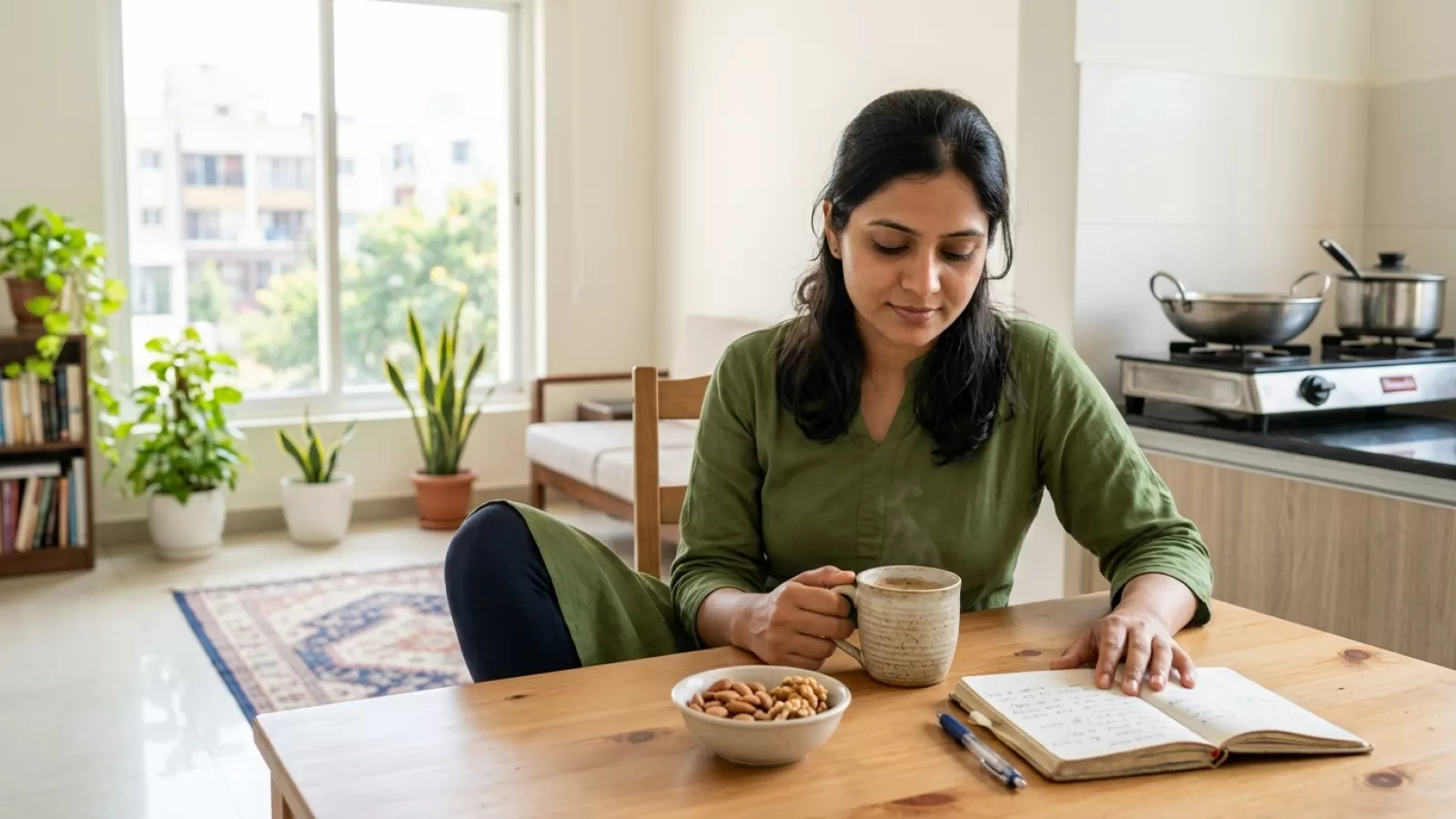
There’s a certain quiet that settles over many Indian homes just before dawn. The city is still asleep, but a faint hum of worry has already crept in. It’s rarely about one big thing. More often, it’s that familiar background anxiety—an accumulation of everything uncertain, from tomorrow’s expenses to last night’s argument, or a vague sense that something might go wrong. These days, many adults try to reduce daily anxiety in India, but the feeling lingers quietly, woven through the routines of early chai, the news, and the first WhatsApp messages.
For many, there’s no single fear to point to. Instead, it’s a restless sense that life could tip either way—sometimes for reasons we can’t explain out loud. You might wake up feeling uneasy, even when all visible problems seem managed for now. In Indian life, the pressure to keep moving, to manage daily uncertainty without complaint, is as much a part of the household as the kitchen table.
Why Daily Uncertainty Feels So Normal in Indian Homes
In most Indian homes, uncertainty isn’t just an occasional visitor—it’s often a permanent resident. Parents worry about job security or children’s education, even if things are currently stable. Homemakers may lie awake at 3am, not because of a crisis, but because a hundred small things need attention: the rising cost of vegetables, a child’s exam, the neighbour’s sharp comment, or whether the water supply will be enough this summer.
The tricky part is, Indian families tend to treat this background anxiety as just another part of life. It doesn’t always look dramatic. It can be the quiet sigh after checking the bank balance, or the extra spoon of sugar in the evening chai. The desire to reduce daily anxiety in India is real, but many people don’t talk about it openly, perhaps fearing it will sound like weakness or bring more worry onto the family.
Many families share space—sometimes three generations under one roof—so worries can pass from one person to another without a word. Children pick up on a parent’s mood. Grandparents remember old hardships. Even celebrations like weddings, which should feel joyful, can carry their own set of “what if” anxieties. This is why background anxiety in Indian life is so common, even when nothing big has actually happened.
Everyday Pressures That Fuel Background Anxiety
For most Indian adults, daily anxiety relief is not as simple as shutting off the TV or doing breathing exercises. Here is the catch: the pressures come from many directions at once. A working professional commuting in Bengaluru might worry about layoffs, traffic, and the latest family WhatsApp group drama, all before 10am. A homemaker in Lucknow might spend her afternoon thinking about the price of onions, power cuts, and whether the children are spending too much time on screens.
The causes of background anxiety in Indian life often include:
- Financial uncertainty: Even with a steady job, rising expenses and sudden emergencies are never far away. Most middle-class families have little cushion if something unexpected happens.
- Social pressures: From relatives to neighbours to colleagues, the expectation to appear "sorted" is heavy. Every comment—"Your son is so thin," "Still renting?"—sticks longer than we admit.
- Professional stress: Long work hours, late meetings (especially for those working with global teams), and unpredictable workloads are now a part of many urban and semi-urban routines.
- Family responsibilities: Many adults are supporting both children and elderly parents, with little time to rest. The responsibility feels endless, and a sense of guilt arises if anything is missed.
- Limited outlets: There’s rarely time or space for true downtime. Even leisure—watching a serial, chatting over chai—usually happens with at least one eye on the next task.
Clinical psychologists who work with Indian adults often find that background anxiety in Indian life is rarely discussed until it disrupts sleep or everyday functioning. The idea of “just managing” is valued, even if it means carrying invisible burdens longer than necessary.
Clues That Anxiety Is Building Up (Even If You’re Not Talking About It)
- Restless or shallow sleep: Waking up at odd hours, mind racing with vague worries about everything and nothing.
- Short temper: Snapping at family over small things—burnt sabzi, a misplaced key, background noise during WFH calls.
- Constant checking: Going over bills, schoolwork, or phone notifications repeatedly, even when there’s nothing urgent.
- Lack of focus: Struggling to finish a simple task, like folding laundry or replying to a message, because there’s a restless feeling inside.
- Physical symptoms: Tension in the shoulders, headaches, or stomach discomfort without any medical reason.
Many Indian adults are so used to this state that it takes a family member’s gentle nudge—“You seem tired these days”—for them to notice it themselves.
Practical Habits That Help Reduce Daily Anxiety in India
There’s no magic fix, but some habits tend to soften that constant hum. Here are a few that have quietly worked for many Indian adults:
- Keep routines simple: Many families have found that sticking to basic rhythms (morning chai, a walk after dinner, a fixed time for phone calls) creates a tiny sense of predictability. It’s not about rigid timetables—just a handful of things you do the same way, most days.
- Limit multi-tasking where you can: It’s tempting to cook, supervise homework, and answer office emails at the same time. When possible, finish one thing before moving to the next—even if only for a few minutes. This can make daily anxiety relief in India feel more possible.
- Share small worries aloud: Many families in Indian cities have quietly discovered that a short, honest chat during chai or an evening walk—about money, health, or a tough day—lightens the load. You don’t need to solve everything; just voicing it helps.
- Give yourself permission to pause: Sometimes, taking ten minutes to sit with dahi or listen to a favourite song (even if the house is not spotless) is a real act of courage. The house will run. You are allowed to rest.
- Connect with the familiar: Whether it’s rolling out rotis, watering plants, or calling a cousin, these small, familiar actions can ground you. They remind you that not everything is uncertain.
None of these habits will solve all the uncertainties, but in many homes, they take the edge off the day’s background anxiety. Try one thing for a week, see if it softens your evenings or mornings a little.
How Anxiety Shows Up in Ordinary Indian Routines
A kitchen in Nagpur at 6am, summer. The fan is spinning, but the air still feels heavy. A pressure cooker whistles. The lady of the house stands at the counter, hands moving automatically—chopping onions, checking rice, glancing at her phone for office messages. In her mind, worries flicker: “Will power stay today? Did the children pack everything? How will I manage expenses if school fees go up?” The background anxiety is not loud, but it’s there, humming alongside the radio.
In many Indian homes, this background hum shows up as small hesitations—re-reading a message before sending, double-checking if the gas is off, feeling a little tense before a relative’s visit. Even when families gather for breakfast—poha, chai, the usual—the conversation sometimes circles around worries, even in light-hearted ways. “Hope it doesn’t rain today, or the roads will be a mess.” “Let’s see what the boss says on that call.” The real comfort, for many, is in sharing space, routines, and small reassurances, even if the uncertainty doesn’t go away completely.
When Daily Anxiety Needs Extra Attention
Most Indian adults carry a fair bit of worry as part of life. But if you find that your anxiety isn’t letting up—if you’re losing sleep for days, feeling overwhelmed by daily tasks, or unable to enjoy ordinary moments—it might be time to speak to someone outside the family. Many people hesitate, thinking, “Isn’t everyone anxious?” But support can help, whether from a trusted friend, a counsellor, or a doctor, especially if anxiety is interfering with your usual rhythm. There’s no shame in reaching out.
Common Questions
Many people living in Indian homes wonder how to tell the difference between everyday worries and something deeper, or how to reduce daily anxiety in India when uncertainty is everywhere. You’re not alone—these questions come up in households of all kinds, from busy city flats to quieter towns. Let’s look at some of the most common concerns, with examples from real Indian routines.
What is the difference between the reasonable worry about real things in Indian life and anxiety that has become unhealthy?
Reasonable worry tends to be about specific problems—school fees, a relative’s health, or a work deadline. It comes and goes as the situation changes. Anxiety that has become unhealthy feels bigger and harder to shake. You may keep worrying even when things are settled, or your mind jumps restlessly from one worry to another. If you’re losing sleep, feeling tense all day, or can’t enjoy small moments (like chai with family) because your mind won’t stop racing, it might be more than just ordinary worry.
What daily habits most reliably reduce background anxiety for Indian adults?
Many Indian adults find small routines most reliable—like having a set time for chai, a short evening walk, or a daily phone call with a friend. Sticking to simple, predictable habits helps create small islands of calm. Sharing worries aloud (even briefly) with someone you trust, and giving yourself a short break from chores or screens, often brings relief. These habits don’t solve every problem, but they help soften background anxiety in Indian life for most people.
How do you manage the specific anxieties that come from living in a society with significant economic and social uncertainty?
In many Indian homes, this starts with accepting what you can’t control (like sudden price hikes or power cuts) and focusing on what is in your hands—managing expenses, asking for help from family, or limiting stressful conversations when possible. Some families set aside a little emergency fund, while others check in with each other when worries build up. Even small steps, like planning meals for the week or discussing job concerns openly, help make uncertainty feel more manageable.
Is anxiety in Indian adults underdiagnosed because the culture treats it as normal worry?
Yes, often. In most Indian families, feeling anxious is seen as a normal part of life, so many adults don’t talk about it unless things get very difficult. There’s also a belief that you should “just manage” and not complain. Because of this, many people live with background anxiety for years without seeking help or even naming it as anxiety. Gentle conversations and more open discussions about mental health are slowly changing this, but it takes time.
When does daily anxiety in an Indian adult become something that benefits from professional support?
If anxiety is making it hard to sleep, work, care for family, or enjoy daily routines for more than a few weeks, it might help to talk to a professional. This could be a counsellor, psychologist, or doctor. In many Indian homes, people wait until things feel unmanageable, but support can help even if your worries don’t seem “big enough.” If you’re unsure, try sharing your experience with someone you trust first—sometimes, an outside perspective helps you decide what you need next.