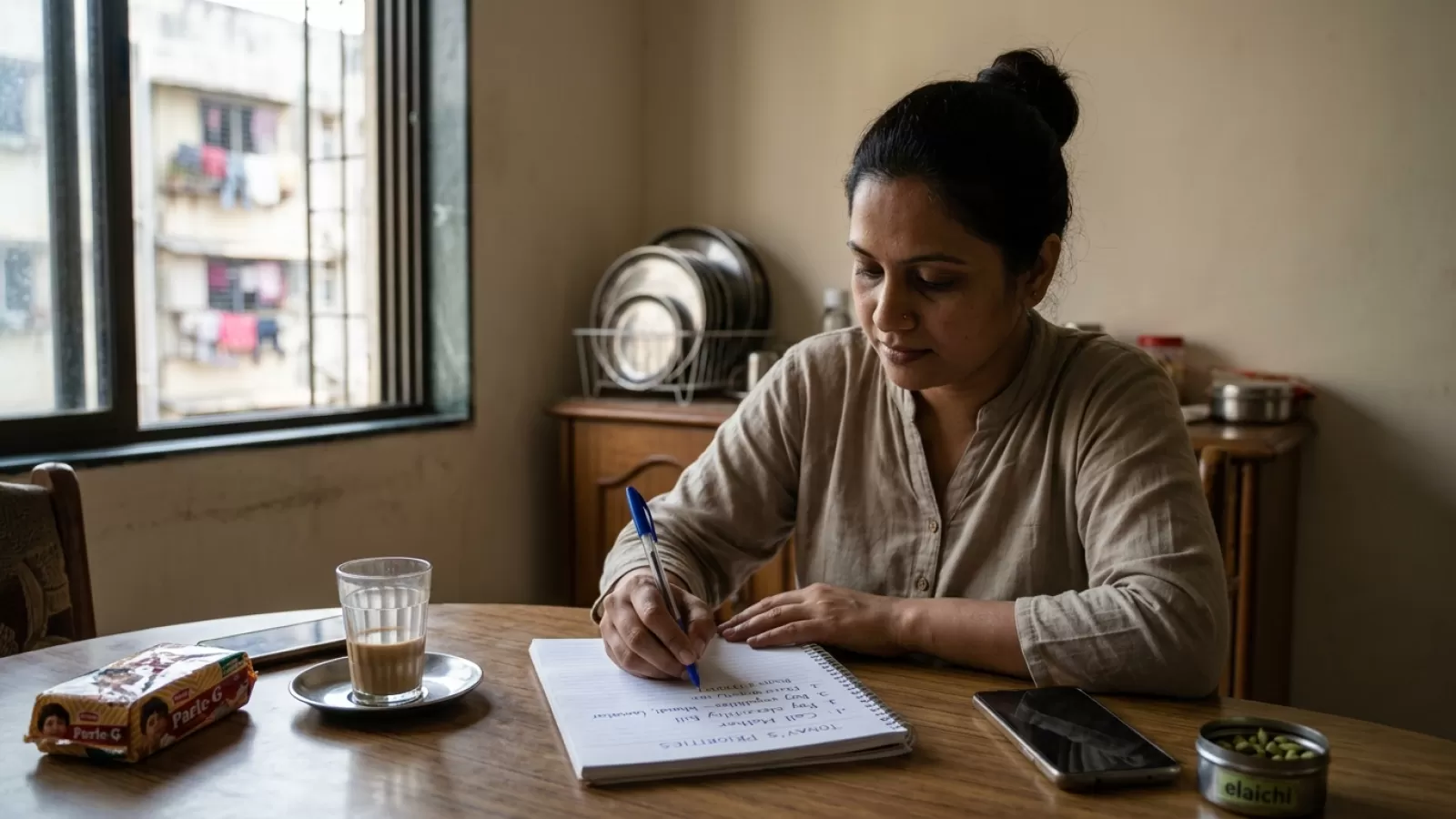
On many evenings in Indian homes, the mind can feel crammed with dozens of small, unfinished matters. The mental load is never about one big problem. Rather, it’s the way mental decluttering habits in India are often shaped by everyday details: a forgotten gas bill, an unanswered WhatsApp, the dahi not set for tomorrow, a work email waiting in drafts, the neighbour’s invitation, the leaky tap, and a child’s project that needs last-minute help. Each is tiny, but together, they fill your mind so thoroughly that true rest feels impossible.
This quiet sense of being always “on” is familiar to many Indian adults. Even after the house is quiet and the day’s work is over, your thoughts might be darting from one concern to another — never finding a real pause. It’s not just about too many thoughts; it’s about never having a clear moment to breathe, focus, or simply be present with your family or yourself.
Why So Many Indian Adults Feel Like Their Minds Are Never Clear
Living in India, mental clutter tends to build up from the way life is structured. In most homes, responsibilities are scattered: you might be managing work deadlines, school pick-ups, elder care, daily chores, and family expectations, all at once. Even the smallest tasks — like remembering to soak chana for tomorrow’s lunch or to call the cable guy — join the mental queue. There is rarely a moment when you feel everything is done.
Unlike in some countries where routines are predictable and support systems might be more formal, Indian households often juggle shifting dinner times, surprise guests, power cuts, or sudden school notices. It’s common to have three or four generations under one roof, each with their own small requests and reminders. In the middle of this, your own needs — a walk, some rest, time for chai — get squeezed out by the dozens of small, dangling tasks.
Many Indian adults say that even when nothing is urgent, their minds feel heavy from the accumulation of little worries. You might find it hard to focus at work, or you may notice your patience wearing thin during family time. This is less about one big stressor, and more about the slow piling up of everyday details, until your mind feels like an overstuffed tiffin box — nothing fits properly, and it’s hard to find what you need.
Why Mental Clutter Accumulates in Indian Households
There’s a reason this pattern is so common. In most Indian homes, roles are rarely singular. A working professional in Mumbai might handle her own job targets, but also keep track of her parents’ medicines, children’s homework, and groceries. Family members often expect you to remember things on their behalf. “Remind me to call the plumber,” someone says, and that too joins your invisible list.
Fitness coaches who train working adults often find that most movement in Indian homes comes from daily tasks, not planned exercise. In the same way, most mental space habits Indian working adults develop are not formal routines, but informal ways of juggling small bits of information. The tricky part is, this constant background load leaves little bandwidth for true downtime, hobbies, or even just sitting with a cup of chai without your mind racing.
Technology can make things worse. Your phone pings with reminders, but also with social messages, news alerts, and family group chats. Even when you want to focus, the mind keeps skipping between tabs — the office WhatsApp group, the children’s school app, and the milkman’s payment link. The result is a sense of being always “on call” — mentally available for every concern, but never truly present for any one thing.
How to Spot When Your Mind Is Overloaded With Small Concerns
- Difficulty enjoying downtime: You sit down to watch TV or have chai, but your mind keeps returning to small, unfinished tasks.
- Restless sleep: Many people find that they wake up in the night remembering something minor — like an upcoming bill or a friend’s birthday — that feels urgent only because it’s unfinished.
- Short temper or impatience: When mental bandwidth is full, small annoyances (like a misplaced remote or a spilled cup of tea) feel bigger than they are.
- Constant multi-tasking: You might end up doing several things at once — stirring dal, replying to a work message, and helping with homework — but never feel like you’ve finished anything properly.
- Forgetfulness: Sometimes, when too many thoughts cloud your mind, you forget things you would normally remember, like locking the door or turning off the gas.
Everyday Habits That Gently Clear Mental Clutter
- Batching small tasks: Instead of remembering each minor thing throughout the day, try to group similar tasks together at a fixed time. For example, use the 10 minutes before dinner to reply to personal messages, pay bills, and set reminders. It’s a simple mental decluttering habit India’s busy adults can fit in even when schedules are unpredictable.
- Physical cues for mental tasks: Many homes use tricks like placing the water bottle near the main door so you remember to carry it, or keeping the gas bill with the house keys. These cues help clear a cluttered mind in India’s multitasking households, because you don’t have to “hold” every reminder in your head.
- Single-tasking for short bursts: Give yourself permission to do just one thing — even if it’s only for 10 minutes. For example, make chai and just sit with it, without checking your phone or planning dinner in your head. These tiny pockets of focus are powerful mental space habits for Indian working adults.
- Letting go of non-urgent details: It’s okay if the fridge isn’t perfectly arranged or if you reply to some texts a day late. Decide which small things don’t need your energy today. The mental decluttering habits India’s adults rely on often involve learning to let some things wait.
- Gentle end-of-day check-in: Before bed, take a few minutes to think: What small worries am I carrying into sleep? Sometimes, just acknowledging them — without trying to solve everything — helps your mind settle. You could even share these aloud with a family member, which is something many Indian families find comforting.
The Quiet Ways Mental Clutter Shapes Our Daily Routines
In many Indian kitchens, the first morning chai is made with one hand while the other scrolls through messages, and the mind is already ticking off the day’s list. Children’s tiffins are packed while parents mentally juggle work calls, the maid’s schedule, and whether the milkman has been paid.
On busy weekday evenings, families might sit together for dinner, but each person’s mind is elsewhere — someone is thinking about an unfinished task at work, another about an unmade doctor’s appointment, and someone else about a phone call to a relative. Even moments meant for rest are sometimes filled with mental “noise.”
Many families have quietly discovered that small, low-pressure rituals help. For example, some keep a shared whiteboard for reminders in the kitchen, or have a weekly “family check-in” to offload reminders together. Others find that simply stepping out onto the balcony for five minutes of fresh air — without their phone — gives their mind a quick sense of space. These aren’t big, dramatic changes. They’re gentle, practical habits that fit around the busy, often unpredictable rhythms of Indian life.
Knowing When It’s Time to Seek Help With Mental Overload
If your mind feels so cluttered that it’s affecting your sleep, relationships, or ability to function at work or home, it may be time to talk to someone. Mental decluttering habits in India are helpful, but sometimes they’re not enough. If you notice persistent anxiety, constant fatigue, or if you feel hopeless or unable to cope, it’s best to check with a doctor or mental health professional. Remember, seeking support is a sign of care — for yourself and your family.
Common Questions
Mental decluttering is something nearly every Indian adult wrestles with now and then. It helps to know you aren’t alone, and that these feelings are shaped by real, everyday situations. Let’s look at a few common questions many people ask, with examples from regular Indian homes.
What are the most effective mental decluttering habits for Indian adults who feel perpetually mentally overloaded?
In many Indian homes, the most effective mental decluttering habits are the ones that fit around your real daily routines. Batching small tasks at a set time, using visual cues (like sticky notes or a dedicated shelf for bills), and giving yourself permission for short, focused breaks all help. For example, some families now set aside 10 minutes after dinner just for everyone to sort their reminders — from the school’s parent app to insurance premium dates — so they don’t carry these concerns into the night.
How do you reduce the number of unresolved small tasks and concerns occupying mental space without having to do them all immediately?
One gentle way is to set aside a fixed “catch-up window” every day — say, 15 minutes in the evening — to tackle whatever small tasks you can. Many people also find it helpful to keep a visible list in the kitchen or on the fridge, so tasks are out of your head and onto paper, but not forgotten. It’s not about doing everything right away, but about freeing your mind from the need to remember each detail all day long.
Is mental clutter in Indian adults more about the volume of concerns or about not having space to process them?
Often, it’s both. The sheer number of small concerns is part of it, but the real trouble comes when you don’t have space — even five quiet minutes — to sort through your thoughts. In joint families or busy flats, there’s rarely a private moment. That’s why many find it helpful to create brief “mental space” rituals: a cup of chai alone on the balcony, or a few silent minutes after everyone sleeps, where you gently process the day instead of just reacting to it.
What simple daily practice most reliably creates more mental space for Indian adults?
One of the most reliable practices is to take a short, device-free pause. This could be a solo walk after dinner, or five minutes of just sitting quietly in your bedroom before the day begins. Many Indian adults say that these small, regular pauses — even if just for a few minutes — help them clear a cluttered mind and ease the sense of being always “on.”
When does persistent mental clutter become anxiety that needs professional attention rather than just lifestyle habits?
If you find that your worries never settle, your sleep is always disturbed, or you’re feeling overwhelmed most days — even when tasks are done — it might be more than everyday mental clutter. In such situations, like a homemaker in Lucknow who can’t enjoy time with her family due to constant worry, it’s wise to speak with a doctor or counselor. Persistent anxiety deserves care, not just lifestyle tweaks. Support is available, and reaching out is the first step to feeling lighter.