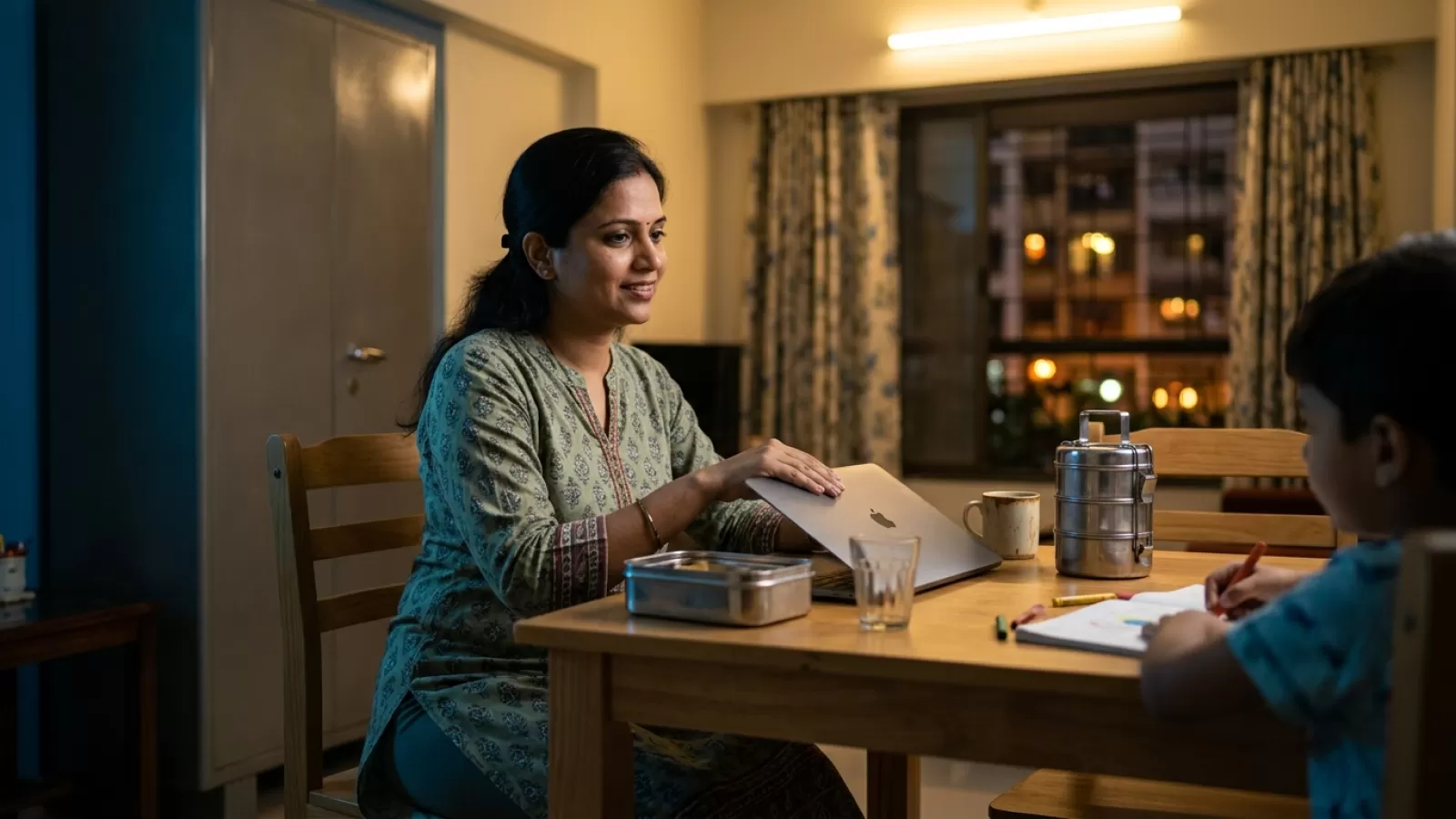
These days, it's common to see work emails popping up on phones even during dinnertime, or hear parents whispering about office deadlines as the kids finish their homework. For many Indian families, especially in cities or with work-from-home routines, the comforting line between "office" and "home" has blurred. It's not always easy to switch off, but letting office worries spill into your personal space can quietly disturb your family peace. If you've ever felt like your mind is still at work even when your body is home, you're not alone. Many families quietly deal with this, especially since the pandemic made home and office feel almost the same.
Why Gentle Boundaries Matter in Indian Homes
It's one thing to have a busy job, but it's another when that job follows you everywhere—into your evening chai, your bedtime, even your Sunday mornings. In many Indian homes, especially where space is limited, the same table might serve as a work desk, dining area, and family game zone. It's no wonder boundaries get fuzzy.
When work stress seeps into your personal time, you might notice more irritability, less patience with family, or just a nagging sense that you're never truly "off duty." Over time, this can quietly chip away at your family bonds and even affect your sleep or health.
Here's the catch: in our culture, family time is precious—whether it's chatting over dal-roti or sharing small jokes before bed. Protecting this time doesn't mean ignoring your work; it just means giving yourself (and your loved ones) a mental break. It’s about creating small routines or signals that help you say, “Work is done for today.”
The Power of a Simple End-of-Work Ritual
Most people underestimate how much a basic routine can help your mind switch gears. You don’t need anything fancy—just something you repeat every day that tells your brain, “office is closed.” For some, it’s shutting the laptop; for others, it might be folding away notebooks or switching off the work phone’s notifications.
Here are a few gentle rituals you could try:
- Change into comfortable home clothes as soon as you’re done.
- Wash your face or hands (almost like a mini reset).
- Light a diya or incense in your puja corner—many families find this marks the start of home time.
- Put on some soft music or the radio while you tidy your workspace.
- Make yourself a cup of tea and sit quietly for five minutes.
It’s not about what you do, but about doing it regularly. Over time, your mind learns to recognize this as the signal for shifting out of work mode.
Creating Physical Space (Even in Small Homes)
Not everyone has a separate study or extra room. In many Indian flats, the kitchen table or the corner of the living room becomes the office by day and family zone by night. That said, even a small space can be managed with clear boundaries.
Try these practical steps:
- If possible, keep work items (laptop, files, chargers) in a basket or box. Put them away at the end of the workday—even if you just slide it under the bed.
- Use a small mat or tablecloth for your work area. When you’re done, fold it up—this visual cue helps your brain separate work and home.
- If you don’t have much space, at least face away from the main family activity zone when working. Turning your chair can make a surprising difference.
It’s not perfect, especially if you’re in a joint family with little privacy. But even small physical changes can send a gentle message: "now it's home time."
Managing Work Calls and Messages After Hours
Here’s the tricky part—Indian office culture often expects quick replies on WhatsApp or late-evening calls, especially in private jobs or with international clients. It's not always possible to ignore every ping. Still, you can manage how much you let these interruptions take over your personal time.
Some gentle strategies include:
- Set a specific cut-off time for work-related chats, and let your team know you’ll check messages in the morning unless it’s urgent.
- Use the "mute" or "silent" features on work groups during dinner or family time. Most phones now allow you to mute specific chats temporarily.
- If you need to take a call, step into another room or balcony, finish it quickly, and then physically return to your family space—this helps signal the end of "work mode."
- For those who find it hard to resist checking messages, keep your work phone (or WhatsApp Web) out of sight after hours—even if it’s just in a drawer.
It’s not about being rigid, but about giving yourself permission to protect your peace for at least a few hours each evening.
Gentle Evening Routines to Unwind
After a demanding workday, it's tempting to just flop onto the sofa and scroll your phone. But sometimes, this makes it harder to truly relax. Many families find that a simple, repeatable evening routine brings a sense of closure to the workday—even if it’s just half an hour.
Common routines in Indian homes include:
- Taking a short walk around the colony or terrace (even just 10 minutes of fresh air helps).
- Sitting together for chai and snacks, sharing small stories from the day.
- Listening to old songs or bhajans as you prepare dinner.
- Doing small household chores together—folding clothes, watering plants, or prepping vegetables for the next day.
These don’t need to be elaborate. What matters is that you’re doing something different from work, ideally with family or in a relaxed mood. Over time, your mind starts to associate these moments with "home life," making it easier to let go of office worries.
Involving Family in the Transition
In joint families, or even with kids and elders at home, everyone has their own routine and needs. Sometimes, family members don’t realize you’re still in "work mode" and expect your full attention right away. It’s okay to gently explain your situation and ask for a few minutes to wind down.
Some families create a small ritual together—like a group prayer, lighting a lamp, or sitting for a few minutes in silence after work hours. Even a quick chat about everyone’s day can help draw a line between "office" and "home."
For children, it helps to involve them in your post-work routine. Maybe they join you in tidying up your desk, or you read them a short story before dinner. These small connections remind everyone that work is not the center of home life.
Handling Guilt and Pressure
Many people feel guilty about not being "available" for work all the time, especially if bosses or colleagues expect late-night responses. Others feel pressure at home if they bring work stress to the dinner table. It’s a tough balance, and there’s no perfect solution.
Remember, it’s normal to feel torn sometimes. You’re not failing if you have an off day, or if work occasionally intrudes into family time. What matters is your intention to keep making that gentle separation—most days, most of the time.
Sometimes, all you need is a few minutes alone to breathe, reflect, or just sit with a cup of tea before joining the family. Don't underestimate how much these small pauses help. Over time, they add up, and you may notice a lighter mood at home—even if the work itself hasn't changed.
Adapting Your Boundaries Through the Year
Life in India moves with the seasons—festivals, school holidays, summer heat, or monsoon traffic can all change your family’s routine. During busy times like Diwali or school exams, your boundaries might get more flexible. That’s perfectly normal.
The key is to be gentle with yourself and your family. Some weeks will feel balanced, others will be a bit chaotic. You might find that during summer vacations, you need a different routine, or that during winter, a warm bath after work becomes your new signal to relax.
What works during one phase of life may need adjusting in another. It's okay to keep experimenting with what helps you switch off from work and rejoin your home life with a lighter heart.
In the end, there’s no single right way to separate work and home. The important thing is to notice what restores your peace at home, and to keep gently protecting that space—one evening at a time.