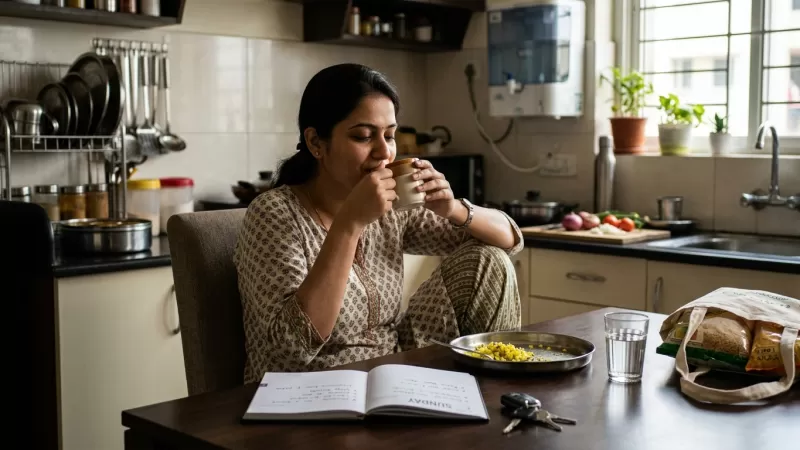
Some days, mornings just slip out of your hands. Maybe a child’s school bus arrived early, or an urgent work call came before you even had chai. In many Indian homes, mornings are already crowded with expectations—tiffin packing, getting everyone ready, and sometimes even squeezing in some housework before the clock strikes nine. When something unexpected happens, it’s easy to feel like the whole day is ruined.
But here’s something worth remembering: you don’t have to "fix" your morning to find steadiness again. There are gentle, practical ways to gather yourself later in the day—no matter how rushed things began. Let’s talk about routines and small habits that can help you find your balance, even after a chaotic start.
Why Rushed Mornings Happen (And Why It’s Okay)
In Indian families, mornings often bring surprises. Maybe the milkman is late, someone’s lost their socks, or an office meeting got moved up. It’s easy to feel like everyone else is handling it better, but honestly, most people have these days now and then.
You might notice that in joint families, one person’s stress can ripple through the house, while in smaller households, you might carry all the morning pressure yourself. Either way, it’s quite normal. These hurried moments don’t say anything about your ability or your care for your family.
So, if your morning felt like a scramble, it’s okay to acknowledge it—without blame or guilt. The real question is: how can you gently steady yourself once things calm down a bit?
Tuning In: Noticing How You’re Feeling
After a rushed morning, you might carry tension in your shoulders, or feel scattered and impatient. Sometimes, you may not even notice how much it’s affecting you until you snap at someone over something small.
One helpful habit is simply to pause and check in with yourself. Are you holding your breath? Is your jaw tight? Are your thoughts jumping from one thing to another? Many families quietly deal with this kind of hidden tension throughout the day.
That said, you don’t have to sit cross-legged and meditate for an hour. Even a minute or two of noticing your body and your breathing can remind you to slow down, just a little.
- Try placing your hand on your stomach and taking five slow breaths.
- Let your shoulders drop away from your ears—sometimes, you’ll realise you were tensing up for no reason.
- If you’re alone in the kitchen or at your desk, softly say to yourself, “It’s okay. I can slow down now.”
Resetting Your Pace: Small Breaks That Work
After the morning rush, it’s tempting to keep running at full speed. But if you can, sprinkle in a few short, gentle pauses during your day. These don’t have to be dramatic or time-consuming.
Here’s the catch: waiting for a "perfect" break rarely works. Instead, look for small windows—maybe while chai is brewing, or during five quiet minutes after lunch.
- Step out onto the balcony or terrace and feel the air for a minute.
- Close your eyes and listen to a favourite song—just one, not the whole playlist.
- Water your plants, or simply touch their leaves for a calming moment.
Some people find that even washing their face with cool water helps reset their mood. You might try different things to see what feels most natural to you.
Food and Fluid: Gentle Midday Nourishment
On busy days, it’s common to eat breakfast in a hurry or skip it altogether. By midday, your energy might dip, making you irritable or foggy-headed. The tricky part is, you might not feel hungry, just "off."
It’s usually best not to overthink nutrition; instead, aim for a simple, familiar meal or snack. In many Indian homes, a basic dal-rice or roti-sabzi lunch brings comfort as well as steadiness.
- If you missed breakfast, consider a small bowl of curd rice or fruit with some peanuts around noon.
- Drink water slowly, instead of gulping—sometimes tension shows up as thirst or a dry mouth.
- On hot days, a glass of nimbu pani or chaas can be refreshing without being heavy.
One opinion: It’s often better to eat a little of something home-cooked than to go hungry or reach for packaged snacks, especially after a hectic morning.
Light Movement: Stretching Out the Stiffness
You’ve probably noticed that after a stressful start, your body begins to feel heavy or tight—especially if you’re sitting at a desk, or standing in the kitchen for long stretches. Movement can help, but it doesn’t have to mean a full workout.
Many people find relief in simple, everyday movements. These don’t need any special clothes or equipment—just a bit of willingness to move, even for a couple of minutes.
- Stand up and gently stretch your arms overhead.
- Roll your shoulders forward and back, slowly.
- During afternoon chores, take a few mindful steps—notice how your feet feel on the ground.
Some homemakers find that sweeping or folding laundry, when done slowly and with attention, can be calming. The important thing is to notice how you feel before and after.
Making Space: Saying ‘No’ (or ‘Later’)
After a bumpy start, your mind might be quick to say "yes" to every new request, just to catch up. But here’s something rarely said out loud: it’s okay to protect a little space for yourself, even if it’s just ten minutes.
Saying "no" or "later" isn’t selfish. In fact, it protects your ability to be present for others when you do have the energy. Of course, this isn’t always possible (especially in busy or joint families), but sometimes, it’s just about being a bit kinder to yourself about what can wait.
- Delay non-urgent chores until evening.
- Let the family know if you need a brief rest—often, they understand more than we expect.
- If working from home, block your calendar for a short break, even if only as a formality.
Most people won’t notice if you don’t reply to a message immediately, or if the kitchen is less tidy after lunch. Sometimes, it’s worth letting these small things be.
Evening Slowdown: Gentle Transitions Before Bed
When the day’s been rushed from the start, evenings can feel like a time to catch up on everything. But if you can, try to use this time to unwind a little instead of piling on more tasks.
Some families have quiet evening routines—walking together outside, sharing snacks, or just watching TV together. If you live alone, even a few minutes with a book or devotional can mark the transition to rest.
- Dim the lights after dinner; it helps the mind slow down.
- Change into comfortable clothes as soon as you can—it’s a small signal to your body that the busy part of the day is over.
- Write down a single thing you’re grateful for, or something that made you smile today, no matter how small.
This isn’t about being productive or making up for lost time. It’s about gently closing the day, however it began.
Gentle Reminders: No Day Is Perfect
It’s easy to feel pressure to have everything under control, especially as a parent, partner, or even just managing your own life. But here’s the truth: most days are a mix of smooth and rough patches, and that’s completely normal.
What matters more than a flawless morning is how you care for yourself once things settle down. These small, steadying habits—pausing, eating, moving, making space, winding down—often help more than a grand plan to "fix" the day.
So, if your morning began in a rush, don’t let it decide the whole story. You can find steadiness, one small step at a time, whenever you’re ready.