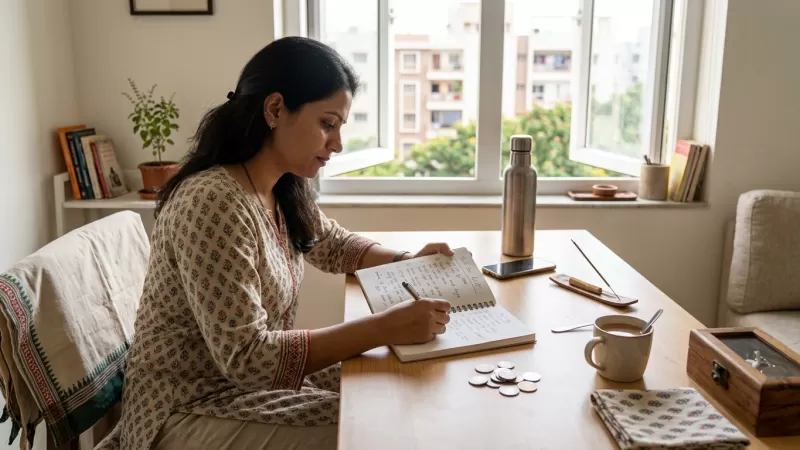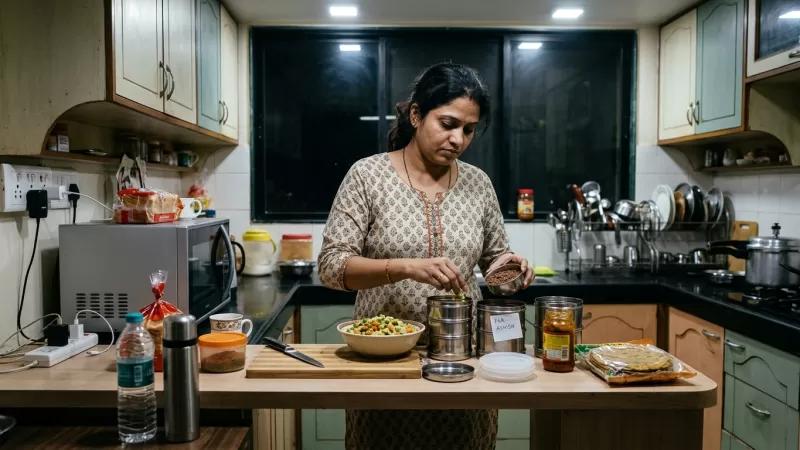
Most Indian homes these days wear many hats. The dining table is not just for dal, roti, and sabzi — it’s where your work laptop sits, your child scribbles homework, and the family’s evening chai is poured. When you try to separate work and home life in India, you’re not talking about two different places. You’re trying to create invisible lines in the same four walls, often at the same table, sometimes in the same hour.
In many apartments, especially in cities like Mumbai or Bengaluru, the living room is both the office and the family zone. The sofa becomes a workspace by day and a nap corner by afternoon. The trick isn’t about having more rooms — it’s about building small, intentional acts that help your mind switch from office mode to home mode, even when the space itself never changes.
Why Indian Homes Often Feel Like Offices All Day
In India, homes tend to adjust themselves to whatever is needed at the moment. During the day, the drawing room can fill up with the sound of online meetings, while the kitchen bustles with mid-morning tea breaks. Many families live in shared or joint-family setups, where privacy is rare and every corner is used for something or someone. The idea of work home separation for Indian adults often sounds like a luxury, not a given.
There’s also the reality of small flats, especially in cities. Not everyone has a study or a spare room. Work-from-home boundaries in India are mostly mental — not built with walls, but with little signals and routines. For many, the workday never really ends with a commute; it just blends into dinner prep, school WhatsApp groups, or late-night emails. That’s why the effort to separate work and home life in India is about creating psychological cues, not physical barriers.
Why Mental Separation Is So Difficult in Shared Spaces
Most Indian families are used to overlapping lives. Children attend online classes in the bedroom while a parent takes calls on the balcony. The TV blares news as someone finishes a sales report. It’s easy for work and home life to leak into each other, especially when everyone is under one roof for long hours.
Work from home boundaries in India are also blurred by social expectations. Many homes expect the working adult to be available for small tasks — answering the door, helping with groceries, or pausing for a quick chat. Even when you try to focus, family members may not see the difference between "being home" and "being available." Family needs, power cuts, and unpredictable schedules all add to the mix.
Psychologists who counsel Indian professionals often find that the pressure to manage both work and household responsibilities, without visible separation, leads to more mental fatigue. Many working adults try to do it all in the same space, believing they should manage without complaint, but the brain starts to blur work and rest.
Clues That Work and Home Are Blending Too Much
- Family dinner feels like another meeting: Three of four people at the table are still thinking about work, homework, or deadlines.
- Never-ending work days: You close the laptop but keep checking emails on your phone, sometimes even during chai or while watching TV with family.
- Household chores sneak into office hours: You find yourself putting dal in the cooker or hanging laundry between calls, feeling like you’re never fully at work or at home.
- Constant background noise: The sounds of pressure cookers, cartoons, and conference calls all merge, making it hard to focus or relax.
- Fatigue at odd hours: You feel tired in the afternoon, yet restless at bedtime, struggling to switch off your "work brain."
Small Rituals That Help Separate Work and Home Life in India
- Pack away the laptop at the end of the day: Many working adults have found that putting the laptop in a bag or cupboard — not just shutting the lid — signals to the mind that work is over. It’s a tiny ritual, but it helps.
- Change your clothes after work hours: Switching from work attire (even if it’s just a slightly formal kurta or shirt) to house clothes or nightwear helps your brain register the transition.
- Make chai or cut fruit as an evening signal: In several homes, the act of making chai together or slicing mango in summer is a small but clear end to the workday. The smell and taste are cues for the mind and family.
- Play music or light incense: Some families play a favourite song or light a diya after work hours. This simple act marks the difference between work and personal time, even in the same room.
- Create a "work-off" chat with family: A shared phrase, like "laptop band," or a family joke, can remind everyone that office time is done for the day, making it easier to relax together.
Everyday Indian Scenarios Where Work and Home Collide
Many families in Indian cities have quietly discovered their own ways to manage work life space separation. On weekday evenings, you’ll often see a parent closing their laptop, storing it above the fridge, and then joining the family in the kitchen to roll out rotis. In joint families, the shift between video calls and helping a grandparent with tea is quick — but the transition is often marked by a small pause or a shared smile.
A working professional commuting in Bengaluru might finish an online meeting while waiting for the pressure cooker’s whistle, then use those few minutes to mentally unplug. Children doing homework in the same room learn to read the signs — when headphones come off and the laptop is packed, it’s time for family talk or an evening snack.
On mornings when everything runs late, breakfast can become a blend of work talk and home planning. But at night, many families now have their own little rituals: a short walk on the terrace, a shared TV show, or simply sitting together for poha or makhana before bed. These routines help everyone’s brain understand when work ends and home life begins, even when the space never changes.
Asking for Help When the Blending Becomes Too Much
Sometimes, the effort to separate work and home life in India feels exhausting. If you notice stress building up, sleep problems, or arguments over small things, it might be time to talk openly with family or your employer about what you need. Some people find it helpful to share their struggles with a close friend, or even seek guidance from a mental health professional — especially if the feeling of being "always on" refuses to fade.
If you’re unsure whether your stress is normal, a quick chat with your doctor can help. In many homes, even a small change or outside perspective can make a big difference.
Common Questions
Most Indian families are still adjusting to the new patterns of work and home life mixing in one space. If you’re feeling unsure about what really helps, you’re not alone. Here are a few questions that come up in many homes — along with some practical ideas, drawn from everyday Indian routines.
How do Indian adults create psychological separation between work and home when they share the same physical space?
In many Indian homes, adults use small daily rituals to signal the end of work — like changing clothes, making chai, or packing away the laptop. Some people put their phone on silent or move it to another room after office hours. Even sitting in a different chair after work, or turning on a favourite TV show, acts as a mental switch. These little cues help the mind adjust, even when the physical space stays the same.
What rituals or signals most reliably tell the brain that the work day has ended in a work-from-home setup?
The most reliable signals in Indian homes tend to be sensory: the sound of evening aarti, the smell of chai, or the act of lighting a diya. Some families have a set time for evening snacks or a shared activity (like a walk or TV show) that marks the end of work. Packing away the laptop or closing the work notebook and keeping it out of sight also sends a strong signal to the brain that office hours are over.
How do family members in Indian homes distinguish between the person being at home and the person being available?
This is tricky, especially in joint families or small flats. Many households create a light rule — like a certain chair or corner means "work time," or headphones signal "not available." The transition often becomes clear when the laptop is put away, or when the person joins for chai or dinner. Over time, family members learn these signals and adjust, but it usually takes gentle reminders and patience from everyone.
Is working from home inherently more stressful than office work for Indian adults or does it depend entirely on the setup?
Whether work from home is more stressful depends on the home setup and family dynamics. In some homes, the lack of commute and flexible hours make life easier. In others, the constant overlap of roles and lack of space can increase stress, especially when everyone is home all day. The key seems to be in finding small ways to separate work and home life in India, even if it’s just a daily ritual or a special spot for work.
What physical changes to the home setup most help Indian WFH adults maintain the sense of separate work and personal spaces?
Some people use a small table or a mat just for work, even if it’s in the living room. Others pack away their work things in a box or bag after office hours. A few families rearrange the furniture so that a certain chair or corner is only used for work. Even changing the direction you sit, or facing a window instead of the TV, can help create a mental distinction between work and home time.