The first stirrings in an Indian joint family home often begin before sunrise. Someone in the kitchen is lighting the stove for chai, a phone alarm goes off, water runs somewhere. If you have ever tried protecting personal time in an Indian joint family, you know that the hours are spoken for before you even wake up. Personal space in a joint family in India is not a given — it is something you quietly collect, a few minutes at a time, in the edges of the day.
The tricky part is, these small windows for self time in an Indian extended family are rarely official. No one tells you, "This is your hour." Instead, the people who manage to find time for themselves are often those who notice the silent pockets before the house is awake, or the few steps to the corner shop where nobody interrupts. In many Indian homes, protecting personal time in an Indian joint family means noticing these moments and gently holding onto them.
Why Personal Time Is So Scarce in Indian Joint Families
In most Indian joint family homes, the day’s schedule runs like a tightly woven piece of cloth. Everyone’s routines are interlaced — breakfast is a group meal, the bathroom queue is real, and phone calls are rarely private. Finding personal space in a joint family in India is a rare luxury, especially when elders, children, or even pets need something at every turn.
For many, the sense of responsibility is strong. If you are a middle-aged woman, a working son, or a retired grandparent, the expectation is that you are available — for a cup of chai, to settle a squabble, or just to listen. The house is full, and so are the days. You may love your people deeply, but the sense that your own needs are always last can quietly build up over months.
Here is the catch: Even when you crave time for yourself in an Indian joint family, asking for it openly can feel wrong. The culture values togetherness. Those who do slip away for a few minutes often do so in ways that don’t disrupt the flow, almost as if personal time is a secret ingredient you have to sneak into the family recipe.
The Unspoken Reasons Why Personal Time Gets Lost
In many homes, it isn’t just about the number of people under one roof — it’s about the flow of expectations. Most Indian joint families run on silent agreements: who wakes early, who makes rotis, who handles the electricity bill, who helps children with homework. These roles are rarely negotiated out loud. If you decide to take a break, someone else quietly picks up the slack, but often with a sigh or a silent question about your absence.
Another reason is the way household rhythms are set. The day begins with shared tasks: making chai, bathing children, prepping lunch, and getting everyone out the door. Evenings are for catching up, watching TV together, or sharing stories. There just isn’t a time slot labeled "me time" — at least not officially.
Family therapists working with middle-class Indian households often find that people in joint families tend to squeeze their own needs into the leftovers of the day, after the house has been fed and settled. This can lead to a pattern where personal space joint family India is always something you have to create, not something handed to you.
And then there’s the question of guilt. Many adults, especially women, feel uneasy about shutting the door or saying no. The sense of duty runs deep, and any act of self-care can feel like selfishness, even if no one says it aloud.
Little Signs You’re Missing Time For Yourself
- You notice irritation at small requests. If being asked to fetch water or answer a simple question feels overwhelming, it might be because your personal time is running dry.
- Daydreaming about being alone. In the middle of chopping bhindi or folding laundry, your mind drifts to a quiet place where no one calls your name.
- Secretly extending errands. That five-minute walk to buy dahi turns into a fifteen-minute stroll, just for the peace.
- Feeling invisible or drained. When everyone’s needs are met but you can’t remember the last time you sat with your own thoughts, that’s a sign.
- Late-night scrolling or early rising. Many adults in Indian joint families carve out self time by waking before the rest or scrolling their phones late into the night — not because they want to, but because it’s the only chance for quiet.
Practical Ways to Find Personal Time in a Busy Household
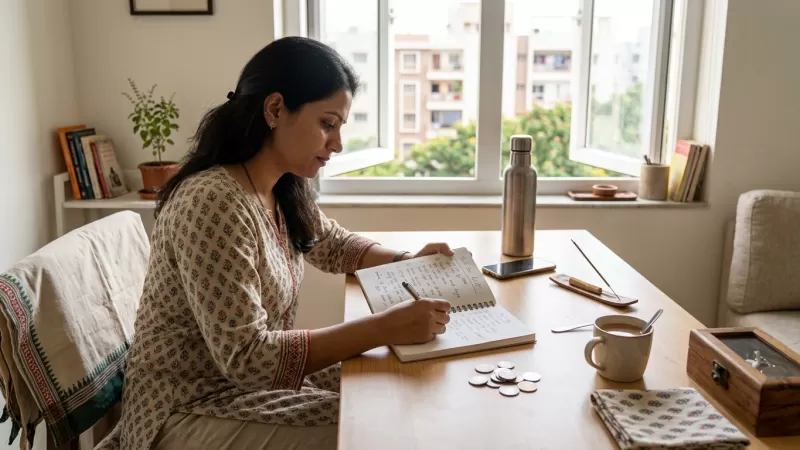
- Notice the quiet windows. In many homes, the only undisturbed time is the early morning — maybe 5:30am, before anyone else stirs, or the late night after everyone is asleep. Even ten minutes with chai on the balcony can feel like a breath of fresh air. Protecting personal time in an Indian joint family often starts here.
- Volunteer for solo errands. Many families have quietly discovered that the walk to buy milk, dahi, or vegetables can be fifteen minutes of peace. Make the most of it — let your mind wander, listen to a song, or just enjoy the break.
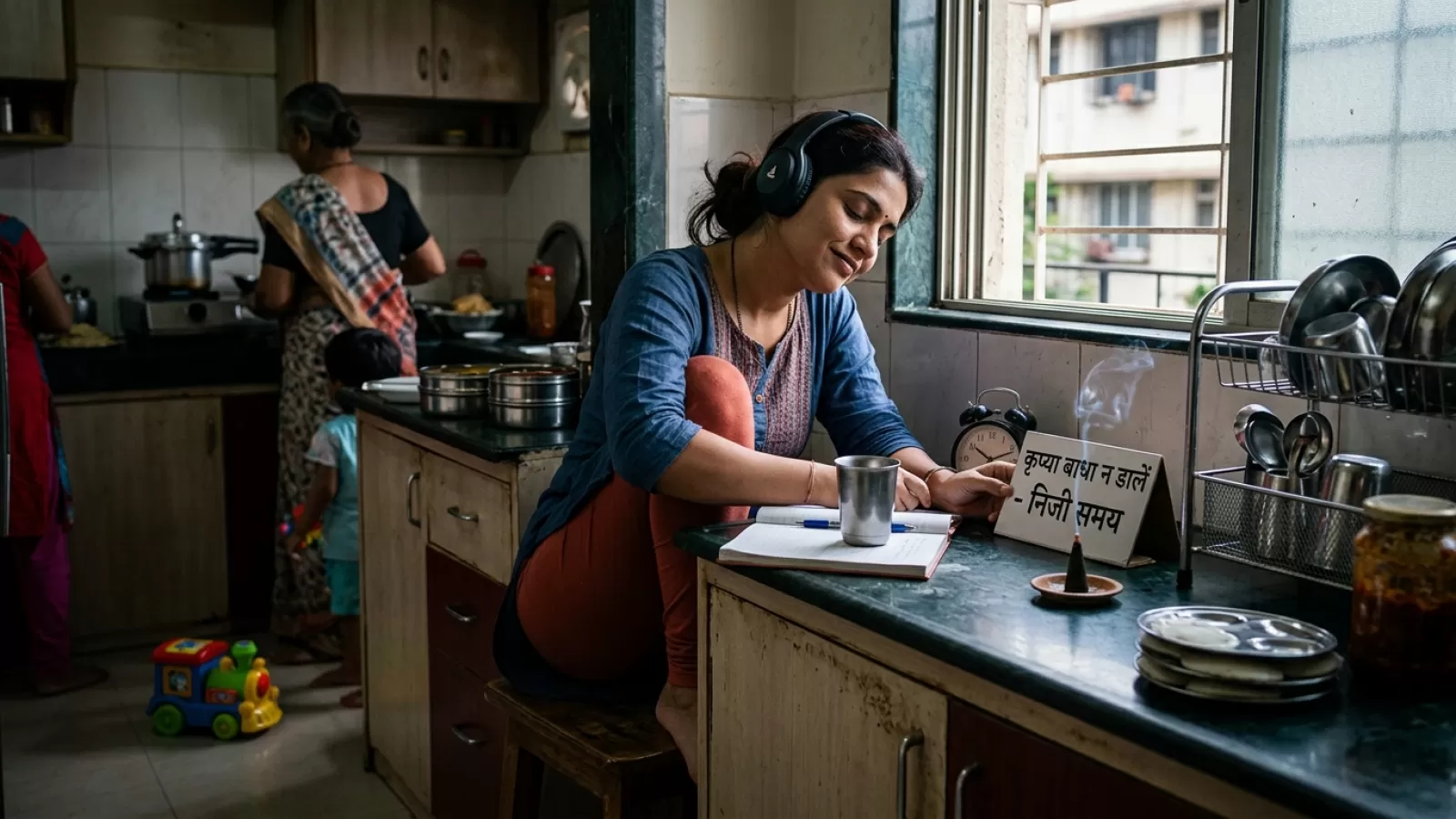
- Turn chores into moments for yourself. Sometimes the only way to get space is to combine it with work. Folding laundry with headphones, washing dishes while humming your favourite tune, or even tidying a quiet room can double as brief self time in an Indian extended family.
- Use technology to your advantage. Plugging in earphones, listening to a podcast, or putting on calming music during kitchen prep lets you mark a gentle boundary without saying a word.
- Find micro-breaks during the day. Even a few minutes alone with chai after lunch, or a slow stretch while everyone naps, can make a difference. These aren’t full breaks, but they help.
What Personal Time Looks Like in Everyday Indian Life
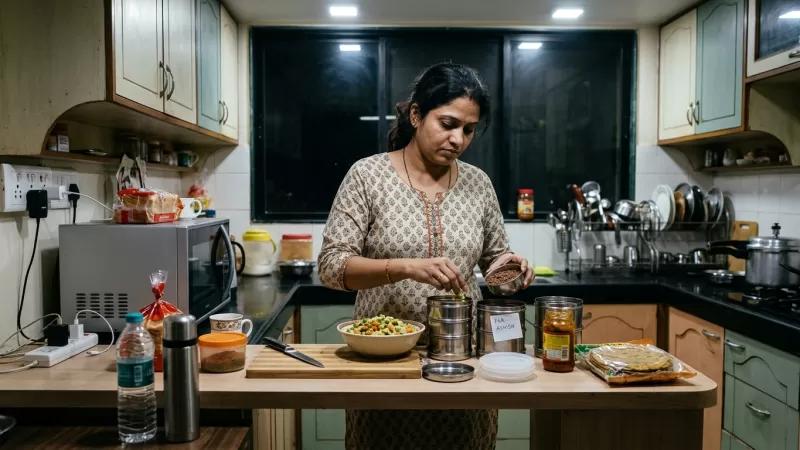
A kitchen in Nagpur at 6am. The ceiling fan clicks quietly. The world outside is still dark, and the only sound inside is the whistle of the pressure cooker. For these few minutes, before the rest of the house wakes, a woman stands with her chai, looking out the window. This is her pocket of personal space in a joint family in India — quiet, unclaimed, and deeply precious. Soon, she will be needed: to pack tiffins, settle sibling fights, and field dozens of small requests. For now, she lets herself be still.
In another home, a retired grandfather offers to walk to the chemist for the third time that week, not because he loves errands, but because the fifteen-minute walk is the only time he has to himself. Many working adults in Bengaluru find their only real alone time during their commute — headphones on in a crowded metro, a few WhatsApp texts to friends, or people-watching through the window. Protecting personal time in an Indian joint family rarely looks like a closed door; it often looks like these small, ordinary moments stitched into the day.
When to Consider Asking For Support
Some days, the usual tricks don’t work. If you start feeling constantly angry, exhausted, or sad, or if the lack of self time in your Indian extended family is making it hard to function, it might be time to speak up. This could mean mentioning to a trusted family member that you need a little breathing room, or — if things feel very heavy — reaching out to a counselor. In most cases, though, a quiet word, a shared cup of chai, or a request for help with chores is enough to ease the pressure a little.
Common Questions
It’s natural to wonder how others manage this tricky balance. Every household is different, but many families find similar patterns. Let’s look at a few real questions that come up about protecting personal time in an Indian joint family — and how it plays out in day-to-day life.
How do Indian adults find even small amounts of genuine personal time in a joint family where someone always needs something?
In many joint families, adults find self time by slipping into natural pauses in the household routine. For example, waking up quietly before everyone else or lingering a few extra minutes on the terrace after hanging laundry can create small windows of personal space. Some people use the walk to the market or a solo tea break as a way to recharge. These pockets might be short, but over time, they add up and help you breathe a little easier.
Is it culturally reasonable to ask a joint family for personal time or does it always create conflict?
In most Indian families, openly asking for personal time can feel awkward — not impossible, but tricky. Many households see shared time as the default, so requests for alone time might be misunderstood at first. That said, if you express your need gently and frame it as a way to be more present and helpful, many families are surprisingly supportive. It’s usually less about a formal announcement and more about finding small ways to look after yourself without hurting feelings.
What are the times of day in a joint family household where personal time is most likely to exist naturally?
Early mornings — before the main rush starts — are often the quietest. Late nights, after everyone is asleep, also tend to be peaceful. Household errands like walking to the shop, folding laundry alone, or even a quick post-lunch nap are moments where personal space joint family India is possible. Every household has its own rhythm, so noticing when the house is naturally quieter can help you find these times for yourself.
How do you protect personal time in an Indian joint family without appearing selfish or causing hurt feelings?
Usually, it’s less about saying “I need alone time” and more about gently slipping away during natural breaks. Volunteering for errands, using headphones, or waking a little earlier are ways to get self time in an Indian extended family without making anyone feel left out. If you need a longer break, sharing tea or talking with a family member first can help them understand, so it doesn’t come across as rejection. The key is to be subtle and kind — most people will understand if it’s done with warmth.
What is the impact on mental health of having genuinely no personal time in a joint Indian household?
Going without any personal time for long stretches can leave you feeling drained, irritable, or even resentful. Over weeks or months, this may grow into stress, poor sleep, or a sense of losing yourself. Many people find that even small, regular breaks help them stay patient and connected with family. If you notice that you’re struggling, it’s okay to talk to someone you trust or seek professional help — looking after your mind is just as important as looking after everyone else.