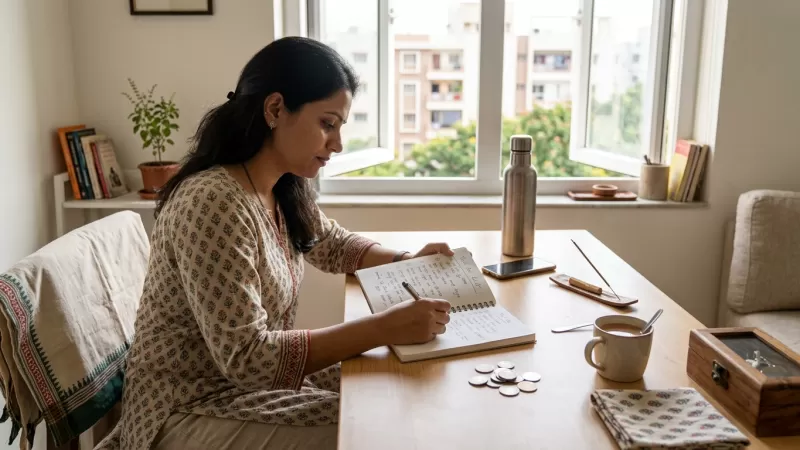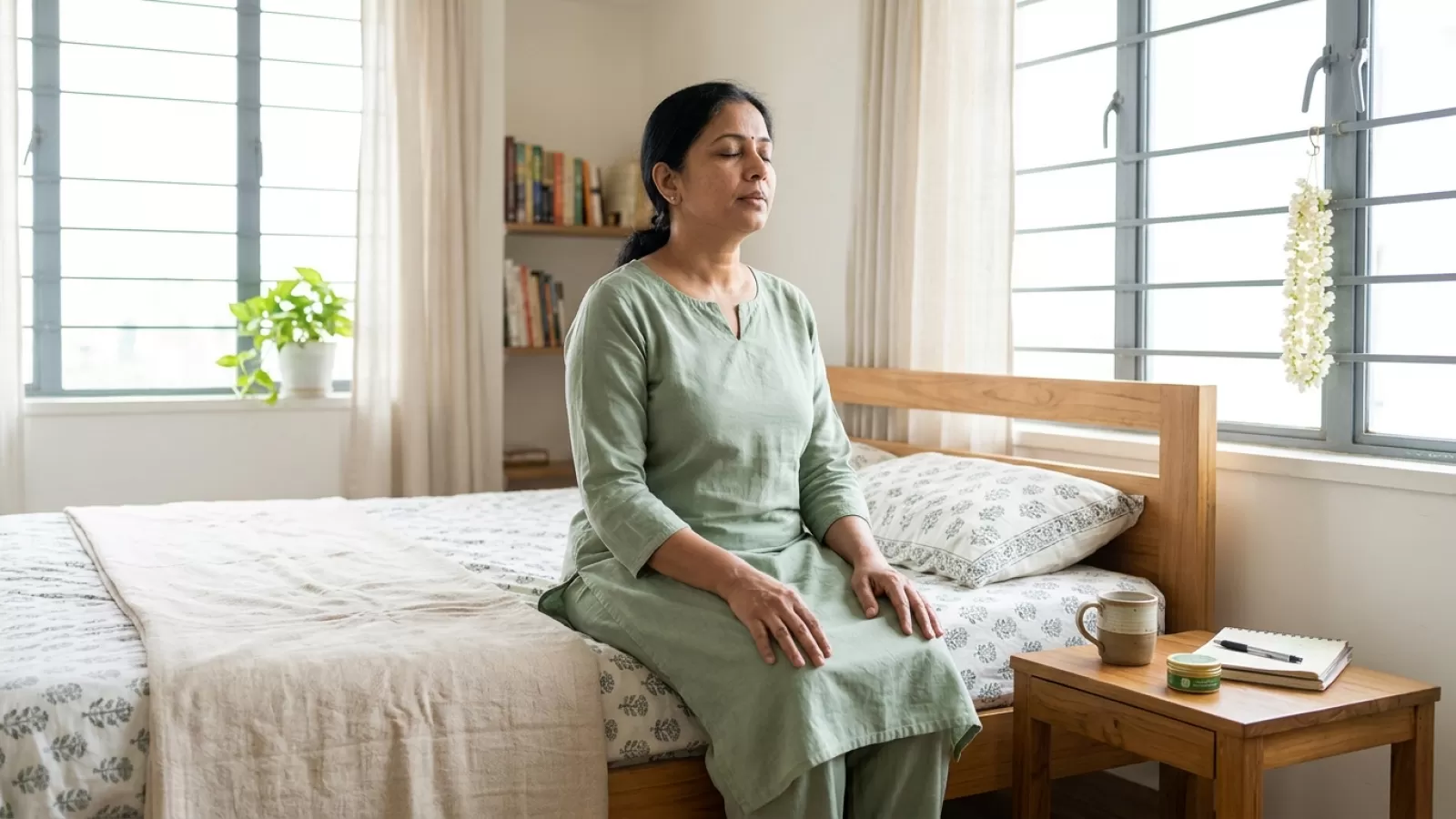
Most Indian adults carry the weight of the day right up to their pillow. Even after the kitchen is finally quiet, the last WhatsApp message is sent, and the TV is switched off, a faint sense of something unfinished stays in the body. These days, finding a way to process emotions before sleep in India is less about grand solutions and more about tiny, practical acts that fit into real homes and routines.
The tricky part is, this emotional residue before bed for Indian adults does not always look like active worry or replaying arguments. Often, it’s just a quiet heaviness or a restlessness that refuses to be named, but still lingers as you try to fall asleep. In most homes, the day’s emotional load is not discussed — it is simply packed away, night after night.
Why Emotional Residue Lingers in Indian Homes After a Long Day
In the rhythm of daily Indian life, few people get the space, privacy, or time to pause and acknowledge how they feel. Whether you’re managing a house, working late in a WFH setup, or juggling family expectations, the day often leaves no room for consciously releasing day emotions in India. Many adults don’t even realise the build-up until it’s time to sleep and the mind, finally free from distraction, tries to process everything at once.
Daily emotional processing for Indian adults before sleep is not a habit that most families talk about openly. Feelings tend to be brushed aside in favour of getting things done — making sure the roti is ready, helping children with homework, or preparing for tomorrow’s meetings. The unspoken rule in many homes is to keep moving, keep performing, and keep the household machinery running smoothly. That said, the body and mind quietly keep score — and at night, when the world slows down, all the unacknowledged bits of the day come forward. This is why so many adults lie awake, unable to identify why they can’t let go of the day, even when they are truly exhausted.
Why Most Indian Adults Don’t Process Emotions Before Sleep
There are a few reasons why releasing day emotions in India feels more difficult than it should. Shared spaces mean it’s rare to have five quiet minutes to yourself. In joint families, the expectation to manage emotions privately is strong — showing tiredness or frustration can be seen as weakness or as complaining. Even in nuclear setups, the demands of work, children, and household chores often fill every gap. Long commutes, unpredictable power cuts, and the sheer busyness of urban life create a constant background noise that leaves little space for gentle reflection.
Many Indians have grown up seeing emotional restraint as a virtue. Expressing disappointment, sadness, or even minor irritation is often discouraged. You might notice, after a tough day, that the easiest thing is to distract yourself — scrolling through Instagram reels, watching a late-night series, or chatting with relatives about everything except what actually bothered you. The tricky part is, this doesn’t make those emotions disappear; it just means they wait until the house is dark and quiet, and your mind is finally still enough to notice them.
Therapists working with Indian families often find that what feels like insomnia or unexplained nighttime anxiety is actually emotional residue before bed in Indian adults — not because they are brooding, but because there was never a safe or practical moment during the day to let those feelings exist, even briefly.
Clues You’re Carrying Emotional Residue To Bed
- Restlessness at bedtime — You finish your day exhausted, but as soon as you lie down, your body feels tense or uneasy, as if you’re waiting for something to finish.
- Unexplained heaviness or low mood — You can’t point to a specific reason, but a weight seems to sit in your chest or stomach, especially at night.
- Difficulty falling asleep despite physical tiredness — Even after busy days filled with household work or office tasks, your mind won’t switch off easily.
- Replay of small, unresolved moments — A brief disagreement in the morning or a sharp word from a family member keeps returning, not as a clear memory, but as a nagging discomfort.
- Waking up feeling unrefreshed — Even after a full night’s sleep, you feel as if you never truly rested — your mind feels tangled and your mood is flat.
Short, Practical Ways To Process Emotions Before Sleep In India
- Three-Minute Quiet Sit — In many Indian homes, sitting quietly for even three minutes after everyone has gone to bed can help. Not to analyse, but just to silently name what the day held (“That call was difficult,” “I felt ignored at dinner,” “I’m still worried about tomorrow”). No need to fix or solve — just acknowledging often lessens the emotional residue before bed for Indian adults.
- Brief, Non-Analytical Reflection — While lying down, mentally walk through your day without judgment. For each moment that stands out, say to yourself, “That happened. I noticed it.” This simple act often releases day emotions in India for those who find detailed analysis overwhelming.
- Gentle Physical Movement — Sometimes, slow stretching or a few rounds of deep, mindful breathing can help the body release what the mind is holding. A few neck rolls or shoulder shrugs on the bed can be enough. Nothing fancy — just what feels natural and doesn’t disturb others sleeping nearby.
- Speaking softly to yourself — In homes where privacy is a challenge, internally or softly saying, “I had a hard day, and that’s okay,” can offer a surprising sense of permission to let go. Some adults find that this brief self-compassion settles the mind more than any external advice.
- Low-Effort Writing (if possible) — Jotting down one or two lines about the day — not a full diary, just a word or phrase that captures the mood — can sometimes move the emotional residue out of your body. This is practical only if you have a private moment, like sitting with a cup of chai after everyone else has gone to bed.
How Emotional Residue Shows Up In Daily Indian Routines
In a kitchen in Nagpur at 6am, the pressure cooker whistles while the city still feels half-asleep. Someone stands by the window, sipping chai, trying to shake off the unsettled feeling from last night’s phone argument with a sibling. The mind is already planning breakfast — poha for the children, dahi for Dadi, maybe some cut fruit for the office tiffin. Yet, that faint ache in the chest is still there, left over from a day that never gave space for a real pause.
Across Indian homes, these moments are common. Sometimes the night’s sleep feels shallow because the mind was busy sorting out the day’s unfinished business. It’s not about dramatic emotions — just a quiet heaviness that lingers, making mornings feel heavier than they should. Many families in Indian cities have quietly discovered that even a minute or two of silently recognising the day’s load, while folding clothes or rinsing milk packets at night, helps the mind let go and the body rest better. The catch is, these habits are rarely discussed — they just become part of the background rhythm.
When Emotional Residue Before Sleep Needs More Than Self-Help
For most Indian adults, a little emotional residue before bed is just part of life. But if you notice that your sleep is regularly disturbed, or you wake up anxious or heavy-hearted for weeks at a stretch, it might be time to speak to someone you trust. When the emotional weight keeps growing, or it affects your relationships or work, a conversation with a mental health professional is worth considering. These days, even a brief phone or online chat can offer new ways to release day emotions in India. There’s no fixed rule — if your inner sense says you need help, that’s enough reason to reach out.
Common Questions
Every household has its own rhythm when it comes to winding down. Some nights, it’s easy to let go of the day, while on others, the mind clings to what was left unsaid or unresolved. These questions come up often — here’s how they play out in real Indian homes.
Why does unexpressed or unacknowledged emotional content from the day follow Indian adults into sleep and affect sleep quality?
In many Indian households, the day is packed with activity and expectations, but not much space for quiet reflection. There’s usually no pause between wrapping up chores and going to bed, especially in homes with joint families or small children. This means the mind carries unprocessed interactions, worries, or annoyances right into sleep. Without time to acknowledge these feelings, the mind tries to work through them at night, leading to restless sleep or early morning heaviness. Even small moments — a sharp word, a missed call, a minor argument — can linger when there’s no space for them during the day.
What are the most accessible approaches for Indian adults to release daily emotional residue before sleep without requiring extended processing time?
Small, practical acts work best in busy Indian homes. Many adults find that sitting quietly for a few minutes after everyone else has gone to bed helps. Simply naming what the day contained, without analysing or judging, is often enough. Gentle stretching, a few deep breaths, or even rinsing your face with cool water before bed can signal to the body that the day is ending. These acts don’t require privacy or much time — they fit into household routines and can be done even in shared spaces.
How do you process the emotional residue of a day that was genuinely difficult without activating those emotions enough to prevent sleep?
On days that feel especially hard, it helps to keep things simple. Instead of trying to solve or deeply analyse tough emotions at night, just acknowledge their presence: “Today was tough. I’m carrying some heaviness.” Short, non-judgmental acceptance prevents emotions from taking over. Sometimes, doing something physical — making a cup of warm milk, folding laundry, or dimming the lights — can gently move the mind away from rumination and signal that it’s time to rest, without pushing you into deeper reflection.
Is it more effective to process emotional residue through writing, reflection, or physical movement for Indian adults?
What works best depends on your living situation and what feels possible. In homes where privacy is scarce, silent reflection or gentle stretches before bed are often easiest. If you do have a quiet moment, jotting down a line or two can help, but it’s not necessary to keep a full journal. For many, the simple act of mentally naming the day’s emotions is enough to reduce emotional residue before bed. The most effective approach is the one you can repeat most nights without extra effort or stress.
When does the inability to emotionally release the day before sleep in Indian adults indicate something that benefits from professional support?
If you notice that trouble sleeping, heavy moods, or anxious thoughts continue for several weeks despite trying simple steps, it may be time to reach out. In Indian homes, this might look like persistent irritation with family, regular morning headaches, or feeling disconnected even after a good night’s sleep. When emotional residue starts affecting your daily functioning or relationships, a gentle conversation with a counselor or mental health professional can provide relief and new coping ideas. Professional help is just another form of support — not a sign of failure.