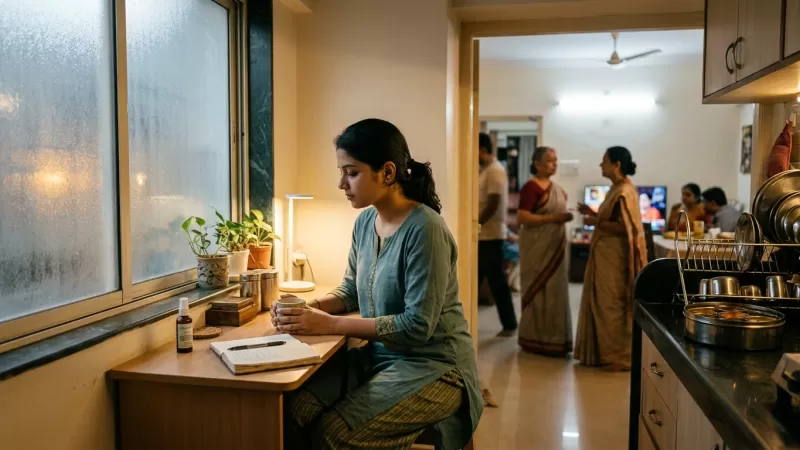
Sometimes, in Indian homes, the day seems to stretch long past sunset. Even after the last cup of chai is washed and the TV switched off, your mind keeps replaying unfinished chores, work emails, and tomorrow’s tiffin dilemmas. Mental closure before bed India style is rarely about tying up every loose end. It’s more about gently telling your mind, “Today is done, tomorrow will take care of the rest.”
Most adults here recognise this feeling: the body is ready to rest, but the mind is still spinning, checking on half-done tasks and family worries. These days, especially in busy households, releasing unfinished day India is less about perfection and more about finding a small ritual to pause the mental to-do list—even when the list is nowhere near complete.
Why Unfinished Business Lingers in Indian Homes Each Night
The reality is, the Indian day rarely ends with a neat finish. In many homes, evenings are a whirlwind of cooking dinner, helping with homework, WhatsApp pings from work, and last-minute electricity or water issues. There’s always something left: a bill unpaid, a call unscheduled, a school form unsigned.
Households with joint families or young children often find that bedtime mental closure for Indian adults is even trickier. Someone might need a late-night snack, or a sudden family discussion stretches late into the night. The tricky part is, even when everyone else seems asleep, your mind may still be alert, monitoring those open loops.
Releasing unfinished day India is not about ignoring these tasks. It’s about creating a small, mental “full stop” for now. For many, this is the difference between rest and restless sleep.
Reasons Indian Minds Resist Switching Off at Night
Why do so many Indian adults struggle with how to let go of day before sleep India? Part of it is cultural. Daily life is rarely compartmentalised here. Work, home, social obligations, and family responsibilities often overlap. Evenings don’t always bring closure—they bring reminders of what’s still pending.
Family therapists often find that Indian adults carry a mental tally of unfinished business into bed because the boundaries between work and home life are thin. For those working from home, the laptop may only close minutes before bed. Household chores are often squeezed around office calls, and family discussions about tomorrow’s plans sometimes happen right before sleep.
There’s also the expectation—spoken or not—that most things should be handled without fuss. That said, the mind keeps watch, quietly checking on tomorrow’s worries: Did I lock the gate? Is the milkman coming? Who will drop the kids at tuition?
Clues Your Mind Hasn’t Released the Day
- Difficulty falling asleep: You lie down, but thoughts about tomorrow’s tasks keep running through your head. Even the ceiling fan’s hum can’t drown them out.
- Waking up tired: You had a full night in bed, yet you wake up feeling like you never really switched off.
- Replaying conversations: You mentally revisit arguments or unfinished discussions, trying to think of what you should have said.
- Physical restlessness: Tossing, turning, or getting up to check if the gas is off or the door is locked.
- Sudden memory jolts: Just as your eyes close, you remember a bill, an email, or a school note, and your mind snaps awake again.
Small Rituals That Help Indian Adults Let Go Before Sleep
- Write three short notes for tomorrow: Many adults find that jotting down just three things—on paper or even in their phone—helps signal to the mind that the unfinished day has been acknowledged. It need not be a long list. Just enough to say, “I’ll handle this tomorrow.”
- Gentle, familiar sounds: Some like to listen to soft bhajans, a favourite old song, or even the soft clatter of kitchen vessels being put away. These sounds can mark the end of the day for the mind, as much as for the household.
- Brief family check-in: In many homes, a two-minute chat about how the day went—without turning it into a planning session—can help. The catch is to avoid letting this turn into a new round of logistics or worries.
- Physical cue: Closing the balcony door, switching off the living room light, or folding the last towel are small acts that tell the brain: “Now, we rest.”
- Breathing with intention: Not a formal meditation, but just noticing five slow breaths as you settle in. This gentle act helps with how to let go of day before sleep India, especially after long or difficult days.
Where Mental Closure Before Bed India Shows Up in Everyday Routines
In many Indian families, the last shared moments before bed tend to be about tomorrow: who will wake up first, what’s for breakfast, reminders about medicines or school projects. Often, these conversations are meant to help—but sometimes, they keep everyone’s mind on alert, trying to problem-solve late into the night.
Then there’s the solo worker in a Mumbai flat who closes their laptop at 11pm, only to remember three half-finished emails. Or the parent in a joint family who, after the dinner plates are cleared, sits quietly by the window, mentally reciting tomorrow’s must-dos. In these moments, bedtime mental closure Indian adults practice is rarely about solving every problem. It’s about telling the mind, “You’ve done enough for today. The rest will wait.”
When It Makes Sense to Ask for Outside Support
If you find that no small ritual is helping, and sleep feels impossible night after night, it might be time to gently raise the issue. Sometimes, too many nights of poor rest can affect mood, health, and relationships. If your mind feels stuck in a loop, or if anxiety about unfinished business is growing, a chat with a trusted doctor or counsellor can help you find new ways to release the day.
Common Questions
These moments of winding down are different for everyone, but some questions come up in many homes. Let’s talk through a few you might have as you search for ways to create mental closure before bed India style—especially when your day hasn’t wrapped up neatly.
How do Indian adults create a genuine sense of mental closure at the end of a day that always has loose ends?
In most Indian homes, there’s acceptance that some things will stay unfinished. Many adults create mental closure before bed India style by doing something small and symbolic: switching off the kitchen light last, folding clothes, or writing down a single reminder for tomorrow. The key is a gentle signal—like a quiet prayer or tidying a corner—that tells the mind, “This is enough for tonight.” These rituals help the mind release vigilance over unfinished tasks, even when bigger worries remain.
What is the minimum effective pre-sleep mental closure practice for Indian adults who cannot do extended evening routines?
For those with little time, even a one-minute pause can work. Just sitting on the bed, taking three slow breaths, and mentally acknowledging that some tasks are left for tomorrow is often enough. Many adults in Indian cities keep a small notepad by the bed to jot down one or two key worries. This minimum effort, repeated daily, helps train the mind to release the unfinished day India without long routines or extra fuss.
How do you signal to the mind that it can release vigilance over unfinished tasks when those tasks genuinely exist and will need attention tomorrow?
This is the heart of how to let go of day before sleep India. The mind responds well to small, repeated cues. Writing down the tasks, saying a quiet “I’ll handle it tomorrow,” or even closing a door with intention can act as a signal. Over time, the mind learns that these cues mean it’s time to rest, even if the to-do list is not empty. It’s not about pretending the tasks don’t exist—it’s about telling the mind they are safely waiting for you in the morning.
Is it more effective to write unfinished tasks down or to mentally acknowledge them before sleep?
Both methods help, but many Indian adults find that writing tasks down—even briefly—works better for releasing unfinished day India. The act of putting pen to paper gives the mind a sense of control and containment. That said, if writing is not possible, mentally acknowledging what’s left and gently telling yourself it will be addressed tomorrow also helps. The trick is consistency: whichever method feels natural to you is the one that’s most likely to help with bedtime mental closure Indian adults need.
What daily habits during the working day reduce the number of unresolved concerns that follow Indian adults into the pre-sleep period?
Small habits during the day can make evenings a bit lighter. Many working professionals in Indian cities have found that setting a fixed time to check WhatsApp or emails (instead of responding immediately) keeps work from spilling into late hours. Pausing for a cup of chai in the afternoon, or finishing one household chore before starting another, can prevent tasks from piling up. These habits don’t remove all loose ends, but they reduce the weight of unfinished business that follows you to bed.