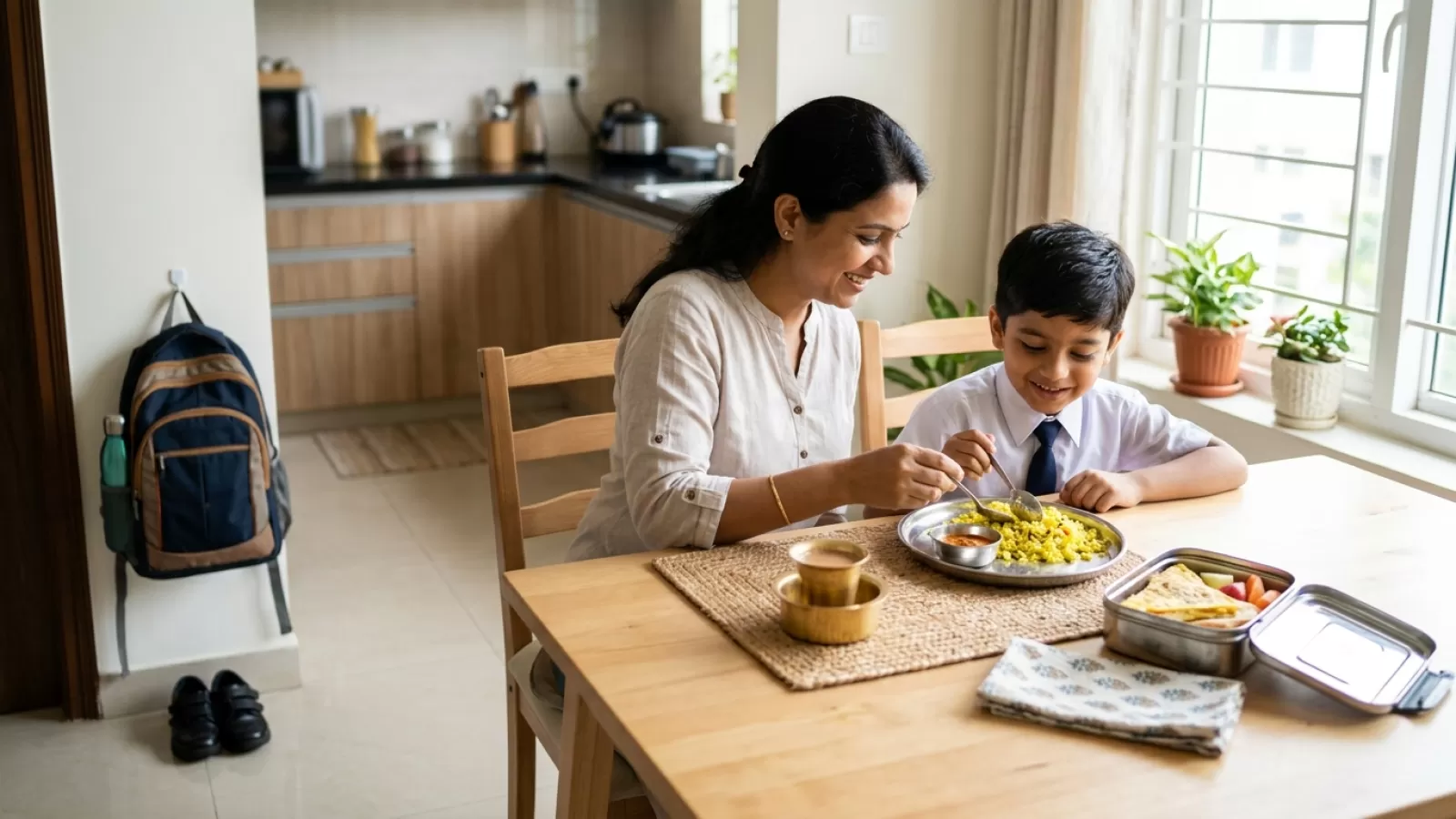
It’s 6:45am in a typical Indian apartment block. The air smells faintly of pressure-cooked dal and someone’s left their chappals by the door. Inside, three alarms have rung and a parent is searching for a missing school tie while toast pops up, half-burnt, and a child announces that their school diary needs to be signed urgently. The calming school morning routine India families dream of often feels like a distant idea — mornings here are messy, loud, and packed with little emergencies.
Much of the Indian household morning chaos children face is not about how early everyone wakes up or how strict the schedule is. The real difference, as many families discover, is made the night before — those who spend 20 minutes on evening preparation almost always find the next day’s school morning stress India households face is easily halved, even when nothing else changes. That’s the quiet magic that rarely gets talked about but truly changes mornings.
Why Mornings With School-Going Children Feel So Overwhelming in Indian Homes
Most Indian homes, whether in Delhi or Dhanbad, share a similar morning pattern: a rush to bathe, cook, pack tiffins, find uniforms, and cajole sleepy children out of bed. Add in shared bathrooms, joint family members needing tea, or the odd power cut, and the morning routine with school children India is even more unpredictable. There’s often a constant feeling that someone is running late, something is missing, or somebody’s shoes have vanished under a pile of yesterday’s homework sheets.
This daily scramble is so common that it sometimes feels normal — but the truth is, it leaves everyone frazzled before the day has even begun. Many parents want calmer, more predictable mornings, but the realities of Indian life (late dinners, homework battles, and limited evening energy) mean that everything gets squeezed into a short, stressful window. The school bus waits for no one, and the smallest forgotten detail (a missing water bottle, an unsigned diary, an empty pencil box) can trigger a household-wide search party at 7am. The thing is, these crises aren’t about lazy children or disorganised parents. They’re just a sign that the system itself makes calm hard to find.
Evenings Set the Tone: Why School Mornings Spiral Into Chaos
Most of the school day morning stress India parents face is a ripple effect from the previous night. After a long workday, it’s easy to think, “We’ll get up early and manage in the morning.” But here’s the catch: no matter how early you try to wake up, if sports shoes aren’t found or the tiffin isn’t packed, you’re back in the same race against time.
Parenting experts who observe Indian families often find that the evening’s level of preparation — not the morning’s — predicts whether children leave on time, eat breakfast, and walk out the door peacefully. In many homes, leaving uniforms, bags, and water bottles to be sorted in the morning is the main reason for repeated chaos. The tricky part is, evenings are also packed: homework, dinner prep, and just a need to relax. So, small gaps get carried over, and those gaps create the next day’s “emergency.”
Another reason is the unpredictable nature of Indian mornings — power cuts, water shortages, or a last-minute WhatsApp from the school about a change in the timetable. When evenings are used for small but key prep steps, these surprises become easier to handle. Otherwise, each small hiccup becomes a crisis, and the whole household feels it.
How to Spot That Mornings Are Breaking Down: Familiar Signs
- Last-Minute Searches: Three people looking for the same school badge, socks, or diary in the final five minutes before the bus arrives is a big clue.
- Skipped or Rushed Breakfasts: Children eating just two bites of poha or leaving without dahi because there’s "no time left" is a warning sign.
- Arguments and Tears: Raised voices, nagging, or a child crying because their bottle isn’t filled or their homework isn’t in the bag — this tends to happen when things are left until the morning.
- Parents Leaving for Work Already Stressed: When parents start their own commutes with a headache or a feeling that they’ve “already run a marathon,” it’s usually a sign the routine isn’t working.
- Repeated Forgotten Items: The same water bottle, tiffin, or sports kit left behind week after week means the prep system needs a tweak.
Evening Habits That Quietly Transform School Mornings
- School Bag Packing the Night Before: Many Indian families have quietly discovered that simply packing the bag (with books, completed homework, and signed diaries) after dinner makes the morning routine with school children India much smoother. It’s a 5-minute habit but has the biggest impact.
- Uniforms and Shoes Ready (Including Sports Kits): Laying out the full uniform — belt, tie, socks, hair bands — helps avoid the 7am scramble. For families with weekly PT or special classes, double-checking the sports kit on the correct evening prevents midweek chaos.
- Tiffin Planning and Partial Prep: Chopping veggies for aloo sabzi, soaking poha, or setting aside curd and fruits the night before saves precious minutes. Some parents even fill water bottles and keep them in the fridge, ready to grab.
- Shared Family Calendar or Whiteboard: In homes where multiple children have different schedules, a simple board by the kitchen helps everyone remember which day is library, art, or PT. This helps both parents and children plan for the next morning.
- Evening Check-In (5-Minute Family Pause): Before bedtime, a quick check-in — “Is your bag packed? Is tomorrow a uniform day or sports day?” — helps catch small things before they become big morning problems.
None of these steps are complicated, but they do require a family decision to shift some energy from the morning to the night before. The good part is, once the habit forms, the morning stops feeling like a battleground.
The School Morning Routine in Everyday Indian Homes
Sunday evenings in many Indian households are spent with parents and children sitting together, sorting school bags for the week. Uniforms are ironed, socks paired, and tiffins planned. Older children might help younger siblings, and someone will usually remind the family about a special school event coming up on Tuesday or Thursday. On these weeks, Monday and Tuesday mornings feel surprisingly calm, with fewer forgotten items and less shouting. By Thursday, if the evening prep has slipped, the chaos creeps back in — someone’s shoes are missing again, or the tiffin is packed in a hurry. This pattern repeats in flats and houses across Indian cities and towns.
Another common sight: in joint families, a grandparent might step in to help with breakfast or double-check a child’s bag, giving working parents a small but vital window to get themselves ready. In many homes, this shared responsibility is the only way mornings work smoothly. Still, even in single-parent or nuclear setups, a little evening preparation is often the quiet trick that makes everything run better. Power cuts, traffic worries, and busy WhatsApp groups can still throw a curveball, but the basics are covered — and that matters most.
When It’s Time to Reach Out for Help
If morning stress starts affecting your own health, or if your child is regularly anxious, skipping meals, or getting late marks despite your best efforts, it may be time to discuss the situation with a school counselor or family doctor. Sometimes, underlying issues like sleep problems or anxiety need extra support, and there’s nothing wrong with asking for a little help. Most schools and many Indian pediatricians are used to these morning struggles and can offer guidance that fits your family’s needs.
Common Questions
Most Indian homes have their own routines and patterns, and there’s no single right way to calm a school morning. That said, a few practical tweaks can help nearly every family move from rushed chaos to a more peaceful start. Let’s look at some of the questions parents ask most often about calming school morning routine India.
What are the most effective changes to make school morning routines calmer in Indian households?
Evening preparation is the one change that consistently helps. Packing bags, setting out uniforms, and prepping tiffins before bedtime means you wake up with fewer decisions to make and less to scramble for. In many homes, a simple checklist on the fridge or a nightly “bag check” with kids has reduced morning shouting and forgotten items. Some families also batch-iron uniforms on Sunday evenings to save time through the week. The key is to shift some of the work to a less rushed time, rather than hoping everyone will move faster in the morning.
How much of school morning chaos in India is about timing versus preparation from the previous evening?
Most morning chaos isn’t about how early you wake up, but about whether the basics were ready the night before. If the school bag, uniform, and tiffin are sorted, even a slightly late start doesn’t cause panic. On days when nothing was prepped, even waking up 30 minutes early rarely helps. Many parents notice that a calm evening routine buys twice as much calm in the morning as simply setting the alarm earlier. Preparation is the real game-changer, not just timing.
What specific evening preparations most reliably prevent the school morning crises that repeat weekly?
The three steps most likely to prevent repeat chaos are: packing the school bag with all books and homework, laying out the complete uniform (including shoes, socks, and accessories), and prepping tiffin ingredients or snacks ahead. Checking for special days (like sports or library) on the school timetable and adjusting the bag or uniform accordingly also catches last-minute surprises. In homes where these are done regularly, the usual morning emergencies start to disappear.
How do Indian parents manage the morning responsibilities of getting children ready when both parents need to leave for work at the same time?
When both parents work, teamwork and evening prep become even more important. Some families split tasks — one handles breakfast, the other checks bags and uniforms. Others involve older children or grandparents, if available. Prepping as much as possible at night (like making idli batter or chopping for poha) means less to do at dawn. Many working couples also set a shared alarm on their phones to remind them about key prep tasks before bedtime, reducing the load in the morning rush.
What school morning habit should Indian parents establish first when trying to improve the tone of their household mornings?
If you’re starting from scratch, begin with packing the school bag (books, diary, and tiffin) every evening after dinner. This single habit catches most of the forgotten items and takes very little time. Once that feels easy, add laying out uniforms and prepping part of breakfast. The point isn’t to do everything at once, but to make one small change and build from there. Most families find that once the bag is ready, the rest of the morning feels lighter and less stressful.