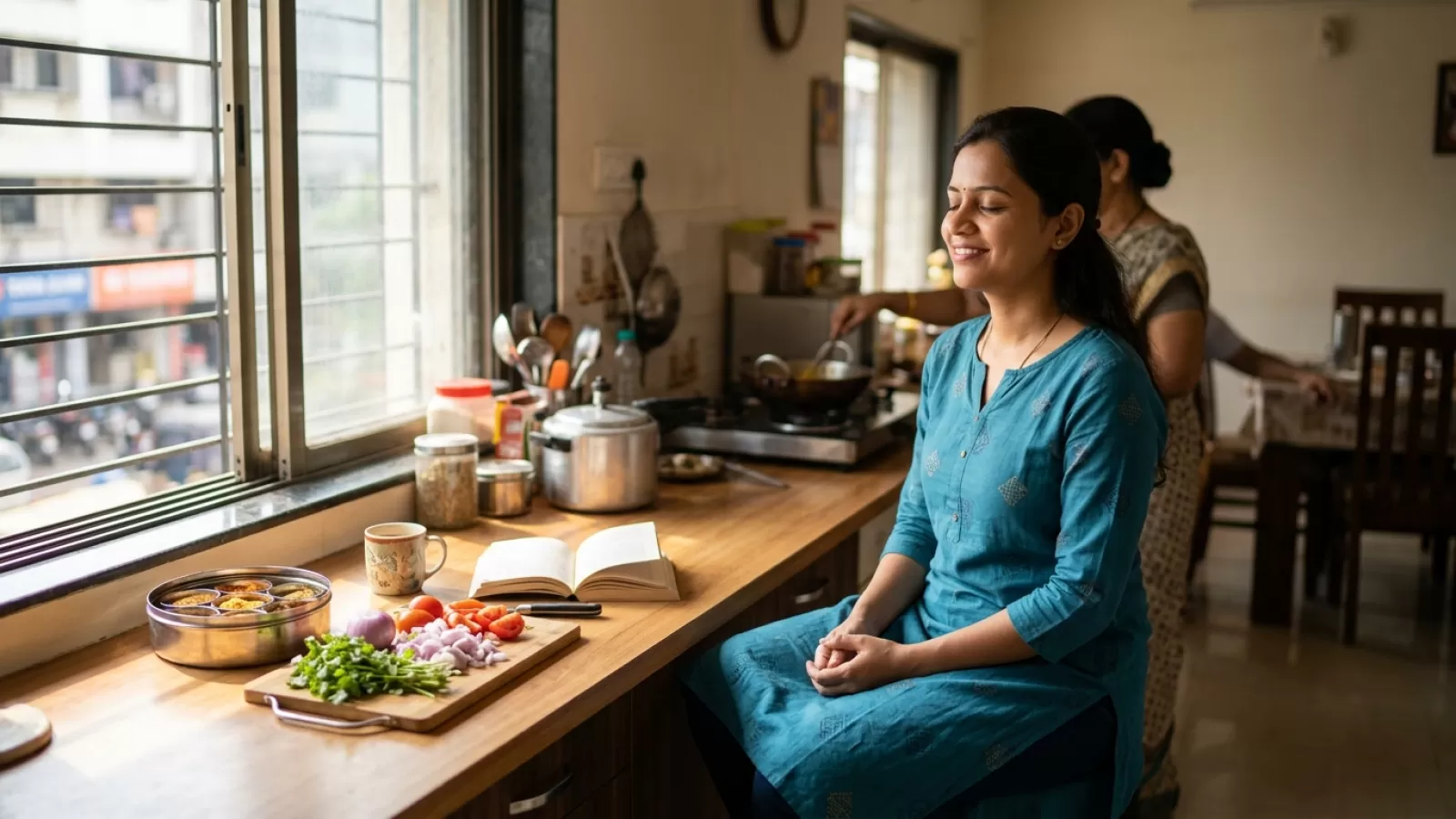
It’s 7:30 in the evening. The pressure cooker is hissing, TV news is blaring, a phone call is on speaker, and someone is hunting for their missing socks. Many Indian homes rarely go quiet, even for a minute. In such a space, the idea of maintaining inner calm in a busy Indian household can sound almost impossible—like asking for a monsoon shower in the middle of May. Still, some adults discover, often by accident, that calm is not about the world slowing down. It’s about finding a steady place inside yourself, even when the dabbas are clanging and someone is calling your name from the other room.
The tricky part is, this kind of calm doesn’t arrive just because you want it. It’s a skill, built up over time. For most people, this means learning how to pause, even while standing in the kitchen or sitting in a crowded living room. The outer world may stay noisy and unpredictable, but the ability to maintain personal steadiness in an Indian family can be quietly grown, right in the middle of the usual chaos.
Why Indian Homes Tend To Feel Loud and Always Active
In many households, activity starts before sunrise. Pressure cookers whistle, alarms buzz, and someone is already calling for tea. Evenings bring their own bustle—tuitions, video calls, TV serials, and the shuffle of slippers moving from room to room. Most Indian families, especially in joint setups, share spaces and routines. Privacy is rare, and silence is rarer.
Busy schedules are not just a city thing. Even in smaller towns, there’s always something happening—milk delivery, neighbours dropping in, sudden power cuts, or the simple fact that rooms are shared. The sense of always being “on” is a real part of daily life. Many adults find that the need to handle multiple roles—parent, worker, cook, driver—keeps the home in a constant state of background noise and motion. Quiet is usually accidental, not planned.
Why Finding Calm In Chaos Is So Difficult
There’s a popular idea that peace comes from having a peaceful environment. But in many Indian homes, the environment is rarely peaceful. The challenge is not just about noise, but about expectations. You’re expected to manage everything—work calls, homework, meals—without fuss. Even when you try to take a break, someone often needs you.
Experts in mental health often find that Indian adults rarely have dedicated personal time. Instead, moments of quiet are snatched between chores or during a quick cup of chai. The mental load—always thinking ahead about the next task—makes it harder to notice calm, even when there’s a brief pause. Over time, many people start to feel that their own calm depends on everyone else behaving, which is almost never the case in a busy household in India.
There’s also cultural pride in being able to handle it all. Many people feel guilty for wanting quiet, or worry it means they’re not strong enough. This can lead to a cycle where you wait for the house to change, instead of finding ways to build your own personal steadiness—even in the middle of a loud Indian home.
How To Know When You’re Losing Your Calm: Common Signs
- Short Fuse: Snapping at small things or feeling irritated by background noise that usually wouldn’t bother you.
- Physical Tension: Shoulders tight, jaw clenched, or an unsettled stomach during evening rush hour at home.
- Distraction: Struggling to focus on a simple task, like chopping vegetables, because your mind won’t settle.
- Restless Sleep: Tossing and turning at night as your mind replays the day’s chaos.
- Withdrawing: Wanting to hide in the bathroom or balcony just to get a minute alone, even if it means missing out on family time.
These signs usually show up quietly at first, then build up if nothing changes. They’re common in active, shared Indian homes.
Small Anchors That Help Build Inner Calm In A Busy Indian Household
- Morning Quiet—Even If It’s Just 10 Minutes: Many homemakers notice that days feel steadier when they wake up a little earlier, finding a pocket of peace before everyone else starts moving. Sipping chai by a window, or just sitting with the fan humming, can become an internal anchor for the day.
- Physical Anchoring: Some adults discover that simply feeling both feet on the floor, or holding a warm cup, helps them stay grounded. The trick is to notice these sensations even when the TV is loud or kids are running around.
- Breathing Patterns: Not formal meditation, but just a slow, steady breath—inhale for four counts, exhale for four counts—done while waiting for dal to boil or during a traffic jam. This small habit builds personal steadiness in an Indian family over time.
- Micro-pauses: Taking a pause before answering a question or picking up the phone. This doesn’t mean ignoring people, but giving yourself a tiny moment to notice your own state before reacting.
- Reframing Noise: Sometimes, just reminding yourself that household noise means life is happening around you—a sign of togetherness, not just chaos. This can soften the mind’s resistance to sound.
The key is not to seek silence, but to build these anchors so they’re available when you need them most.
Everyday Life: Where Inner Calm Shows Up, Even When It’s Noisy
A kitchen in Nagpur at 6am. The mixie is running, someone is boiling water for morning chai, and a child is reading loudly for school. In the middle of it, a working adult stands by the window, quietly sipping tea for just five minutes before diving into the day. The calm does not come from a silent house, but from the small ritual of tasting the tea, noticing the warmth, and letting the mind settle for a brief moment.
In many joint families, elders have quietly learned to tune out background chatter while peeling peas or folding laundry. Their faces look peaceful not because the house is calm, but because they have a mental anchor—watching the hands move, or humming a favourite bhajan. Many families in Indian cities have discovered, sometimes without realising it, that these private rituals are the backbone of calm in a busy household in India.
When Household Stress Calls For Extra Support
Most days, these small practices are enough. But if you find yourself feeling constantly overwhelmed, irritable, or unable to enjoy anything—even in your own home—it may help to talk to someone outside the family. Sometimes, a trusted friend or neighbour is enough. If the distress keeps building, or you notice changes in sleep, appetite, or mood lasting for weeks, reaching out to a mental health professional can be a gentle, useful step. Just like we don’t hesitate to ask for help with a broken mixer or a leaking tap, asking for support with emotional steadiness is also part of taking care of the household.
Common Questions
Most Indian households are full of movement and noise, so it’s natural to wonder if true inner calm is even possible here. The good news is, many adults have found practical ways to build steadiness without waiting for the world to quiet down. Let’s look at some common questions and see how these patterns play out in real homes.
How do Indian adults develop genuine inner calm that does not depend on the external environment being cooperative?
In many Indian homes, adults find that creating a small internal ritual—a certain way of breathing, a morning cup of chai alone, or taking two minutes to stand quietly on the balcony—can become a private anchor. Over time, these rituals build a habit of calm that doesn’t rely on everyone else being quiet or cooperative. The chaos may still be there, but the mind starts to recognise these small moments as safe spaces, helping the adult remain steady even during evening rush hour or weekend family gatherings.
What are the most effective strategies for maintaining personal steadiness in a household that is consistently active and loud?
Many adults in busy households find that pausing to notice physical sensations—like the feel of both feet on the floor or the warmth of a steel cup—helps more than trying to block out noise. Setting a regular time for a short walk, soft humming while doing chores, or even closing the eyes for a minute during a long commute can help. These tiny practices, repeated daily, tend to build personal steadiness in an Indian family without needing the house to become quiet.
Is inner calm in busy Indian households something that can be built or is it a natural temperament difference between people?
Some people may appear naturally calmer than others, but most adults who seem steady in a busy household in India have built that skill over time. It comes from small, repeated habits—like taking morning quiet time, slow breathing during stress, or reframing household noise. With practice, almost anyone can grow this capacity, even in homes that are rarely quiet. It’s less about temperament, more about regular, gentle practice.
How do you recover quickly when household noise or activity genuinely overwhelms your inner calm?
When the noise or rush becomes too much, many adults step into the balcony, the bathroom, or even just stand near a window for a minute. Focusing on a single sense—like the cool air, the feel of water on your hands, or the taste of a quick glass of dahi—can help reset the mind. Some also find that stepping away from screens or taking a few slow breaths while folding clothes helps them regain balance. The main thing is to give yourself permission to pause, even if only for a moment.
What is the most important daily practice for an Indian adult who wants to be reliably calmer regardless of what is happening at home?
Many people find that starting the day with a few minutes of quiet—before the rest of the household wakes—makes the biggest difference. This could be sipping chai, sitting silently, or even just listening to morning birds. That said, the most effective habit is the one you can repeat every day, no matter how small. Over time, this daily anchor becomes a reliable source of inner calm, no matter how busy or loud the Indian home may be.