On most evenings in a joint family household, the real quiet only settles in after the kitchen has been cleaned, the last chai glass rinsed, and the TV’s volume finally turned down. For many adults, the idea of a personal night routine inside a joint family in India can feel like a distant luxury—especially when every evening seems to run on someone else’s schedule. But a window does open, however briefly, once the household’s collective demands shift from urgent to background noise.
That window rarely appears at the perfect time. In plenty of Indian homes, the opportunity for a personal night routine comes much later than you’d like. Still, with a little observation and some gentle boundary-setting, it is possible to claim this time for yourself, even in the middle of the family’s late-night hum.
Why Evenings in Joint Families Rarely Belong to One Person
Evening routines inside joint families in India are shaped by shared spaces, overlapping responsibilities, and the unspoken rule that personal needs come second. In many homes, after-office hours are filled with dinner preparations, homework help, TV debates, and a general flurry of activity as everyone winds down together. The tricky part is, the idea of a fixed pre-sleep routine gets lost in this collective rhythm.
For most adults, ‘me time’ comes after everyone else's needs have been met. You might notice that your mother-in-law likes a final cup of dahi before bed, or that your nephew always needs help finding his schoolbook right at 10pm. Even after the main work is done, there’s the habit of rechecking the fridge, turning off switches, or just sitting together in the living room until someone finally says, “It’s late, let’s go to bed.”
It’s no wonder that night habits in a joint family household tend to start later than planned and are easily interrupted. That said, most families do fall into a consistent pattern where, after a certain point in the evening, the collective activity naturally slows down. Spotting this moment is your best bet for starting a personal night routine, even if it’s just for 20 or 30 minutes.
Why Personal Night Routines Get Pushed to the Sidelines
There are a few reasons why carving out a personal night routine joint family India style often feels like a challenge. First, there’s the expectation—sometimes spoken, sometimes just felt—that everyone participates in evening activities. Socialising after dinner, watching serials together, or catching up over chai is a big part of family bonding.
Shared bedrooms and bathrooms mean privacy comes at a premium, especially for adults who don’t have their own space. If you’re living with elders or children, your routine is often shaped around their needs. It’s common to hear, “Just five more minutes, help me with this,” right when you planned to wind down.
Sleep experts who work with Indian families often find that night habits in joint family households tend to be dictated by the eldest or youngest members, with adults quietly adjusting their own routines to fit around these timings. People end up waiting for the “right” moment to start their own wind-down, but in reality, that moment rarely arrives on its own.
Another reason is the unpredictable nature of Indian evenings: power cuts, late-night guests, someone suddenly deciding to mop the floor, or a cricket match running into extra overs. All these can throw even the best-laid plans off track. Over time, many adults begin to believe that a personal night routine is only possible for those with separate rooms or less family responsibility. But small, consistent shifts in habit are often more effective than waiting for perfect conditions.
Clues Your Night Routine Isn't Working for You
- You find yourself scrolling your phone in bed just for a sense of privacy. This is common when the only alone time comes after everyone else is asleep.
- You regularly feel irritable or restless during late evenings. This often happens when you haven't had a chance to decompress in your own way after family activities.
- Personal care—like oiling your hair, reading, or a quiet cup of milk—keeps getting skipped. In many homes, these small night habits are the first to go when evenings are busy.
- You’re always the last to leave the shared space, even when you’re tired. Sometimes it feels easier to stay involved than to step away and risk seeming rude.
- There’s no fixed signal that your evening routine inside joint family India has begun. The line between ‘family time’ and ‘me time’ is blurry, so your night blends into everyone else’s.
Practical Ways to Claim a Personal Night Routine in a Joint Family
- Identify the household’s natural slow-down point. In many families, this is when the kitchen is cleaned and everyone’s eaten. Use this as your signal to begin your own routine, even if others are still watching TV or chatting.
- Step back 20–30 minutes earlier than usual. The first few times, you might feel a bit guilty or sense family members expecting you to stay. Often, you’ll find the household manages just fine without you for this short period. Over time, this becomes an accepted pattern.
- Anchor your routine to a common family event. For example, once the last roti is made or the pressure cooker is off the stove, quietly transition to your own wind-down, such as a short face wash, light stretching, or reading. The routine doesn’t need to be elaborate.
- Choose low-key, portable habits. Pre-sleep habits in Indian joint families often work best when they don’t require solitude or a special setup. Listening to calming music with headphones, oiling your hair, or writing a short gratitude note can be done in a shared space.
- Communicate gently, but let actions speak louder. Rather than announcing, “I need personal time now,” try quietly slipping out or saying, “I’ll finish this and then go rest.” Over time, your regular pattern becomes accepted and respected by others.
- Embrace tiny, non-negotiable rituals. Even five minutes of quiet chai, a brief chat with a spouse, or a single page of a book can signal to your brain that the evening is now yours.
Many families in Indian cities have quietly discovered that these small changes often go unnoticed at first, but soon become part of the household rhythm.
Everyday Patterns: How Night Routines Actually Fit In
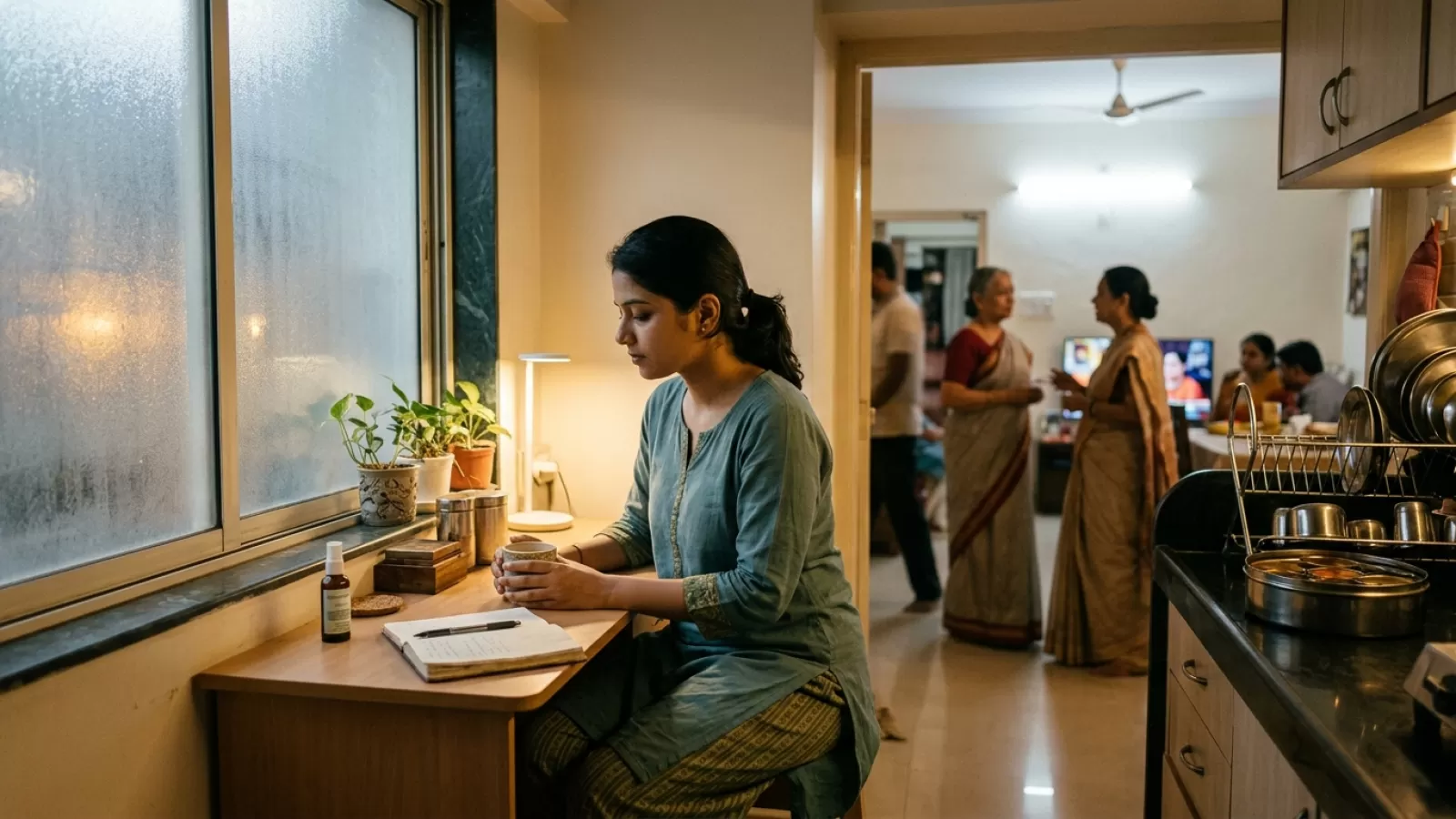
A kitchen in Nagpur at 6am still smells faintly of last night’s tadka. The steel plates are stacked, the gas knob checked twice. In this home, the personal night routine joint family India style doesn’t look like a long meditation session or a luxurious skincare regimen. Instead, it’s the moment after the last dinner plate is washed and the kitchen towel is draped over the tap. Someone quietly steps away, washes their face, changes into a night kurta, and sits on the balcony with a mug of warm milk—even if cousins are still laughing in the hall.
Across the city, a working professional commuting in Bengaluru might find their personal routine begins only once their child is asleep and the TV is finally switched off. Maybe it’s just 15 minutes of gentle stretching beside the bed, or writing down tomorrow’s to-dos. In many homes, the signal for personal time is not a grand gesture, but the simple act of doing something quietly and consistently, night after night.
When You Might Need Extra Support for Your Night Routine
If you often feel your evenings are leaving you anxious, exhausted, or you’re unable to get any personal time for weeks at a stretch, it may help to gently raise the topic with a trusted family member. Sometimes, a quiet word with a sibling or spouse is enough to signal your need for a small shift in routine. If ongoing stress or sleep issues persist, consider checking in with a doctor or counselor for more support.
Common Questions
Many Indian families are quietly figuring out how to fit personal time into shared evening routines. You may find that what works for one household feels impossible in another, and that’s completely normal. Let’s look at some common questions about making a personal night routine work inside a busy joint family.
How do Indian adults create a genuine pre-sleep personal routine within a joint family where someone always needs something in the evening?
In most joint families, adults work around the household’s collective activity by spotting the point in the evening when things naturally slow down—often after dinner and kitchen cleanup. Many quietly slip away 20–30 minutes before everyone else finishes up, using that window for simple personal habits like washing up, applying oil, or reading. Small, portable routines—like listening to calming music or journaling—can be done in a shared room, and over time, these patterns become accepted by the family as your own way of winding down.
What is the most effective way to communicate to a joint family that late evening is personal time without causing offence?
Direct announcements can sometimes feel abrupt in Indian homes. Instead, many find it works better to create a regular pattern: quietly moving to your room or balcony at the same time each night, or saying something gentle like, “I’ll just freshen up and rest now.” Over several days, this pattern becomes familiar and respected. If needed, share with a family member that you feel better when you get a few minutes to yourself at night; most families are understanding if you approach it softly and consistently.
Which night routine practices work inside a joint family context without requiring solitude or a separate space?
Night habits joint family household style often include gentle stretching on the bed, applying coconut oil to your hair, sipping warm milk, or quietly listening to music with headphones. Reading a book or writing a gratitude note works even if others are nearby. The main thing is keeping the ritual simple, portable, and not reliant on total privacy. Over time, these small acts signal to your body and mind that it’s time to rest, even in a busy home.
How do you establish a night routine in a joint family when the household actively socialises until late in the evening?
When evening routine inside joint family India stretches late due to socialising, look for moments when group energy dips—like after the last round of chai or when most people start yawning. Use this as your cue to begin winding down, even if a few are still chatting. Communicate your routine gently, and if possible, invite others to join in a quiet activity like sharing a bedtime drink. Consistency is key; even if your window is short, using it regularly helps others recognise and respect your need for personal time.
What is the minimum effective personal night routine for joint family members who have very limited evening personal time?
Even five to ten minutes can make a difference. Many in Indian joint families start with something as simple as washing their face, changing into nightwear, and sitting quietly—whether on a balcony, by a window, or even on the bed. Listening to a soothing bhajan, writing down what went well that day, or enjoying a small bowl of makhana can be enough. The most effective routines are short, consistent, and signal to your brain that the day is ending, even if your surroundings stay lively.