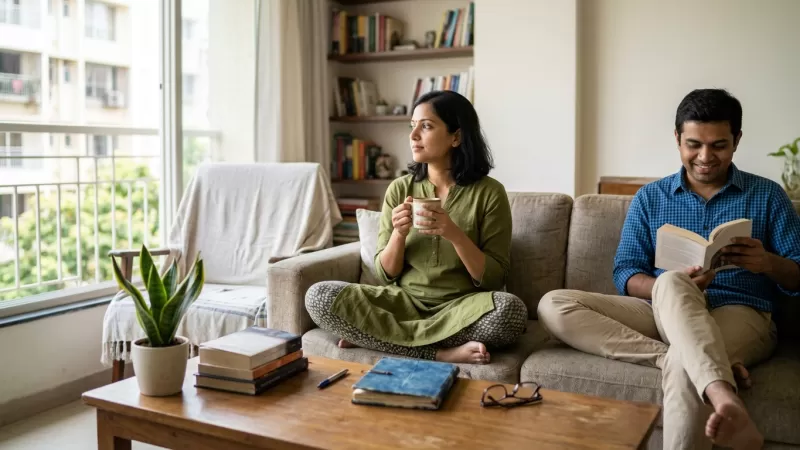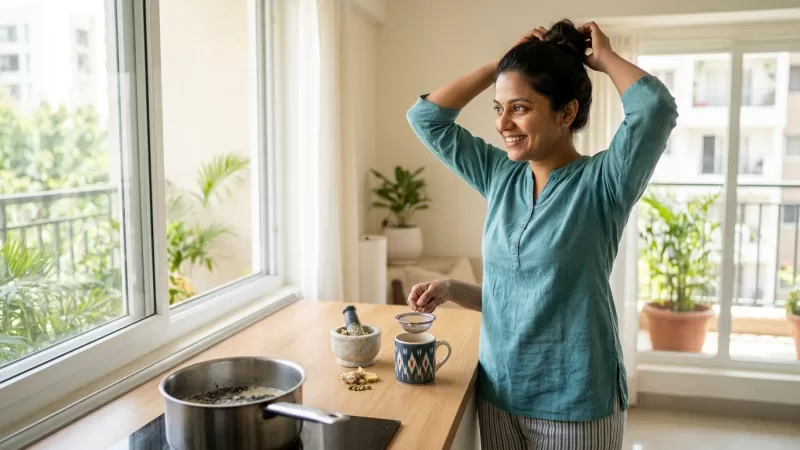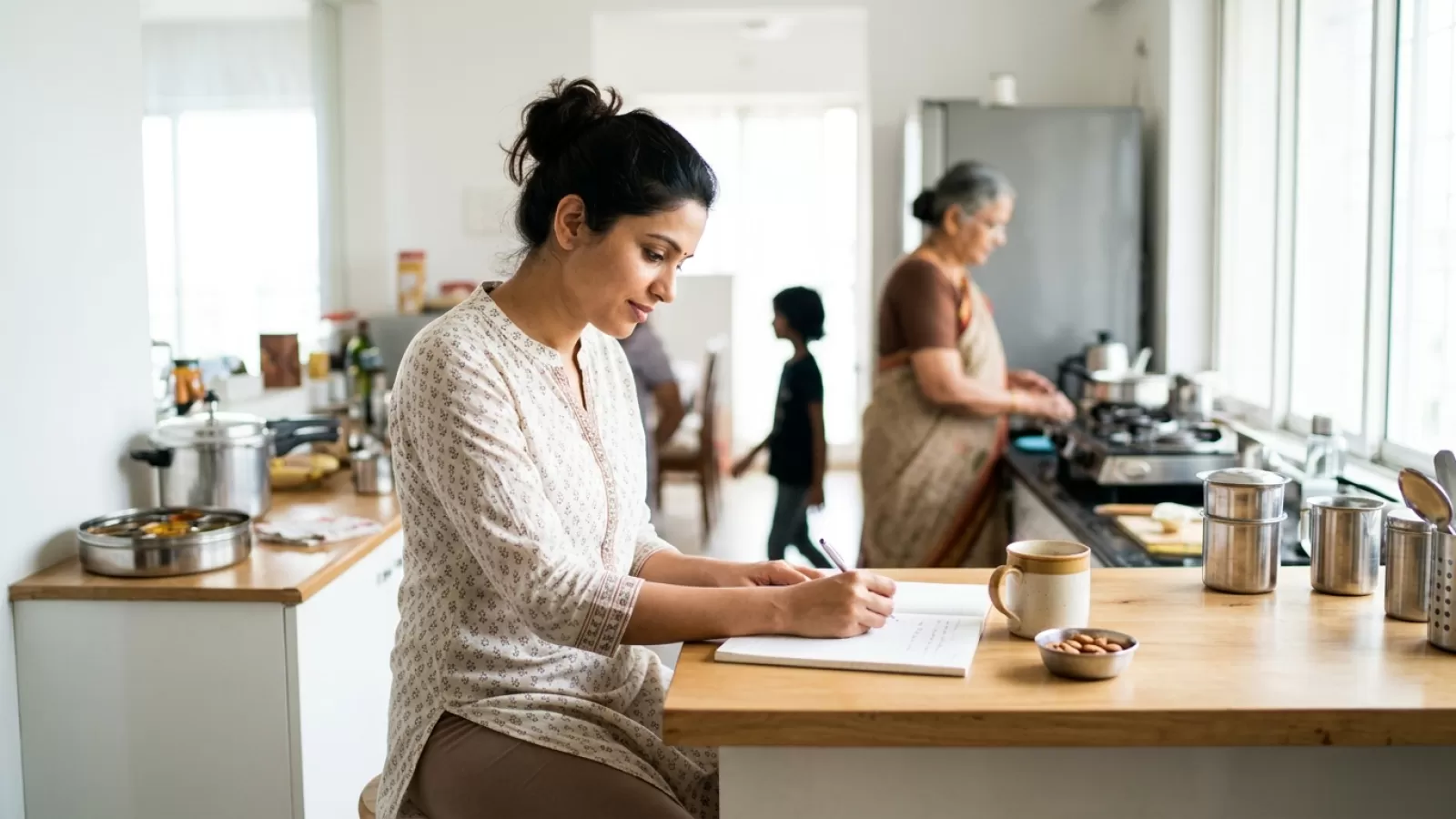
In many Indian joint families, the morning hum begins before sunrise. Pressure cookers whistle, news channels murmur in the background, and someone is already making the first round of chai. If you’re trying to build a personal morning routine joint family India style, you soon realise it’s not about shutting out the world but about spotting those little gaps that appear before the household’s collective energy takes over.
That said, finding a personal morning routine inside joint family life is rarely about waking up at 4am or demanding quiet. It’s often about noticing that, say, after the last person finishes in the bathroom and before the dahi is set out for breakfast, there’s a 15-minute window nobody touches. In many homes, these pockets are hidden in plain sight, quietly waiting for someone to claim them.
The Rhythm of a Joint Family Morning
Life inside a joint family household tends to move like clockwork, especially in the mornings. There’s a set order to who gets the bathroom first, who starts the gas, and who rolls out the rotis. Some mornings are smooth, but often, there’s a race to get children ready for school, elders settled with their tea, and tiffins packed for office-goers. Shared spaces mean everyone is negotiating for their turn, and personal space can feel like a luxury.
This is why creating morning structure joint family India style looks different from what you might see in smaller families or in movies. The pace is set by the whole house, not just one person’s alarm clock. In these homes, most adults learn to weave their personal habits into the collective routine. It’s not always about having a full hour for yoga or meditation — sometimes, it’s just about having your own cup of tea by the balcony, or reading the day’s headlines in peace before the rush begins.
Why Most Joint Family Mornings Feel So Shared
There are a few reasons why a personal morning routine inside joint family life can feel challenging. First, in many Indian homes, mornings are designed for collective functioning — breakfast is a group affair, chores get divided on the fly, and even the smallest tasks, like turning on the water pump, become everyone’s business. Privacy, especially in shared flats or ancestral homes, is rare.
Family rhythms also tend to be inherited. If the house wakes at 6am, it’s tough to be the only one sleeping in or doing something that appears unusual — like stretching quietly in a corner or journalling at the dining table. Many adults feel a push to ‘help out’ or just be present, especially when elders value togetherness over personal rituals.
Work-from-home setups have made this even trickier. The moment you step out of your bedroom, you might be roped into helping with breakfast or answering a quick question about the inverter. Nutritionists working with Indian families often find that the first meal of the day is usually decided by whoever is cooking in the kitchen, not by personal preference. So carving out a personal morning routine inside joint family can feel like swimming upstream — unless you find those tiny, unclaimed moments.
Everyday Signs Your Morning Routine Has Been Claimed By The Household
- You never finish a cup of chai without interruption. In many homes, someone always pops in to ask about milk, news, or the day’s schedule.
- Your first thoughts are about the family’s needs, not your own. The morning starts with a mental checklist of everyone else’s to-dos.
- Bathroom time feels like a race. If you’re watching the clock or hurrying because someone is knocking, personal morning habits joint family household style often get dropped.
- You skip small personal rituals. Whether it’s a few minutes at the window or making your own poha just the way you like, these habits tend to disappear on busy days.
- The start of your work or chores is chaotic. If you find yourself jumping straight from household demands to work calls, your personal morning structure has probably been absorbed by the family’s routine.
Practical Ways to Carve Out a Personal Morning Routine
- Spot the unclaimed pocket. In most joint family homes, there’s a small window that nobody notices — 10 minutes after the first round of bathroom runs, or while the pressure cooker does its job. Try to quietly hold onto this pocket. It doesn’t have to be long; even 15 minutes is enough to anchor a morning routine inside joint family life.
- Pick a single non-negotiable habit. Many working professionals in joint families quietly commit to just one thing — a glass of warm water, or five minutes of silence at a window, or writing down three thoughts in a diary. This one practice, even if brief, creates a sense of personal space amidst the morning rush.
- Use shared moments for personal habits. If everyone sits together for chai, let that be your grounding ritual. Or if you walk to the gate with your children, use those few minutes for deep breaths or quiet reflection. Creating morning structure joint family India style doesn’t always mean being alone — sometimes, it’s about finding yourself within the group.
- Communicate gently, not defensively. If you need five minutes for yourself, say it warmly: “I’ll join in a bit — just finishing my tea.” Most families, especially if you’re consistent and kind, slowly come to respect these boundaries, even if they don’t always understand them.
- Keep your routine flexible. The tricky part is, not every day will allow for the same routine. On days when the power goes out or guests arrive, it’s okay to adapt. The habit is less about the specific activity and more about regularly making a small space for yourself — whatever the day brings.
How These Small Routines Blend Into Everyday Family Life
In a three-bedroom flat in Pune, the only truly quiet time is the 15 minutes after the last child leaves for school and before the maid arrives. A grandmother uses these minutes to sit by the window with her knitting, not speaking, just watching the morning traffic. In a Kolkata home, the working adults take turns packing tiffins — but one of them always manages to sneak in two minutes to water the tulsi plant, a habit that’s as much about grounding as it is about the plant’s health.
Many families in Indian cities have quietly discovered that a personal morning routine joint family India style doesn’t have to look dramatic. It’s the small things that matter — the first sip of chai before the TV goes on, the quick walk to the corner shop, or the brief moment of stillness in the balcony before breakfast. These moments are rarely announced, but when protected, they become part of the unspoken rhythm of the house.
When Personal Morning Needs Really Need Support
If you find yourself feeling constantly overwhelmed, irritable, or physically unwell because there’s no personal space at all, it might be time to ask for support from your family. Sometimes, a gentle conversation about needing just ten minutes can make a difference. If the feeling grows heavier or starts affecting your health, it could help to speak to a doctor or a counsellor who understands the realities of joint family life.
Common Questions
Many adults in joint families wonder if carving out a personal morning routine is even possible. The good news is that it often is — and it usually happens in small, practical ways that fit real Indian household rhythms. Here are some thoughtful answers to the most common questions about creating morning structure joint family India style.
How do Indian adults who live in joint families find and protect any personal morning routine time?
Most adults in joint families discover their personal morning routine during those overlooked minutes between big household events. For example, the ten minutes after the bathroom is free but before breakfast duties begin, or while waiting for the kettle to boil. Protecting this time usually means quietly excusing yourself and making it a habit. Over time, even busy families start to recognise and respect these small rituals, especially when you keep them consistent and don’t demand too much from others.
What personal morning practices are realistic within the constraints of a joint family household with many members and shared spaces?
Realistic morning habits joint family household style tend to be short and easily slotted into shared schedules. Drinking a glass of water first thing, a silent prayer, watching the sunrise from the balcony, or even just sitting quietly with your thoughts for a few minutes. Some adults keep a diary at the dining table or do a few stretches wherever there’s room. The key is to pick habits that can blend in without needing a closed door or total silence.
Is it reasonable to have personal morning needs in an Indian joint family where collective functioning begins immediately?
It is entirely reasonable. Many people in joint families have small personal needs — a moment to themselves, a certain breakfast, or even a few quiet breaths before the day begins. Indian homes have always balanced individual and collective rhythms. You’re not being selfish by needing a small pocket of time for yourself. Often, this makes you more present and patient with the rest of the family, too.
How do you communicate to a joint family that you need a small amount of personal morning time without it being interpreted as anti-social?
In many families, it helps to share your need gently and without drama. For example, “I feel better when I have five minutes to myself before breakfast.” If you keep it consistent and don’t use the time to avoid collective duties entirely, most family members adjust over time. Sometimes, pairing your routine with a group activity — like joining breakfast after your quiet moment — can help others see you’re not withdrawing, just recharging.
What single morning habit is most worth protecting for personal wellbeing within a joint family household?
For most adults, the one habit that makes a difference is having a few uninterrupted minutes for themselves — whether that’s enjoying chai quietly, stretching by the window, or just sitting in silence. This small act signals to your mind that you matter, too, even on the busiest mornings. Protecting even five minutes can help you feel more centred as the day unfolds, no matter what the household demands.