Some mornings, the line between home and office blurs before you even open your eyes. These days, in many Indian homes, the first sound is not a rooster or pressure cooker whistle—it’s the ping of a WhatsApp group or work email. For many WFH adults, a proper WFH morning routine separation in India can feel almost impossible; within minutes, you’re reading office updates before you’ve even sipped chai or greeted anyone at home.
It’s a quiet shift that’s happened in countless households. The workday seeps in before the taste of dahi or the comfort of stretching in your own space. Without a buffer, there’s hardly any personal time before work for WFH adults in India—making the day feel longer, heavier, and oddly less productive.
Why Indian Homes Often Start Work Before Breakfast
The habit of blending personal mornings with work isn’t just about convenience. In many Indian homes, space is shared—sometimes the dining table becomes an office, and family members tiptoe around meetings. There’s no commute to mark the start of the workday, so the first vibration or notification acts as a signal to begin. Often, a WFH professional in a Bengaluru flat will start answering emails before brushing teeth, simply because the laptop is right there and the urge to “just check” is strong.
This pattern is reinforced by expectations too. Many companies in India expect near-instant replies, even if the clock shows 8:30am and breakfast is still on the stove. For women managing both household and office tasks, mornings can feel like a race—flipping rotis with one hand, typing with the other. Work from home morning habits in India tend to get tangled with family rhythms, especially when elders, children, and partners also need attention before 9am. The result is that personal time fades without anyone noticing.
How Notifications and Shared Spaces Disrupt Morning Boundaries
Several things make it difficult to build strong WFH morning routine separation in India. First, notifications have a way of making everything feel urgent—even the smallest work message can trigger a chain reaction of tasks. In joint families, the pressure to be available (both for household needs and office requests) means mornings often become a blur of chores and emails.
Many homes in India are not set up for true work-life separation. The dining table might double as a desk, or work calls might happen with the sounds of sambar sizzling in the background. When living spaces are shared, it’s easy to start the workday before you even realise it. Productivity experts who observe Indian families often find that most adults struggle to carve out clear boundaries, especially when extended family is around or when tech devices are always within arm’s reach.
Then there’s the cultural expectation—not to complain, not to say no. It’s common to feel that you must be available for both work and home at all hours, especially if the boss or client is in a different time zone. The tricky part is, this expectation seeps into the morning, making it difficult to claim any personal quiet before work begins.
Clues Your Mornings Are Missing Real Personal Time
- You check work messages before getting out of bed.
Many WFH adults in India reach for their phones first thing. That single message can pull you into work mode before your feet touch the floor. - Breakfast happens at your laptop—if it happens at all.
It’s not unusual to find plates of poha or slices of bread beside the keyboard. Sometimes, you realise at 11am you haven’t eaten yet. - Showering, prayer, or any ritual feels like a luxury.
Activities like lighting a diya, enjoying chai on the balcony, or even a quick stretch often get skipped. There’s a constant sense of running late for something. - Family conversations are cut short or distracted.
Maybe your child is telling you about a school project, but you’re only half-listening as you type a reply. The personal moment slips past. - You feel mentally tired by noon—even on days without meetings.
Without a real personal morning, the workday feels longer and more draining than it should.
Simple Ways To Protect Personal Mornings Before Work
- Decide on a “no work before” time.
Pick a time when you will not check work emails or open your laptop—perhaps 8:30am or after breakfast. Let your team know if needed. The discipline to keep this boundary, even on busy days, often pays off in energy and focus. - Start with a small, enjoyable ritual.
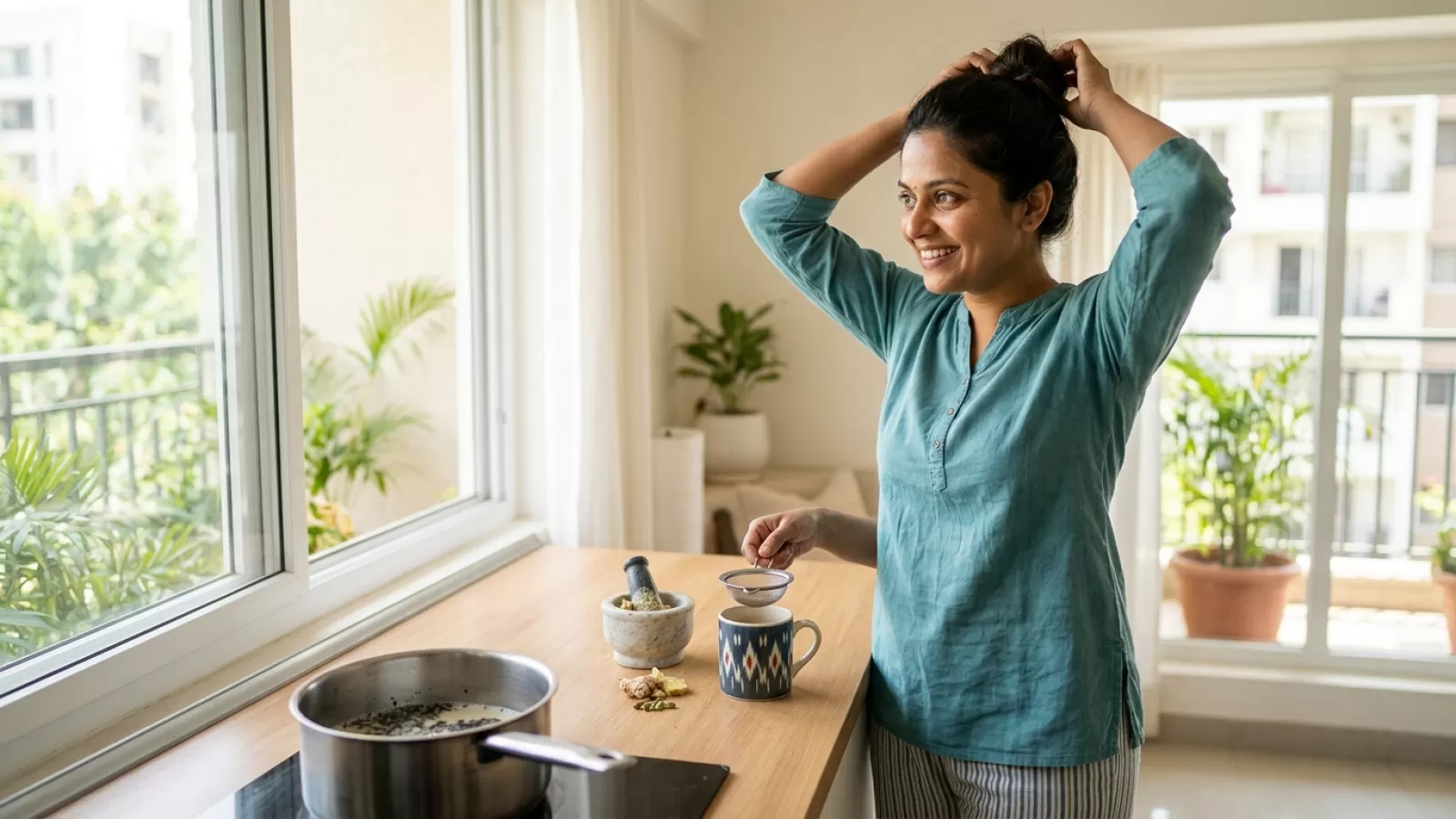
Some WFH adults in India light an agarbatti, make chai, or spend 10 minutes reading the newspaper. It doesn’t have to be an hour-long yoga session—even a five-minute pause is enough to mark the start of your own day. - Eat breakfast away from the screen.
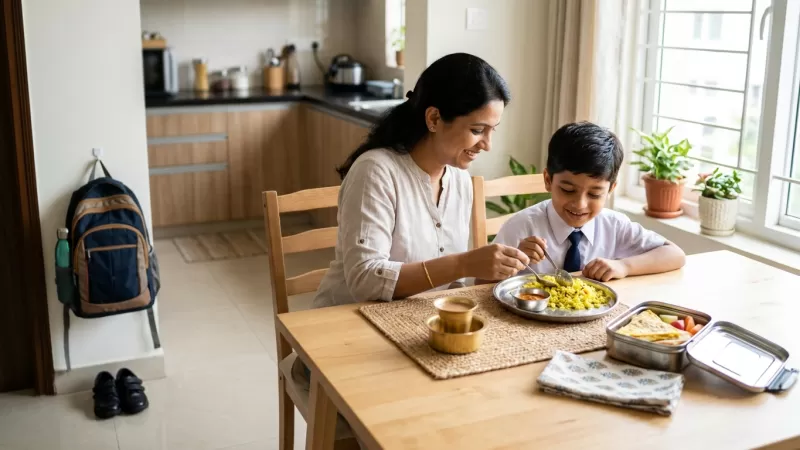
Try to have your poha, idli, or paratha at the dining table, even if the laptop is nearby. This small act can help restore a sense of personal time before work tasks begin. - Prepare your workspace after your personal routine.
Some find it helpful to set up their WFH spot only after finishing their morning routine. Putting away the laptop at night and physically setting it up after breakfast can help signal the shift from home to work. - Use household rhythms as anchors.
In many Indian homes, the sound of the cooker’s first whistle or the routine of packing tiffins can act as natural cues. Treat these as your personal morning zone, and don’t let work cross into this time.
It’s not about strict schedules—just gentle, repeatable habits that protect a little space for yourself.
Everyday Indian Routines: Where WFH Boundaries Get Blurred
In flats across Gurugram, Hyderabad, or Kolkata, mornings start early. Someone’s making chai, someone else is packing lunch, and notifications begin to buzz before the sun is fully up. In many homes, the only time that feels truly personal is those first few minutes—maybe while rinsing dahi for breakfast or watering the tulsi. But as soon as the laptop lights up, the home transforms. Suddenly, the kitchen is a conference room, and family members are background noise on a call.
Some families have quietly discovered that building a WFH morning routine separation in India doesn’t mean adding more tasks. It’s about guarding what already exists—protecting that small window before work seeps in. For some, it means sitting with parents for chai. For others, a short walk on the terrace before replying to emails. The change is subtle, but the feeling of owning those first minutes makes the rest of the day feel a little more manageable.
When It’s Time To Seek Support For Morning Boundaries
If you find that even after trying simple changes, your work is taking over every part of your morning—or if you’re feeling persistently anxious, exhausted, or unable to focus—it may be time to talk to someone. This could be a manager about expectations, or a family member about sharing household tasks. If you notice ongoing stress or changes to your sleep, appetite, or mood, it’s a good idea to check in with a doctor or counsellor to rule out other concerns.
Common Questions
Many Indian families are still figuring out how to keep home and work apart when everything happens under one roof. You’re not alone if mornings feel rushed or blurred. Here are some warm, practical answers to the most common questions about WFH morning routine separation in India.
How do Indian WFH adults create a genuine personal morning before the workday begins when the office is in the same space as home?
One way is to treat the first 20–40 minutes after waking as non-negotiable personal time, even if that means closing the bedroom door or stepping onto the balcony with chai. In a typical Mumbai flat, this might look like listening to devotional music while preparing breakfast or chatting with a family member before opening work chats. The point is to create a buffer—a stretch of time when work simply isn’t allowed to intrude, no matter how close the laptop is.
What specific habits create the strongest psychological boundary between personal morning time and the start of WFH work?
Changing clothes after your personal routine, setting up your work desk only after breakfast, or physically moving to a dedicated corner for work are habits that help. In many Indian homes, lighting a diya or even a simple act like combing hair and sitting down at the same chair every morning can signal to your mind that personal time is over and work is about to begin. The consistency of the cue is what matters most.
Is it worth the discipline of not checking work messages before a specific time for Indian WFH adults and what difference does it make?
Usually, yes. Many WFH adults in India who set a strict “no work before X time” rule notice that they feel less anxious and more present with family. For instance, in a Chennai household, waiting to check work emails until after breakfast means you start work in a calmer state—and can focus better, instead of feeling you’ve been working since dawn. The difference is a workday that feels less rushed and more manageable.
How do you build a WFH morning routine that provides enough personal time to feel ready for work without making the workday start too late?
The trick is to keep the personal morning routine simple and realistic. In a Pune home, this might mean 20 minutes for stretching, breakfast, and a quick prayer before work. Setting a phone alarm for both “stop personal time” and “start work” can help. If you have children or elders to care for, include them in your morning zone—share chai, read the news, or just chat. You don’t need an elaborate schedule, just a gentle pause before work begins.
What is the single most effective morning habit for Indian WFH adults who want to feel less like they are always at work?
Changing out of sleepwear and into fresh clothes before you start working—even if it’s just a kurta or T-shirt—signals to your mind and body that home time and work time are separate. In many Indian homes, this small act, paired with a cup of chai or breakfast away from the laptop, creates a tangible boundary that lasts all day. It’s simple, but it works.