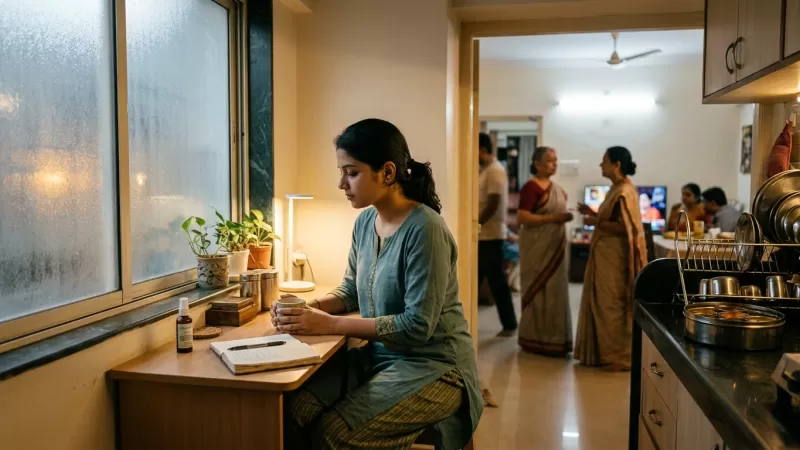
In many Indian homes, the day begins before sunrise and rarely winds down before midnight. The shift from one household task to another—making chai, packing tiffins, sorting laundry, remembering who likes their sabzi less spicy—happens almost by instinct. Household balance tips Indian homemakers often look for are not about reducing work, but about learning how to name and manage the invisible responsibilities that pile up quietly, without ever being formally given.
These patterns settle in over years. The expectation to run a smooth home, keep everyone fed and content, and remember the tiny details (where the spare keys are, if the dahi is set, whether the geyser is off) becomes second nature. But, somewhere between the 6am alarm and the 10pm kitchen clean-up, the risk is losing that small inner space that feels like yours. That’s where real household balance tips Indian homemakers can use begin: noticing, naming, and gently reclaiming what gets lost in the daily shuffle.
The Invisible Weight of Managing Everything at Home
Household duties in Indian homes rarely come with a formal job description. Over time, many women find themselves handling not just the visible chores—cooking, cleaning, laundry—but also the mental load: tracking everyone’s schedules, remembering family birthdays, managing grocery lists, and keeping an eye on household expenses. These responsibilities don’t always get talked about. They just accumulate, one after another, until the day feels stretched thin.
This invisible work is especially common in joint families, where the number of people—and preferences—can double or triple. Even in nuclear families, the expectation that the homemaker will automatically know who likes their dal with more tadka, or which child needs a costume for school tomorrow, tends to fall silently on the same shoulders. Sometimes, the only break comes late at night, after everyone else is asleep. No one asks how the homemaker is feeling; the only measure of success is whether the house runs smoothly.
That said, Indian homemaker self care usually gets pushed to the end of the list, if it appears at all. The busy routines, constant background noise, and the pressure to never complain can leave even the most energetic homemaker feeling drained by evening. Many women quietly wonder if this is just part of being a good wife, daughter-in-law, or mother in India.
How Indian Homes Fall Into This Pattern
The tricky part is, these invisible roles often start small. Maybe you were the one who remembered to soak the chana for Sunday chole, or you handled the school forms because you had neat handwriting. Over time, these small tasks become yours by default, never officially assigned but never questioned either. The expectation grows quietly.
Family traditions and cultural norms play a big role. In many Indian homes, the homemaker is seen as the one who remembers everything. Even working professionals, after a full office day and a long commute, often come home to questions about dinner, uniforms, and forgotten bills. Domestic balance India women seek is sometimes challenged by these deeply set cultural habits, where asking for help feels like a weakness or a failure.
Here is the catch: The more you do, the more you are expected to handle. Fitness coaches who train working adults often find that most movement in Indian homes comes from daily tasks, not planned exercise. This constant background activity—sweeping, chopping, running after children—can be physically tiring, but it’s the mental load that wears you out. The line between your own needs and everyone else’s starts to blur, and it’s easy to lose track of where you end and the household begins.
Social media has created new pressures, too. Clean homes, perfect rotis, happy children, and always-smiling homemakers are everywhere online. In reality, most Indian homemakers are juggling household balance tips, self care, and family demands with far less support than it appears.
Everyday Signs That Your Balance Is Off
- Feeling exhausted but unable to rest: Even on days when you finish your work early, you feel a sense of guilt for sitting down or taking a nap. There’s always something left to do.
- Constantly thinking ahead: You’re physically present with your family, but your mind is already on tomorrow’s breakfast, the grocery list, or the next school event.
- Losing interest in old hobbies: Activities you once enjoyed—reading, music, chatting with friends—now feel like a luxury you can’t afford.
- Short temper and frequent frustration: Even small requests from family members can feel overwhelming, and you find yourself snapping more often.
- Resentment or feeling invisible: You notice that your efforts are rarely acknowledged, or you feel taken for granted. This can quietly build up over weeks or months.
These signs are more common than most people admit. Many homemakers brush them aside, thinking this is just part of a busy Indian household. But, over time, they often become a steady background hum that’s hard to shake off.
Practical Ways to Reclaim a Sense of Self at Home
- Write down what you do: Spend one day listing every single task—big or small—that you handle. Include things like checking the water tank, reminding someone to take their medicine, or wiping the dining table after dinner. Naming these invisible duties is the first step towards domestic balance India women can actually see.
- Find small private rituals: Many homemaker wellbeing tips India begin with tiny routines—ten minutes with your chai in the balcony, a song while folding laundry, or a quiet walk after dinner. These moments do not solve everything, but they carve out a small space that feels yours.
- Make your preferences visible: If you like a certain type of music, or want dahi with your lunch, allow yourself to voice it. It’s a gentle way to remind everyone that you have needs too.
- Accept imperfect days: Some days will be messy. The dal may get overcooked, the power may go off mid-ironing, or the children may fight all evening. Allowing yourself to accept this without self-blame is a form of self care.
- Use household routines as touchpoints, not chains: Many families in Indian cities have quietly discovered that fixing a weekly menu or doing laundry on specific days can reduce decision fatigue. But if a routine stops working, it’s okay to change it.
None of these household balance tips Indian homemakers try are about magic solutions. They are small, steady ways to notice where your energy goes and gently pull a little back for yourself.
When the Daily Grind Feels Overwhelming
After a long day, many homemakers in India find themselves finishing up in the kitchen close to 9pm. Even as the last plate is washed and the gas is turned off, someone calls out, “What’s for breakfast tomorrow?” This moment—that feeling of being needed before you’ve even had a chance to sit—captures the quiet exhaustion that builds up over years.
These patterns show up in all kinds of families. In busy cities like Mumbai or Bengaluru, working women often come home to a second shift of household work. In smaller towns, homemakers juggle guests, extended family, and the unpredictable rhythm of power cuts or water shortages. The small pauses—a cup of chai after everyone leaves for school, or a quick chat with a neighbour over the balcony—become lifelines. Indian homemaker self care is rarely dramatic; it’s usually found in these quiet, everyday moments.
For many, the only time that feels genuinely their own is after midnight, once the house has finally settled. The television is off, the kitchen is clean, and the phone stops ringing. Some women use this time to watch a favourite show, read, or simply sit in silence. It isn’t perfect, but it’s real.
When Household Fatigue Needs More Than Rest
There are times when tiredness moves beyond normal end-of-day fatigue. If you find that you’re waking up already exhausted, losing interest in everything, or unable to find joy in anything, it may be time to speak with someone you trust—a close friend, a family member, or even a doctor. Sometimes, household balance tips Indian homemakers use are not enough, especially if the load has been heavy for years.
No one should have to carry everything alone. Asking for help is not a sign of weakness, but a sign that you are human and deserve support, too.
Common Questions
Many homemakers across India have similar worries when it comes to finding household balance. These questions come up in quiet conversations with friends, in WhatsApp groups, or even in those rare moments of self-reflection after a long day. Let’s look at some practical answers rooted in the rhythms of real Indian homes.
How do Indian homemakers protect even a small amount of time that is genuinely their own?
Protecting time for yourself usually means finding small pockets in the day. For some, it’s fifteen minutes with morning chai before anyone else is up. Others use the post-lunch lull, when the house is quiet, to listen to music or read. In one Delhi household, a homemaker started closing the kitchen door for ten minutes after dinner—no questions, no interruptions. It’s rarely about having hours free; it’s about defending these small rituals without guilt. Even if it feels like a trickle, these minutes add up.
Is it culturally realistic for Indian homemakers to ask family members to share domestic responsibilities?
In many Indian homes, asking for help can feel uncomfortable and sometimes meets resistance. But habits are shifting. Some families now assign small, regular tasks to everyone—like one child setting the table and another folding clothes. Often, success comes not from one big conversation, but from quietly involving others in daily chores, so sharing work becomes normal. It may take time, but even small shifts—like asking someone to fetch groceries or make evening tea—can slowly change the rhythm of the house.
How do you maintain a sense of personal identity when the household role takes over completely?
Maintaining identity starts with naming what you enjoy beyond household work. Many homemakers keep up with a favourite serial, follow a passion for gardening, or write in a diary after the children sleep. In an Indore home, one woman makes sure to video call her childhood friends every Sunday—no matter how busy the week. These small acts of self care remind you that you are more than the tasks you do. It’s not always easy, but these moments bring a sense of self back into the day.
What does a sustainable daily rhythm look like for a full-time Indian homemaker managing a large household?
A sustainable rhythm often blends routine with flexibility. Many homemakers swear by a weekly menu, a fixed time for laundry, and small afternoon breaks—even if it’s just sitting with dahi and poha. In a joint family in Gujarat, the day starts early, but the homemaker builds in a break after lunch when the elders nap and children are at school. The key is to allow some breathing room instead of packing every minute. Accept that not every day will go according to plan, and that’s okay.
When does household fatigue in Indian homemakers become something that needs more attention than a day off?
If tiredness lingers for weeks, sleep doesn’t help, and you start feeling hopeless or disconnected from your family, it may be time to talk to someone you trust or a doctor. In Chennai, a homemaker noticed she was crying often and unable to enjoy even festivals with her family. After speaking to her sister, she realized this was more than just tiredness. When daily life feels unmanageable, reaching out for help is a wise, caring step—not a failure.