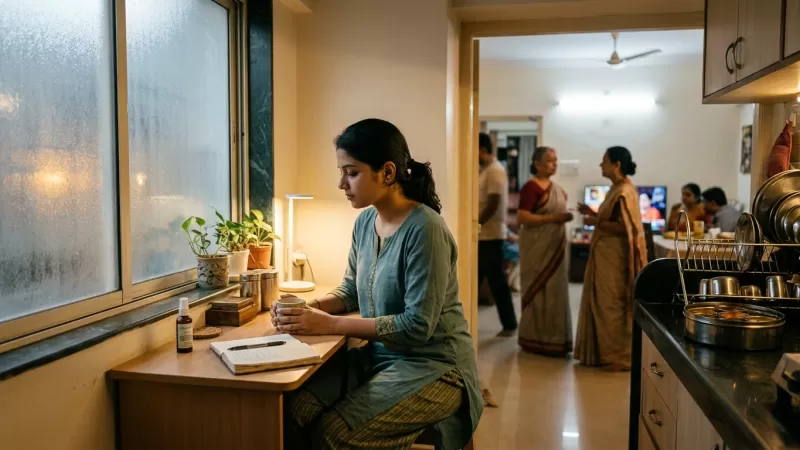
Some mornings in Indian homes, you wake up, switch off the fan, and sit on the edge of the bed, feeling blank. The urge to do anything—make chai, prep lunch, even scroll your phone—just isn’t there. It’s not sadness or illness. It’s just that the usual motivation engine that carries you through dal, sabzi, work calls, and traffic jams is missing. On these days, to keep going zero motivation days India feels like trying to start a scooter with an empty tank.
There’s nothing broken. No big reason. No dramatic event. Just a stretch where every action, from ironing a shirt to replying to a WhatsApp group, demands more effort than usual. In many homes, this low-motivation current drifts in quietly and can last a day or linger for several. The trick, often, is not to search for lost motivation, but to quietly remove any hurdles that stand between you and the bare minimum needed to get through.
Why Indian Adults Sometimes Feel Like They’re Running On Empty
In many Indian families, daily routines are packed from morning till night. There’s the rush to get breakfast ready, the scramble to pack tiffins, and the endless cycle of cleaning and tidying. Working adults in Indian cities might start their day with a commute, or these days, shuffle to a WFH laptop while still in their nightclothes. Even on weekends, there’s little pause—errands, family calls, and social commitments fill the gaps. It’s no surprise, then, that sometimes the system just… stalls.
These periods of zero motivation in Indian adult life are not rare. They don’t always mean burnout, and they don’t mean something is wrong with you. After weeks of meeting expectations at work, keeping up with relatives, and holding together the small things—refilling the water filter, remembering to charge the inverter—your mind sometimes just checks out. The household still needs running, but it can feel like you’re dragging yourself through thick, invisible mud. There’s a kind of heaviness, not quite tiredness, not quite boredom, just a lack of spark.
Many Indian adults quietly keep going through these spells, but it’s common to feel a little guilty about being less productive or energetic. The tricky part is, these days aren’t about laziness or lack of discipline. They’re just a part of living in a household where the demands never really stop. The best approach tends to be making the routine as light and frictionless as possible, so you can keep going zero motivation days India with less strain.
Everyday Pressures That Switch Off Motivation
Some days, motivation disappears for reasons that aren’t obvious even to yourself. Maybe there was no late night, no unusual argument, no missed meal. Yet, getting started on daily chores feels like climbing a steep hill. Several things in Indian households can quietly pile up and tip you into a zero-motivation phase.
- Constant responsibility: In joint families or even nuclear ones, the feeling of being ‘on duty’ never really leaves. That mental load—remembering milk, gas booking, everyone’s schedules—can quietly wear you down.
- Lack of alone time: With people around, shared rooms, and few quiet corners, it’s hard to reset. Many adults in India, especially women, juggle personal space with family needs and rarely get true downtime.
- Weather and environment: Humid summers, power cuts, or a string of hot nights with sticky bedsheets can drain your battery fast. It’s hard to feel motivated for anything when you’re already uncomfortable.
- Invisible effort: Keeping a household running—checking for onions, dealing with water supply issues, managing kids’ online classes—takes energy, even if nobody notices.
Psychologists who work with Indian families often find that zero motivation Indian adults daily routine is more about these accumulated micro-stressors than any one big trigger. It’s not about laziness. Your brain just hits pause until things lighten up.
How To Spot When Motivation Has Gone Missing
- Every decision feels heavy: Even small choices—what to cook, what to wear—become hard. You stand in front of the fridge, staring at vegetables, not able to care.
- Routine tasks get skipped: Dishes stay piled up longer, the bed remains unmade, and even simple things like folding laundry feel impossible.
- Chores are done mechanically: You go through the motions—maybe making dal, maybe answering emails—but there’s no spark, just rote action.
- Social withdrawal: You ignore calls, don’t respond to messages, or hope someone else in the house will answer the door or deal with visitors.
- Time blurs: Hours pass unnoticed. You might spend a lot of time just sitting, scrolling, or staring, without really enjoying or absorbing anything.
Most people experience these signs at some point, especially during stretches of low motivation Indian working life. It doesn’t mean there’s a crisis. Sometimes, it just means your mind needs a lighter load, not a bigger push.
Making Daily Routines Frictionless When Motivation Is Zero
- Lower the bar—on purpose: If you usually make three sabzis for lunch, settle for dal and rice. If you can’t face a full poha breakfast, have a banana and chai. The goal is to keep going zero motivation days India with the least resistance.
- Use shortcuts without guilt: Ready-made atta, frozen parathas, or ordering simple home-style food are lifelines. In many homes, these small supports make the difference between getting through or feeling overwhelmed.
- Batch and simplify chores: Do tasks in clusters—fold laundry while watching TV, wipe kitchen counters while boiling milk. The less you stop to think, the easier it feels to move from one task to the next.
- Outsource or delegate: Ask other family members to pitch in, even for a day or two. Many Indian adults hesitate to ask for help, but these days, it’s worth it. Even kids can fill water bottles or clear plates.
- Automate what you can: Set reminders for bill payments, use recurring online deliveries for groceries, or prep extra roti dough at night. It reduces the number of decisions you have to make—and that’s the real energy saver.
The point isn’t to do everything as usual, but to trim away any extra steps so you can function with a lot less mental effort. When you look back, you’ll notice that most Indian homes have their own small tricks for how to function without motivation India—the less thinking involved, the easier it becomes to just keep moving.
Low-Motivation Days Are Usually Hidden In Plain Sight
It’s common for families to have two or three days a month when everyone’s energy is low and routines shrink to the bare minimum. In Bengaluru, a working professional might leave home for the office, finish the day’s calls, but skip the after-work chai with colleagues, coming home to simple khichdi and barely speaking until bedtime. In smaller towns, there might be days when even the evening walk is skipped, and the whole house feels quieter.
In many Indian homes, these are not talked about, but they’re familiar. Sometimes, the signs are subtle—a mother who doesn’t insist on homework, a father who leaves the scooter unwashed, or a senior who sits longer with the newspaper and less with the TV. The day passes, and the world doesn’t end. Meals are simpler, chores are fewer, and everyone lets things slide a bit. The next day, life usually returns to normal, but it’s good to recognise that these slow days are a part of the rhythm, not a sign that something is broken.
In the workplace, too, managers sometimes notice a quiet spell in the team—less chatter on Teams, fewer new ideas, more focus on just clearing the inbox. It’s rarely discussed, but most people know that these low-motivation patches pass, especially when the pressure is gently reduced rather than ramped up.
When You Need To Reach Out For Help
If your zero-motivation days stretch into weeks, or if you feel unable to manage even minimum daily needs—like eating, bathing, or talking to family—it may be time to speak to someone you trust or a professional. While most zero motivation Indian adults daily routine experiences are short-lived and pass with a lighter approach, ongoing struggles can sometimes signal a deeper issue. If sadness, hopelessness, or withdrawal become constant, don’t hesitate to ask for support. There’s strength in sharing, even if our culture often expects us to manage alone.
Common Questions
These are the kinds of questions that many Indian adults wonder about, but don’t always say out loud. If you’ve ever found yourself feeling stuck or unusually flat for a few days, you’re not alone. Let’s talk through what this looks like in real households, and what might help.
Why do Indian adults have periods of zero motivation that cannot be explained by how much sleep they got or how stressful the previous day was?
In most Indian homes, the routine rarely stops—household chores, family obligations, and work blend together, leaving little real downtime. Sometimes, even after decent sleep or a normal day, your mind and body just hit pause. It’s often the invisible, ongoing responsibilities and the expectation to always be available that quietly build up. Even small, constant decisions—like managing the maid, planning meals, or dealing with relatives—can create a kind of background fatigue. So, these zero-motivation periods aren’t always linked to a clear reason; they’re just a sign your system needs a break from constant demand.
What is the most effective approach for Indian adults on genuinely zero-motivation days who still have responsibilities?
The best approach, in many Indian families, is to lower expectations for the day and make each task as easy as possible. Focus on the absolute minimum—simple meals, core chores, and essential work. Use shortcuts, ask for help, and let go of anything non-urgent. For example, if you’re usually the one who packs everyone’s tiffins, switch to simple sandwiches or leftovers. The key is to remove friction and reduce the need for motivation, not to force yourself to be productive as usual.
How do you distinguish between a zero-motivation day that just needs to be survived and one that is signalling something needs to change?
If low-motivation days are occasional and you bounce back after a day or two, it’s usually nothing to worry about. But if you notice you’re struggling most days, losing interest in things you usually enjoy (like your evening chai or phone calls with friends), or if daily functioning becomes very difficult, it might be a sign that something deeper needs attention. In a typical Indian household, if even the basics—like eating, bathing, or getting out of bed—are hard for days at a stretch, consider reaching out to a doctor or counselor.
What are the absolute minimum actions worth maintaining on an Indian adult's zero-motivation day?
On days when motivation is missing, focus on the basics: eat something (even if it’s just dahi and rice), drink water, and try to keep yourself physically clean. If you have dependents—kids or elders—make sure their essential needs are met. Skip the extras; for example, don’t worry about deep cleaning or elaborate meals. In many homes, just keeping the kitchen and bathroom usable, and making sure everyone is fed, is enough for a low-motivation day.
How do you return to normal motivation levels after a period of consistently low motivation without adding self-criticism to the already difficult experience?
In many Indian families, people feel guilty after a slow patch, but try to remember that everyone has these days. Don’t judge yourself for taking shortcuts or letting things slide. Sometimes a small win, like washing your face or making a cup of chai, helps you feel a bit more like yourself. Ease back into routine—don’t force a big comeback. Often, talking to someone you trust or just stepping outside for a few minutes can gently break the cycle. Be kind to yourself; motivation returns more easily when you’re not scolding yourself for being human.