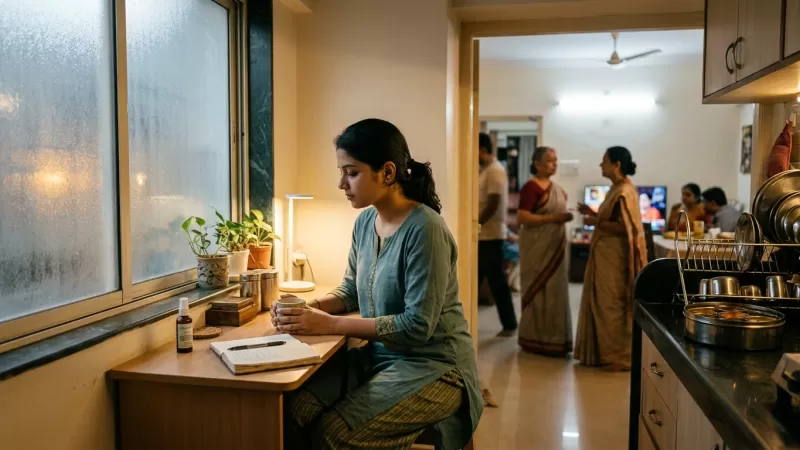
Sometimes, in Indian homes, a gentle sameness creeps in. You might notice it while folding the third load of laundry for the week, or somewhere between your morning chai and the familiar to-do list. The days blend into each other, and that spark of freshness fades, leaving behind a quiet flatness. This isn’t just tiredness; it’s the mental fatigue of a repetitive routine — a pattern many families in India know all too well.
There’s comfort in routine dal-chawal lunches, in the evening hum of pressure cookers, and the predictable ring of the doorbell at 7am. But after weeks, or sometimes months, too much sameness can leave you feeling stuck. The usual fixes — quick naps, scrolling your phone, or even that evening walk — don’t always bring back your energy. What’s missing is a small, genuine change: a reminder that things can be different, even for a short while. In quiet moments, the need for restoring engagement with repetitive Indian life becomes clear.
Why Repetition Drains Indian Adults: Everyday Loops and Their Impact
In many Indian homes, routines are the backbone. They keep the household running, make sure tiffins are packed, and help everyone get out the door. Yet, when every day starts with the same alarm and ends with the same TV serial, even the most comforting rituals can start to feel heavy. This is the heart of mental fatigue from repetitive routine India faces: it’s not physical exhaustion, but a sense that each day is a copy of the last.
Busy adults — whether they’re shuttling between office and home, or managing groceries and homework — often find their weeks melting together. The predictability that once felt safe now feels like a loop with no exit. The tricky part is that this kind of routine fatigue India experiences doesn’t always come with big warning signs. It’s subtle: a loss of interest, a lack of spark, or a sense that you’re just going through the motions. Breaking daily monotony for Indian adults isn’t about upending everything, but about finding small, manageable ways to remind yourself that change is possible — even in the middle of a busy week.
What Causes This Flatness in Indian Adult Life?
There are a few reasons why mental fatigue repetitive routine India is so common, especially in homes where schedules are packed and expectations run high. For one, Indian families often value stability — and for good reason. Fixed meal times, regular outings to the sabzi mandi, and even the way chai is made each morning brings a sense of reliability. But here’s the catch: what protects us from chaos can, over time, become its own kind of trap.
Work-from-home setups mean many adults now spend whole days in the same rooms, seeing the same walls. Seniors living with family may find their world shrinking to the balcony and the living room. Parents juggle work calls and online classes, and homemakers keep the household moving on a schedule that rarely shifts. Over weeks and months, this sameness can quietly sap mental energy. Psychologists who work with Indian families often find that most people crave small, refreshing changes, but hesitate to disrupt the systems that keep everything running smoothly. The desire to avoid mess or extra work keeps routines rigid, even when they no longer feel satisfying.
Even small seasonal shifts — like the arrival of mangoes in summer, or swapping warm chai for chilled nimbu paani — can break the loop, but these changes don’t always happen unless someone makes a conscious decision. Many families get stuck waiting for a big event or festival to bring excitement, missing the chance to create small moments of novelty in daily life.
Noticing the Signs: When Routine Crosses Into Fatigue
- Days blur together: You find yourself unsure whether it’s Wednesday or Thursday, because nothing stands out anymore.
- Little motivation for familiar tasks: Even cooking your favourite sabzi or watering plants feels boring or pointless.
- Forgetting pleasant moments: You can’t recall what you did differently the previous weekend — everything feels like a repeat of the week before.
- Low energy despite enough sleep: Even after a good night’s rest, you wake up feeling drained, not refreshed.
- Craving escape or distraction: You start scrolling endlessly on your phone, watching TV without really enjoying it, or wishing for a sudden, big change.
These are clues that restoring engagement with repetitive Indian life might need more than just a break or a nap. The real solution often involves adding a small, new element to your day — something that breaks the sameness, even for a few minutes.
Practical Ways to Break Daily Monotony Without Disrupting the Whole Routine
- Switch up one small habit: Change your breakfast from poha to upma, or add fruit to your dahi. Even a simple twist, like having chai on the balcony instead of the sofa, can give your morning a different flavour.
- Rearrange a corner of your home: Move the dining table, shift cushions, or hang a new photo. Many families in Indian cities have quietly discovered that a small change in environment can refresh the mind without much effort or cost.
- Try a new route or timing: If you’re commuting, take a different road or leave 10 minutes earlier. For homemakers, change the order of chores or play music you don’t usually listen to while cleaning.
- Create a five-minute novelty ritual: Light a candle in the evening, water plants at a different time, or have a family chat about a funny childhood memory during dinner. The point isn’t to overhaul your day, but to add a touch of newness.
- Invite in a seasonal shift: During summer, have cold chaas instead of tea. In monsoon, make a quick plate of pakoras for everyone, even if it’s not a special occasion. These tiny seasonal breaks help shift the mood.
Each of these steps respects the structure that keeps the household steady, while gently nudging you out of the fatigue loop. The power lies in their simplicity and the fact that they don’t demand a full routine makeover.
Household Patterns Where Routine Fatigue Quietly Grows
In a flat in Hyderabad, mornings often follow a tight script: alarms at 6, chai by 6:15, breakfast prep, then the rush to get children online for school and adults onto their laptops. When this pattern repeats without pause, a quiet restlessness builds. It’s the same in Bengaluru, where a working professional might realise during their auto ride to the office that they can’t remember the last time their week felt different. In many joint families, seniors notice the days slipping by in a comfortable but unchanging rhythm, their only novelty the changing faces on news channels.
Many households try to break routine fatigue India style by waiting for festivals, birthdays, or a big family trip. But months can pass with nothing new except the change of vegetables in the market. The tricky part is, the pressure to keep everything smooth can make adults avoid even the smallest change — fearing that any disruption will create more work or confusion. This is how restoring engagement with repetitive Indian life becomes a quiet, personal need rather than a shared family effort.
On some evenings, you might hear the same conversation about what’s for dinner, or find that the TV serials have become background noise, not entertainment. When these patterns go unbroken, mental fatigue repetitive routine India style settles in deeper. Tiny experiments — like a five-minute family game, a new playlist while chopping vegetables, or an unexpected evening walk — are often what break the loop, if only for a day.
A Real Moment: Early Morning in a Nagpur Kitchen
A kitchen in Nagpur at 6am. The fan is already whirring, fighting off the early summer heat. There’s the familiar clatter of a steel dabba on the counter, the soft snap of methi leaves being plucked, and the low hum of the pressure cooker. The same breakfast — aloo paratha and dahi — as every other Wednesday this month. But today, someone adds a few sprigs of mint and slices a raw mango for the side. The scent of mint fills the air, sharp and unexpected. For a brief moment, the routine breaks. The kitchen feels lighter; the day seems a little less predictable. It’s a small thing, but it’s enough to remind everyone that change, however tiny, is possible — even on a regular weekday.
When Small Changes Aren’t Enough: Recognising When to Reach Out
Sometimes, despite trying little shifts, the flatness lingers. If you find yourself losing interest in things you used to enjoy, feeling persistently low, or unable to function as you need to — even after trying to break the monotony — it’s wise to speak with a trusted friend, family member, or a healthcare professional. These feelings can be a part of normal routine fatigue, but they can also be a sign of something deeper that needs attention. There’s no harm in checking in with someone who can help you make sense of it.
Common Questions
Many Indian households quietly wrestle with the flatness that comes from repetition. A few small changes can go a long way, but knowing where to start — and how much is enough — can be tricky. Let’s look at some of the most common questions families have about breaking daily monotony in Indian adult life.
What are the most effective small changes that break mental fatigue from repetitive daily routines in Indian adult life?
Often, the most effective changes are the simplest: switching up your breakfast, rearranging a small corner, or introducing a new evening ritual. Many families find that playing a different kind of music while cooking or sharing a short laugh together in the evening helps. Even a five-minute walk at a new time or lighting an agarbatti with a different scent can snap the monotony. The key is to pick something easy that doesn’t add extra work or cost but still feels fresh.
How much change is needed to shift the sense of monotony without disrupting the aspects of the routine that are working well?
In Indian homes, even the smallest shift can bring relief. You don’t need to overhaul your entire day — often, one or two little tweaks are enough. For example, changing your evening tea spot, reading a different section of the newspaper, or adding a fun chat during dinner usually does the trick. Most routines have parts that work well, so it’s about gently nudging one piece rather than shaking up everything at once.
Is mental fatigue from routine in Indian adults a sign of something deeper or simply a normal response to extended repetition?
For many, routine fatigue is a natural response to long periods without change — especially in tightly scheduled homes. It’s usually not a sign of a bigger problem if you still find joy in small things or feel better after a little variety. That said, if the flatness lasts for weeks, affects your mood deeply, or makes it hard to function, it’s a good idea to check in with a doctor or counselor. Sometimes, what feels like routine fatigue can be linked to something more.
What specific elements of Indian daily routine most commonly produce mental fatigue when unchanged for long periods?
Common culprits are repetitive meal plans (dal-roti every night), predictable chores, fixed work-from-home schedules, and the lack of spontaneous outings. Even the way evenings unfold — same TV, same snacks, same conversations — tends to create monotony. Many adults report that when commutes, chores, and leisure all follow an unchanging pattern, the sense of staleness grows stronger, especially after festival seasons or school holidays end.
How do you introduce enough novelty into a very repetitive Indian daily life without destabilising the structures that provide security?
The safest way is to make one small change at a time — like changing the order of chores, trying a new sabzi, or adding a short family ritual. These don’t disrupt the flow of the day or create extra work, but they do add freshness. Many Indian families find that involving everyone in choosing a new activity, or simply shifting a meal to the balcony or terrace, brings novelty without risk. The goal is gentle variety, not chaos.