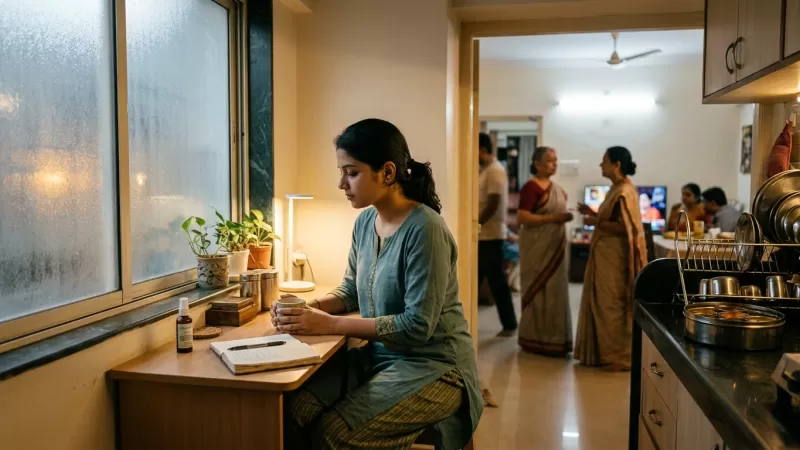
In many Indian families, the evening doesn’t really start until after 8pm. When both partners are negotiating long commutes, Indian couples commute time becomes the quiet thief of togetherness. The door opens, bags drop, and often, the only conversation is a tired “Khaana ho gaya?” before the routine of helping kids finish homework, folding laundry, or prepping for the next day begins.
On some nights, the only time you see your partner’s face in the kitchen light is when passing the dahi or asking if there’s more rice. These days, with commutes stretching into the late evening, relationship time when commuting in India looks less like a meaningful pause and more like a quick handover in a relay race. There’s no single fix, but small daily habits can keep a thread of connection alive, even when evenings are mostly spent managing exhaustion.
Why Evenings Disappear for Indian Couples Who Commute
It’s become routine in cities like Mumbai, Bengaluru, and Hyderabad: both partners finish work, face the grind of traffic or crowded trains, and arrive home between 8 and 10pm. In joint families, they might be greeted by a house bustling with activity; in nuclear homes, the silence can feel heavy. Indian couples commute time is squeezed by deadlines, meal prep, and household chores that pile up in their absence.
Most couples find that their evenings are not their own. The hours after work are spent attending to children, elderly parents, or kitchen duties that simply can’t wait. There’s hardly a moment when both partners can sit without interruption. Even weekends are often reserved for errands, family visits, or catching up on lost sleep. In this rhythm, genuine connection is often the casualty.
The tricky part is, the strain isn’t always visible. From the outside, everything may look fine: dinner is on the table, kids are in bed, everyone is safe. But that feeling of growing distance can quietly creep in when the only thing shared each night is a quick meal and a rundown of tasks.
What Makes Commute-Driven Disconnection So Common
It’s not just the hours lost in traffic — it’s what those hours take out of you. Long commutes in India often mean battling unpredictable weather, crowded buses or trains, and roads choked with honking vehicles. By the time you reach home, patience has worn thin. Even the small joys, like sharing a cup of chai or a laugh over dinner, can feel out of reach.
Family routines often revolve around the earliest person home, meaning the latecomer’s needs or moods get squeezed in wherever possible. Children’s bedtimes, elderly parents’ medication schedules, and household help timings rarely flex for late arrivals. Protecting couple time during the Indian commute often feels selfish or impractical — especially when the rest of the family is waiting.
Relationship time when commuting in India is affected not just by logistics, but by expectations. There’s an unspoken pressure to manage everything smoothly, not complain, and avoid rocking the boat. Marriage counselors who work with urban Indian couples often find that most relationship strain is traced back to chronic exhaustion and not to any real lack of love or care.
Clues That Commute Exhaustion Is Hurting Your Relationship
- Conversations feel like quick updates. You catch up on chores, bills, and children’s needs, but rarely talk about anything else.
- Physical closeness becomes rare. The bedtime routine is rushed, and even a simple hug or hand-hold feels like another task.
- Small irritations grow quietly. A forgotten errand or a missed call turns into an argument — fatigue makes patience run thin.
- Shared activities disappear. Watching TV together or sitting with chai after dinner fades away. Each person drifts into their own screen or task.
- You can’t remember your last uninterrupted conversation. Days blur, and there’s a sense of “managing” rather than relating.
These signs don’t mean your relationship is broken. They just show that the commute is affecting relationships in Indian homes in ways that are easy to miss when you’re always tired.
Everyday Habits That Protect Connection for Commuting Couples
- Fifteen minutes together after dinner — with no screens. Many families in Indian cities have quietly discovered that just 15–20 minutes of sitting together after dinner (without TV or phones) restores a sense of partnership. It might feel forced at first, but over time, it becomes a gentle anchor at the end of a long day.
- Small rituals — even if they’re brief. On nights when the commute runs late, a shared cup of warm milk or even sitting together while folding clothes counts. The consistency matters more than the activity.
- Simple check-ins before bed. A working professional commuting in Bengaluru might sit on the edge of the bed, ask, “How did your day really feel?” and just listen, even for five minutes. These check-ins can break the cycle of only talking about logistics.
- Shared responsibility for winding down the house. Instead of splitting up tasks, doing a couple of small things together — like locking up, turning off lights, or checking on children — can create a few extra minutes for connection.
- Saying a proper goodnight. In many Indian homes, one partner falls asleep scrolling through messages while the other drifts off mid-series. Making a habit of saying goodnight — with attention — can become a tiny, daily moment of closeness.
Protecting couple time during the Indian commute doesn’t require grand gestures. Often, it’s the quiet, everyday habits that keep relationships steady when evenings are mostly lost to travel and tiredness.
How Commute Fatigue Changes the Evening in Indian Homes
There’s a familiar rhythm to city evenings these days. Around 8:30pm, the elevator dings in a Mumbai apartment block; tired feet shuffle in, and the first thing many couples do is wash up and check on what’s left of dinner. Children might be finishing homework at the dining table, or lights are already off in their rooms. The TV murmurs in the background, but real conversation barely happens.
The quiet moment comes — if it comes at all — only after the kitchen is cleaned, bags are packed for the next day, and everyone is set for bed. Protecting couple time during the Indian commute often looks like a shared bowl of dahi, a few words in the balcony, or even exchanging a look that says, “We made it through another day.” It’s these small patterns, repeated night after night, that keep a sense of connection alive when time is always short.
When It’s Time To Seek Extra Help
If you find that the distance is growing wider, not just in small ways but in how you feel about each other, it might help to talk to someone outside the home. Sometimes, a neutral person — a counselor or a trusted older couple — can help you see what’s exhaustion and what’s something deeper.
In Indian families, asking for support can feel awkward, but it’s often the first step to resetting the rhythm before frustration or resentment take over. If you notice ongoing sadness, withdrawal, or tension that doesn’t lift even on holidays or weekends, consider reaching out for guidance.
Common Questions
Many Indian couples quietly wonder if their relationship strain is just a phase, or if it’s something more serious. These questions come up often in households juggling work, commutes, and family obligations. Here are some honest, India-specific answers to the most common worries.
How does a sustained long commute affect the quality of Indian couple relationships over months and years?
When Indian couples commute time is always long, the impact builds slowly. Over months and years, the couple may feel more like co-parents or co-managers than true partners. Emotional connection tends to erode when most conversations revolve around tasks or complaints. In some homes, irritations become routine, and affection fades into practical cooperation. Loneliness can creep in — even when living under the same roof. Small habits of connection, if not protected, easily disappear over time.
What are the most practical ways for Indian couples to protect relationship time when the commute leaves very little evening available?
Most couples in India who face long commutes find that tiny, daily moments work better than grand efforts. Sharing chai after dinner, taking five minutes to talk before bed, or even texting something personal during the day can help. The key is making these habits automatic, so they happen even on the most exhausting days. It’s not about the quantity, but the regularity and intention behind these small pockets of time.
Is it possible to maintain genuine closeness with a partner when both people arrive home depleted most evenings?
Yes — though it rarely looks like the closeness of earlier, less busy years. Closeness for Indian couples who commute is usually built on small, repeated moments: sitting together quietly, sharing meals, or simply acknowledging each other’s tiredness. The effort is not in finding time, but in noticing and honoring the little chances to connect, even if just for a few minutes each day. Over time, these moments form a steady thread of partnership.
How do Indian couples distinguish between relationship problems that are actually about the relationship versus ones that are primarily caused by commute-driven exhaustion?
It’s tricky. Many couples in India notice that tensions rise with tiredness and ease up during holidays or long weekends. If arguments, irritability, or distance seem to vanish when the commute is removed — like during remote work periods or family vacations — it’s a strong sign the real issue is exhaustion, not the relationship itself. If problems persist even in restful times, it may be worth talking more deeply or getting outside advice.
What one daily habit most reliably protects the sense of connection between Indian partners who commute long distances?
Sharing 15 minutes together after dinner, without any screens or tasks, is the habit most couples say makes a difference. Even when both are tired, this pocket of time helps partners see each other as more than just co-managers of the home. The consistency of this simple pause, night after night, builds a quiet sense of “us” — even when time is always short.