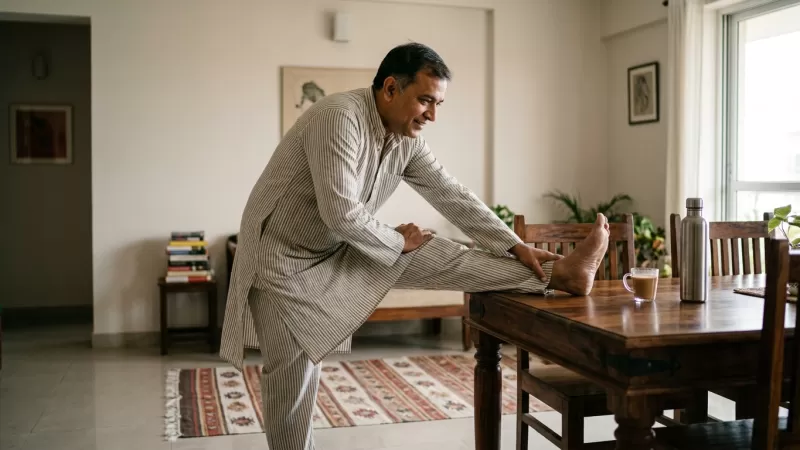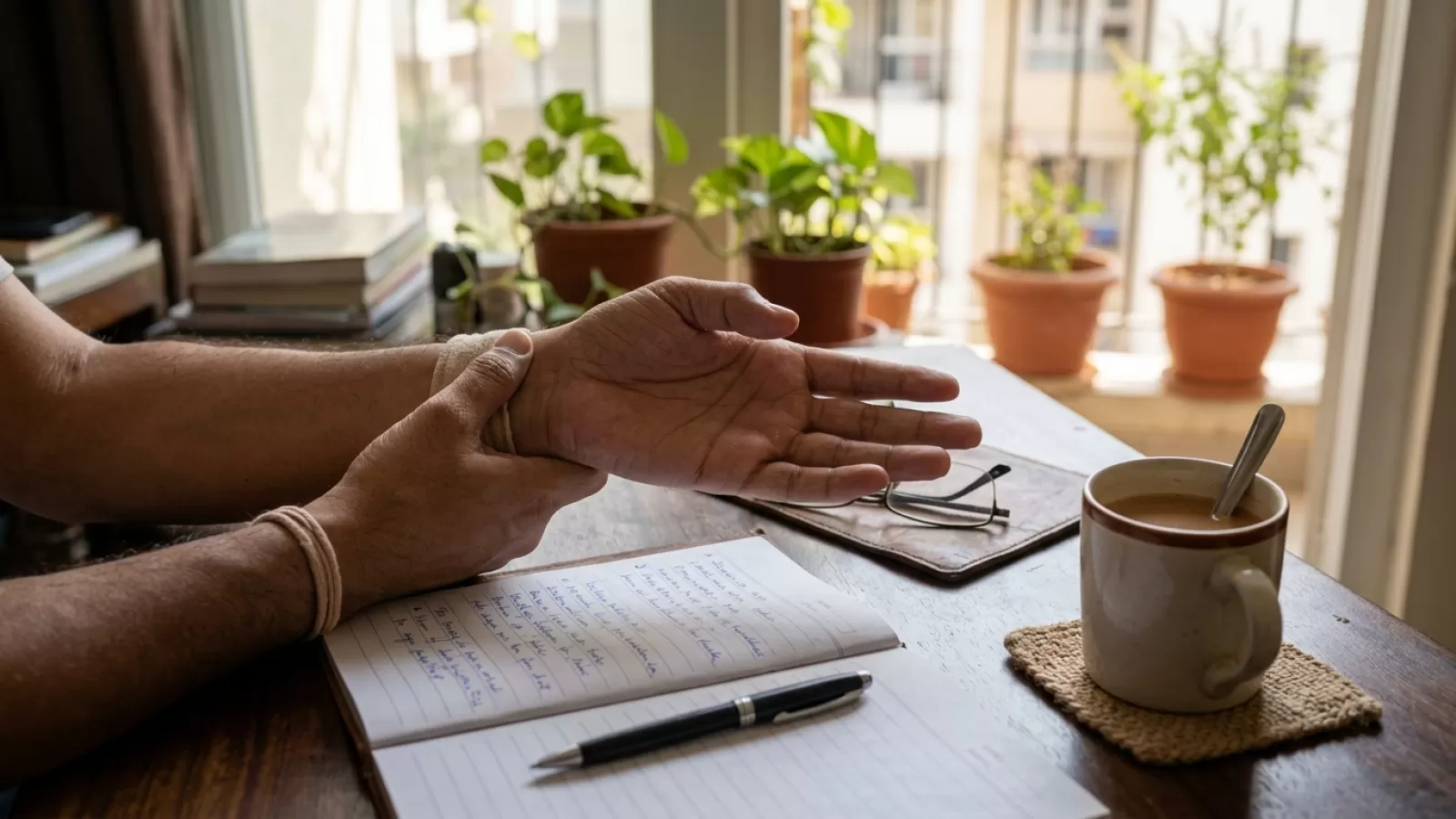
After a long stretch of writing by hand or typing out WhatsApp messages, it’s quite common for your wrist to start feeling stiff or achy. Whether you’re filling exam sheets, jotting down grocery lists, or replying to work emails on your phone, that tired, dull ache in the wrist can creep up on anyone. Many Indian homes have one family member or another quietly rubbing their wrist after a busy day. If you’re reading this with a slight twinge in your own hand, you’re certainly not alone.
Why Does Writing or Typing Make Our Wrists Ache?
These days, our wrists do a lot more than they used to. It’s not just writing with a pen anymore – it’s scrolling, swiping, and typing on screens for hours. The repetitive motions, combined with holding your wrist at odd angles, can make the small muscles and tendons in your wrist tired and cranky. That’s when you might notice stiffness, a vague pain, or just a sense that your hand is less flexible than before.
Even something as simple as holding a phone for long video calls or writing out festival greeting cards can set off discomfort. It’s not a sign of weakness or age – it just means your wrist wants a break.
Here’s the catch: we rarely remember to pause. Most of us only notice our wrist when it starts to complain.
Recognising When Your Wrist Needs a Breather
You may not always notice the early signs. Sometimes it’s just a nagging urge to stretch your fingers, or you unconsciously shake your hand out after a long WhatsApp chat. Other times, you might feel a more serious discomfort if you’re writing continuously – like during exam season, or when working from home on a tight deadline.
Some things you might experience:
- A feeling of tightness or stiffness, especially after being in the same position for a while
- Mild pain when you move your wrist up, down, or in a circle
- A heavy, tired sensation after writing notes, letters, or even just signing forms
If you notice these, it’s a gentle reminder from your body to take a short pause and care for your wrists.
Gentle Wrist Ease Exercises You Can Do Anywhere
It’s not always possible to take a long break, especially during busy mornings or when the house is full of activity. But you don’t need fancy equipment or lots of space to give your wrists some relief. These simple movements can be done while sitting at your dining table, waiting for tea to boil, or even during a quick water break between tasks.
- Wrist Rotations: Extend your arm in front of you and gently rotate your wrist in slow circles – five times in each direction. Keep your shoulder relaxed.
- Prayer Stretch: Place your palms together in front of your chest (like namaste), then slowly lower your hands while keeping the heels of your palms together. Hold for 10–15 seconds and repeat twice.
- Finger Fan-Out: Spread your fingers wide, hold for a few seconds, then relax. Repeat five times. This wakes up the smaller muscles as well.
- Tabletop Flex: With your forearm resting on a table and your hand hanging over the edge, gently bend your wrist up and down. Try this 5–8 times each way, slowly.
None of these should cause pain. If something feels too much, ease off a little.
Building Short Wrist Breaks Into Your Day
It’s easy to forget about your wrists until they act up, especially if you’re juggling work calls, school assignments, and kitchen chores all at once. Instead of waiting for discomfort, try weaving in short wrist breaks every hour or so. These don’t have to interrupt your day – just a minute while waiting for the dal to simmer is enough.
Some gentle reminders:
- Set a recurring phone reminder or tie it to routines (like every time you get up to refill your water bottle)
- Encourage kids to stretch their wrists after homework sessions
- Use natural pauses – TV ad breaks, tea-time chats, or while waiting for a file to download
It tends to get easier once it becomes a habit, almost like washing hands before meals.
Adjusting Your Writing and Device Habits
Sometimes, small changes in your daily routine can make a noticeable difference in how your wrists feel. A few practical adjustments can help reduce strain, especially if you do a lot of writing or typing.
- Try to write or type with your wrist in a neutral, straight position – not bent up or down
- Use a soft pen or one with a comfortable grip for long writing sessions
- Switch hands when holding your phone for long calls or video chats
- Prop your forearm on a cushion or soft towel during long typing or writing tasks
Many families now keep a small support cushion near the computer desk – a simple touch that can ease wrist strain over long work-from-home days.
What to Watch Out For: Gentle Cautions
Most wrist aches from writing or device use are harmless and fade with rest and gentle movement. But sometimes, you might notice swelling, sharp pain, or tingling that doesn’t go away easily. If your wrist discomfort keeps coming back even after regular breaks and stretches, it might be worth mentioning to your doctor during a routine visit.
That said, don’t panic if you just have mild soreness after a marathon of exam paper corrections or festival card writing. It’s usually your body’s way of asking for a little kindness and rest.
Just don’t ignore severe or persistent symptoms.
Encouraging the Whole Family to Care for Their Wrists
In many Indian homes, writing and device use aren’t limited to one person. Children, parents, and even grandparents often spend long hours on schoolwork, paperwork, or online calls. Encouraging everyone to take short wrist breaks can quietly set a positive example, especially for younger family members who might not notice their own discomfort until it gets worse.
Some families find it helpful to do a quick stretch together before dinner or after evening tea – nothing formal, just a few minutes to loosen up. It can be a light, shared ritual, much like passing the pickle jar at mealtime. The goal isn’t perfection, just a little more comfort for everyone.
On Days When You’re Just Too Tired
Let’s be honest: some days, you’re drained and don’t want to think about stretches or habits. It happens. On those days, even a gentle wrist shake-out before bed can help. Or just rubbing your palms together for warmth and comfort. No need to be strict with yourself. The idea is to listen to your body’s signals and offer your wrists a little relief, whenever you can.
Remember, these are small acts of self-care, not burdens. Over time, your wrists will thank you for even the simplest efforts.