Many of us look forward to weekends as a time to unwind, but in reality, they often turn into marathon cleaning sessions. By Sunday night, it’s not uncommon to find your lower back stiff, sore, or just plain tired. In Indian homes, especially, deep cleaning can mean shifting heavy furniture, mopping corners, and bending over for hours—tasks that don’t spare your back. If you’ve ever flopped onto bed after such a day and thought, "Is it only me who feels like this?"—you’re not alone. It’s a common story, and it tends to hit hardest right before the new week begins.
Why Weekend Cleaning Hits Your Back So Hard
There’s something about the way we clean—reaching under the bed, scrubbing bathroom tiles, or lifting buckets of water—that puts extra pressure on the lower back. Unlike a quick weekday tidy-up, these deep cleaning sprees involve repetitive bending, twisting, and sometimes awkward postures. In many Indian homes, especially where space is tight, you might find yourself contorted into all sorts of positions just to dust a shelf or wipe a window grill.
The tricky part is, our backs aren’t always ready for this sudden increase in activity, especially if most of your week is spent sitting at a desk or working from home. The muscles may not be used to long hours of bending or lifting. Add to this the tendency to "finish everything in one go"—a very familiar urge—and it’s no wonder the back protests on Sunday evening.
Here’s the catch: ignoring this soreness and pushing through with your usual Monday routine can make things worse over time. Taking a few minutes to gently stretch and support your back isn’t a luxury—it’s common sense.
Before You Start: Gentle Reminders for Safe Stretching
If your back feels extremely painful, or if you notice pain shooting down your legs, it’s better to rest and consider reaching out to a healthcare provider. For ordinary muscle stiffness or mild soreness, though, gentle stretching can bring real comfort. These aren’t fancy yoga poses or gym workouts—they’re safe, simple movements you can do in your living room, even if you’re tired or not very flexible.
- Wear loose, comfortable clothes. Old cotton pajamas or a nightie work well.
- Choose a safe, flat spot—maybe a mat or carpet in your bedroom or drawing room.
- Move slowly and notice how your body feels. If anything hurts, stop right away.
- It’s okay if you can’t do every movement perfectly. The idea is to feel a gentle stretch, not strain.
Some people like to play soft music or keep a window open for fresh air. Small comforts make a difference.
Simple Stretches to Ease Lower Back Stiffness
You don’t need special equipment or a lot of space. These stretches are straightforward and familiar—many are things you might’ve seen elders or kids do at home, though we don’t always realize their value for adults.
- Knees-to-Chest Stretch: Lie on your back, bend your knees, and gently bring them towards your chest. Hold your knees with your hands for a few breaths, feeling your lower back relax against the floor. You can do this one leg at a time if both together feels too much.
- Supine Twist: While lying on your back, bend your knees and place your feet on the ground. Drop both knees to one side while turning your head to the opposite side (like a gentle twist). Hold for a few seconds, then switch sides.
- Child’s Pose (Balasana): Kneel down, sit back on your heels, and stretch your arms forward while bringing your forehead to the floor. This pose is comforting for the back and hips, especially after a day of bending.
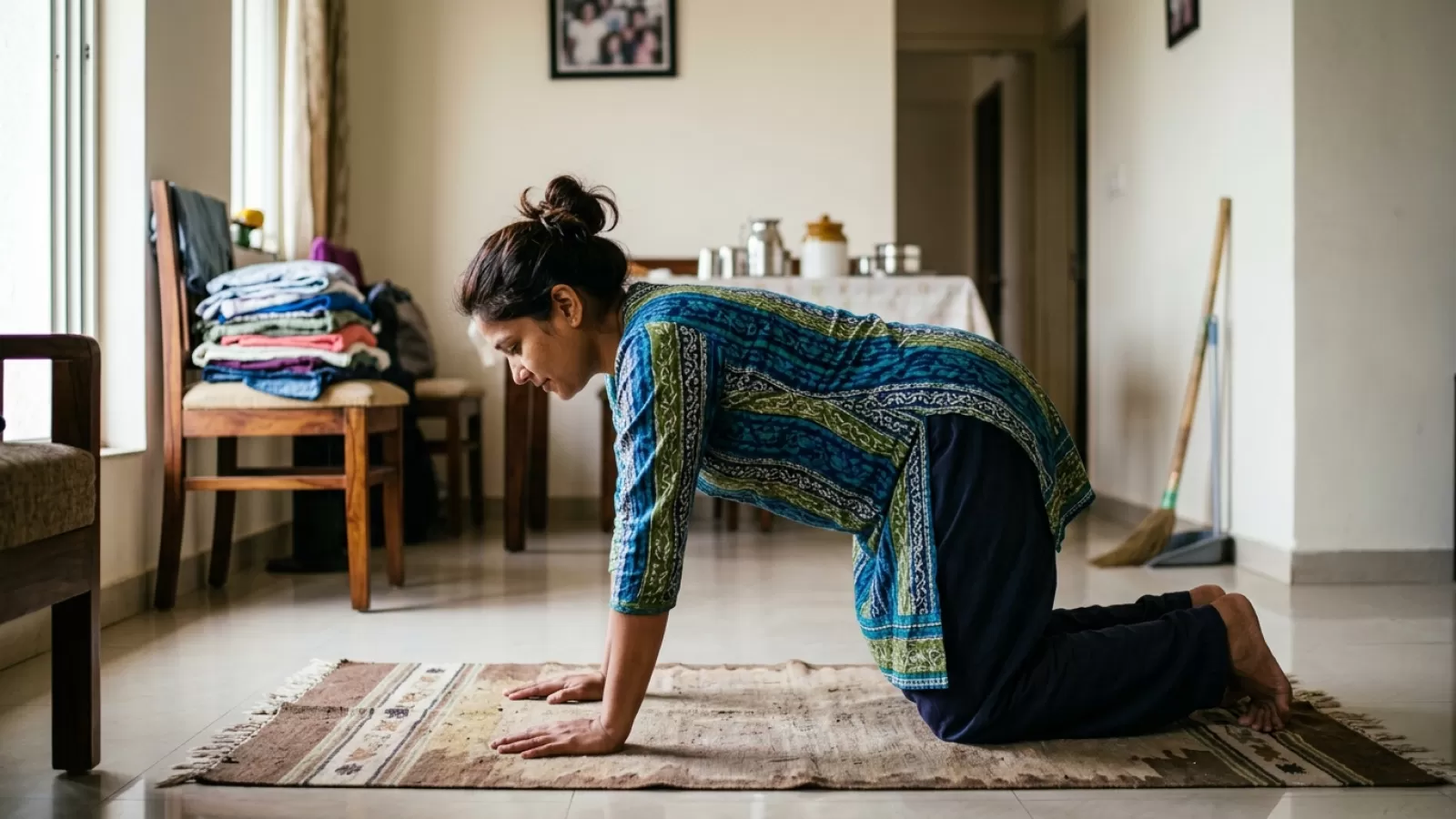
- Cat-Cow Stretch: On all fours (hands and knees), arch your back upwards (like a cat) and then gently lower your stomach towards the floor (like a cow). Move slowly with your breath—inhale to arch, exhale to dip.
Spend a few breaths in each stretch—no need to rush. If you’re tired, even one or two of these can make a difference.
Tips for Making Stretching a Weekend Habit
One of the challenges is actually remembering to stretch, especially when you’re exhausted and just want to collapse after chores. But if you make it a small ritual—say, five minutes before your Sunday bath or while waiting for your tea to cool—it feels less like a chore and more like a reward.
Some families do a group stretch in the evening, especially if everyone’s been helping with cleaning. Kids often join in, turning it into a lighthearted moment. Even if you’re alone, setting aside a few minutes (maybe after folding the laundry or before dinner) can help your body unwind.
The main thing is consistency. Like seasoning your dal just right, the benefits add up over time if you do it regularly—even if it’s just on weekends.
What If You’re Too Tired or Sore?
There are days when the idea of stretching feels like too much effort. That’s normal, and it happens to most people at some point. If you’re feeling completely worn out, sometimes the best thing you can do is simply rest flat on your back, legs supported by a pillow under your knees. Let your muscles recover before you start moving again.
A warm bath, a gentle massage from a family member, or just lying quietly with eyes closed can also help. Some people find that sipping warm water or haldi doodh (turmeric milk) brings a sense of comfort to the body. The point is, you don’t always have to "do more"—sometimes, less is enough.
That said, if you notice the pain isn’t improving or gets worse by Monday morning, it’s best not to ignore it. Many families quietly deal with nagging aches, only to realize later that early care could have helped.
Preventing Back Pain During Future Cleaning Sprees
You can’t always avoid heavy cleaning, especially before festivals or family gatherings. But there are small changes that make a big difference over time.
- Break up tasks—tackle one room at a time, with short breaks in between.
- Alternate between bending and standing chores, so you’re not in one position too long.
- Ask for help, even if it’s just for the heavy or awkward jobs. Many hands, lighter work.
- Use a small stool or chair when cleaning low surfaces instead of crouching for long periods.
- Listen to your body—if your back starts to protest, pause and stretch, even if it feels silly.
It’s easy to get caught up in the urge to “finish everything,” but a little pacing can spare you hours of discomfort.
Everyday Movements That Support Your Back
Even outside of cleaning, the way you move at home can affect your back health. Simple things add up—like sitting with your feet flat on the ground, not slumping on the sofa, or lifting heavy grocery bags with your knees bent instead of your back.
Some people place a cushion behind their lower back while sitting for long periods, especially during work-from-home days or evening TV time. Others try to stand up and stretch every hour or so, even if it’s just to refill a water bottle or check on the cooker.
Small habits, when repeated, make a quiet difference over the months.
Listening to Your Body and Knowing When to Pause
Perhaps the most important lesson—one that comes from daily life, not textbooks—is learning to listen to your body. Indian households, with all their activity and social rhythms, sometimes make us ignore our own comfort. But your back gives you signals: a dull ache, tightness, a feeling of heaviness after a busy day.
It’s okay to pause, to change your plans, or to ask for help. You’re not being lazy or weak; you’re being wise. Many people quietly manage back pain for years, thinking it’s just “part of life.” But a little attention now can mean fewer problems later, allowing you to enjoy the things that really matter—whether it’s a Sunday evening with family or a peaceful start to your work week.
So, the next time your back complains after a long day of chores, give it a few minutes of gentle care. You’ll thank yourself later.