Waking up feeling stiff as a board is more common than most people admit. Whether it’s the years creeping up, sleeping in odd positions, or just the effects of a chilly winter morning, a rigid body can make the start of your day feel like an uphill climb. In many Indian homes, especially where mornings begin with chai and a flurry of activity, dragging yourself out of bed while feeling stuck is both frustrating and, frankly, exhausting. But here’s a gentle truth: you don’t need to force yourself into anything intense to get your body moving. Sometimes, the simplest movements—done slowly and with patience—are just what your body needs.
Why Do We Wake Up Stiff?
Most people notice stiffness more as they get older, but even younger folks, especially those who work at desks, aren’t immune. Long hours of inactivity, sleeping on a hard mattress, or even just curling up under a thick razai in winter can leave your muscles feeling tight and joints unwilling to cooperate first thing in the morning.
Our bodies, after several hours of rest, settle into one position for quite a while. There’s less circulation, and the muscles and joints can feel like they’ve become strangers to movement. This isn’t usually anything to panic about—just something to work with, gently.
You’ve probably noticed that some mornings are worse than others. Changes in weather, stress, or even what you ate the night before (very spicy food, perhaps?) can play a part. The good news is, with a few light movements, most people find they can shake off this stiffness and start their day with a little more comfort.
Starting With Stillness: Breathe Before You Move
It may sound odd, but before you even attempt to sit up or stretch, it helps to spend a minute just lying still and paying attention to your breath. This isn’t any fancy meditation—just a few deep, slow breaths, in and out, to bring a little awareness to your body.
Here’s what you might try:
- Lay flat on your back (as you wake up, don’t change your position yet).
- Close your eyes and take a slow breath in through your nose, feeling your chest and belly rise.
- Exhale gently through your mouth or nose, letting your body sink a little deeper into the bed.
- Repeat this for 3–5 breaths, noticing how your body feels a bit more awake with each breath.
This tiny pause helps signal to your body that you’re about to start moving, easing you in rather than jolting you awake.
Wiggle and Sway: Gentle Movements While Lying Down
After focusing on your breath, the next step is to introduce tiny, easy movements while you’re still under your bedsheet. You don’t have to sit up yet. Think of this as giving your muscles a polite nudge to wake up.
- Start by slowly wiggling your fingers and toes. Stretch them out, then relax.
- Move your ankles in slow circles—one way, then the other.
- Gently roll your head from side to side, just a few times.
- If it feels comfortable, bend your knees and gently sway them from side to side (like a windshield wiper motion).
None of these should hurt. If any movement feels uncomfortable, skip it. The idea is to remind your body of movement, not to push it into anything dramatic.
Many people find that a minute or two of these tiny stretches makes sitting up much less daunting.
Sitting Up Slowly: Easing Into a New Position
This is the part where a lot of people rush and end up feeling dizzy or even more stiff. Instead, give yourself permission to take it slow. Rolling to your side before sitting up can make a big difference.
- Roll gently onto your side, using your arms for support.
- Let your legs dangle off the bed, then slowly push yourself up to a sitting position.
- Sit there for a moment—no need to spring up immediately.
If you notice a little lightheadedness, just pause and take a few more breaths. There’s no prize for getting up the fastest. Especially in humid summers or chilly winters, your body sometimes needs this extra moment to adjust.
Many seniors and busy adults have quietly developed their own version of this routine, often without realizing it, just because it feels better than the alternative.
Simple Seated Stretches on the Bed
Now that you’re sitting, it’s a good time for a few light stretches. Nothing too ambitious—just enough to invite a bit more mobility into your joints and muscles.
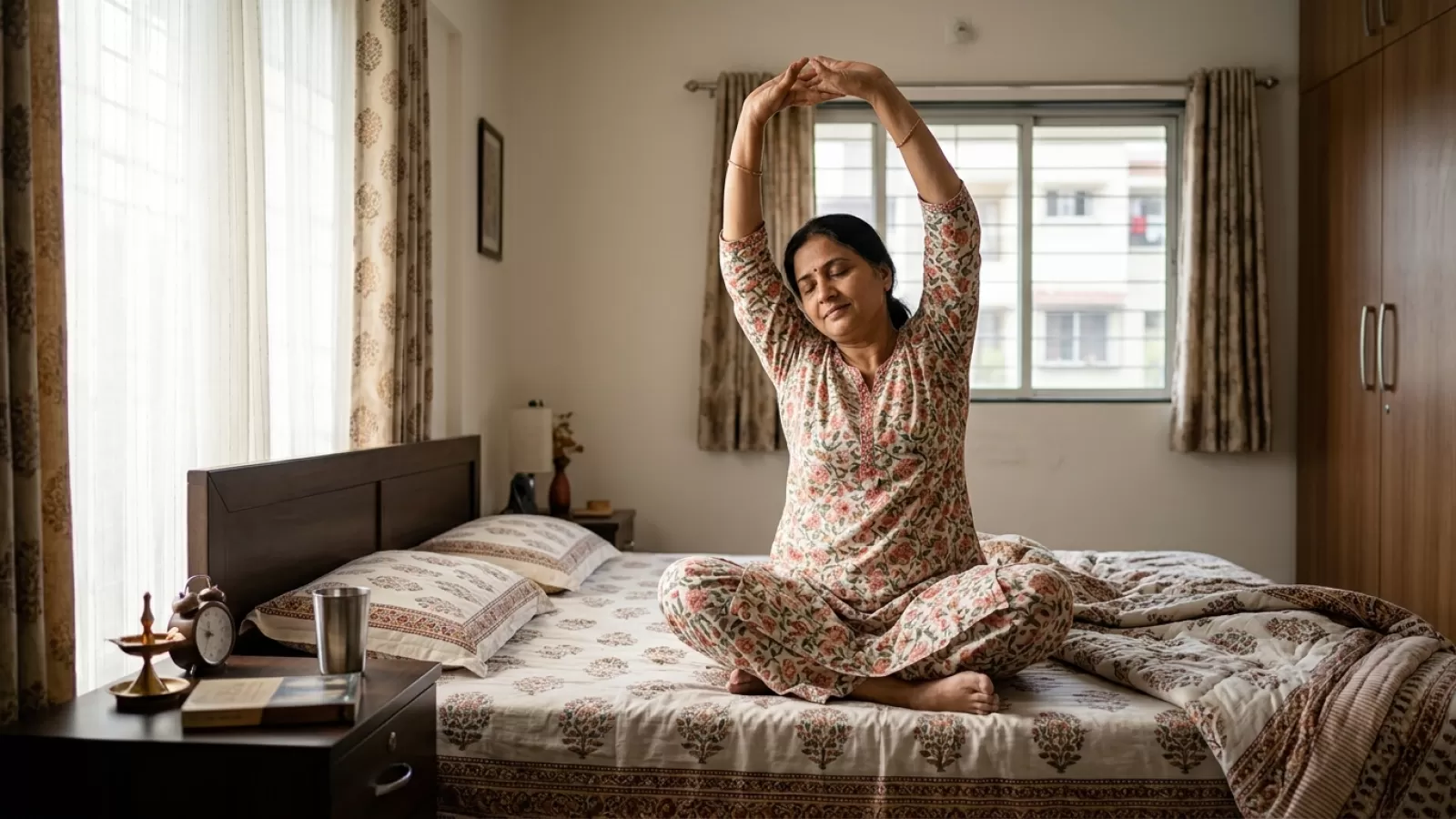
- Neck Stretch: Drop your chin gently to your chest, then look up towards the ceiling. Repeat this slowly a couple of times.
- Side Bend: Raise your right arm and lean gently to the left, feeling a stretch along your side. Come back to center, then switch sides.
- Shoulder Rolls: Roll your shoulders forward and backward in slow circles.
- Seated Forward Bend: With legs in front or crossed, lean forward slightly, reaching out with your arms. Don’t force it—just go as far as feels good.
These stretches aren’t about flexibility or reaching your toes. They’re more about inviting your body to join the day, one small movement at a time.
Even a couple of minutes can make a surprising difference, especially if you often feel achy or tight in the mornings.
Standing Up: Use Support, Take Your Time
When you feel ready to stand, use the edge of the bed or a sturdy chair nearby for support. There’s no harm in being careful, especially if you sometimes feel unsteady.
Stand up slowly, keeping your feet about hip-width apart. If you notice your balance isn’t quite there yet, it’s completely normal—especially after a night of stillness or if you have a health issue that affects your joints.
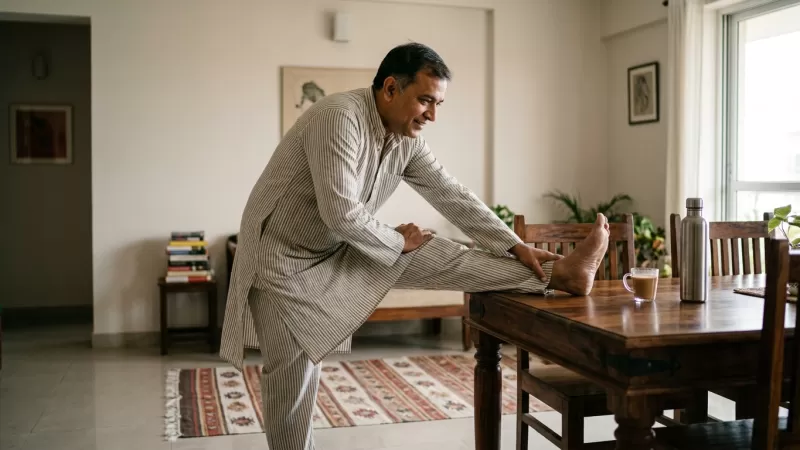
A few small standing movements can help:
- Marching in place, very lightly, just lifting one foot and then the other.
- Rising up onto your toes, then lowering your heels back down.
- Swinging your arms gently at your sides.
These movements aren’t meant to be a workout, but rather a way to signal to your body that it’s time for the day to begin. Some people find this especially helpful on winter mornings, when the body seems to resist movement the most.
Everyday Indian Habits That Can Help
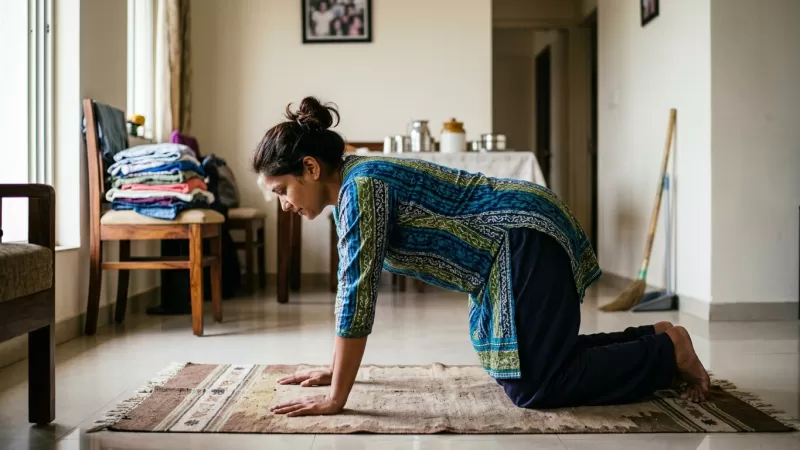
In many Indian households, certain habits naturally encourage movement and flexibility. You may not realize it, but actions like sitting on the floor for pooja, squatting to fill water, or even sweeping the house with a jhadu engage different muscles and joints gently.
Of course, not everyone is able or wants to continue all these traditional movements, especially as we age or if we have knee or back issues. But there’s something to be said for the slow, repetitive actions built into daily chores.
For example:
- Washing vegetables at the sink (standing and gentle arm movement)
- Folding clothes on the bed (sitting, reaching, and slight twisting)
- Walking to the balcony for fresh air
- Making chapati dough (kneading works the hands and wrists)
These might not feel like exercise, but they do help keep the body from becoming too stiff, especially when done mindfully and with good posture.
If You’re Short on Time: A 3-Minute Wake-Up Routine
Busy mornings are the norm for many of us, with children to get ready, tiffins to pack, or early calls to join. On such days, even a brief routine can help break the stiffness cycle.
Here’s a simple sequence that takes about three minutes:
- 1 minute of breathing and finger/toe wiggling (while lying down)
- 1 minute of gentle neck rolls, shoulder rolls, and side bends (seated)
- 1 minute of standing marches and ankle circles (standing beside your bed)
This isn’t about being perfect or ticking boxes. It’s about giving your body a little nudge so you don’t carry that stiffness into your breakfast, commute, or early chores. Some mornings, even these three minutes can feel like a big ask, especially if you’re exhausted. That’s okay. Just do what you can, when you can.
Gentle Reminders and When to Slow Down
It’s easy to get carried away with routines and tips, but your body is the best judge of what feels right. If at any point you feel pain, dizziness, or anything unusual, it’s always better to pause and, if needed, seek help from a qualified health professional.
Sometimes, persistent stiffness can be a sign of something more than just a bad mattress or an awkward sleeping position. But for most people, especially those living busy lives in Indian cities and towns, these small, mindful movements are a practical way to greet the morning without a struggle.
You don’t have to be perfect. You don’t have to do it every day. Just remember, waking up gently—with kindness to yourself—can set a calmer tone for whatever the day brings.