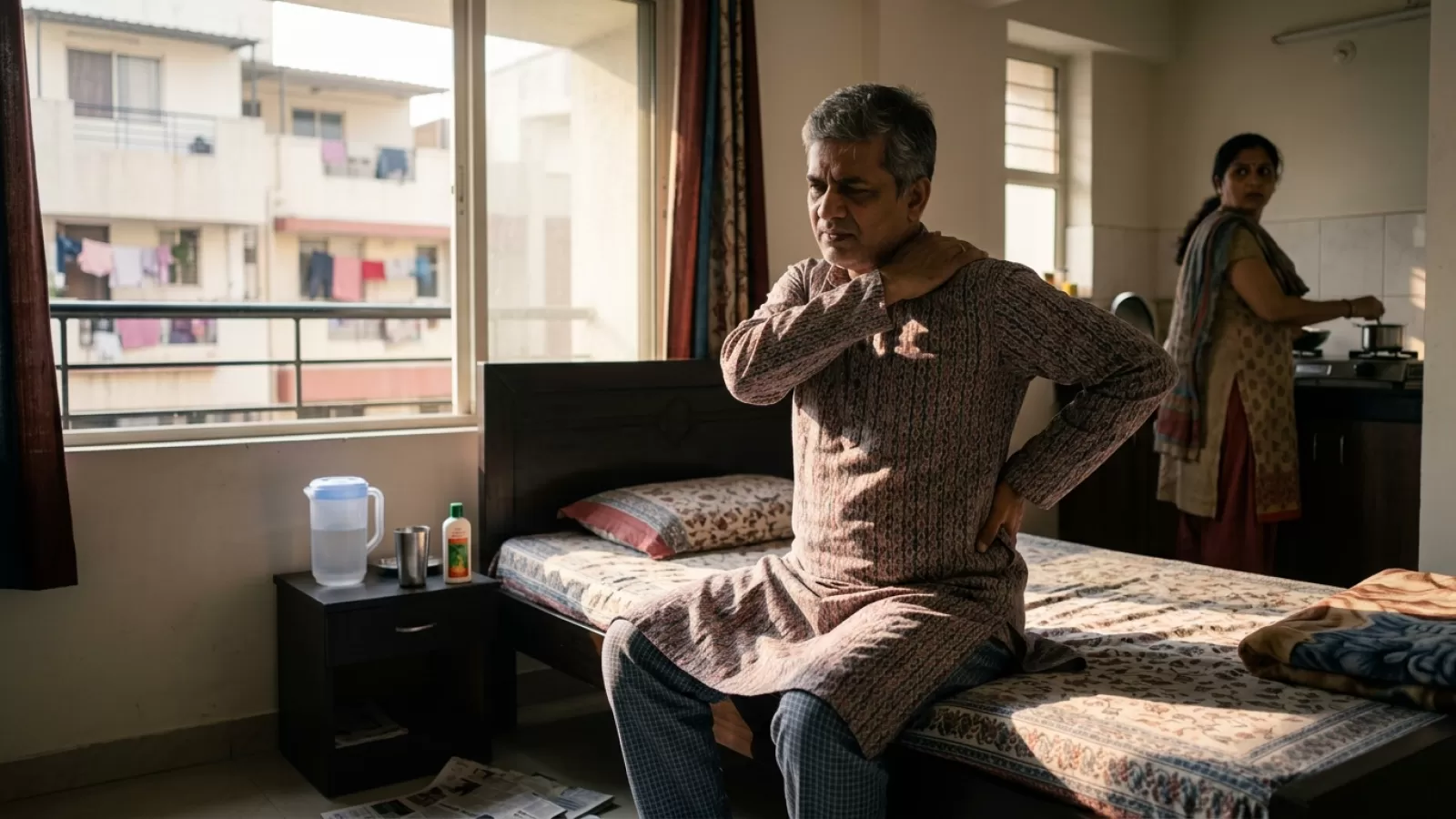
Waking up with your whole body feeling tight and stiff can make even the simplest morning tasks—like brushing your teeth or making chai—feel like a struggle. In many Indian homes, especially as we get older or spend more time sitting (think long hours at the computer or even just watching TV), this sort of morning stiffness becomes quite common. You might notice it especially during winter, or after a restless night. The good news is, you don’t always need fancy equipment or complicated routines to get moving. Simple, familiar movements done gently at home can often make a real difference in how you start your day.
Why Does Morning Stiffness Happen So Often?
You’ve probably noticed that the longer you stay in one position, the stiffer your body feels. Overnight, our muscles and joints aren’t moving, blood flow slows down a bit, and the body cools. For some people, especially in their forties and beyond, the after-effects of yesterday’s household chores, or just natural aging, can add up to a sense of heaviness in the morning.
This isn’t always a sign of something serious. Most often, it’s the body’s way of saying, “Let’s wake up slowly.” That said, if the stiffness is severe, lasts for hours, or you find it worsening every day, it’s always a good idea to check with a doctor. But for a lot of folks, gentle home movements can really help ease things up.
There’s no need to force yourself into tough exercises or yoga poses right away. The trick is: start slow, listen to your body, and focus on movements that feel comfortable, not painful.
Setting Up: Making Your Morning Easier
Before you even get out of bed, you can prepare your body for movement. A few small habits can help:
- Keep a glass of water by your bedside and sip slowly after waking up. Hydration can sometimes help ease muscle tightness.
- If you have a thin blanket or shawl, drape it over your shoulders for a minute. Sudden exposure to cold air (especially in winters) can make stiffness worse.
- Take a few deep breaths—inhale through your nose, exhale through your mouth—before moving.
None of this takes much effort, but it sets a gentler tone for the rest of your morning.
Before You Stand: Simple Bed Movements
Getting out of bed too quickly when you’re stiff can sometimes make things worse. Here are a few movements you can try while still under your blanket:
- Ankle circles: Point your toes away from you, then bring them back towards you. Slowly rotate each ankle in a circle—5 times each direction.
- Knee bends: One leg at a time, bend your knee and slide your foot towards your hips, then straighten it out again. Do this a few times on each side.
- Gentle hand stretches: Open and close your fists, wiggle your fingers, and rotate your wrists both ways.
- Neck turns: Gently turn your head from side to side, looking over each shoulder.
These tiny movements wake up your joints and muscles gradually, making that first step out of bed a bit smoother.
Getting Up: Moving Safely Out of Bed
Many folks (especially seniors or those with back pain) find that how they get up makes a difference. Instead of sitting up in a rush, try this:
- Roll onto your side, bend your knees.
- Use your arms to push yourself up into a sitting position.
- Pause for a few seconds—let any dizziness pass—before standing.
It’s a small adjustment, but it can help reduce sudden strain on your back and legs. You might have seen elders in your family do this, especially after an afternoon nap.
Standing Tall: Easy Stretches for the Living Room
Once you’re up and about, a few standing stretches can gently loosen you up further. You don’t need to turn your house into a gym—just a bit of space near your bed or in the hall will do.
- Shoulder shrugs: Lift your shoulders towards your ears and release. Repeat 5–10 times.
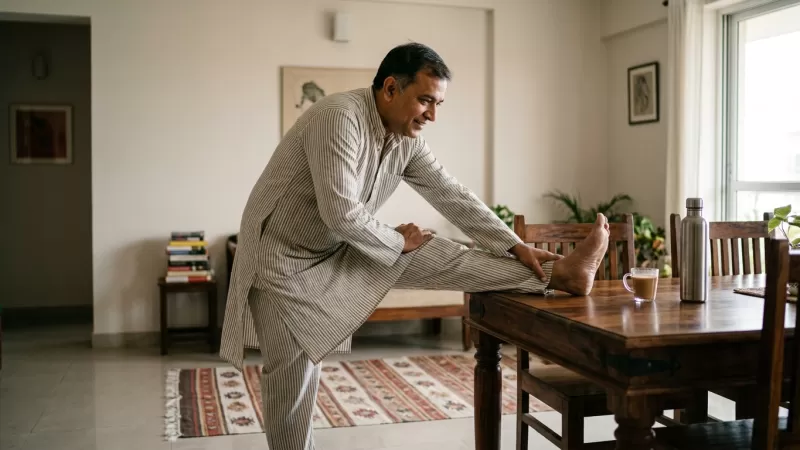
- Side bends: With feet hip-width apart, slowly reach one hand overhead and lean gently to the opposite side. Hold for a few seconds, then switch sides.
- Marching on the spot: Lift your knees one at a time, as if you’re marching slowly. This helps get your legs moving without any jumping or impact.
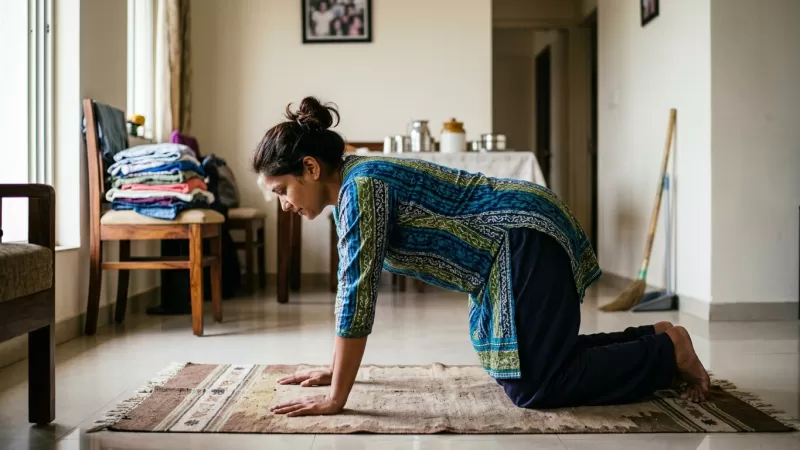
- Wall push-ups: Stand facing the wall, arms outstretched. Place your palms on the wall and slowly bend your elbows, bringing your chest towards the wall, then push back. It’s much gentler than floor push-ups and helps activate your upper body.
No need to count or force yourself—just move in a way that feels right for your body that day.
During Busy Mornings: How to Sneak in Movement
Let’s be honest—on many mornings, there’s barely time to sip chai, let alone do a full routine. In joint families or small flats, space and privacy can be limited. Here are a few ways people manage to get some movement in, even with busy routines:
- While waiting for the cooker whistle or the tea to boil, try a few heel raises—stand on your toes, hold for a second, and lower down.
- Stretch your arms overhead while standing in the kitchen or waiting for the lift.
- Rotate your shoulders or gently twist your torso side to side, especially if you’re standing and chatting with family.
The trick is to make these part of your usual morning flow, so they don’t feel like extra work. Over time, these little habits add up.
If You’re Still Tired or Stiff: What’s Normal?
Some mornings are just tougher than others—especially after days filled with extra cleaning (think festival prep), travel, or even just a long, stressful week. It’s normal to feel a bit off now and then. The important thing is not to push yourself too hard on those days.
If you’re feeling too stiff, skip any movement that hurts. Stick to the smallest, gentlest stretches. Sometimes, a warm bath or a quick shower after moving a bit can help too.
But if your stiffness is always severe, or it’s starting to interfere with daily routines—like holding a cup, walking to the gate, or bending to tie your shoes—it’s wise to let your family know and check with a trusted doctor. Many families quietly deal with these things, hoping they’ll just go away. Sometimes a little help or advice from a professional can make life easier.
Making This a Habit: Gentle Tips for Sticking With It
The hardest part is often remembering to do these tiny movements, especially on rushed mornings or lazy weekends. Here are a few things that can help:
- Pair your stretches with something you already do—like your morning prayer, listening to bhajans, or even while watching the morning news.
- Ask family members to join in. Kids and elders can both benefit, and it turns into a shared habit.
- On days you forget, don’t scold yourself—just try again the next morning. Habits take time.
Over time, you’ll notice your body responding—a little less stiffness, maybe a little more energy. But even if you miss a day, that’s okay. The goal is simply to make mornings feel a bit kinder to your body, one easy movement at a time.