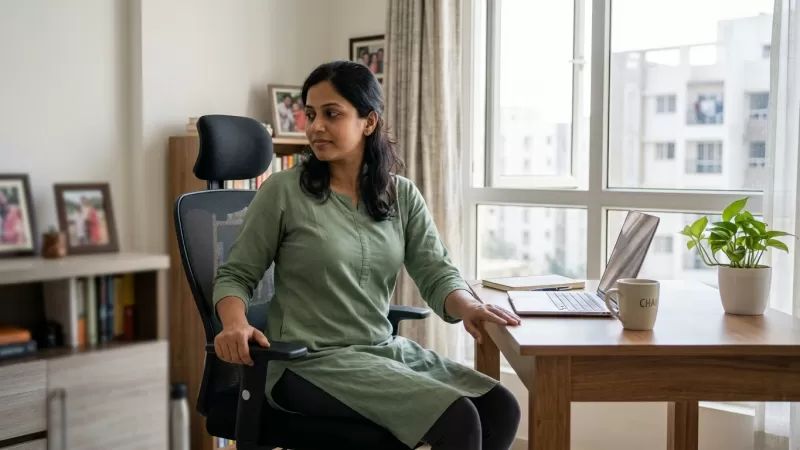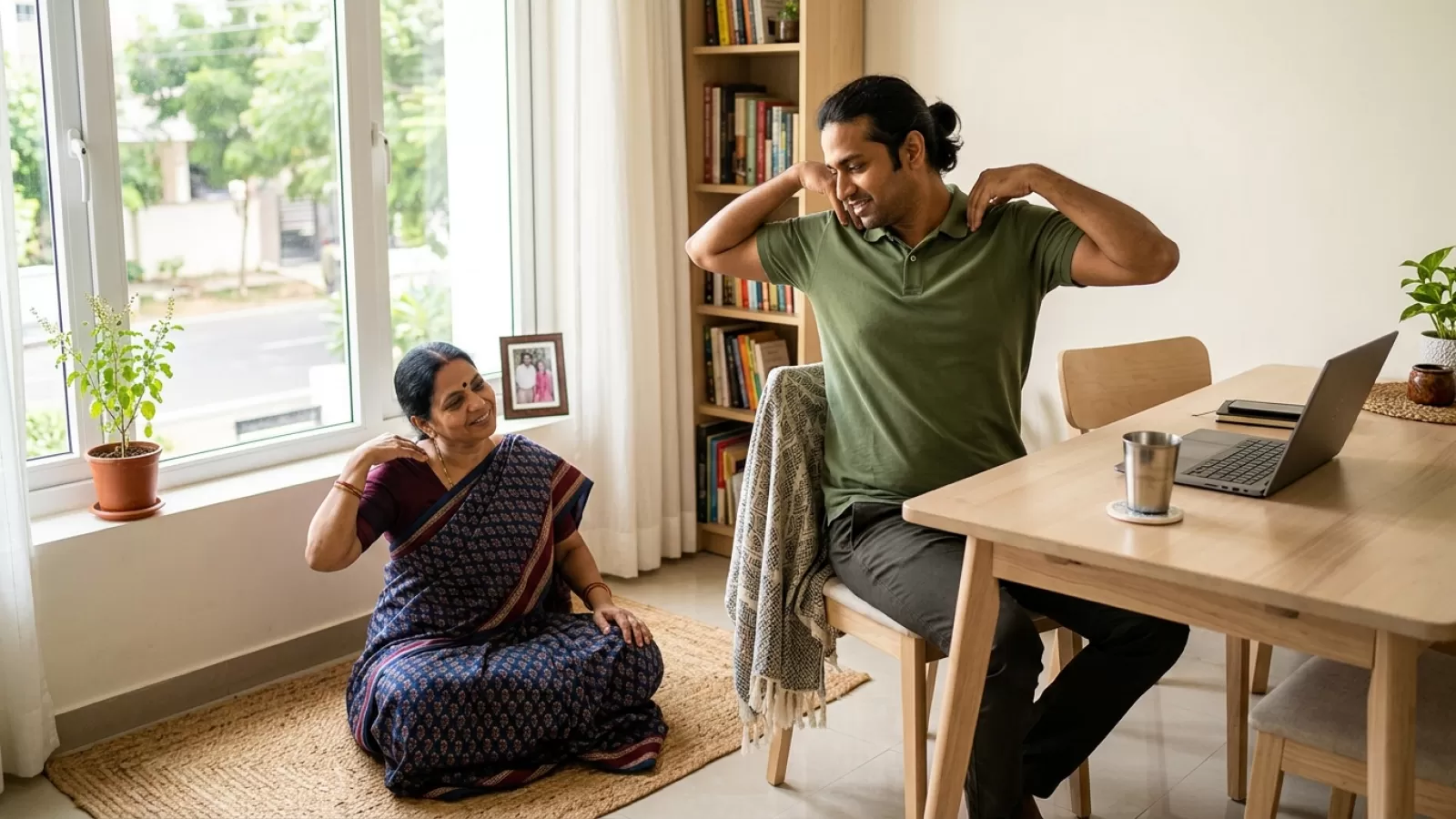
In many Indian homes, the end of a long day often arrives with a dull heaviness between the shoulders and a tired ache across the upper back. Whether it’s from hours at a laptop in a city apartment or standing at the stove preparing dal and sabzi for the family, upper back tension relief exercises India style have quietly become a small necessity for adults who shoulder so much, in every sense of the word.
That said, most of us only notice the tightness when we finally pause—maybe while pouring chai for everyone, or after putting away the last set of plates at night—realising how much our shoulders have been rounding forward, how stiff the upper back has become. It’s a quiet, familiar ache, but one that can be gently eased by a few well-chosen home exercises for upper back tension India has quietly adapted to its own rhythms.
Why Shoulder and Upper Back Tension Feels So Common in Indian Homes
Upper back and shoulder tightness is almost universal for Indian adults juggling work, family, and daily household responsibilities. It’s not just from office jobs—although those who WFH or commute in traffic-heavy cities like Bengaluru and Mumbai know the familiar hunch all too well. Even those spending hours in the kitchen, tending to children or elders, or sitting for evening prayers can find their upper back tensed and shoulders drawn up from repetitive, static tasks.
Space at home is often shared, chairs are rarely ergonomic, and the habit of sitting cross-legged on the floor or on the bed is common. All these little things add up. The result is shoulders quietly creeping up towards the ears, upper backs rounding forward, and a heavy, tired feeling that settles in by evening. In joint families, rotating duties means nearly everyone—homemaker, student, senior—experiences some version of this, making relief strategies a quiet household need.
The Roots of Upper Back and Shoulder Tension in Everyday Indian Life
There’s no single reason for shoulder tension exercises Indian adults home routines have become more popular. For many, it starts with long hours in static positions—like hunching over a laptop, or standing at the kitchen counter prepping vegetables. Commutes, whether in crowded local trains or on two-wheelers weaving through city traffic, also leave the upper back stiff and the shoulders fatigued.
Fitness coaches who train working adults often find that most movement in Indian homes comes from daily tasks, not planned exercise. That means those deep, releasing stretches for the thoracic spine and shoulders rarely happen unless they’re made intentional.
Another quiet culprit is stress: managing household budgets, caring for elders, or rushing through a busy morning often brings a subtle clenching of the upper back. Finally, the Indian summer, with its stickiness and frequent power cuts, means many of us sleep poorly, and wake up already stiff. Over time, these patterns train the body into a posture where tension becomes the default setting.
Clues Your Upper Back and Shoulders Are Carrying More Than You Think
- Shoulders that stay hunched or pulled forward—especially after desk work or long periods at the gas stove.
- A dull ache or tightness across the upper back that appears by evening, often relieved only briefly by lying down or stretching.
- Difficulty taking a deep breath, noticing the chest feels compressed and the upper back stiff.
- Frequent need to roll or shrug the shoulders, sometimes with a faint popping or crackling sound.
- Headaches that seem to start at the base of the neck and travel up to the temples, especially after a day of screen time or housework.
These little signs are often ignored, but over weeks or months, they add up—making daily comfort harder to find.
Everyday Steps for Easing Upper Back and Shoulder Tension at Home
- Shoulder Rolls and Squeezes: Take a break—just a minute or two—to roll your shoulders back and down. Bring your shoulder blades together gently, hold for a breath or two, then relax. This classic move often provides quick upper back pain relief home India adults can rely on, especially between household chores or during a commute pause.
- Wall Angels: Stand with your back to a wall, arms bent like a goalpost. Slowly slide your arms up and down against the wall, keeping elbows and wrists in contact. This opens the chest and mobilizes the thoracic spine, which often gets neglected. Many families have discovered this can be done in a corridor or even against a sturdy cupboard before lunch or dinner.
- Seated Thoracic Twists: While sitting on a chair or even on the bed, cross your arms over your chest and gently twist from side to side. This wakes up the middle back, where most stiffness builds up from long periods of stillness.
- Chest Openers with a Towel: Grab a long towel or dupatta, hold it behind your back, and gently lift it up and away. This stretches the front of the shoulders and the chest, countering the forward rounding that comes from work or kitchen tasks.
- Mindful Movement Breaks: Set a reminder—maybe before chai breaks, or after finishing a household chore—to stand up, stretch, or even walk around the house for a few minutes. Home exercises for upper back tension India style don’t always need a mat or equipment. Sometimes, they just need a few moments between the everyday rush.
It doesn’t need to be a formal routine. The trick is weaving these small, targeted stretches into the rhythm of your day.
How Upper Back and Shoulder Tension Shapes the Day in Indian Homes
In a kitchen in Nagpur at 6am, the first signs of upper back tightness appear almost before the day begins. The cook bends over the gas stove, stirring poha and boiling milk, shoulders already inching forward. Later, a working professional in Noida finds their upper back stiffening as they balance a laptop on the dining table—kids running around, power cuts flickering the internet. By late evening, a retired senior in Chennai rubs their own neck absent-mindedly, having spent the afternoon reading or watching TV in the same chair.
Across Indian cities and towns, the pattern repeats: a blend of work, care, and constant adjustment to shared spaces. Upper back tension becomes a silent companion, shaping how people move, breathe, and even rest. The relief of a deep, slow shoulder roll or a satisfying thoracic twist stands out as a small, private triumph—one that needs to be claimed, not just hoped for.
When It’s Time to Seek Extra Help for Persistent Upper Back Tension
Most mild to moderate shoulder and upper back tension can be managed with regular home exercises and movement breaks. But if the pain is sharp, persistent, or starts to limit your daily activities—like lifting a bucket, combing hair, or turning the neck—it’s wise to check with a physiotherapist or doctor. Numbness, tingling, or any weakness in the arms also calls for a professional opinion, especially if home efforts aren’t helping after a couple of weeks.
Common Questions
It’s completely normal to wonder which routines and small changes really make a difference when it comes to upper back tension relief exercises India style. Many households have tried different tips, but some questions come up again and again—especially when you’re already juggling so much at home.
What upper back and shoulder exercises are most specifically effective for Indian adults with desk work and commute-related tension?
Shoulder rolls, thoracic twists, and wall angels are the most effective for adults spending hours at a desk or stuck in traffic. Many in Indian cities find quick relief by rolling their shoulders back and down, then twisting gently left and right to loosen the upper back. Wall angels can be squeezed in against any empty wall or door. These moves target areas tightened by both desk work and long commutes, and they’re easy to do in small spaces—even in a joint family home.
How often do Indian adults with chronic upper back tension need to do targeted exercises to see a meaningful reduction in baseline tension?
Most adults who feel upper back tightness daily should aim for short, targeted exercises two to three times a day. In many Indian homes, doing these stretches before breakfast, mid-afternoon, and just before bed fits naturally into the household rhythm. Consistency matters more than intensity. Over a couple of weeks, regular movement usually brings noticeable relief for most people. If the tension stays the same or worsens, it may be time to ask a physiotherapist for advice.
Can upper back tension in Indian adults be genuinely resolved through home exercises or does it always require professional treatment?
For many Indian adults, home exercises for upper back tension India style—done regularly—can make a big difference and sometimes fully resolve mild tension. Most cases are linked to posture, daily habits, and lack of stretching, rather than injury. That said, if the pain is severe, keeps coming back, or affects sleep and daily work, it’s best to check with a physiotherapist. Home routines are a good first step, but persistent or worsening problems need extra support.
What is the relationship between upper back tension in Indian adults and the headaches that many of them experience by the end of the working day?
In Indian homes, it’s common to hear people mention headaches by evening—especially after long periods of screen time or housework. Often, this is linked to upper back and shoulder tension. Tight muscles pull on the neck and scalp, which can trigger headaches that start at the base of the skull and travel up. Stretching the upper back and shoulders, taking movement breaks, and changing posture throughout the day usually helps reduce these headaches in most adults.
Which single upper back exercise provides the most immediate tension relief for Indian adults who do not have time for a full routine?
Shoulder rolls—pulling the shoulders up, then back and down—give the fastest relief for most people. Many in Indian homes do this instinctively during breaks, while waiting for chai to boil or after a long phone call. It opens up tight spaces, brings blood flow to the upper back, and can be done anywhere—no equipment or privacy required. It’s a small habit, but one that often brings immediate comfort, especially on busy days.