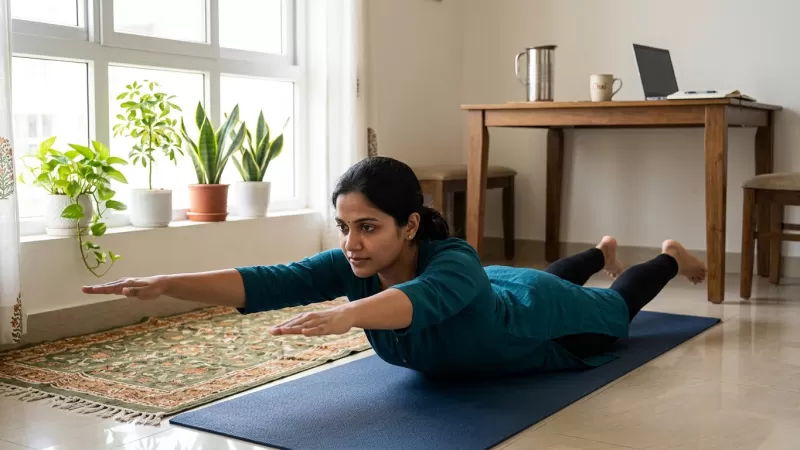
In many Indian homes, work hours often mean hours spent at a desk, sometimes at a dining table, or a makeshift study area squeezed between beds and cupboards. Back exercises at desk during work India are quietly becoming a small but steady habit, especially during those long stretches between chai breaks when shoulders start to round and lower backs begin to ache.
It's not always about big routines or carving out 20 minutes before breakfast. More and more, posture exercises during working hours India are being squeezed into tiny pockets of time—like the minute between two Teams calls, or while waiting for a spreadsheet to load. And in the process, many working adults are discovering that these micro-movements can actually shift how their body feels by late afternoon.
Why Desk-Related Back Pain Is So Common for Indian Adults
Work hour exercises Indian adults back tend to get ignored because our work setups, in most middle-class homes and offices, are rarely designed for posture. The dining chair doubles up as the office chair. The laptop sits a bit too low. Fans whirl overhead in the summer, but the back remains pressed against a hard wooden surface for hours. Even in open-plan offices, ergonomic chairs are the exception rather than the rule.
In many families, the pressure to manage household chores and office work at the same time means people barely get up except for lunch or a quick trip to the kitchen. The result? A slow build-up of stiffness, soreness, and that familiar mid-back ache that seems to settle in around 4pm.
Fitness coaches who train working adults often find that most movement in Indian homes comes from daily tasks, not planned exercise. So, the body learns to live with these aches, accepting them as part of the routine—even though they don’t have to be.
Why These Aches and Stiffness Happen During Desk Work
There are a few reasons why at-desk exercises for back pain India become necessary. First, the way we sit at desks here is rarely ideal. Most adults end up hunching forward to look at their screens, shoulders creeping up, neck jutting out. Over time, this posture strains the upper back and neck, leading to tightness and even headaches.
Lower backs take a beating too. Many Indian adults, especially those who work long hours without breaks, start to tuck their pelvis under or slump, putting pressure on the lumbar region. Then there’s the lack of movement—getting up only for tea or a bathroom break isn’t enough. The tricky part is, Indian workplaces and homes often expect adults to stay put at their stations, making it feel awkward to stand up or stretch in full view of family or colleagues.
During busy periods—like the end of the financial year or when schools are on holiday and the house is noisier—people tend to move even less. These small, repeated patterns add up over weeks and months, making back stiffness a near-universal experience among desk workers here.
Clues Your Body Is Asking for Attention at the Desk
- Afternoon aching: A dull pain or heaviness in the lower back or between the shoulder blades after lunch, especially by 4pm.
- Neck tightness: Difficulty turning your head fully, or a stiff neck after a long call.
- Shoulders creeping up: Noticing your shoulders are almost touching your ears, especially during stressful tasks.
- Restlessness: The urge to keep shifting in your seat, stretching your legs, or rolling your shoulders without really knowing why.
- Tiredness despite sitting: Feeling drained or foggy, as if you’ve run around all day, even though you’ve barely moved from your desk.
These signs often pop up quietly. Many adults in India write them off as part of growing older or just ‘normal’ work fatigue, but they’re your body’s way of asking for a pause and a bit of movement.
Desk Movements That Fit Into Real Indian Workdays
- Seated Shoulder Rolls: While staying seated, slowly roll your shoulders up, back, and down in a circular motion. Repeat 5–8 times. This is subtle enough for any open-plan office or even during a video call with your camera off.
- Neck Side-to-Side: Gently tilt your head toward each shoulder, holding for a breath. This helps with neck tightness from looking at screens and works well between tasks, even if someone walks by.
- Seated Figure-Four Stretch: Cross one ankle over the opposite knee, sit tall, and gently lean forward. Hold for a few breaths. This stretch feels discreet and helps open the hips, which get tight after long hours at the desk.
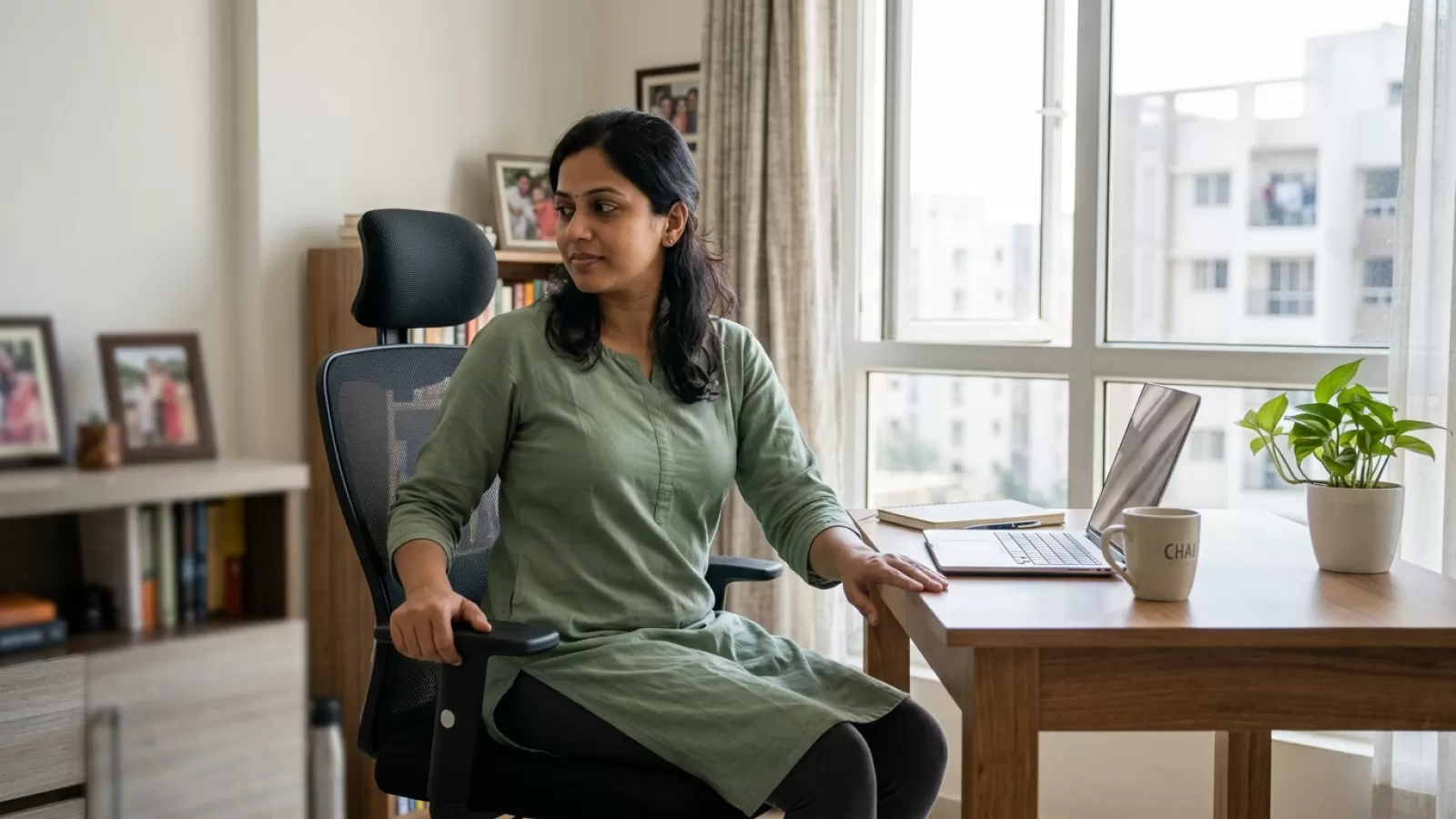
- Upper Back Twist: Sit tall, place one hand behind your chair, and gently twist to look over your shoulder. Hold for 2–3 breaths and switch sides. This movement is quiet but effective for releasing stiffness between the shoulder blades.
- Pelvic Tilts (Seated): Sit with feet flat, gently rock your pelvis forward and back, feeling your lower back arch and then flatten. No one notices this movement, but it wakes up the lumbar area and helps with lower back ache.
Most of these back exercises at desk during work India take less than 90 seconds. You don’t need to get up, change your clothes, or draw attention. Over a week or two, many people notice that their usual 4pm soreness fades—or at least doesn’t get worse.
How Desk-Based Exercises Blend Into Everyday Indian Routines
In a Bengaluru office with long rows of desks, one person starts rolling their shoulders and shifting their hips every hour. At first, colleagues glance over, but soon two or three others begin copying the movements quietly, often during team calls when cameras are off. Within a few weeks, the afternoon hush is sometimes broken by the gentle ripple of chair creaks as people stretch—no one needs to explain, and it becomes an accepted part of the day.
At home, a parent working at the dining table sneaks in a hip stretch while waiting for dal to boil on the stove. In joint families, younger adults do subtle posture exercises during working hours India while older relatives read the newspaper nearby. Over time, these micro-movements become part of the household rhythm—just another thing that happens between bites of poha or sips of chai.
Many families in Indian cities have quietly discovered that building these tiny routines helps everyone feel less achy by evening, especially after back-to-back calls or long days spent sitting.
When to Consider Asking for Help With Back Pain
Most people find that simple back exercises at desk during work India relieve stiffness and mild discomfort. But if pain becomes sharp, shoots down your leg, or doesn’t improve after a week or two of regular movement, it’s a good idea to talk to your doctor. The same goes if you notice tingling or numbness. Small, regular movements help a lot, but sometimes a check with a professional is needed—especially for pain that interrupts sleep or daily activity.
Common Questions
Many Indian adults wonder how to fit at-desk exercises for back pain India into a packed workday, especially in busy homes or shared offices. Sometimes the most useful routines are the ones that can be done quietly, without drawing attention or requiring extra time. Here’s what people often want to know about making these movements work for them.
What back and posture exercises can Indian adults do at their desk in under 2 minutes between work tasks?
Some of the best options are seated shoulder rolls, neck tilts from side to side, and gentle upper back twists. In a busy Mumbai home office, an adult might do a round of shoulder rolls while waiting for a slow internet page to load. These movements take less than two minutes, don't need special clothes or a yoga mat, and can be done quietly—even with family members nearby. Over time, these small exercises help keep the back and neck from getting too stiff during long workdays.
How do you make desk-based back exercises discreet enough to do in an Indian open-plan office or shared workspace?
The trick is to keep the movements small and slow. In many Indian offices, people do seated pelvic tilts or figure-four stretches under their desks, which look like simple posture adjustments. Shoulder rolls and neck turns can be done while reading a report or during a call. In a shared space, these subtle actions blend in so well that colleagues usually don’t notice. It helps to pair the exercise with something routine, like checking emails or waiting for chai.
Which specific desk exercises address the upper back and neck versus the lower back and hips for different pain patterns?
For upper back and neck tightness, shoulder rolls, neck tilts, and upper back twists work best. If you’re feeling lower back and hip stiffness—common after sitting through long budget meetings—figure-four stretches and seated pelvic tilts are helpful. Some people in Pune offices alternate between the two types, picking what feels tightest that day. Matching the exercise to your pain pattern makes the biggest difference over time.
How do you build a habit of doing desk exercises throughout the working day when concentration on work makes it easy to forget?
One method is to link the exercise to something you already do regularly, like every time you finish a call or before you get up for chai. In many Indian households, setting a gentle alarm or a sticky note on the laptop helps too. Over a week or two, the action starts to feel automatic. Some families even remind each other—kids might nudge a parent to stretch during online classes, making it a shared habit.
What is the most effective single desk exercise for Indian adults with the specific lower back and shoulder pattern created by long-term computer work?
If you can only pick one, seated shoulder rolls give both upper and lower back some relief. Many Indian adults find that doing 8–10 shoulder rolls every hour, even without getting up, helps relax tense muscles and makes sitting feel less tiring. On days when you feel the ache building, try combining these with a quick seated twist. It’s the small, repeatable movements that matter most during long computer workdays in Indian homes and offices.