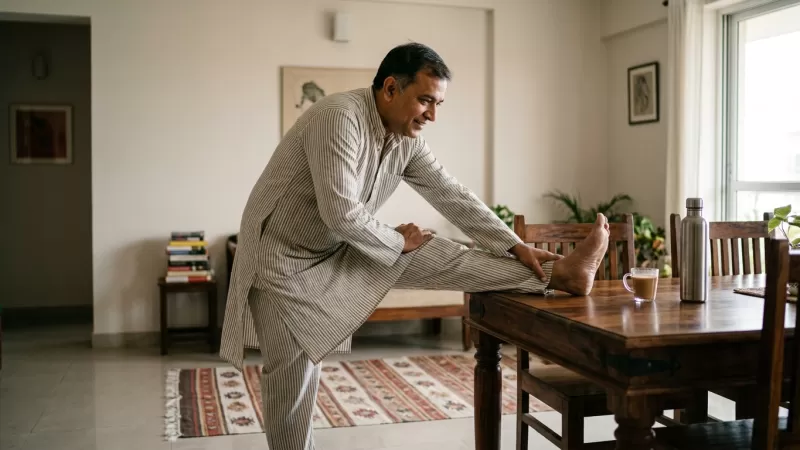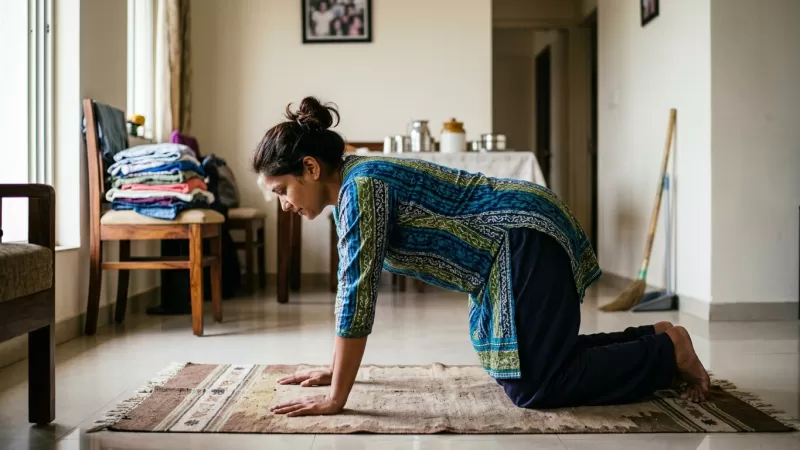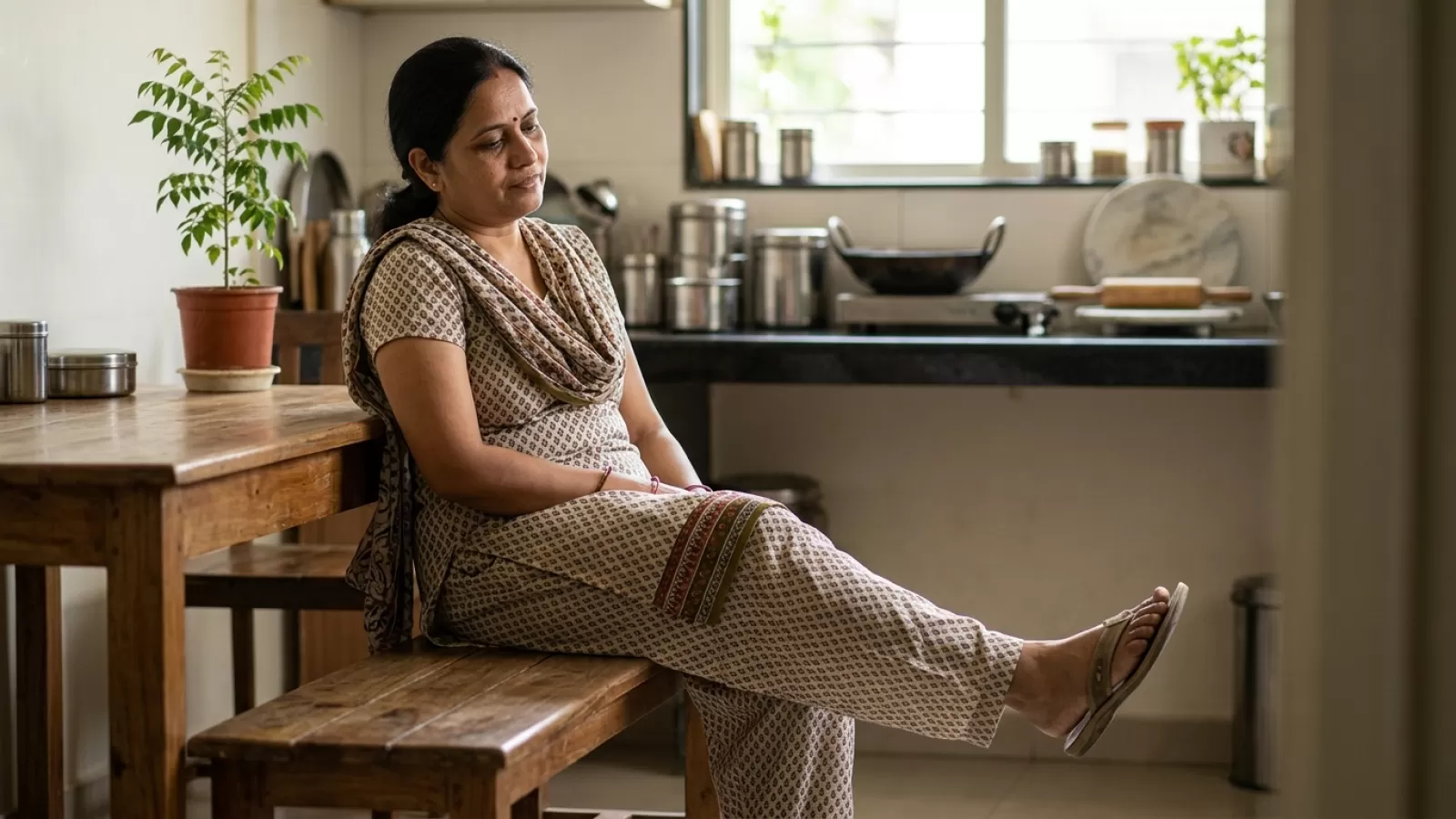
After a long day of standing in the kitchen, running behind children, or just managing the endless rounds of household chores, it’s not uncommon to feel that heavy, dragging sensation in your legs. You may find yourself sitting down for a few minutes, rubbing your calves, or even propping your feet up on a stool—hoping for some relief. In Indian homes, especially where multitasking is almost a way of life, tired legs are just part of the daily routine for many. But here’s something you might not know: a few gentle movements, done right at home (even in your living room, kitchen, or bedroom), can make your legs feel lighter and help support better circulation. No gym, no fancy equipment, and definitely no strenuous exercises required.
Why Do Legs Feel Tired After Chores?
Let’s start with the basics. When you stand for long periods—like while washing utensils, chopping vegetables, or folding laundry—the blood tends to pool in your lower legs. This is just how gravity works, and it can leave your calves and feet feeling achy or swollen. Some people notice this more in hot weather, especially during our Indian summers, or after festival preparations when there’s extra work at home.
What’s interesting is that most of us don’t realize how little we actually move our legs in different ways during these chores. Standing in one spot, even if you’re busy with your hands, doesn’t get your leg muscles pumping properly. And if you’re someone who likes to finish all the heavy work in one go, you might end up with more fatigue than someone who moves around in bits and pieces.
That said, leg tiredness isn’t a sign you’re weak. It just means your legs need a little help to keep the blood moving and the muscles relaxed.
Small Movements, Big Difference
You don’t need to set aside a special hour for leg care. In fact, sprinkling short movement breaks throughout your day often works better. These movements are not meant to be exercise in the strict sense. Think of them as ways to wake up sleepy muscles and gently nudge your blood circulation.
Here are some signs that it’s time to move your legs a bit:
- Your feet or ankles feel puffy.
- You feel a dull ache or heaviness in your calves.
- Your legs feel restless when you finally sit down.
If this sounds familiar, you’re not alone. Many families quietly deal with this, especially in homes where most chores are still done by hand.
Simple Seated Leg Movements
On days when you feel too tired to stand, seated movements can offer comfort. If you’re sitting on a chair, sofa, or even the floor (as many do while folding clothes or watching TV), you can try these gentle actions:
- Ankle Circles: Lift one foot slightly off the ground and slowly rotate your ankle in circles. Do five to ten circles in each direction, then switch to the other foot.
- Toe Taps: While keeping your heel on the floor, lift your toes up and tap them back down. This can be done quickly or slowly, about 10–15 times per foot.
- Knee Extensions: Straighten one knee to lift your foot off the ground, hold for a count of three, then lower. Repeat five times on each side. This helps stretch the back of your knee and thigh.
These can be done while chatting with family, waiting for the cooker’s whistle, or during a quick tea break. Even a few minutes can bring a gentle sense of relief.
Standing Movements To Lighten Your Legs
When you have a couple of minutes between tasks—maybe while waiting for the milk to boil—try these standing movements. You don’t need much space. A corner of your kitchen or next to the dining table is enough.
- Heel Raises: Stand with feet hip-width apart, slowly lift your heels so you’re on your toes, hold for a second, then lower back down. Repeat 10 times. This pumps your calf muscles, which helps move blood upward.
- Marching in Place: Gently lift one knee, then the other, as if marching. You can hold onto a chair or counter for support. Aim for 20–30 steps.
- Side-to-Side Shifts: Shift your weight from one foot to the other, swaying gently. This wakes up different parts of your legs and helps if you’ve been standing still for too long.
The tricky part is remembering to do these before your legs feel too tired. If you build them into your routine, they become second nature—like washing your hands before eating.
Can These Movements Really Help?
Many people wonder if such small actions are actually useful. Here’s the catch: while they won’t make your legs as fresh as after a full night’s sleep, these gentle movements do encourage blood flow and help reduce that heavy feeling.
You’ve probably noticed older family members stretching their legs out on a stool after a long day, or flexing their ankles while reading the newspaper. There’s a reason—moving your muscles, even a little, helps your veins push blood back up to the heart, which eases swelling and discomfort.
It’s not about doing things perfectly. Consistency, even with simple actions, tends to bring gradual comfort.
Fitting Leg Movements Into Your Busy Day
Modern Indian life can be hectic. Whether you’re juggling office work from home, caring for children and elders, or simply trying to finish chores quickly, it’s easy to forget about your own comfort. But these leg movements don’t need a special setting. You can squeeze them in during:
- Morning tea or coffee breaks
- Waiting for the pressure cooker or microwave
- Watching TV or listening to music in the evening
- Phone calls or video chats
Even during festivals or family gatherings, when you’re on your feet more than usual, taking tiny movement breaks can make the difference between ending the day with tired legs or with a little more ease.
The real challenge is making these movements a habit. Some people like to set reminders on their phone; others tie it to something they do daily, like after every meal. Whatever works for you is just fine.
Leg Movements for Seniors and Those with Less Mobility
For seniors in the family, or anyone who finds it hard to stand for long, gentle leg movements can be even more important. A few examples:
- While sitting, straighten and bend each knee slowly—it doesn’t matter if you can’t lift your foot very high.
- Gently flex and point your toes, as if trying to write your name in the air with your big toe.
- If you use a walker or need support, heel raises can still be done while holding onto a sturdy surface.
It’s perfectly okay to keep things simple. The goal is to move a little, as often as you comfortably can. And if you ever feel pain or dizziness, it’s wise to pause and rest.
Many older people say they feel a bit more steady on their feet after doing these movements regularly—especially after long periods of sitting.
Other Simple Ways to Soothe Tired Legs
Besides movement, there are a few other home-friendly ways people in India often use to ease leg fatigue. Sometimes, it’s the little things that help the most:
- Elevate your legs for a few minutes—prop them up on a pillow or stool while you sit or lie down.
- Soak feet in a basin of warm (not hot) water with a handful of salt—many find this relaxing after a busy day.
- If you wear tight socks or leggings, consider looser clothing at home; this can sometimes help with circulation.
- Massage your calves gently with coconut or mustard oil, especially before bedtime.
During summer, keeping hydrated and avoiding too much salty or oily food can also help reduce swelling in the legs. These are all familiar habits, nothing fancy, but they do tend to make a quiet difference over time.
Listening to Your Body
No two days are exactly the same, and neither are our bodies. Some days, your legs may feel fine, and on others, even a short period of standing can leave you longing to put your feet up. That’s normal.
It’s always okay to rest when you need to. Movement is helpful, but only when you feel safe and comfortable doing it. If you notice anything unusual—like sudden swelling, pain, or changes in skin color—it’s a good idea to mention it to a doctor or a health professional, just to be safe.
But for everyday tiredness, these gentle movements and home habits can help bring a little more comfort and lightness into your routine. After all, taking care of your legs is just another way of taking care of yourself and your family.