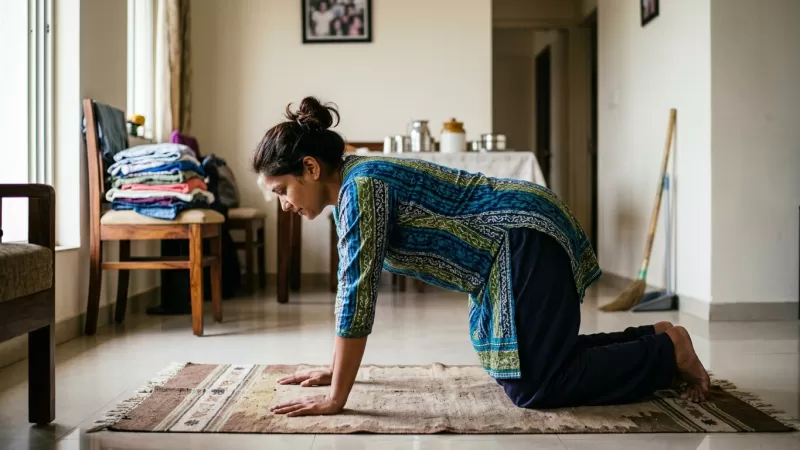
Let’s be honest—most Indian homes aren’t designed with open floor plans or dedicated workout corners. Our living rooms are often multipurpose, balancing sofa sets, center tables, and sometimes even drying laundry. With joint families or children around, making space just to stretch your arms can feel like a game of chess. But, as many have quietly discovered, staying active isn’t about square footage—it’s about fitting movement into the spaces and routines you already have.
Why Moving Matters, Even in Small Spaces
In recent years, many people have started working from home or spending more time indoors, especially during the hot summers or monsoon. It’s easy to lose track of how long you’ve been sitting, whether on the sofa with your tea or at the dining table checking emails. But even gentle activity can help keep your joints happy and your energy up. It’s rarely about burning calories or building big muscles—it’s about keeping your body from stiffening up or feeling sluggish.
Many homemakers and seniors quietly worry about aches and stiffness, but don’t want to overhaul their living room or buy fancy equipment. The good news is, most of us can fit small movements into our daily routine—without moving furniture or making a fuss. It’s really about making the most of the nooks and corners you already have. You don’t need a gym. Just a little space and a few minutes when you can.
Standing Stretches That Fit Anywhere
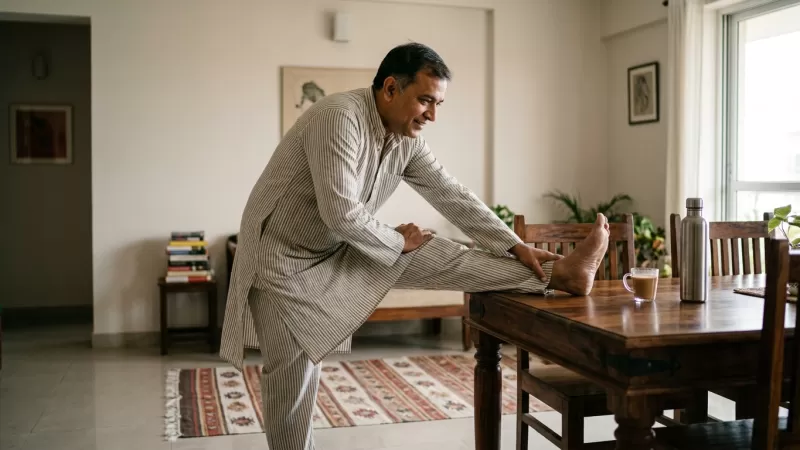
Standing stretches are easy to do in the narrowest of spaces—think of that spot between your sofa and the TV, or even next to your bed. No need for a yoga mat or special gear. You can use the back of a chair or hold onto the wall for balance if you need it, which is especially handy for seniors.
- Shoulder Rolls: Stand tall, gently roll your shoulders forward and back. This helps loosen up tension from long hours of cooking, cleaning, or typing.
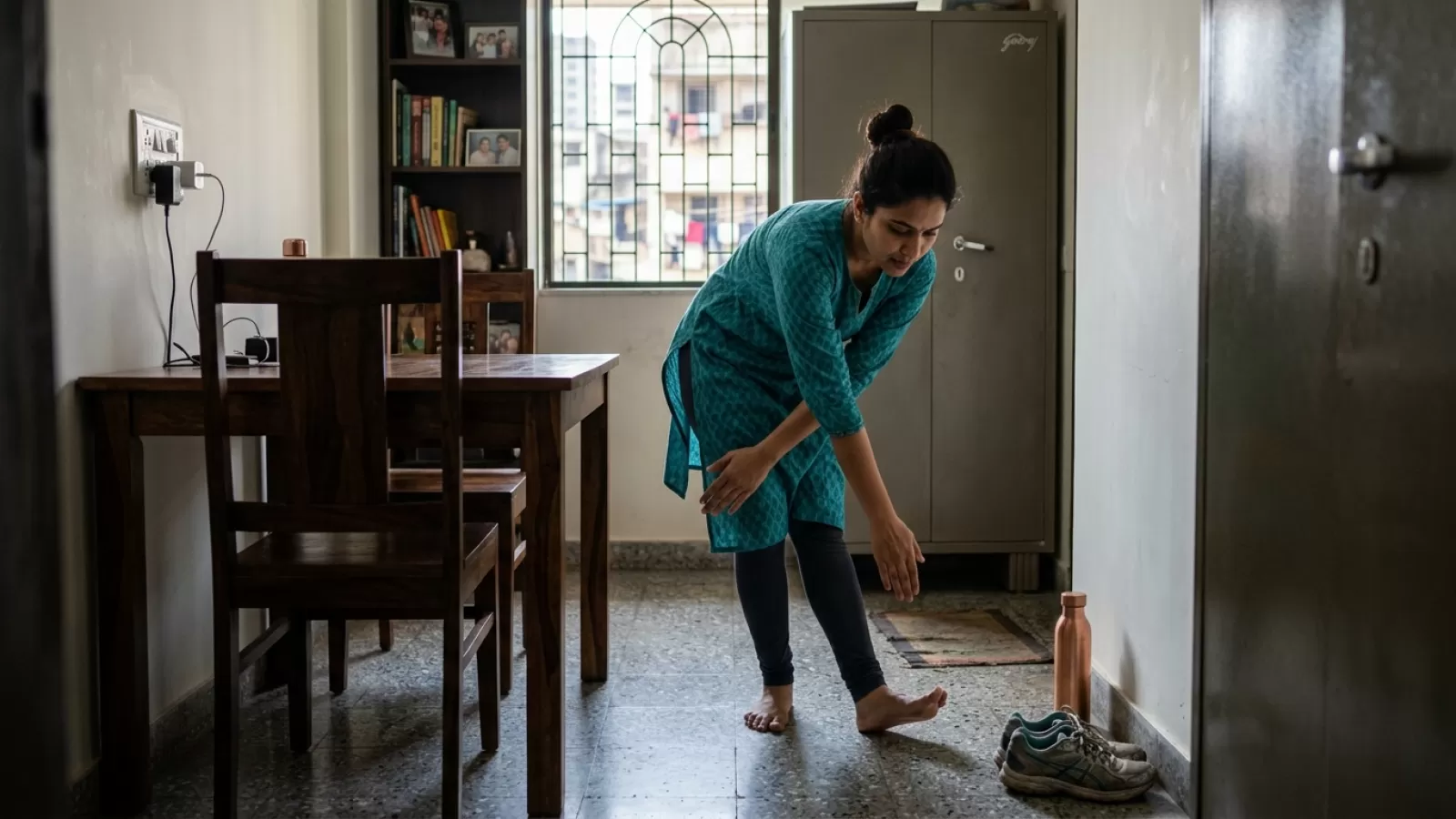
- Side Bends: With arms by your side, slowly reach one hand towards your knee while leaning your body to the same side. Repeat on the other side. You might feel a gentle stretch along your ribs.
- Ankle Circles: Hold onto a sturdy surface, lift one foot slightly and rotate your ankle, first clockwise, then anti-clockwise. This small move helps with balance and mobility, especially if you tend to sit cross-legged for long periods.
These moves can be squeezed in while waiting for milk to boil or during TV ad breaks. No need to change into sportswear—your regular kurta or pajamas are just fine.
Seated Moves for the Sofa or Bed
Let’s face it—everyone ends up on the sofa or bed at some point, especially after a tiring day. Here’s the catch: you can actually do a lot without even getting up. Seated moves are great for those with knee pain, seniors, or anyone who just wants a gentle start.
Try these while watching your favorite serial, talking on the phone, or even during a family WhatsApp call:
- Knee Lifts: Sit comfortably, slowly lift one knee towards your chest, hold for a moment, then lower. Switch sides. This helps wake up your hip and thigh muscles.
- Toe Taps: With feet flat on the floor, tap your toes up and down. It’s a small move, but you’ll feel your shins working.
- Neck Turns: Gently turn your head to look over each shoulder, holding for a breath or two. Good for easing neck stiffness from mobile use or reading.
Don’t underestimate these tiny moves. They keep your joints moving and remind your body to stay awake, especially on slow afternoons.
Wall Workouts: Your Best Friend in Tight Corners
Walls are surprisingly useful when space is tight. Most Indian homes have at least one clear wall—maybe in the hallway or bedroom. Wall exercises help with balance and support, making them comfortable for all ages.
- Wall Push-Ups: Stand facing the wall, place your palms flat and do gentle push-ups. This works your arms and chest without putting strain on your wrists or back.
- Wall Slides: Stand with your back to the wall, slowly bend your knees as if sitting in an invisible chair, then come back up. It’s like a squat, but the wall keeps you steady.
- Arm Reaches: Stand side-on to the wall and slide your arm up as high as you can, then back down. Helps open up tight shoulders and side muscles.
These moves are simple, but you’ll notice a pleasant difference in your energy, especially if you’ve been sitting or standing in one position for too long.
Use Everyday Items for Extra Support
Most people don’t have fancy dumbbells or resistance bands lying around, and honestly, you don’t need them. Everyday objects can double as gentle weights or props for movement. Even a bottle of water, a sturdy rolling pin (belan), or a small towel can make a difference.
- Water Bottle Lifts: Hold a filled bottle in each hand and gently curl your arms up and down. Great for arm strength, and you can do it while standing or sitting.
- Towel Stretches: Hold a rolled-up towel between both hands, stretch it overhead or in front of you. This helps open up your shoulders and chest, especially if you’ve been hunched over a phone or laptop.
- Step-Ups (if you have a sturdy step or stool): Carefully step up and down, holding onto a support if needed. This gets your legs working without needing much space at all.
It’s easy to be creative here. Just ensure whatever you use is safe and not too heavy—especially if you have kids or pets running around.
Micro-Movement Habits for Busy Days
Some days, you might not get a block of free time. The trick is to sneak in small movements throughout the day. These micro-movements add up, especially if you’re realistic about what you can manage between household chores, office calls, or helping with homework.
You’ve probably noticed how often you move without realizing it: walking to answer the doorbell, bending to pick up a dropped spoon, or reaching for a jar on the top shelf. Try to do these a bit more intentionally—stretch a little further, squat a little deeper, or stand on your toes for a moment longer.
- Take the stairs at home instead of the lift for just one floor.
- Stand and march in place for a minute while waiting for your tea to brew.
- Do a gentle stretch every time you finish a phone call.
It may feel small, but over a week, these little habits can truly help keep your body moving.
Movement for the Whole Family
In many Indian households, finding time for yourself isn’t always easy. Kids running around, elders watching TV, or a spouse busy with work calls—there’s always something. One gentle way to make movement regular is to involve everyone, even for just a few minutes in the evening or during a family break.
Simple activities work best:
- Play an old Hindi song and have a two-minute dance in the living room. It doesn’t have to be graceful—it just needs to be fun.
- Challenge each other to stand on one leg for as long as possible, using a wall for support if needed. Kids especially enjoy this game.
- During family TV time, do gentle toe taps or arm stretches together during ad breaks.
When movement feels like a shared activity, it’s less of a chore and more of a natural part of home life.
Gentle Reminders and Listening to Your Body
Some days, your body will feel stiff or tired even before you start. That’s completely normal, especially after long workdays or during humid weather when energy feels low. The most important thing is to listen to your body’s signals—move gently, and don’t push through discomfort. If you feel pain, stop and rest. There’s no prize for overdoing it.
It can be helpful to set small reminders—maybe a note on the fridge, or a gentle alarm on your phone every couple of hours—to stretch or stand up for a minute. Over time, these moments add up, and your body will thank you for the care.
No need to aim for perfection. Just do what you can, when you can. Even a little movement is far better than none at all, especially in a busy Indian home.
Final Thoughts: Small Steps, Big Difference
Staying active in a compact home isn’t about doing everything, or doing it perfectly. Most people quietly find their own balance—fitting in a few stretches here, a gentle walk there, according to what their day looks like. The tricky part is starting, especially when you feel there’s no space or time. But once you begin, you’ll notice how even small movements help your body feel lighter and your mood a bit brighter.
So, next time you feel cramped or tired, remember—it’s not about the size of your living room, but the little choices you make in the space you have. Start small, stay gentle, and let movement become just another easy part of your daily rhythm at home.