When your home is on the smaller side, finding space for exercise can feel a bit discouraging. In many Indian cities, flats are compact, balconies are crowded with plants and drying clothes, and living rooms double as bedrooms at night. That doesn’t mean you have to give up on movement, though. You’ll be surprised at how much you can do to keep yourself flexible and active—no need for a gym, fancy equipment, or even a yoga mat.
Why Moving Matters (Even in Small Spaces)
These days, whether you’re working from home, watching TV with the family, or helping kids with homework, a lot of life happens sitting down. Over time, this can leave your body feeling stiff, sore, or simply less energetic. Regular movement brings back a sense of lightness and helps ward off that nagging tightness in your back or legs.
In Indian homes, it’s common to put off exercise because “there’s no room.” But if you can stretch your arms sideways without hitting furniture, you’ve already got enough space for a small routine. Even 10–15 minutes a day can make a difference, especially for flexibility and mood.
Most importantly, you don’t need to aim for perfection. Some days, it’ll just be three stretches. That’s okay.
Warming Up: Simple, Safe, and Space-Saving
Before you start, it’s always helpful to wake up your joints and muscles gently—especially first thing in the morning or after sitting for hours. Here are a few moves that fit almost anywhere:
- Neck Rolls: Drop your chin and roll your head in slow circles. Go the other way too. It’s surprising how much tension this releases.
- Shoulder Shrugs and Circles: Lift your shoulders up to your ears and drop them. Then roll them slowly forwards and backwards.
- Standing Side Bends: Stand with feet apart, arms overhead, and lean gently side to side. You might hear a satisfying stretch along your waist.
None of these require much room—just a small patch of floor.
Flexible Without Fancy Mats: Stretching for Everyday Comfort
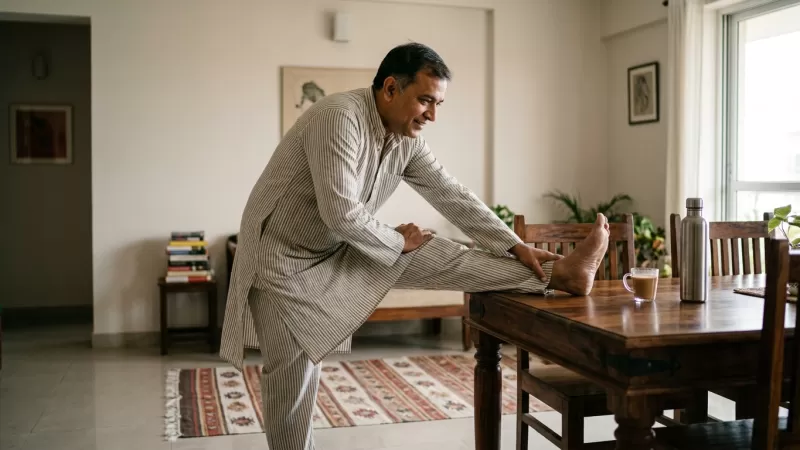
Many families quietly deal with tight backs, stiff hamstrings, or aching shoulders. You don’t need a yoga mat (or even much floor) for a few basic stretches. Try these after waking up, while waiting for the cooker’s whistle, or before bedtime:
- Seated Toe Touch: Sit on your bed or floor, legs stretched out. Reach for your toes—go only as far as comfortable. Hold, breathe, and repeat.
- Standing Calf Stretch: Stand facing a wall, place your hands on it, and step one foot back. Keep the heel down and feel the stretch in your calf. Switch sides.
- Gentle Spinal Twist: Sit cross-legged, place your right hand on your left knee, and twist your upper body gently to the left. Breathe, then switch.
These moves keep you limber, and you can squeeze them in during small breaks.
Bodyweight Movements That Actually Fit in Indian Homes
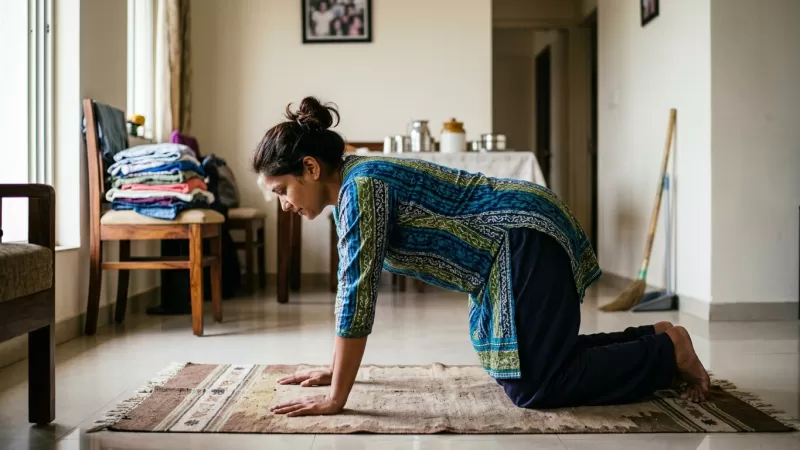
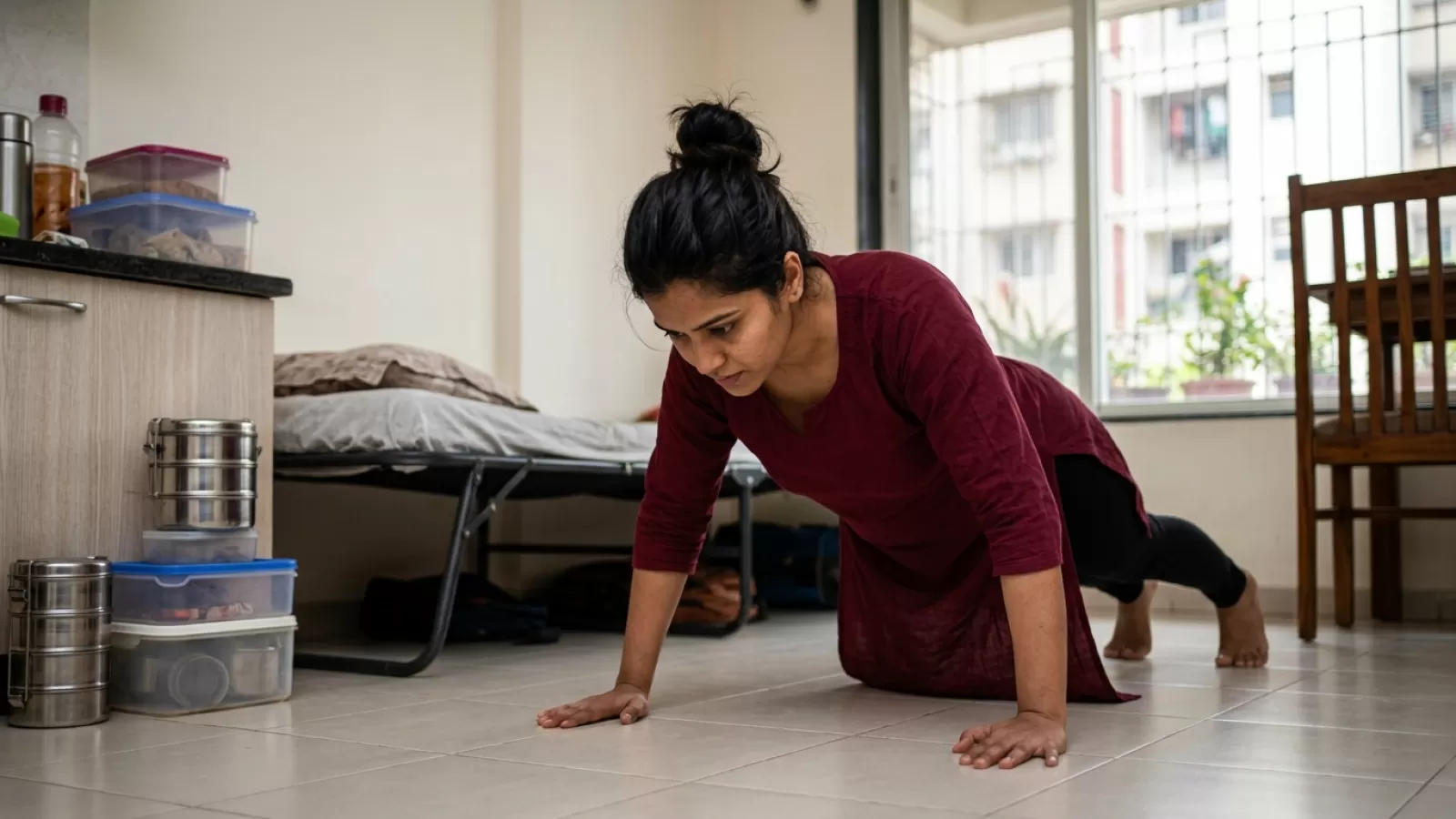
Here’s the catch: Most home workouts online assume you have lots of empty space. But in Indian flats, you work around beds, dining tables, and sometimes even curious pets or kids. The following movements need only a tiny area—about the size of a doormat:
- Wall Push-Ups: Stand facing a wall, arms at shoulder height, and push against the wall like a standing push-up. It’s easy on the joints and gives your arms a gentle challenge.
- Seated Leg Lifts: Sit at the edge of a sturdy chair, straighten one leg, hold for a few seconds, then switch. This works your thighs and can be done while chatting with family.
- Standing Marches: March in place, lifting knees as high as comfortable. Try for a minute at a stretch. It’s great for circulation, especially if you sit long hours.
- Squats (with Support): Hold onto the back of a chair or the edge of a sturdy table, and gently lower yourself down as if sitting in an invisible chair, then come back up. Go only as low as feels safe.
None of these require lying on the floor or sweating buckets. They’re about keeping your body moving, not building six-pack abs.
Making It a Habit (When Family Life Gets Busy)
Here’s something many people struggle with: finding the right time. In most homes, mornings are rushed, evenings are for family, and afternoons slip by with chores or office work. The trick is to fit movement into the little gaps.
Some gentle options:
- While waiting for your chai to boil, do a few wall push-ups.
- After lunch, try a seated spinal twist before getting up from the table.
- During TV ad breaks, march in place or do a round of shoulder rolls.
On some days, you might get distracted or forget. That’s normal. Just pick up from where you left off. The important thing is to not let a missed day stop you the next day.
Joint-Friendly Moves for Seniors and Beginners
For older adults—or anyone new to exercise—gentle, low-impact movements are safest. Many seniors worry about balance, especially on tiled floors. Here are some moves that can be done holding onto a table or chair for support:
- Heel Raises: Stand behind a chair, hold for balance, and rise up onto your toes, then lower back down. Good for calves and ankles.
- Single Leg Stand: Hold the chair back, lift one foot slightly off the ground, and balance for a few seconds. Switch sides. This helps with stability.
- Seated Arm Circles: Sit comfortably, stretch arms to the sides, and make small slow circles. This gently wakes up the shoulders.
It’s best to start slow and stop if you feel pain or dizziness. If you’re unsure, it’s always safer to have someone nearby for support.
Making Exercise Enjoyable: Small Touches That Help
Let’s be honest—exercise can feel like a chore, especially when the house is noisy or the weather is humid. But a few small tweaks can make it more enjoyable:
- Play your favourite old songs while doing stretches. Many people find a little music makes the time fly.
- Open a window for fresh air, especially in the morning or evening.
- Try doing a few moves together with your spouse, parent, or kids. It doesn’t have to be serious—just moving together can be fun.
- Wear comfortable, loose clothes. You don’t need fancy gym wear—your regular cotton salwar or T-shirt is just fine.
Sometimes, setting a small goal—like stretching every day for a week—gives that extra nudge. But don’t let the idea of a “perfect routine” stop you from doing something, however small.
When Motivation Slips: What to Remind Yourself
Not every day will be ideal. You’ll feel tired after long work calls, or just want to curl up with a book. That’s part of normal life. On such days, even a few neck rolls or shoulder stretches are better than nothing.
Often, people think exercise must leave you sweating or sore to matter. But gentle, regular movement—done in the living room, kitchen, or balcony—keeps your body flexible and spirits lifted. If you miss a day (or three), don’t be hard on yourself.
The real benefit comes from returning to movement, again and again, in small ways that suit your home and routine.
Staying Safe and Listening to Your Body
A final word: It’s important to respect your body’s limits. If you feel dizzy, sharp pain, or anything unusual, stop and rest. For those with medical conditions or recent surgeries, it’s best to stick to very gentle movements and get a doctor’s opinion before trying anything new.
Most people find that with a little patience, their bodies adjust, and the simple habit of moving—even in small spaces—makes everyday life feel just a bit lighter. You don’t need a big house, expensive equipment, or perfect discipline. Just a few minutes, a patch of space, and a willingness to start again tomorrow if today didn’t go as planned.