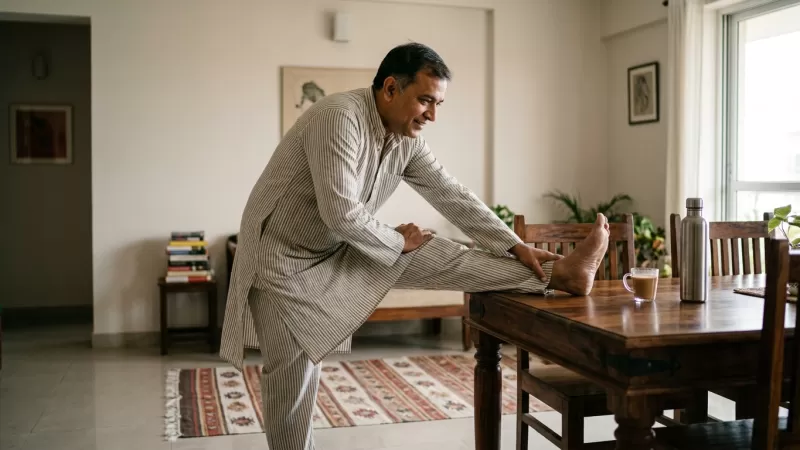
Long business calls have quietly become a part of daily life in many Indian homes, especially since work-from-home became so common. Whether you’re discussing projects with a client, sorting out details with a team, or even catching up on family logistics, long phone calls can leave you surprisingly stiff. Shoulders tighten, necks ache, backs get sore—sometimes you don’t even notice until you finally stand up and feel the pinch. Most people try to ignore it, but that nagging discomfort can drain your energy, make you irritable, and even distract you from what truly matters in the conversation.
Why Do Long Calls Make Us So Stiff?
It’s easy to blame the phone or your chair, but the real issue is often the way we sit and hold ourselves while talking. Many people instinctively hunch over, cradle the phone between shoulder and ear, or just freeze in one position for too long. In Indian homes, where space might be tight and chairs aren’t always ergonomic, these habits tend to sneak up on you.
There’s also something about being deep in conversation—especially an important work call—that makes you forget about your body entirely. You might notice, after hanging up, that your shoulders are near your ears, or your legs have gone numb. It's common, and you're not alone in this.
Of course, not everyone can get up and pace around during a serious call. Sometimes you need to stay close to your laptop, jot down notes, or just keep things professional. The challenge is to find small, private ways to ease tension without breaking your focus or sounding distracted.
Discreet Neck and Shoulder Relief
The neck and shoulders usually take the brunt of a long call. You’ve probably noticed how, after ten or fifteen minutes, your neck feels tight or your shoulders start to ache. Here’s the catch: most people think you have to do big, obvious stretches to feel better. But even tiny, invisible movements can help a lot.
- Shoulder Rolls (Mini Version): Instead of rolling your whole shoulder, just gently squeeze your shoulders up towards your ears, then release. Do this slowly, one side at a time if you like. No one on the call will notice.
- Neck Micro-Tilts: Gently tilt your head a few degrees left and right, as if you’re just nodding along. You can do this while listening, and it usually won’t affect your voice.
- Jaw Relaxation: Many people clench their jaw during tense calls. Try silently parting your lips and relaxing your jaw muscles for a few seconds at a time. It feels subtle, but often helps release tension you didn’t know was there.
None of these need to be dramatic. In fact, they’re best done softly, almost like a slow exhale.
Your Hands, Wrists, and Fingers Need Care Too
In today’s world, many business calls double up as note-taking sessions. You might be scribbling in a diary, typing on a laptop, or even scrolling through emails on your phone. Over time, these repetitive movements can stiffen your wrists, fingers, and even your elbows.
Here are a few ideas that don’t draw attention but offer real relief:
- Gentle Fist Rolls: With your hand under the table or out of the camera’s view, slowly make a fist, then stretch your fingers wide. Repeat a few times, especially if you feel stiffness creeping in.
- Wrist Circles: Move your wrist in tiny circles, almost as if you’re stirring a small spoon in your chai. It’s a small movement, but it can ease tightness after a lot of typing.
- Finger Taps: Press each fingertip to your thumb, one by one. It’s easy to do while you’re listening, and helps keep your hands relaxed.
Sometimes, just pausing for a few seconds between notes to shake out your hand under the desk can make a difference. It’s the little breaks that add up.
Lower Back Comfort Without Drawing Attention
Long calls at the dining table or on a bed can do a number on your lower back. Many families don’t have fancy office chairs, and even those who do may not always sit properly while talking. The result? That all-too-familiar dull ache at the end of a workday.
Here’s what can help, quietly:
- Subtle Pelvic Tilts: While seated, gently rock your hips forward and back a few times. It’s almost like adjusting in your seat, and it keeps your lower back from stiffening up.
- Foot Position Switch: Change the way your feet are placed every few minutes. Flat on the floor, crossed at the ankles, or even one slightly forward—all of these can shift the strain on your back.
- Back Support: Place a small cushion or folded towel behind your lower back. It’s not movement, but good support helps you sit straighter without much effort.
The main thing is not to sit frozen—regular tiny adjustments are usually enough to prevent that deep, nagging ache.
Legs and Feet: Keeping Circulation Going
If you’re on a long call, especially sitting cross-legged on the bed or floor (which happens in many Indian homes), your legs can start tingling or feeling heavy. Getting up and walking around isn’t always possible, but you can still keep your legs comfortable.
Some simple, barely-there movements:
- Toe Wiggles: Wiggle your toes inside your slippers or shoes. It’s almost invisible, but helps blood flow.
- Heel Lifts: With feet flat on the ground, gently lift your heels and lower them, as if you’re tapping along to a song.
- Mini Leg Shifts: Move one leg slightly out, then the other, every ten minutes or so. Even a few inches can help prevent stiffness.
It’s surprising how often people forget about their legs entirely until it’s too late. These movements can help you avoid that sudden "pins and needles" feeling after a long call.
Breathing: The Unsung Hero of Comfort
During long, stressful calls, people often hold their breath or breathe too shallowly. This can make your whole body tense without you realizing it. The good news is that breathing deeply is something you can do without anyone noticing—and it can calm both your nerves and your muscles.
- Silent Deep Breaths: When you’re listening, try taking a slow, deep breath in through your nose, then exhale quietly through your mouth. Repeat a few times.
- Shoulder Drop with Exhale: As you breathe out, consciously let your shoulders drop away from your ears. It’s a gentle way to reset during tense moments.
Some people find that focusing on their breath also helps them listen better and stay grounded, especially during tricky conversations.
Setting Up Your Space for Comfort
Not everyone has a dedicated home office, and that’s okay. You can still make small tweaks to your space to stay comfortable during long phone calls. In many Indian homes, it’s common to take calls at the dining table, on the sofa, or even standing in a quiet corner.
A few practical adjustments:
- Alternate Between Sitting and Standing: If possible, take some calls sitting and others standing. Placing your phone on a shelf or the kitchen counter can give your back a break.
- Use Earphones or Speaker: This frees up your hands and lets you move your neck and shoulders more naturally, rather than cradling the phone.
- Keep Water Nearby: Taking a sip now and then encourages you to pause, shift your position, and keep your throat happy during long discussions.
And if you can, pick a spot with some fresh air—near a window or balcony—especially on those hot, stuffy afternoons.
Building Habits That Stick
It’s easy to try all these tricks for a day or two, then slip back into old habits. The tricky part is making them part of your regular routine. You might need reminders at first—a sticky note on your laptop, or even an alarm that gently buzzes every 30 minutes.
Some families quietly make it a rule to stand or stretch after every call, even if just for a minute. In busy Indian homes, you might also find yourself automatically moving more between calls—fetching a glass of water, helping with lunch, or answering the doorbell.
That said, don’t be hard on yourself if you forget now and then. Most people do. What matters is that you notice how your body feels, and do what you can, when you can. Even small, barely-there movements—done often—can make long workdays a lot more comfortable.
After all, you deserve to finish your calls feeling ready for the next part of your day, whether that’s making chai, helping with homework, or simply taking a quiet moment for yourself.