It’s a scene most of us know well: after a long day, you finally sink into your favourite sofa, maybe with a plate of hot samosas or a cup of chai. But after a while—sometimes without even realising—you feel a dull ache or stiffness in your lower back. For many Indian families, the sofa is the heart of the home, doubling up as a place for evening TV, catching up with family, or even quick work-from-home calls. But sitting here for long stretches, especially in that relaxed, slightly slouched pose, often leads to back trouble that creeps up quietly. Here’s what you can do about it, right in your living room, in just five minutes.
Why Does Sofa Sitting Cause Back Ache?
Most living room sofas, especially the soft, cushiony ones so common in Indian homes, aren’t really designed for long-term sitting. You’ve probably noticed that you tend to slide down or slouch after a while. The back support is often too soft or too low, and our legs dangle or stretch out awkwardly.
This relaxed posture puts stress on the lower back, especially if you’re watching TV for a couple of hours or scrolling on your phone after dinner. Over time, your back muscles get used to this position, and the spine can become stiff. Mornings can feel worse—sometimes it’s hard to straighten up right after getting up from the sofa.
It’s not only age. Even younger people, especially those working from home, are feeling the difference these days. The good news is that a few simple movements can help loosen things up, if you include them as part of your daily routine.
What is a Mobility Flow? (And Why 5 Minutes?)
Mobility flow just means a short series of gentle exercises that help your joints and muscles move better. Unlike hard workouts, these movements are easy, slow, and don’t require any special equipment. No need for fancy yoga mats or gym wear; a regular bed sheet spread on the floor works just fine.
Five minutes might sound too short, but for most busy families—between cooking, kids’ homework, and late-night calls—anything longer can be tough to stick to. The key is consistency. Doing these simple stretches regularly, even if you miss a day or two, is more useful than aiming for perfection and giving up after a week.
The trick is to treat this flow almost like brushing your teeth—just a quiet part of your daily wind-down, rather than a big event.
Before You Begin: Safety and Setting Up
First things first: if you have any serious back problems, injuries, or sharp pain, it’s best to check with a doctor before trying anything new. This guide is meant for mild stiffness and day-to-day aches, not medical conditions.
For everyone else, here’s what usually works best:
- Choose a time when you’re least likely to be interrupted—maybe after dinner, when the kitchen is winding down, or during an afternoon break.
- Wear something comfortable. Pyjamas, house dresses, or simple track pants are perfect.
- If your floor is too hard, spread a thin blanket or bed sheet for cushioning.
- Keep a glass of water nearby. Sometimes gentle movement makes you thirsty.
And remember, it’s okay to skip a step or pause if anything feels odd. This is about comfort, not competition.
The 5-Minute Sofa Relief Flow
This flow is designed to be gentle and familiar. It won’t leave you sweaty or exhausted. You can do most of it in your living room, right next to your sofa.
- Knee Hugs (1 minute): Lie on your back, bring one knee up to your chest, and hold with both hands for 20–30 seconds. Switch sides. This eases your lower back.
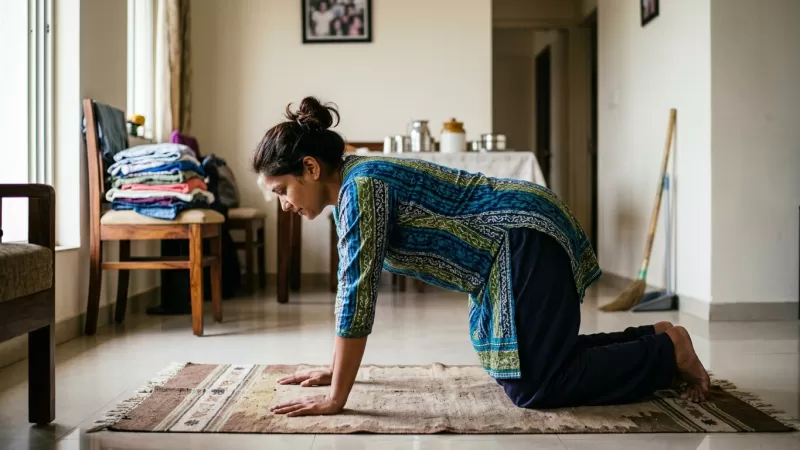
- Cat-Cow Stretch (1 minute): On all fours (hands and knees), arch your back up (like a stretching cat) and then drop your belly towards the floor while lifting your head gently (like a cow). Repeat slowly 6–8 times.
- Seated Forward Bend (1 minute): Sit on the floor with legs straight, toes pointing up. Gently bend forward, reaching for your feet or shins. Don’t force it—just go as far as is comfortable.
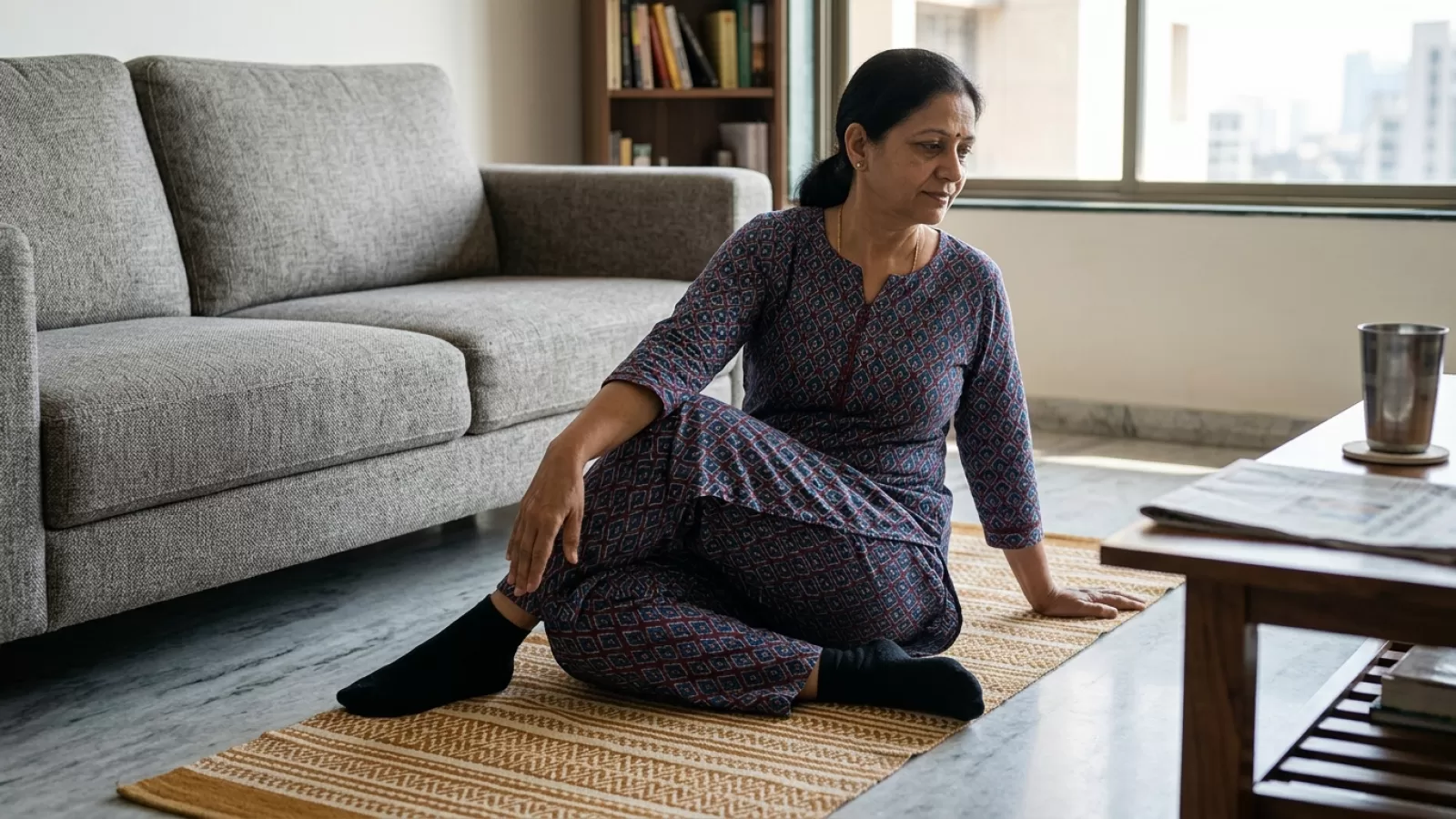
- Spinal Twist (1 minute): Sit cross-legged or with legs out in front. Place your right hand behind you, left hand on your right knee, and gently twist your upper body to the right. Hold for 15 seconds, then switch sides.
- Child’s Pose (1 minute): Kneel and sit back on your heels, stretch your arms forward on the floor, and let your forehead rest down. Breathe slowly. This is a resting stretch, and many people find it calming.
If sitting on the floor is difficult (it happens to many seniors), you can do some of these stretches while sitting on the sofa itself, just by hugging your knees or twisting gently.
How to Make It a Habit (Even If You’re Too Busy)
Honestly, the hardest part isn’t the stretching—it’s remembering to do it. Many people start out with energy but lose track after a few days, especially when life gets hectic.
Here are a few practical ways that tend to help:
- Pair the flow with something you already do every evening—maybe right after you switch off the TV or before brushing your teeth at night.
- Ask a family member to join you. Even if it’s just for a minute, shared routines often stick better.
- On days when you’re too tired, just do one or two stretches. Even a little movement is better than nothing.
The point isn’t to be perfect. It’s just to gently remind your body that it can move, even after hours on the sofa.
What If You Feel Stiff or Sore?
It’s normal to feel a little stiff, especially the first few times. You might even wonder if you’re doing the movements "right." That’s fine—these aren’t complicated poses, and it’s not about exact form.
If you feel mild discomfort, pause and breathe. Many families quietly deal with occasional aches, especially during winter or after festival seasons when routines go out of shape. It usually gets easier after a week or so, as your muscles get used to moving again.
But, if you ever feel sharp pain or something feels very wrong, it’s best to skip that movement and rest. There’s no rush.
Everyday Tips to Reduce Sofa-Related Back Ache
Besides mobility flows, small changes around the house can also make a difference. None of these are must-dos, but they often help:
- Try using a small cushion or rolled towel behind your lower back while sitting. It gives basic support and reminds you to sit up straighter.
- Get up every 30–40 minutes to stretch your legs, even if it’s just to refill your water bottle or check on what’s cooking.
- During phone calls, stand up and walk around the room if possible. You’ll notice it breaks the spell of long sitting.
- After a long sofa session, do a couple of gentle stretches before heading to bed.
Little routines like these often work quietly in the background, keeping back aches from becoming regular guests in your home.
When to Seek Extra Help
Some back aches do linger, even after trying everything simple. If your pain lasts more than a few weeks, keeps coming back, or starts affecting your daily activities (like standing at the gas stove, sweeping, or carrying groceries), it might be time to check with a doctor or physiotherapist.
Sometimes, what feels like a minor ache can have a deeper cause—like a slipped disc or nerve issue. Most cases are harmless, but it’s better to be cautious, especially for seniors or those with health conditions.
The main thing is to listen to your body. If something feels off, there’s no harm in asking for help.
Final Gentle Thoughts
Back stiffness from sofa sitting tends to sneak up on most of us, especially in this era of endless screens, quick meals, and late-night family chats. The good news is, you don’t need to overhaul your life or give up your favourite spot in the house. Just a few minutes daily, a little movement here and there, and some awareness can go a long way.
Take it slow. Skip days when you’re too tired. The important thing is to treat your back with the same care you give to everything else in your home.
That’s often enough.