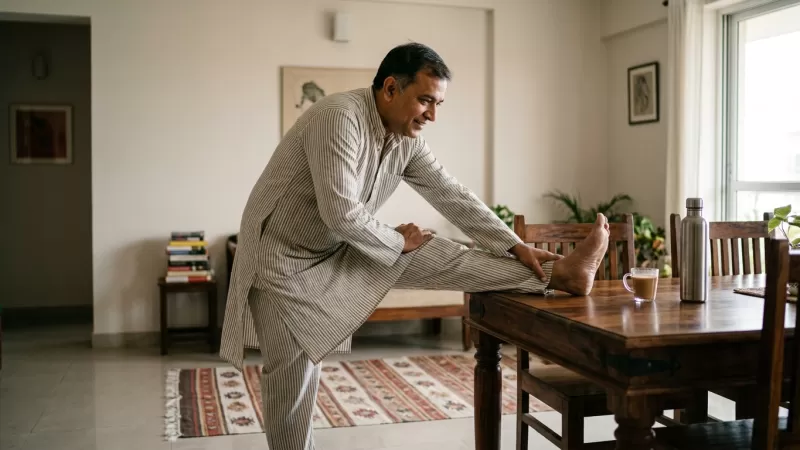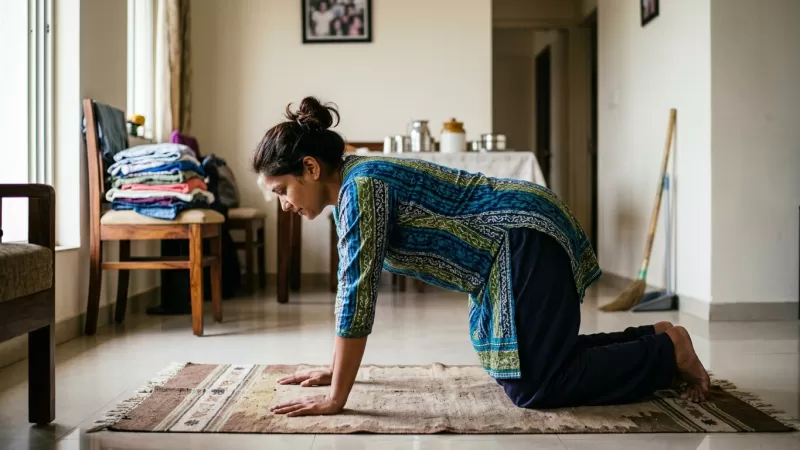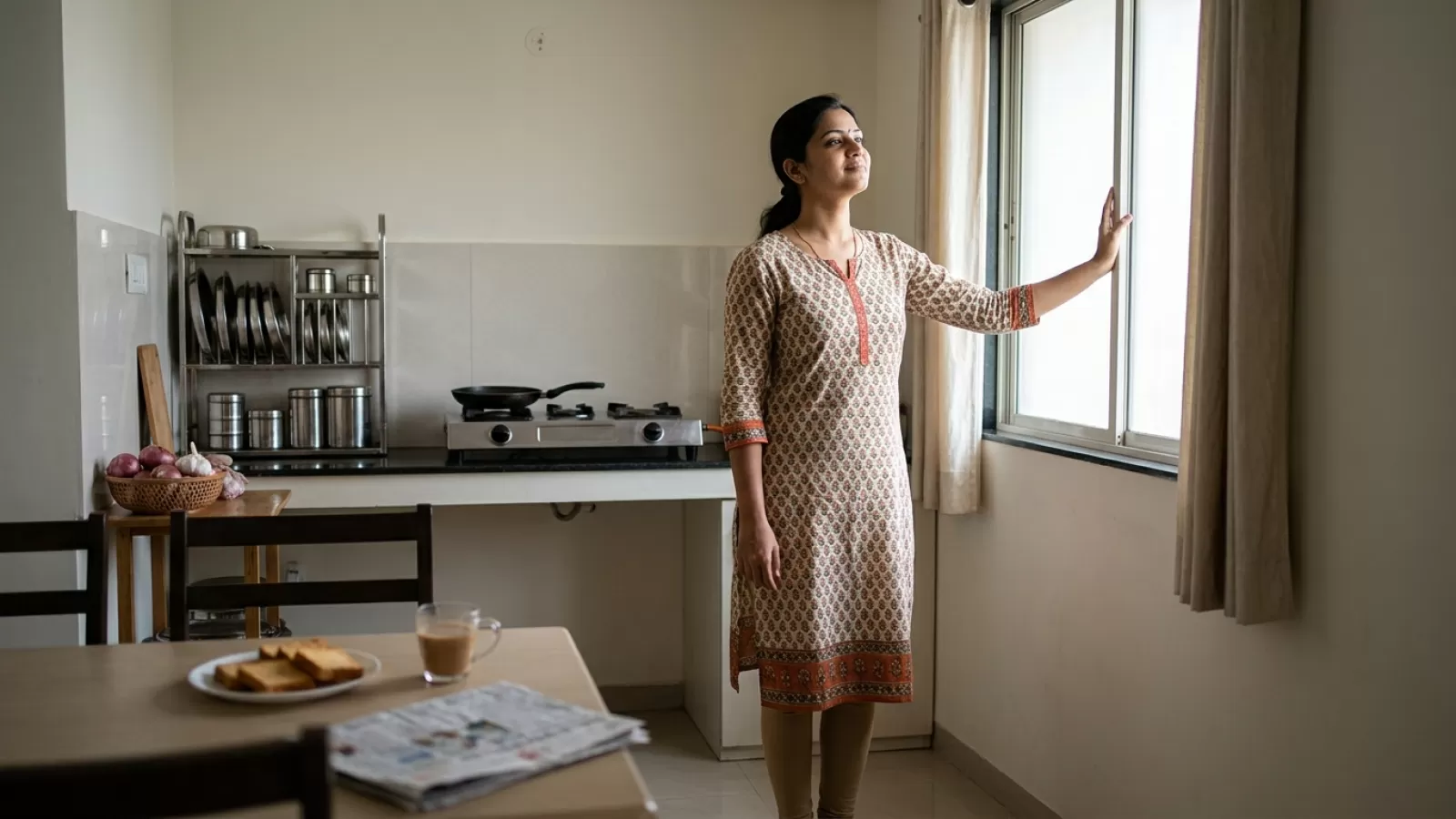
These days, most of us spend long hours sitting—at the dining table, on the sofa, at work desks, or even hunched over our phones while waiting for chai to brew. Many Indian homes have shifted from active, bustling mornings to quieter, more sedentary routines, especially if you’re working from home or spending more time indoors. It’s no surprise that neck pain, stiff shoulders, and a tired back have quietly become everyday complaints. You might notice it after an evening watching TV, or during long phone conversations with relatives. The good news? You don’t need fancy equipment or a gym membership to start feeling better. With a few simple, posture-friendly movements tucked into your day, you can support your back and neck—right from your living room.
Why Slouching Happens So Easily at Home
Let’s be honest: most Indian seating, whether it’s cushy sofas or those low plastic chairs, isn’t designed with your back in mind. Add in the habit of leaning forward during meals, reading news on your phone, or folding laundry, and you end up with a posture that slowly collapses.
Slouching doesn’t always feel uncomfortable at first. In fact, it often feels relaxing to sink into the sofa after a long day. But over time, this “relaxing” position puts extra pressure on the neck, shoulders, and lower back. You might not connect the dots immediately, but regular slouching is a common reason for those nagging aches you feel by bedtime.
So, what can you do? The trick isn’t about sitting up straight like a soldier all day. Instead, it’s about adding small, easy stretches and movements—ones that fit into your everyday routines.
Simple Stretches You Can Do Anywhere
You don’t have to put on workout clothes or clear a big space. The easiest stretches are the ones you can do in your kurta or sari, maybe while waiting for the pressure cooker to whistle or during an ad break on TV. Here are a few options:
- Shoulder Rolls: Gently roll your shoulders backwards and then forwards, about 5–10 times in each direction. This helps release tension that builds up from slouching.
- Neck Tilts: Lower your right ear toward your right shoulder, hold for a few seconds, then switch to the left. Try not to force anything—just let your neck stretch naturally.
- Seated Cat-Cow: Sit tall on a dining chair, place your hands on your knees, and slowly arch your back (look up), then round it (look down). This is a gentle way to get your spine moving, especially after long periods of sitting.
None of these need to be perfect. The idea is to loosen up a bit, not to compete with anyone.
Fitting Movement Into Busy Indian Routines
Many families have packed mornings—breakfast tiffin, school drop-offs, office logins. It’s easy to feel there’s just no time for extra exercises. Still, you can slip in a few movements without adding stress to your day.
For example, while waiting for your tea to boil, practice a few shoulder rolls. If you’re folding clothes on the bed, take a moment to stretch your arms overhead. During evening TV time, try the neck tilts during commercial breaks. Small, scattered movements are better than none.
And if you miss a stretch or two? Don’t worry. It’s not about being perfect every day—it’s about giving your body small chances to reset.
Household Habits That Naturally Help Posture
You’ve probably noticed elders in the family sitting cross-legged on the floor or squatting while doing chores. These traditional positions, though sometimes uncomfortable for stiff knees, actually support a healthy spine if done safely. The trouble is, most of us have shifted to chairs and sofas.
Here are a few gentle habits that can help, especially if you’re not keen on formal exercise:
- Alternate Sitting Styles: Switch between sitting on the floor (if comfortable), a firm chair, and standing throughout the day.
- Take Micro-breaks: Stand up and stretch lightly every 30–40 minutes. Even walking to the kitchen counts.
- Use a Small Towel Roll: Place it behind your lower back when sitting. This can give your spine gentle support and remind you not to slump.
Some days, you’ll forget these habits. That’s alright. It’s about finding what quietly fits into your life.
Gentle Movements for Seniors and Stiff Joints
For many seniors, or anyone dealing with joint stiffness, the idea of exercise can feel overwhelming. The key is gentleness—never pushing into pain or strain. Simple movements, even done from a chair or bed, can make a difference over time.
Some very safe options include:
- Wrist and Ankle Circles: Slowly rotate your wrists and ankles in circles, both directions. This helps keep joints mobile, especially after long rest.
- Arm Raises: Lift your arms overhead as far as comfortable, then gently lower them. You can do this sitting or standing.
- Gentle Side Bends: While seated, reach one arm over your head and lean slightly to the opposite side. Repeat on the other side if it feels good.
Always listen to your body. If something doesn’t feel right, skip it. The goal is to move a little, not to force anything.
Common Posture Mistakes in Indian Homes
There are a few habits that tend to sneak up on us. You might recognize these:
- Sitting with the phone or tablet in your lap—neck bent down for long stretches.
- Working on a laptop placed on a low table or bed (very common with work-from-home routines).
- Watching TV while lying sideways on the sofa, with one shoulder squashed.
- Doing jigsaw puzzles or reading the newspaper hunched over the dining table.
The tricky part is, many of these are just part of ordinary life. You don’t have to give them all up, but you can balance them with a few posture-friendly movements, and maybe adjust your setup a bit (like raising your screen higher or supporting your back with a pillow).
How to Stay Consistent Without Stress
Consistency is where most of us struggle. Life gets busy, routines change, and before you know it, days pass without even a single stretch. Here’s the catch: you’re more likely to keep up with these movements if they feel easy and natural, not like another chore on your list.
Try pairing a stretch with a daily habit you already have. For example, shoulder rolls after brushing your teeth, or neck stretches before you start dinner. Some families even do a quick “stretch break” together before evening chai.
And if you skip a day or two? That’s normal. Just start again whenever you remember. Your body doesn’t mind small interruptions.
When to Be Extra Careful
Most gentle stretches are safe for most people, but it’s wise to be cautious. If you have any serious pain, recent injuries, or health concerns, it’s best to be careful and avoid anything that feels uncomfortable. You never need to push through sharp pain or dizziness.
Simple movements should always feel comfortable and easy. If you’re unsure about any exercise, or if your pain is persistent and severe, it’s a good idea to talk to a healthcare professional who understands your personal needs.
In many homes, aches and pains are quietly tolerated for years. Sometimes, just acknowledging the discomfort is a good first step.
A Little Movement Goes a Long Way
Most Indian families find themselves sitting more than ever, whether it’s due to work, age, or simply the comfort of home. You don’t have to overhaul your lifestyle or aim for perfect posture every minute. Just a handful of small, easy stretches—done here and there throughout your day—can help ease tension and support your body.
Think of it as giving your neck and back a little care, the same way you’d water your tulsi plant daily. It doesn’t need to be complicated, and you don’t have to do everything at once. Over time, these gentle movements can make your home feel like a more comfortable place to rest, work, and enjoy with your family.
Sometimes, the smallest efforts are the ones that quietly make life better.