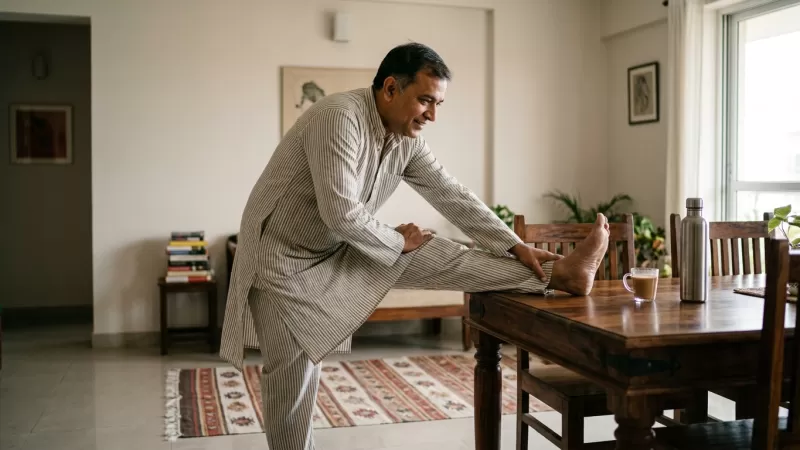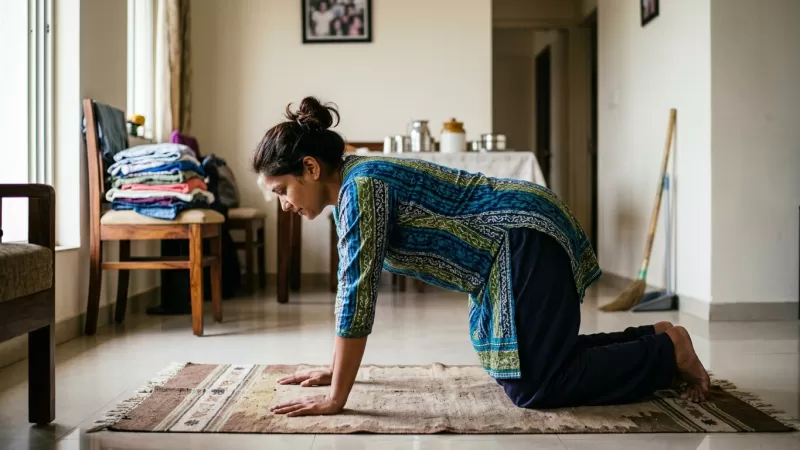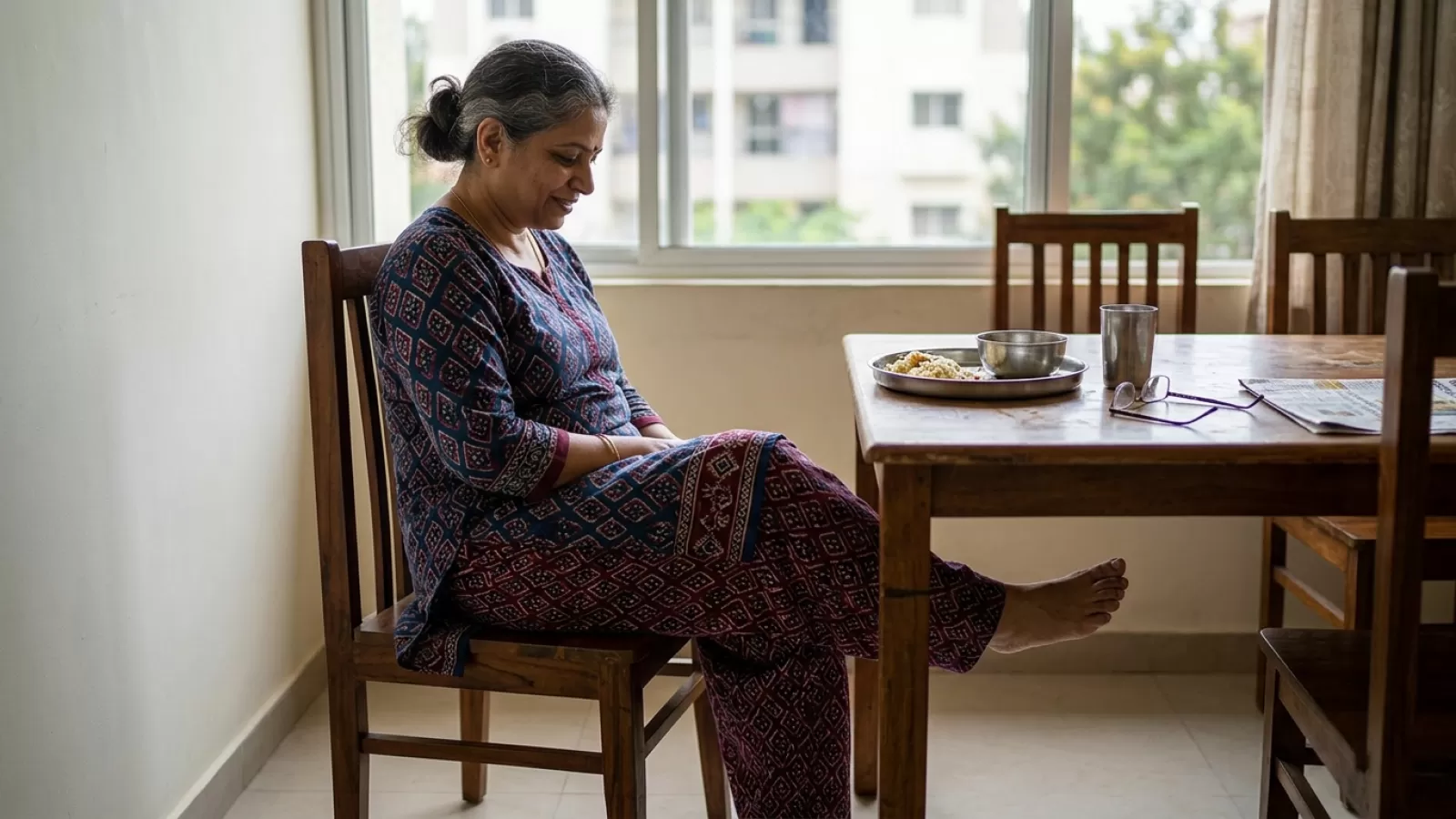
These days, with so much of life happening indoors—be it in small flats, joint family homes, or work-from-home setups—it’s not unusual to find yourself sitting quietly for hours. Maybe it’s at the dining table sorting bills, on the sofa watching TV, or in a corner doing office work. After a while, you might notice your legs feel heavy, your joints a bit stiff, or there’s a dull ache in your back. It’s a common story in many Indian homes, especially as we spend more time on screens, or simply catching a moment’s peace after a busy morning. The good news? You don’t need a fancy routine, equipment, or even a lot of time to gently restore circulation and comfort. Small, thoughtful movements can make a real difference—without feeling like a workout or adding pressure to your day.
Why Sitting Still Affects Your Body
You’ve probably noticed how your body feels after sitting for a long time—whether it’s at the computer, watching a long serial, or during a family game night. The reason is simple: when you stay in one position, blood flow slows down, especially to your legs and feet. Muscles tighten and joints get less lubrication, leading to that familiar stiffness or heaviness.
In Indian homes, it’s common to sit cross-legged on the floor or on the bed, and sometimes chairs or sofas for long stretches. During summer, you might find yourself parked under a fan for hours, while in winter, those thick blankets can make it harder to get up frequently. Over time, these habits can quietly creep up on you, making everyday movements less comfortable.
But here’s the catch: you don’t need to overhaul your routine or start a formal exercise program just to feel better. It’s more about finding simple, easy ways to keep your blood moving throughout the day. Many older adults and busy homemakers make small movements almost unconsciously, like shifting weight or tapping their feet—these little things genuinely help.
Signs Your Circulation Might Need Some Care
Sometimes, it’s easy to ignore mild discomfort, especially when you’re busy or tired. But paying attention to your body can help you make gentle changes before stiffness becomes a bigger problem. Some common signs include:
- Heaviness or swelling in the feet and ankles, especially after sitting for a long time.
- Tingling, numbness, or pins-and-needles in your legs or hands.
- Stiff knees, hips, or lower back when you stand up.
- General tiredness or a sense of sluggishness, sometimes even after a good meal like dal chawal or poha.
If you notice these things often, it’s worth trying a few very gentle habits to see if they help. No need to panic—these symptoms are common in many families, especially with age or a more sedentary lifestyle.
One thing to remember: always check with your doctor if you have any medical conditions, new swelling, or severe pain. For everyday stiffness, though, a few easy changes usually help most people feel a bit better.
Gentle Movements You Can Do Without Leaving Your Seat
You don’t always have to stand up or do stretches to help your body. Even while sitting, there are quiet, almost invisible ways to wake up your circulation. These work well whether you’re reading the newspaper, doing puja, or listening to music.
- Ankle Circles: Slowly rotate your ankles in both directions. Do this for 20–30 seconds every hour.
- Knee Lifts (Seated): Gently lift one knee at a time, as if marching in place while sitting. No rush, just a slow movement.
- Shoulder Rolls: Roll your shoulders forward and backward. This helps release neck and upper back tension.
- Toe Tapping: Quietly tap your toes or press your heels into the ground for a minute. This little movement helps pump blood back up your legs.
These activities are so gentle, you can do them while chatting with family or watching TV. Over time, small habits like these add up, making it less likely that you’ll feel stiff or heavy after sitting.
That said, don’t worry if you forget sometimes. The idea is to do what fits naturally into your day, not to give yourself one more thing to remember or feel guilty about.
Making Everyday Movements Work for You
Keeping your body comfortable doesn’t have to mean carving out separate time for “exercise.” In many Indian homes, you’ll see older relatives who get up to stir the dal, check on the pressure cooker, or simply move things around the house. These little movements are valuable—they keep joints loose and blood flowing.
Here are some easy ways to add movement without changing your routine:
- Stand up to refill your water bottle or make chai, even if you’re in the middle of a TV show.
- During phone calls, try to stand or pace gently if you can.
- Switch sitting positions often—cross-legged, legs stretched out, or feet flat on the floor. Slight changes prevent stiffness.
- If you use a footstool or chatai, change its position every now and then.
There’s no prize for sitting perfectly still for hours. In fact, fidgeting a little is often a sign your body’s reminding you to move.
How to Set Small Movement Reminders
In the rush of daily chores, work meetings, or even peaceful afternoons, it’s easy to forget about moving. Many people, especially when deeply focused or tired, end up sitting longer than they realize.
Some simple reminders can help. You might:
- Set a gentle alarm or phone reminder every hour or two, just to check in with your body.
- Use natural breaks—like ad breaks during a favourite serial, or after finishing a WhatsApp chat—to stretch your arms or legs a bit.
- Ask family members to gently remind each other to move, especially if someone tends to get lost in work or reading.
It’s not about strict schedules. Think of these as friendly nudges, the same way a grandmother might remind you to drink water or eat a fruit during the summer.
Household Chores as Gentle Circulation Boosters
Here’s something many people overlook: ordinary household tasks often help restore circulation without feeling like exercise at all. When you sweep the floor, dust shelves, fold laundry, or even water plants on your balcony, your body naturally shifts positions and uses different muscles.
Some examples that fit smoothly into daily life:
- Folding clothes while sitting on the bed—reach, twist, and stretch gently as you stack each item.
- Wiping the table after meals with both hands—good for shoulder and wrist movement.
- Reaching for things in the kitchen or on cupboard shelves—just be careful with high places.
Even 5–10 minutes of these small chores can “wake up” your body, especially after long periods of sitting. The trick is not to rush, but let these movements come naturally as part of your regular routine.
One moment you’re lost in thought, the next you’re folding a saree or wiping a plate—these simple actions quietly support your circulation.
Common Barriers and How to Work Around Them
It’s easy to feel stuck. Maybe you worry that moving around will disturb others, or you simply don’t have space in your living room. Some people also feel embarrassed about moving awkwardly in front of family or guests.
But most families understand these realities. In fact, if you look closely, you’ll notice many people quietly shifting, stretching, or massaging their legs during conversations or family gatherings.
If you’re worried about space, remember that even small movements—like ankle circles or shoulder rolls—require very little room. If you’re self-conscious, try doing a few gentle movements in the kitchen, bathroom, or bedroom when you need privacy. There’s no need to announce it or make a show; these habits can be as quiet as you want them to be.
The tricky part is just getting started. Once you do, it often becomes second nature.
Gentle Habits for Long-Term Comfort
Staying comfortable at home isn’t about perfection or strict rules. It’s about listening to your body and working with what you have. Over time, these gentle habits can help you feel more at ease, whether you’re caring for children, working long hours, or enjoying a peaceful retirement.
Some families keep a small stress ball or wooden roller near their favorite chair and use it while watching TV. Others make it a habit to get up during every ad break, even if it’s just to peek into the kitchen or adjust a window curtain. These aren’t big changes, but they quietly help maintain your comfort.
It’s okay to have days when you hardly move—festivals, guests, or tired evenings happen. What matters is coming back to these small movements when you can. Over months and years, these everyday actions often make daily life smoother and less stiff.
Most importantly, be gentle with yourself. There’s no need to set high expectations or compare yourself with others. Your body will thank you for whatever small effort you can make, whenever you can manage it.