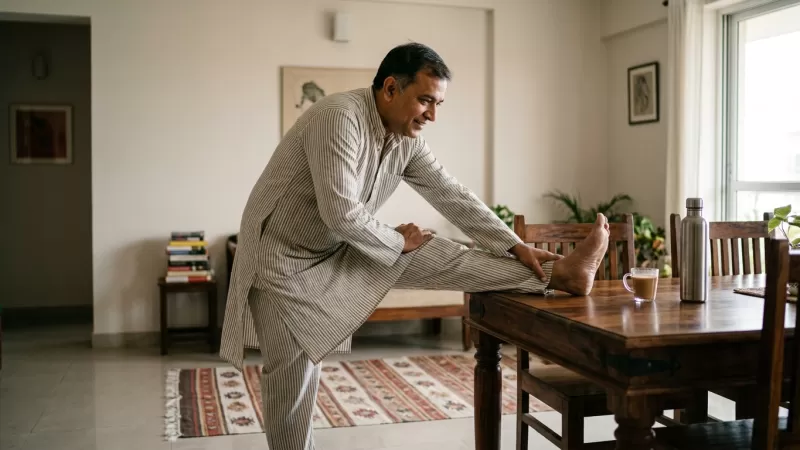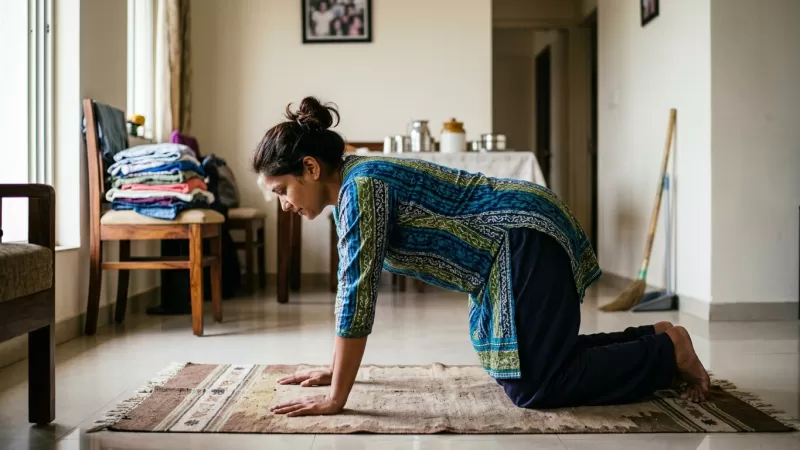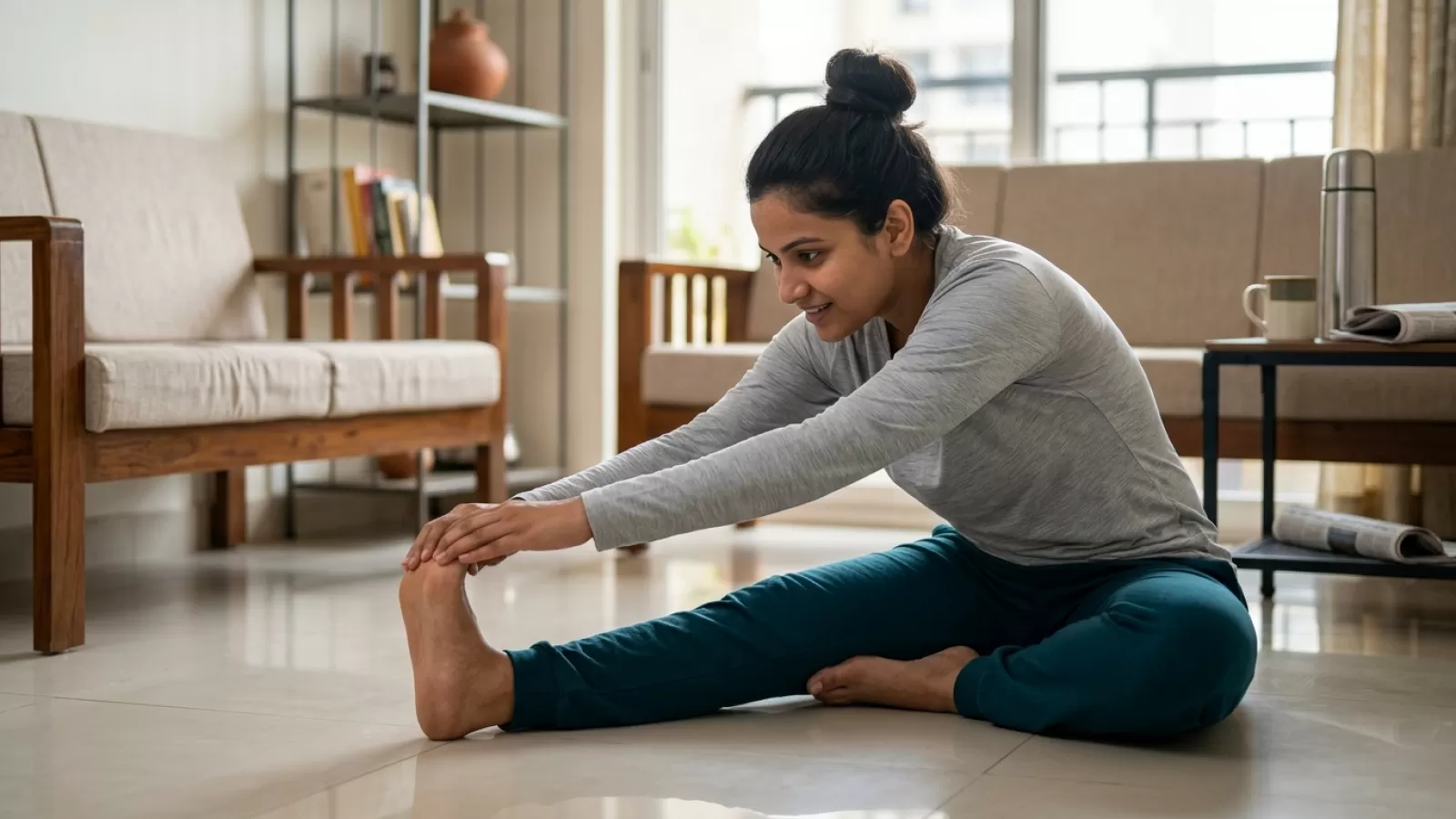
These days, many of us end up sitting for hours—at the dining table with a laptop, in front of the TV after a long day, or even while chatting on the phone. Whether it’s remote work, online classes, or just the usual household routines, sitting too long is quite common in Indian homes now. Often, you might not realize how much time has slipped by until your legs feel stiff or your back starts to ache. The good news? You don’t need fancy equipment or a gym membership to keep your body moving. A few simple, everyday movements can make a real difference, even if you have limited space or noisy surroundings.
Why Sitting for Hours Feels So Draining
Let’s be honest: it’s easy to lose track of time when you’re working or relaxing indoors. But after a while, you might notice your body feels heavy, your shoulders tense, or your legs strangely restless. This often happens because sitting for a long stretch quietly slows down blood flow and puts your joints in a fixed position. It’s not just about comfort—over time, joints and muscles need movement to stay healthy.
In many Indian families, especially during hot afternoons or rainy days, it’s normal to sit for extended periods. Maybe you’re helping kids with homework, paying bills online, or catching up on serials. The body, however, still craves some gentle activity.
That’s why even small movements, done regularly, can help. They tend to ease stiffness and gently support your natural flexibility, without any big lifestyle changes.
How Often Should You Move?
Here’s the tricky part: there’s no magic number that fits everyone, but most people feel better if they get up and move every 30–60 minutes. That might sound like a lot, but it’s usually just a matter of standing, stretching, or walking a short distance inside your home.
Some families set phone alarms or use water breaks as reminders. Others just try to move during TV ad breaks or between online meetings. There’s no perfect schedule—just do what fits into your day without adding pressure. The real aim is to break up long stretches of sitting, not to create another chore.
You’ve probably noticed that after a quick stretch or walk to the kitchen, your mind also feels a bit fresher. Gentle movement isn’t only good for the body; it can pick up your mood too.
Easy Movements You Can Do While Sitting
If you’re in the middle of work or just can’t get up right away, there are still ways to move. Many simple exercises can be done right from your chair or sofa—no need to change clothes or find a special spot.
- Shoulder Rolls: Gently roll your shoulders forward and backward, five to ten times each. This tends to loosen up tightness from hunching over a laptop or phone.
- Ankle Circles: While sitting, lift one foot slightly and rotate your ankle in slow circles. Repeat both ways on each foot. This helps if your legs often feel heavy or swollen.
- Neck Turns: Slowly turn your head to look over each shoulder. Hold for a moment on each side. Go gently—no forcing or sudden turns.
- Knee Lifts: Raise one knee at a time, as if you’re marching while seated. Even a few lifts can help improve blood flow.
These small movements, when done throughout the day, help keep your joints from stiffening up and your blood moving. They’re especially useful during long phone calls or while waiting for the pressure cooker to finish.
Standing Up: Quick Ways to Wake Up Your Body
Standing, even briefly, makes a noticeable difference. If you’ve been sitting for over an hour, just standing up and stretching your arms overhead or out to the sides can feel surprisingly refreshing.
Try these simple standing activities:
- Wall Push-Ups: Place your hands on a wall and do gentle push-ups. Go slowly—these are much lighter than floor push-ups and suit most ages.
- Marching in Place: Just lift your knees and swing your arms as if walking on the spot. It’s a familiar movement that gets your blood flowing.
- Side Stretches: Raise one arm overhead and gently lean to the opposite side, then switch. This can help if you feel cramped or tight after sitting.
Even a minute or two of these can clear away some of that sluggish feeling. Some people use kitchen countertops or sturdy chairs for balance—do whatever helps you feel stable and safe.
Simple Leg and Back Movements for Any Space
Living rooms, bedrooms, or even a wide corridor can be enough for these easy movements. You don’t need much space, and there’s no need to worry if you’re not athletic.
- Heel Raises: Stand behind a chair and lift your heels, rising onto your toes. Lower slowly. This supports your calf muscles, which tend to stiffen from sitting too long.
- Mini-Squats: Stand with feet apart and bend your knees a little, as if lowering yourself to sit, then stand up again. Keep your movements small if your knees are sensitive.
- Torso Twists: While standing, gently rotate your upper body left and right, letting your arms swing loosely. This eases back and waist stiffness that builds up during long sitting spells.
These movements fit well between daily chores—maybe while waiting for tea to boil or during a phone call. You don’t need to count reps unless you want to; the main thing is moving regularly.
One thing: take your time and listen to your body. If something feels off, just skip it. There’s no rush.
Fitting Movement into a Typical Indian Day
Most Indian homes already have bits of movement built into daily routines—walking to hang clothes, climbing stairs, or sweeping floors. But with more screen time and remote work, those natural activities sometimes get squeezed out.
Here are some gentle ways to add more movement back in, without feeling overwhelmed:
- After breakfast, walk a couple of rounds inside your home or on the balcony before settling into work.
- Use chai or water breaks as a reminder to stretch or do a few shoulder rolls.
- During TV time, stand up or move during the ads—just a few steps or stretches.
- If you’re on long calls, try pacing around the room or standing instead of sitting the entire time.
It’s not about squeezing in exercise, but about gently weaving more movement into what you’re already doing. This approach tends to feel less like a chore and more like a favor to your body.
How to Stay Motivated When You Feel Tired or Busy
Let’s face it, sometimes the last thing you want to do is move—especially after a long workday or when you’re juggling home and office responsibilities. The thought of getting up can feel like just another task on an endless list.
Here’s a gentle thought: try not to aim for perfection. Even a minute or two of stretching or standing is better than nothing, and it’s okay if you miss a session. Some families quietly deal with this by encouraging each other, or by making movement a shared activity (like stretching together before dinner).
Another small tip: pair movement with something you enjoy, like listening to music or chatting with family. You’ll often find it makes the time pass more pleasantly and feels less like exercise.
Gentle Cautions and Common Sense Reminders
Most of these movements are quite safe for people who generally feel well. That said, it’s wise to avoid anything that causes pain, dizziness, or discomfort. If you have joint problems or any medical condition, it’s best to listen to your body and stick to movements that feel comfortable.
There’s no need to force yourself into positions that feel awkward or to keep up with anyone else. Everyone’s body is different—what matters is making movement a normal, easy part of your indoor routine, not a source of stress.
Remember, the goal isn’t to achieve some perfect fitness standard—it’s just to help your body feel more comfortable and less stiff during long days spent indoors. Most people notice small improvements over time, like less backache or a bit more energy in the afternoons.
Making Peace with Imperfect Routines
It’s perfectly normal for routines to slip, especially during busy weeks or family emergencies. The important thing is not to feel discouraged. Just pick up where you left off—your body will welcome even the smallest effort to move.
In the end, these simple home exercises aren’t about big transformations. They’re about staying a little more comfortable, a little more mobile, and finding moments of ease in a world that keeps us seated far too long. And perhaps, over time, you’ll notice that moving a little, often, quietly brings its own sense of relief.
That’s really the heart of it.