It’s no secret that most of us—whether we’re working from home, keeping up with family WhatsApp chats, or even just watching a cricket match—spend hours sitting each day. You might be at your dining table with a laptop, helping kids with homework, or catching up on paperwork late into the night. Over time, you’ve probably noticed that weird stiffness in your neck or a dull pain in your lower back, especially after a long stretch of sitting. In many Indian homes, especially these days, this is just quietly accepted as part of a busy routine. But here’s the catch: sitting for hours without moving can really trouble your posture, and the discomfort can slowly pile up if you don’t pay gentle attention now and then.
Why Sitting for Long Hours Feels So Uncomfortable
Our bodies aren’t designed to be stuck in one place for hours—if you think about it, even our elders who sat for long periods (think of dadi knitting or nanu reading the newspaper) would usually get up every so often to check on the kitchen or open the door. These days, with work-from-home and endless screen time, we tend to go much longer without moving.
Prolonged sitting can cause certain muscles—like those in your hip, back, and neck—to tighten, while others become weaker. Over time, your natural, upright posture can start to droop. You may notice your shoulders curling forward or your neck craning towards the screen. It doesn’t help that many of us work on beds, sofas, or even the floor, not always with the best back support.
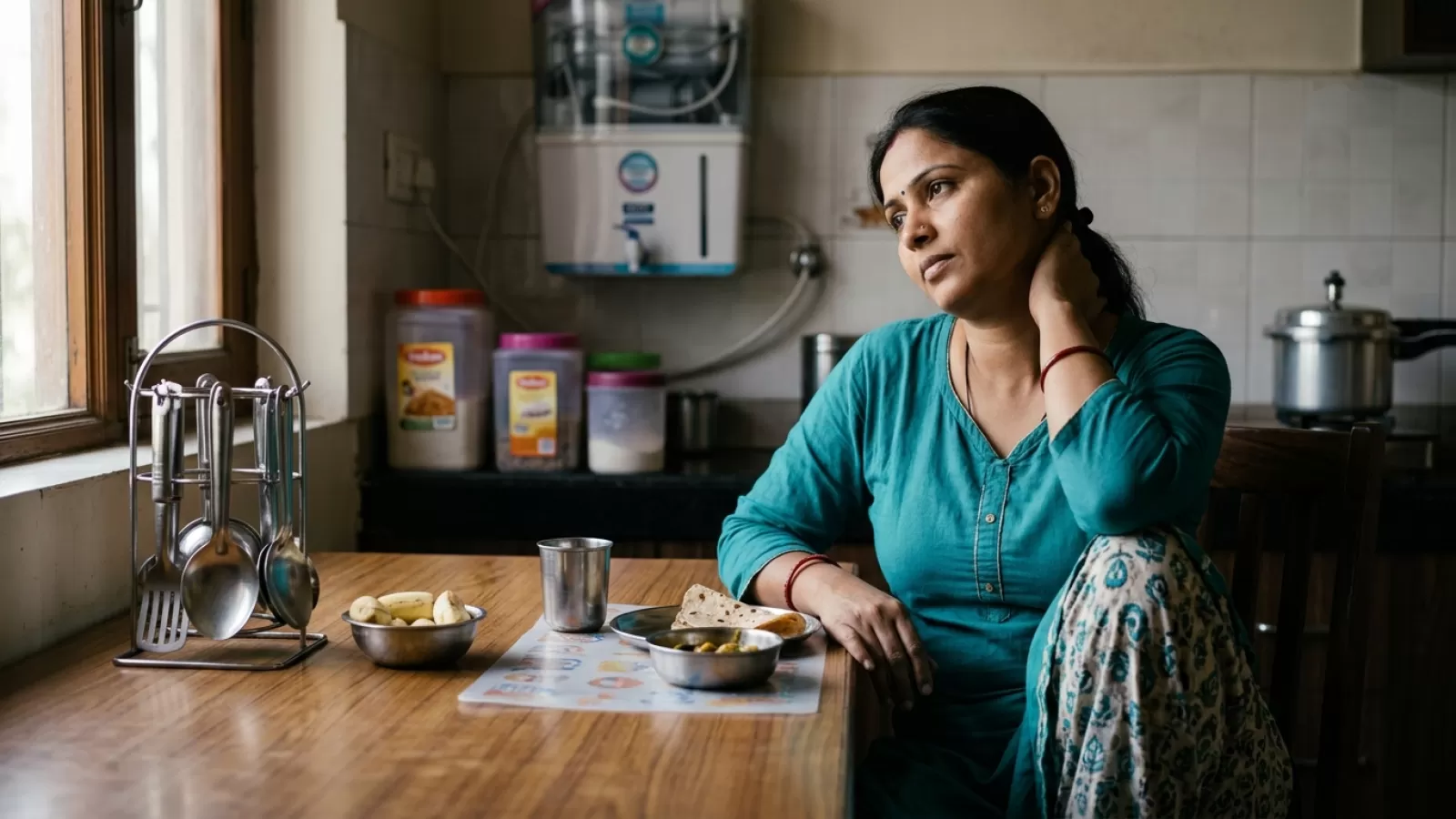
The tricky part is, you may not notice the discomfort right away. It creeps up, especially after a long workday or during exam season when everyone in the house is glued to their chairs.
How Poor Posture Creeps Up in Everyday Life
In many Indian homes, space is tight and special office chairs aren’t always possible. You might be working on a dining chair, balancing a laptop on your lap, or sitting cross-legged on the bed. Over time, these habits—though they feel convenient—can make your back and neck work extra hard.
What makes matters worse is that household chores never really stop. Even if you get up to stir the dal or fold clothes, it’s not quite the same as moving your whole body or stretching.
It’s easy to dismiss a little discomfort at first. But if you’re spending long hours in the same position, small aches can become a constant background irritation, especially for seniors or anyone who already has a tender back.
Gentle Reminders: How Often Should You Move?
Most experts say you should get up every 30-60 minutes, but realistically, that’s tough when you’re in the middle of an important call or helping your child with homework. Instead, try to remember to shift your position, roll your shoulders, or stretch your legs whenever you notice stiffness. It doesn’t have to be perfect.
Some people find it helpful to set a gentle reminder on their phone or use ad breaks on TV as a cue to stand up. In joint families, a quick walk to the kitchen or balcony is a natural break. Even a few minutes here and there can help.
If you forget sometimes, don’t worry. The goal isn’t to be perfect, but to bring in small changes that fit your day.
Simple Seated Exercises for Busy Days
Not everyone has time or space for a formal exercise routine, especially during busy weekdays. Here are a few gentle moves you can do while sitting, whether you’re at the computer or waiting for the pressure cooker’s whistle:
- Shoulder Rolls: Lift your shoulders up towards your ears and roll them back in a slow, wide circle. Do this five times, then reverse. It feels surprisingly good.
- Neck Turns: Slowly turn your head to look over your right shoulder, hold for a moment, then to the left. Repeat a few times. Don’t force it—just feel the stretch.
- Seated March: While sitting, gently lift one knee, then the other, as if you’re marching. This wakes up your hips and legs, especially after long computer sessions.
- Spine Stretch: Sit up straight and gently twist your torso to one side, holding onto your chair for support. Hold for a few breaths, then switch sides.
These are easy to do between tasks—no need to change clothes or roll out a yoga mat.
Standing Up: Quick Ways to Break Sitting Patterns
Sometimes, the best way to help your posture is simply to stand up for a few minutes. You might do this while talking on the phone, waiting for chai to boil, or listening to your child’s stories. Even just standing and stretching your arms overhead can ease tension.
Here are a few ideas that fit naturally into home life:
- Walk around while talking to family or on a call—cordless phones and mobiles make this easy.
- Do a gentle calf raise (standing up on your toes) when you’re at the sink or waiting for the microwave.
- Reach your arms up and gently lean side to side, especially after sitting for long periods.
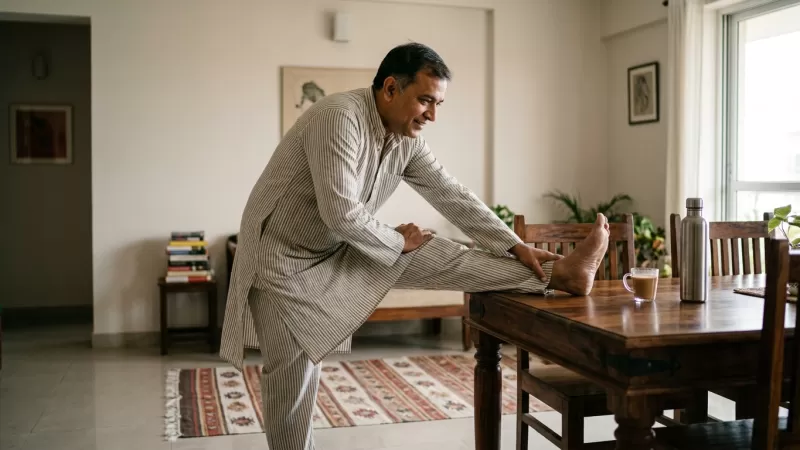
- If you’re comfortable, try a light forward bend—just let your head and arms hang towards the floor for a few seconds.
Even three to five minutes at a time can make a difference. It’s about building small habits, not doing a marathon.
Better Posture with Common Household Support
Most homes don’t have ergonomic chairs or fancy desk setups, but with a little creativity, you can support your back and neck using what’s already around. Many families quietly use cushions, rolled towels, or even a folded dupatta for support.
Here’s what you can try:
- Place a small, firm cushion or rolled towel at the lower part of your back when sitting. It helps keep the natural curve of your spine.
- If your feet don’t rest flat on the floor, use a sturdy box or low stool to support them.
- Use a folded cloth to raise your laptop or reading material closer to eye level—this reduces neck strain.
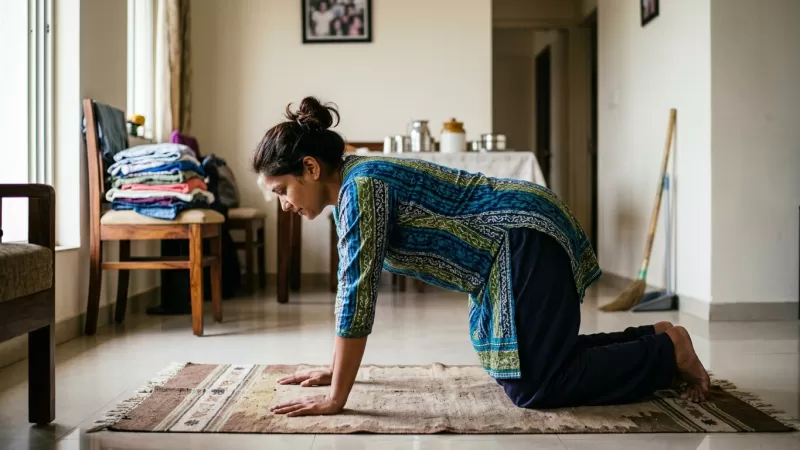
- Change your sitting spot every few hours if possible. Even moving from a chair to the floor (with support) or to a different room can help.
Don’t worry if things aren’t perfect. A few thoughtful adjustments can go a long way toward keeping you comfortable.
Listening to Your Body: When to Rest and When to Move
It’s easy to ignore small aches, especially when you’re focused on work or family. But your body tends to send early signals—a little tightness, a slight ache, maybe a bit of numbness in your legs. These are gentle reminders to take a break or stretch, even for just a minute.
That said, some days you might feel too tired or busy to bother. That’s normal. The important thing is to listen to your body when the discomfort feels different or more intense than usual. Rest when you need to; don’t push yourself if something feels wrong.
If you find that pain or discomfort sticks around for a long time or gets worse, it’s always safest to check with a doctor (especially for seniors or anyone with existing health issues).
Making Gentle Exercise Part of Your Daily Routine
Fitting these small movements into your daily life takes a little practice, especially in homes where routines are already packed. The best approach is to tie them to things you already do—like stretching while waiting for the cooker, or shoulder rolls after finishing a WhatsApp chat.
Some families enjoy doing light stretches together in the evening, just before dinner or during a favorite TV show. Others prefer quiet time in the morning, maybe after a cup of chai.
The key is to stay relaxed about it. Don’t worry about missing a session or not doing things perfectly. Over time, these little efforts can help you feel more comfortable and less stiff.
Many people notice, after a few weeks, that it’s easier to sit up straight or that nagging aches don’t come as often. It’s a gentle shift—not overnight, but over time.
A Few Final Thoughts for Everyday Comfort
Modern life in India has its comforts and its challenges. Long sitting hours are just one of those things that have crept in with changing times—online jobs, TV serials, even long chats with friends. But with a little care and a few simple exercises, you can support your posture and ease the strain that comes from daily routines.
Remember, there’s no need to aim for perfection. Some days will be better than others. What matters is tuning in to your body and making small, kind changes that fit into your home and your life. Over time, these gentle adjustments can help you stay more comfortable—so you can focus on what really matters to you.