After a long day, it’s tempting to let the evening just slip away in front of the TV, with your phone, or catching up on chats with family. Most of us don’t even realize until we stand up that our legs have gone numb, shoulders feel tight, and our back is complaining. In many Indian homes, evenings are often the only time people get to rest – but sitting for hours at a stretch can leave the body feeling stiff and oddly restless when it’s finally time for bed. If you’ve ever stretched your arms at night and felt like your body is made of wood, you’re definitely not alone.
Why Does Evening Sitting Make Us So Stiff?
These days, whether it’s working late on a laptop, helping kids with homework, or enjoying a series marathon after dinner, sitting tends to take over our evenings. The body, especially past a certain age, doesn’t like being still for so long. Joints get less movement, muscles cool down, and blood flow slows in the legs and back. Add in the gentle hum of the ceiling fan or AC, and it’s easy to settle deeper into the sofa, barely moving for hours.
It’s not just older adults who experience this. Even teenagers and busy professionals notice it, especially after a string of work-from-home days. The body sends gentle signals — a twinge here, a cramp there — but they’re easy to ignore until it’s time to get up, and everything feels clumsy and awkward.
Some families joke that the body "locks up" after a long evening of sitting. There’s some truth there. Stiffness is the body’s way of reminding us it prefers a bit of gentle movement, even on those quiet nights when all you want is peace.
The Value of Gentle Evening Movement
Here’s the catch: you don’t need a loud, sweaty workout to ease this stiffness. In fact, late-night exercise can sometimes disrupt sleep, especially if it’s energetic. What most bodies crave at this hour is gentle, calming movement — something that helps shake off the day’s stiffness without waking up the mind too much.
Think of it as a quiet signal to your muscles and joints: the day is done, and you’re preparing for restful sleep. These simple exercises don’t require fancy equipment or a yoga mat. Most can be done in your bedroom, drawing room, or even on a thick bedsheet spread on the floor. There’s no need for perfection, either. The goal is comfort, not competition.
You’ll probably find that after just a few minutes, your body feels lighter, and sleep comes more naturally. Many people quietly incorporate these movements into their routine without ever calling it "exercise." It’s just a gentle way of pressing the reset button before bed.
Preparing for Nighttime Ease: Setting Up Your Space
First things first, don’t make this another chore. If you set out to do 20 different moves, chances are you’ll quit before you start. Instead, keep things simple. Clear a small space — maybe between the sofa and coffee table, or in a quiet corner of your bedroom. If you’re someone who likes a bit of company, ask your spouse, parent, or even kids to join in. You’ll be amazed how quickly it turns into a family wind-down ritual.
Some people like to dim the lights, put on soft music, or just let the night sounds come through the window. Wear whatever feels comfortable — old pajamas, a loose kurta, even your nightwear. The less you fuss, the easier it is to make this a habit.
It also helps to set a rough time, maybe 15-20 minutes before your regular bedtime. This way, your body learns to expect it and starts unwinding on its own. Of course, some days you’ll feel too tired or rushed — that’s okay. Missing a night or two won’t matter as long as you return to it when you can.
Simple Stretches to Release Stiffness
Let’s start with the basics. These are gentle stretches you can do sitting or standing, right at home. The beauty is, you don’t need to be flexible or athletic. Just move within your own comfort.
- Neck Rolls: Sit tall on a chair or the edge of your bed. Drop your chin gently toward your chest, then slowly roll your neck in a circle, first clockwise, then anti-clockwise. Do this twice each way.
- Shoulder Shrugs: Lift both shoulders towards your ears as you breathe in, then drop them back down while exhaling. Repeat five times.
- Seated Forward Bend: Sit with your legs stretched out, feet together. Reach your hands toward your toes as far as comfortable. Hold for a few breaths, then relax.
- Side Stretch: Standing or sitting, raise one arm overhead and gently lean to the opposite side. Hold for a few breaths, then switch sides.
There’s no rush. Move slowly, and if you feel any pain, simply back off a bit. Most people find that the stretches feel better after a few breaths, especially if you focus on relaxing your jaw and shoulders.
Releasing Tension in the Lower Body
Legs and hips tend to stiffen up the most when sitting for long periods — common in Indian homes where the evening often ends with everyone gathered in the living room. Here are some soothing moves for the lower body:
- Ankle Circles: While seated, lift one foot off the floor and slowly rotate your ankle in circles. Switch directions, then repeat with the other foot.
- Knee-to-Chest Hug: Lie back on your bed or a mat. Bring one knee toward your chest, hold for a few breaths, then switch legs.
- Seated Butterfly: Sit with soles of feet together and knees dropped out to the sides. Gently flap the legs up and down like butterfly wings, then hold the stretch for a few breaths.
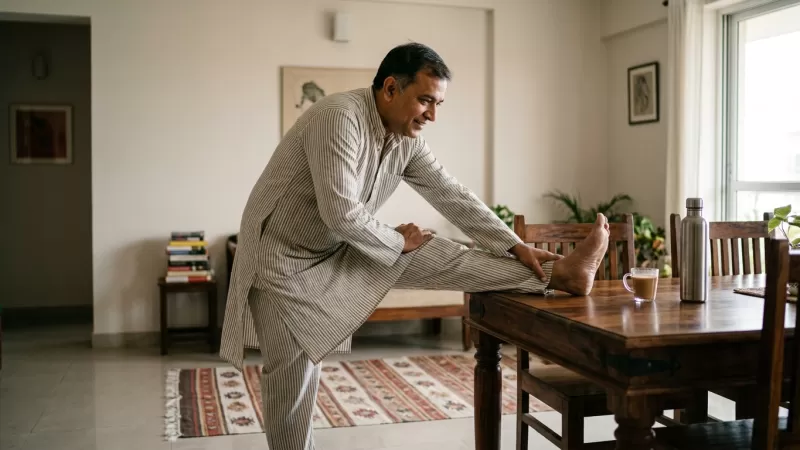
- Standing Calf Stretch: Stand facing a wall, place your hands on it, and step one foot back, keeping the heel on the ground. Hold for 10-20 seconds, feeling a gentle stretch in your calf muscle. Switch sides.
None of these need to be perfect. You’ll notice, especially on days when you’ve been sitting for hours, that even simple movements like these can bring surprising relief.
Gentle Twists and Movements for the Back
Back stiffness is something many families quietly deal with, especially after a day at the desk or on the sofa. While it’s tempting to crack your back or twist forcefully, gentle, controlled movements work better in the evening.
- Seated Twist: Sit cross-legged or on a chair. Place your right hand on your left knee and gently twist your upper body to the left, looking over your shoulder. Hold for a few breaths, then repeat on the other side.
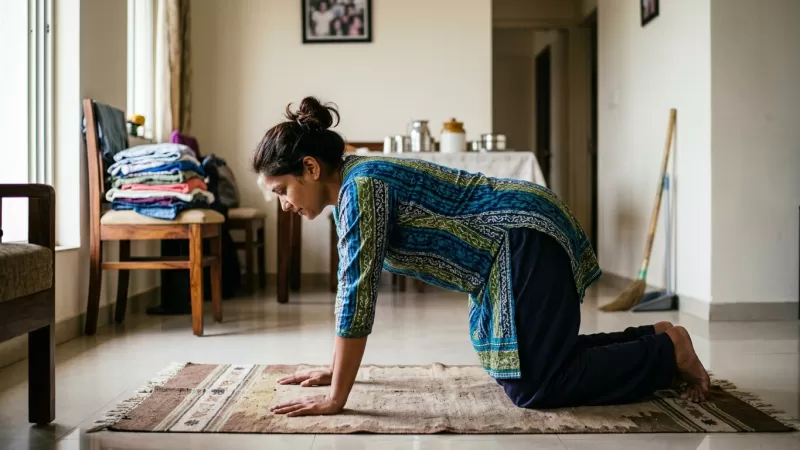
- Cat-Cow Movement: If you’re comfortable on your hands and knees (use a folded bed-sheet for cushioning), alternate arching your back up (like a cat) and then dipping it down (like a cow). Move slowly with your breath, 5-6 times.
- Child’s Pose: Kneel on the floor, sit back on your heels, and stretch your arms forward, forehead resting on the ground or a pillow. Hold for 20-30 seconds, breathing deeply.
Some days your back may feel too stiff to bend much. That’s perfectly normal. Even a partial movement, as far as you can go comfortably, is better than none. The point is to coax the body gently, not force it.
Relaxing the Hands, Wrists, and Feet
It’s easy to forget how much tension builds up in your hands, wrists, and feet. Typing, phone scrolling, and even holding the TV remote for hours can make these areas surprisingly tight. Before bed, a few simple moves can help:
- Wrist Circles: Extend your arms in front and make slow circles with your wrists, first one way, then the other. Repeat five times each direction.
- Finger Stretch: Spread your fingers wide, then make a fist. Repeat 10 times.
- Foot Massage: If you like, gently press and knead the soles of your feet — using your thumbs or even a wooden roller if you have one. This is especially soothing after a day of sitting or standing.
A few minutes spent here can make a surprising difference, especially if you tend to wake up with numbness or tingling in your hands or feet some mornings.
Breathing and Mindful Unwinding
Sometimes, stiffness isn’t just in the body. The mind often feels wound up after an evening of news, WhatsApp messages, or catching up on work. After you finish your gentle stretches, spend a minute or two just focusing on your breath.
- Simple Belly Breathing: Sit or lie down comfortably. Place one hand on your stomach. Breathe in slowly through your nose, letting your belly rise, then exhale gently. Repeat 5-10 times.
- Counting Breaths: Breathe in while counting to four, then out to four. This simple counting helps the mind slow down and lets the body know it’s time for rest.
Honestly, this may feel a bit awkward at first, especially if you’re not used to slow breathing. But with practice, it becomes a quiet anchor at the end of your day.
Making It a Habit, Not a Task
Here’s what many people miss: you don’t need to do every single exercise every night. Some evenings, just a neck roll and a few ankle circles are enough. Other nights, you might feel like spending a bit more time. The important part is consistency, not perfection.
Try linking these movements to something you already do — maybe after folding the laundry, switching off the living room lights, or once everyone has gone to bed. Over time, your body starts to expect this gentle release, and the stiffness of evening sitting won’t bother you as much.
One last thing: don’t judge yourself on the days you skip or when you feel too tired. Life, especially in Indian homes, can be unpredictable. But whenever you come back to these gentle movements, your body will thank you in its own quiet way.
So the next time you catch yourself sighing with stiffness after an evening on the sofa, remember — a few small movements can bring real comfort. The difference may not be dramatic, but over weeks and months, it tends to add up to a body that feels more at ease, night after night.