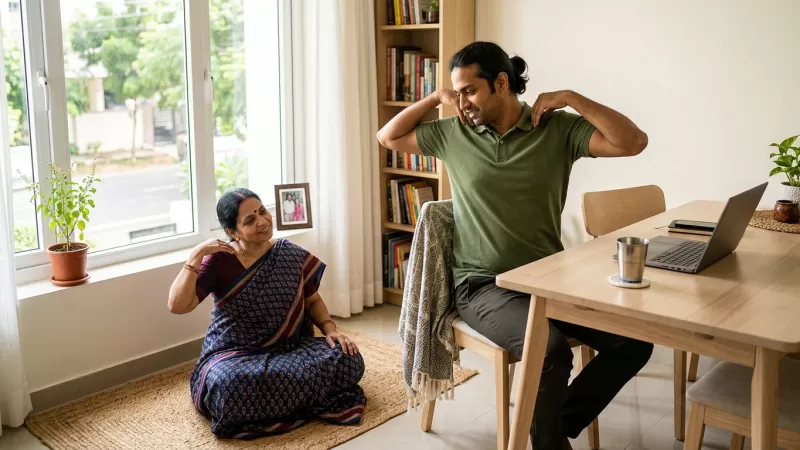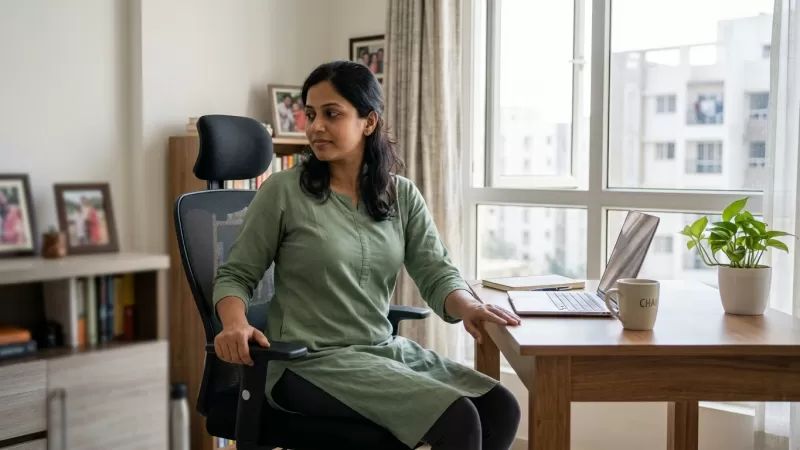
In many Indian homes, seniors often find themselves moving from one household task to another—tidying up the pooja space, folding laundry, chopping vegetables for dal, or simply making evening chai. A simple home movement Indian seniors genuinely stick to tends to be one that slips quietly between these daily activities, not a routine that needs a yoga mat or a trainer. It’s the tiny knee lifts while waiting for the cooker whistle, or the gentle shoulder rolls as the tea boils in the morning, that often make the biggest difference over time.
For a retired parent who is used to a rhythm of chores and family responsibilities, the idea of a formal “senior exercise” class can feel unfamiliar, maybe even intimidating. But adding two minutes of simple movement after each household task—without special equipment—feels natural, almost like a continuation of what’s always been done. This is how a simple home movement Indian seniors routine can quietly improve flexibility, balance, and confidence, often before anyone even calls it ‘exercise’.
Why Gentle Movement Blends Easily Into Indian Household Routines
Many Indian seniors are not strangers to movement—they’ve spent decades walking between rooms, squatting near the floor to pick up grandkids’ toys, or reaching high shelves for a tin of atta. The difference now is that movement isn’t always as easy, and the rhythm of the house may have slowed after retirement or as children move away. Yet, the expectation to stay active is always there—whether that means helping with the sabzi prep or taking the stairs during a power cut.
What often happens is that the advice to "exercise more" feels disconnected from these everyday patterns. The idea of a senior home exercise routine India-style might sound like it needs a new habit, a trainer, or a gym. But most movement that truly lasts for Indian seniors is built right into the day. A few gentle squats while dusting the mandir, stretching arms before folding clothes, or ankle rotations while sitting on the verandah—these blend naturally with the flow of the day and don’t feel like extra work.
In homes where joint families live together, seniors might even find more opportunity to move, as there are often multiple small tasks to help with—brushing off the dining chairs, carrying a small thali, or tidying the garden. For those living alone, movement can be woven around self-care routines and phone calls with family. These gentle routines are not just about fitness—they’re about maintaining independence and the familiar comforts of daily life.
Why Formal Exercise Can Feel Out of Place for Many Indian Seniors
The tricky part is that formal exercise sessions—like scheduled walks, online fitness classes, or physiotherapy routines—can feel too structured or even a bit alien. Many Indian seniors grew up before fitness was a buzzword. Fitness coaches who train working adults often find that most movement in Indian homes comes from daily tasks, not planned exercise. When someone has never followed a formal program, starting one after retirement may feel like a big leap, and it can be easy to put it off indefinitely.
For some, there may also be worries about safety—slippery floors, knee pain, or not wanting to look odd in front of family or neighbours. Others may face pressure from younger relatives to "do more" or "walk outside every day", which can start to feel like a chore rather than a source of confidence. That said, the most sustainable routine is often one that doesn’t ask for a big change. Just stringing together a few gentle movements—like standing calf raises before sitting for breakfast or wrist circles after folding bedsheets—can be quietly powerful. These fit naturally into the rhythms of Indian homes, regardless of the season or family structure.
Everyday Signs That Movement is Becoming Difficult
- Taking longer to get up from low seats: Many seniors notice they need extra momentum or hands on the armrest to stand after sitting on a diwan or floor mat.
- Feeling more tired after regular household chores: Folding laundry, sweeping, or chopping vegetables might leave you a bit breathless or needing to rest sooner than before.
- Reduced confidence moving around during summer power cuts: When the lights go out, a lack of movement practice can make navigating dark rooms feel less safe.
- More stiffness in the morning: Joints may feel tight or creaky, especially before the first cup of chai or after sitting for a long time watching TV or talking to family.
- Relying more on support: Using walls, tables, or another person’s arm more often, especially when navigating stairs or carrying a thali across the room.
Often, these signs show up slowly. They’re easy to brush off as “just getting older,” but they are little reminders to keep moving in small, gentle ways throughout the day.
Everyday Ways to Slip Movement Into Household Tasks
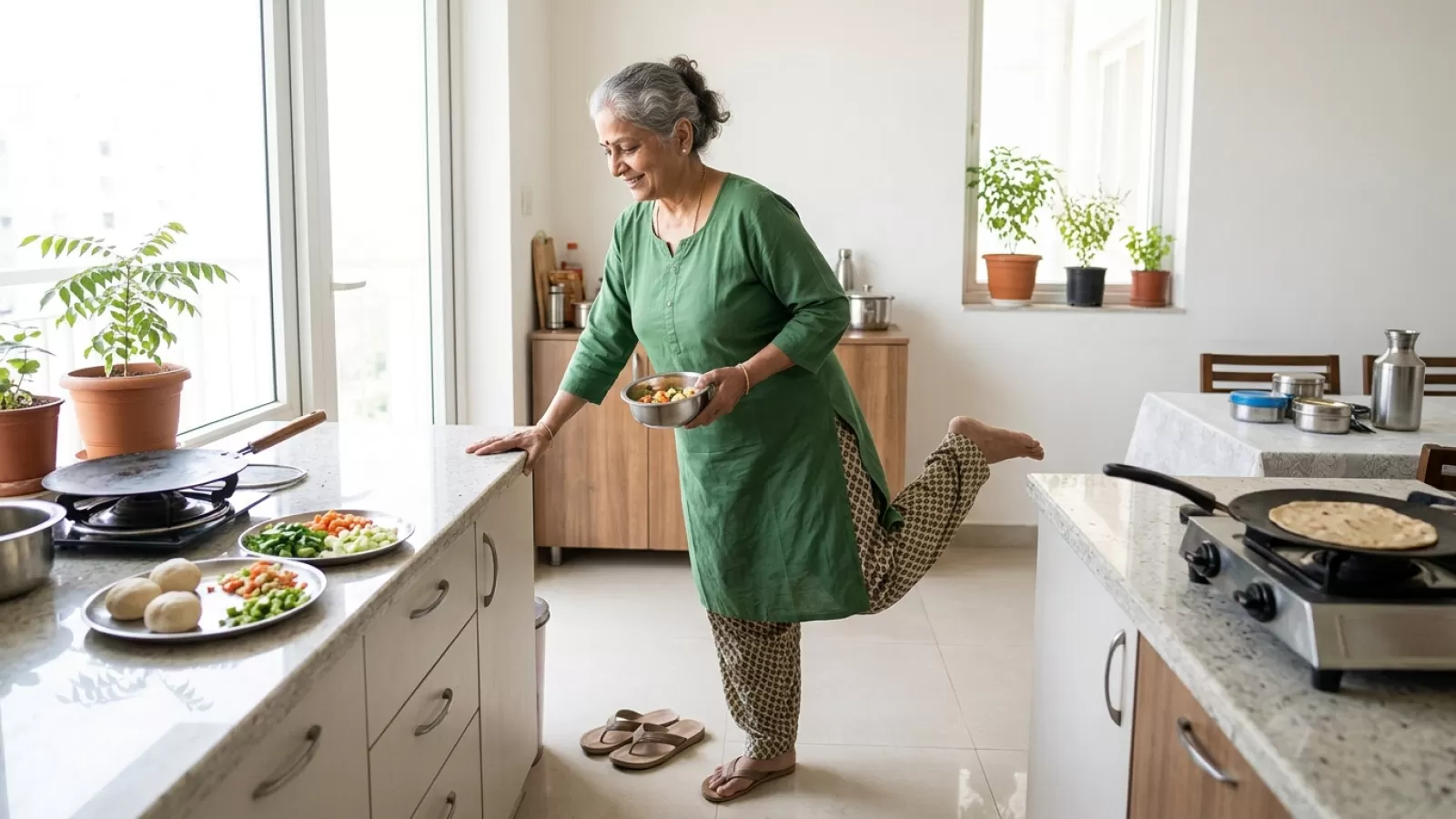
- Knee lifts in the kitchen: After finishing with the cooker, hold the counter and do 10 gentle knee raises before sitting down. This strengthens thighs and improves balance.
- Shoulder rolls while waiting for chai: Standing by the stove, slowly roll your shoulders forward and back 10 times. This relieves stiffness and tension, especially after a night’s sleep.
- Side bends during dusting: When cleaning shelves or the TV table, pause to gently bend sideways, reaching one arm overhead, then switch sides. This keeps your sides flexible and helps with reaching for things.
- Toe and heel lifts while brushing teeth: Stand near the washbasin and slowly lift up onto your toes, then your heels, 10 times each. This simple move supports good foot and ankle strength.
- Neck rotations after folding laundry: With laundry done, sit or stand tall and slowly turn your head side to side and then gently circle your neck. This reduces neck stiffness, especially for seniors who watch TV or read in bed.
These movements are not meant to be strenuous. On days when joints are sore or the weather is humid, it’s fine to move gently and for less time. The most important part is to do a little, often—making movement as routine as making chai or tidying your corner of the house.
How Small Movements Shape Daily Life in Indian Homes
In many homes across India, seniors are quietly building their own simple home movement Indian seniors routines—one that fits around the pulse of the household. It isn’t unusual to see a grandfather doing ankle circles while sitting on the verandah, or a grandmother squeezing a soft ball with her hands during evening TV time. Some seniors like to do gentle stretches while talking to their children on WhatsApp video calls, or to practice standing up and sitting down from a low chair a few extra times after evening puja.
These routines often become little rituals—so woven into the day that they don’t feel like exercise at all. Families who notice these patterns tend to see their parents and grandparents move with more confidence, especially when climbing stairs, stepping out to buy milk, or playing with grandchildren during school holidays. The beauty of this approach is that it respects both the senior’s pace and the natural rhythms of the home.
A Kitchen in Nagpur at 6am: A Real Household Moment
The kitchen is cool before the summer heat arrives. The gas flame hisses, the cooker lets out a gentle whistle, and the faint scent of jeera floats in the air. In this quiet, someone stands by the platform, waiting for the dal to simmer. Instead of just standing still, they gently roll their shoulders, then hold the edge of the counter and lift each knee a few times. The kettle boils, and there’s a pause—a few side stretches, a soft sigh, and a smile. In this moment, movement is not a chore. It is simply part of the morning—just another way to greet the day, quietly caring for the body between everyday tasks.
Recognising When More Help Is Needed
Sometimes, even gentle movement for Indian elderly daily doesn’t feel easy. Maybe there’s sudden pain, frequent dizziness, or a new struggle with basic tasks like getting up from bed or carrying a plate. If you notice these changes, especially if they come on quickly or get worse, it’s a good idea to talk to a doctor. It is always better to check than to wait—especially in homes where family members may not notice small changes right away.
Common Questions
Many Indian families wonder how much movement is enough, or what types of simple home movement Indian seniors can do safely. Sometimes the answer is found in the rhythms of daily life—a gentle stretch in the kitchen, or a few steps between rooms. Let’s look at some common questions with examples from real Indian homes.
What are the most appropriate and safe home movements for Indian seniors to do between daily household tasks?
Movements that use your own body weight and offer support from furniture are usually safest. For example, holding the kitchen counter while doing gentle knee lifts, standing calf raises, or ankle circles. Shoulder rolls and neck rotations can be done seated or standing. These movements are simple, don’t require equipment, and fit well with daily chores like waiting for tea or after folding clothes. If pain or dizziness happens, it’s wise to stop and talk to a doctor before resuming.
How much daily movement is needed for Indian seniors to maintain physical function and independence?
Most Indian seniors benefit from about 20–30 minutes of gentle movement spread throughout the day. This doesn’t need to be all at once. For example, doing 3–5 minutes of movement after each household task—like after washing up, before sitting for TV, or between garden rounds—adds up quickly. The goal is to keep joints flexible and muscles active, not to tire yourself out. Small, frequent movement usually supports independence better than one long session.
Which household tasks can most easily become movement opportunities for Indian seniors?
Many simple chores become mini exercise sessions when you add gentle movements. Waiting for the cooker? Do some shoulder rolls. Brushing teeth? Try toe and heel lifts. Dusting or sweeping? Add side stretches. Sitting for evening chai? Do a few ankle or wrist circles. Even folding laundry can include gentle back or neck stretches. The key is to notice these in-between moments and make them work for you.
How do Indian families encourage elderly parents to maintain daily movement without making it feel like an instruction or imposition?
Often, the best encouragement comes from joining in or making gentle movement a shared routine. For example, a family might do shoulder rolls together during TV ads, or invite seniors to help with simple garden tasks like watering plants. Gently praising effort—not results—helps too. When movement is normalized as part of household life, it feels less like a chore and more like a family ritual. Avoiding direct instructions and offering companionship usually works best.
What are the early signs that an Indian senior's movement and physical function is declining in a way that needs medical attention?
If you notice a senior needing help for tasks they used to do alone—standing from a chair, climbing stairs, or carrying a plate—it may be time to check in. Other signs include new unsteadiness, frequent tripping, unexplained pain, or sudden fatigue after everyday activities. Sometimes, a senior may stop helping with chores or avoid certain rooms. These are quiet signs that extra support or a doctor’s advice may be needed.