In many Indian homes, a regular workday slips by with hardly any movement. You may notice that after lunch, the only real steps taken are to refill a water bottle or check on the pressure cooker. Simple home exercises sitting all day in India has become a quiet necessity, not just a fitness trend. These days, it is common to sit at a desk from morning chai until late evening, especially for Indian adults who sit indoors all day—whether in IT, teaching, customer service, or even while managing the house budget online.
That said, the body does start to protest. Tight hips, a stiff lower back, and that heavy-legged feeling by 6pm—these are familiar to most of us. Occasional walks or weekend outings rarely undo the everyday effects. What often works better is weaving home movement into the regular rhythm of Indian life, a few minutes at a time, rather than waiting for a big block of exercise.
Why Sitting All Day Is So Common in Indian Homes
Extended sitting is now woven into daily routines, especially in urban and semi-urban India. Many adults spend hours at a desk for work, then unwind in front of the TV, or scroll on their phones. The morning rush—making poha, packing tiffin, or helping kids with homework—offers some movement, but after that, much of the day is spent sitting indoors. Even homemakers, often seen as more active, may find themselves sitting for long stretches while sorting bills, folding laundry, or supervising homework.
Joint families sometimes share small spaces, making it easier to stay in one corner, especially during hot, sticky summers when movement feels like extra effort. Power cuts might mean sitting near a window with a hand fan, rather than going out for a walk. Many families in Indian cities have quietly discovered that work-from-home, while convenient, has increased sitting time for everyone.
It’s not always about laziness or lack of willpower. The commute in a Bengaluru cab, the long queue at the bank, or simply waiting for the plumber—these are all parts of Indian daily life that add to the sitting tally. The tricky part is, these patterns tend to settle in without us realising until the body starts sending signals.
Why Occasional Walks Aren’t Enough for Indian Adults Who Sit Indoors All Day
The body responds differently to frequent small movements than to one big workout or walk. That’s the catch. You might take a brisk walk in the evening or head to the park on Sundays, but the hours spent sitting still leave their mark. Muscles shorten, joints become stiff, and even circulation slows down. For Indian adults who sit indoors all day, the problem is not just lack of exercise, but lack of regular, gentle movement woven into daily life.
Physiotherapists often find that most movement in Indian homes comes from daily tasks, not planned exercise. But these days, many tasks have become less physical—online banking, food delivery, and digital payments mean less walking and standing. Even housework, which used to involve squatting, climbing, and carrying, now often happens with minimal movement, especially in flats with limited space. The result is a kind of quiet, creeping physical decline that a Sunday walk can’t quite fix.
Some of this is cultural too. The idea that only a gym session or a long walk counts as exercise is still strong in many homes. But what the body really needs is to break up sitting with frequent, simple home exercises—sitting all day in India, your body craves just a few moments of movement, many times a day.
Clues That Your Body Is Affected by Too Much Sitting
- Stiffness in the hips or lower back: Many notice this most when getting up after a long TV show or work call. The first few steps feel creaky.
- Feeling sluggish or heavy-legged by evening: Especially common after a day of desk work followed by a family dinner in front of the TV.
- Tingling or numbness in the legs or feet: This often crops up for those who sit cross-legged on a bed or sofa with the laptop for hours.
- Neck and shoulder tightness: Frequent among those who work on laptops at the dining table or sofa, not a proper desk, which is the case in many Indian homes.
- Reduced energy or mood dips: After hours of sitting, it’s common to feel drained, even if you haven’t done anything physically demanding.
Small Home Movements That Break Up Sitting
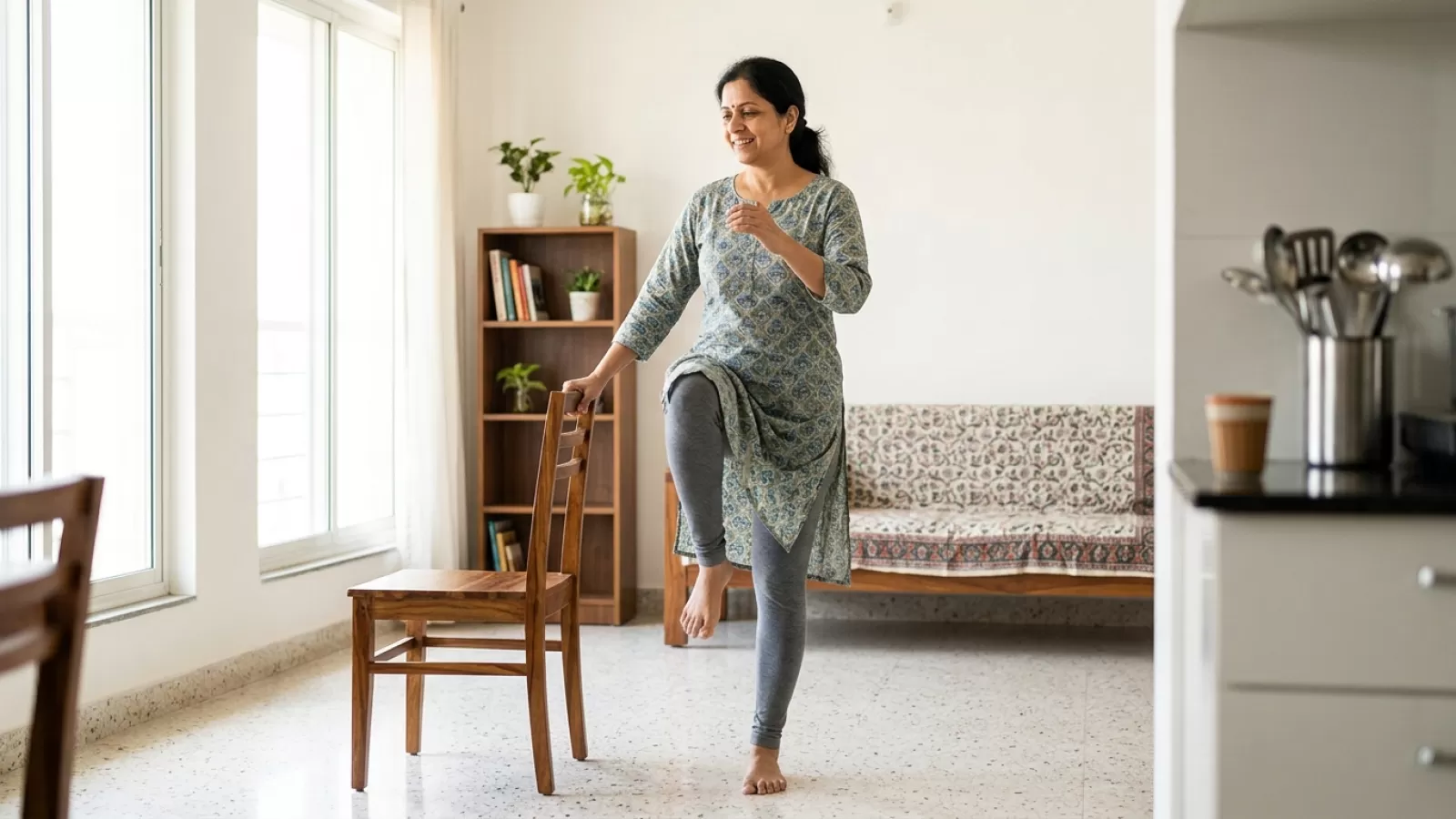
- Knee lifts and ankle circles: While waiting for chai to boil or dal to cook, stand near the stove and gently march in place or rotate each ankle.
- Hip-opening stretches: After a long call, stand and do gentle lunges or step one foot up on a stool, then lean forward. This helps the hip flexors, which get tight from sitting.
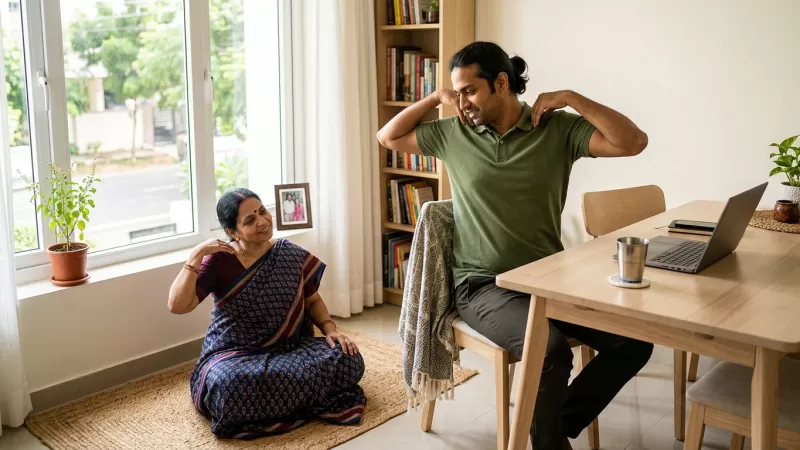
- Shoulder rolls and arm swings: Ideal during ad breaks or while chatting on the phone. Roll your shoulders back and forth, swing your arms gently side to side.
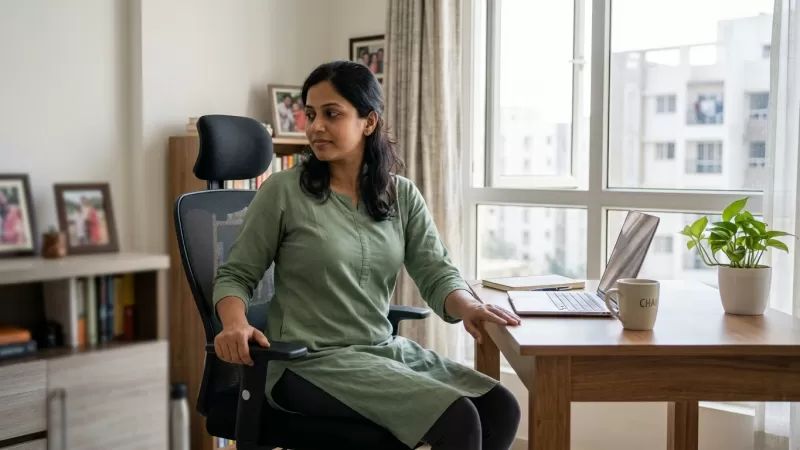
- Seated twists: Even if you’re stuck at your desk, sit tall, place your right hand on your left knee and twist gently, then switch sides. This helps the lower back and digestion.
- Standing up every 30-45 minutes: Set a reminder on your phone or use the kettle whistle as a cue. Walk to the balcony, adjust the curtains, or simply stand and stretch for a minute.
Some people find it helpful to keep a small bottle of water at their desk, so they have to get up to refill it more often. Others use regular household activities—folding clothes standing up, wiping a table, or watering the tulsi plant—to sneak in extra movement. The key is to make these movements as routine as brushing your teeth, not something extra that needs special motivation.
Where These Patterns Sneak Into Daily Indian Life
On mornings when everything runs late, you might find yourself sitting through breakfast, then hurrying to the laptop or office chair, barely moving until lunchtime. In many Indian homes, lunch is eaten quickly at the desk or in front of the TV, followed by another round of sitting for work or household bills. Seniors often watch TV serials for hours with only short breaks for chai or bathroom visits.
A working professional commuting in Bengaluru might spend over two hours in traffic, then sit at a desk for eight more hours. Even homemakers, after finishing heavy chores in the morning, tend to sit through the hotter parts of the day to avoid the afternoon heat. Many families notice that children are encouraged to play outside, but adults rarely do. The result: movement for adults becomes limited to necessary tasks, not a natural part of the day.
There’s also the shared-space effect. In smaller flats, moving around too much can feel disruptive. In joint families, there may be pressure to stay put and not disturb others. Over time, these little patterns add up and become the new normal.
Knowing When To Ask for Help
If you notice persistent pain—especially sharp or worsening pain in your back, hips, or knees—or numbness that doesn’t go away after moving, it may be time to check with a doctor or physiotherapist. Occasional stiffness is common, but pain that interrupts sleep, makes walking difficult, or lingers for weeks is not something to ignore. It’s always wise to get a professional opinion if you feel unsure. For most Indian adults who sit indoors all day, gentle home movement helps, but some situations do need expert guidance.
Common Questions
Many Indian adults find themselves wondering how much movement is enough, or what home exercises really make a difference when you’re sitting all day. These questions come up in homes from Mumbai to Guwahati, especially as people notice more aches and stiffness after long hours indoors. Let’s look at what tends to work in the real world, with examples you might recognise from your own routine.
What are the most effective exercises for reversing the physical effects of sitting all day for Indian adults?
For Indian adults who sit indoors all day, the most helpful home exercises are those that target the hips, lower back, and shoulders. Simple things like hip-flexor stretches (such as lunges), gentle backbends (lying on your stomach and pressing up slightly), and standing twists can help. Marching in place, squats, and heel raises while waiting for chai or stirring dal add movement throughout the day. These don’t need much space or equipment and fit easily into household routines, making them more likely to become habits.
How many times should an Indian adult who sits all day get up and move to prevent the negative effects of prolonged sitting?
Most experts suggest getting up at least once every 30 to 45 minutes, even if it’s just for a minute or two. In an Indian kitchen, for example, you might use the pressure cooker whistle or tea break as a reminder to stand, stretch, or walk around. These frequent, small breaks are more effective than one long exercise session at the end of the day, especially for those working from home or sitting at an office desk all day.
Are the physical effects of sitting all day reversible through home exercises alone?
In many cases, yes—regular home movement can make a big difference, especially if you catch the problem early. For Indian adults who sit indoors all day, adding gentle stretches and movement breaks usually eases stiffness and boosts energy. However, if you have pain that doesn't improve, or symptoms like numbness or weakness, it’s a good idea to check with a doctor. Most mild aches and stiffness respond well to simple home exercises sitting all day in India, especially when done consistently.
What specific exercises are most helpful for the hip flexors and lower back that suffer most from Indian desk work?
Hip-flexor stretches (like low lunges), gentle standing backbends, and seated twists are especially helpful. Many Indian adults who sit indoors all day find that doing these after long meetings or TV sessions relieves tightness. You can also try standing with hands on hips and slowly leaning backward, or lying face down and gently pressing your upper body up with your arms. These movements don’t require much space, so they work well even in smaller flats or during a busy household day.
How do you build movement breaks into a home working day when deep concentration makes remembering to get up difficult?
One trick is to tie movement to household cues—stand up every time your phone rings, the kettle whistles, or someone asks for chai. Some people keep a small glass of water that needs frequent refilling, so they’re forced to get up. Others use family routines—taking a quick walk around the house during ad breaks or while waiting for the rice to cook. The key is to make movement a normal part of your home working day, not an extra chore.
A kitchen in Nagpur at 6am: The first light is coming in through the window. The air is still cool, but the body is already stiff from yesterday’s sitting. While waiting for the milk to boil, someone lifts each knee a few times, rolls their shoulders, and twists gently at the waist. The pressure cooker hisses. There’s a small sigh of relief as movement brings a bit of energy to the morning—proof that even a few minutes of simple home exercises sitting all day in India can shift how the day feels, one small habit at a time.