Most Indian adults spend more time at a desk, dining table, or sofa than they realise. A typical weekday often involves sitting for hours—whether it’s hunched at a laptop on the dining table, leaning over a phone on the sofa, or balancing a plate of poha on the couch while catching up on the news. Posture exercises at home in India are rarely the first thing on anyone’s mind, but by 2pm, the ache between the shoulder blades or the dull heaviness at the back of the neck is a familiar signal.
This isn’t laziness or carelessness. For many, it’s the body quietly giving in—taking the easiest route when certain muscles have grown weak and others have stiffened. Most people can sit up straight with effort for a minute or two, but the slouch returns before you know it. The good news? The home exercises that help fix this are often much simpler than what you see online.
Why Slouching Becomes the Default in Indian Homes
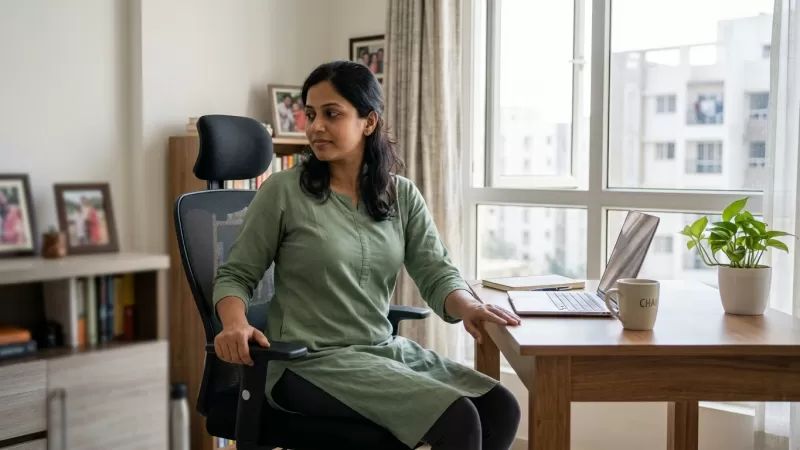
In many Indian homes, furniture isn’t designed for perfect posture. Sofas that sink, dining chairs that wobble, work-from-home setups squeezed into bedroom corners—all of these encourage the body to relax in ways that seem harmless at first. Add long commutes, power cuts (forcing you to work on the bed), or late-night family TV sessions, and you have the perfect recipe for a slouched back.
For working professionals and homemakers alike, the day’s rhythm often means long stretches of sitting interrupted by brief periods of standing—making tea, checking on dal on the stove, or answering the door. These small breaks aren’t enough to reverse the effects of hours of slouching. Even those who try to sit upright find their back muscles tiring quickly; the body simply hasn’t been trained to hold that position comfortably.
Indian adult slouching exercises are rarely part of daily life. In most homes, posture isn’t discussed unless someone complains of pain. Children are told to "sit straight," but adults quietly adapt to the furniture and routines around them. Over time, the body forgets what upright feels like, and slouching becomes the new normal.
The Real Reason Slouching Happens—And Why It’s Not Your Fault
There’s a common belief that slouching is a bad habit—something you can fix by simply paying attention. That said, the tricky part is, your posture is a result of muscle memory. The muscles in your upper back, shoulders, and core naturally weaken when not used. Meanwhile, the chest and front shoulders tend to shorten from hours spent leaning forward—whether cooking, working, or scrolling on your phone.
Physiotherapists often find that most Indian adults experience posture problems not because they forget to sit straight, but because their bodies are physically unable to maintain upright posture for long periods. The body always chooses the path of least resistance. After months (or years) of slouching, upright sitting feels unnatural and tiresome.
Another factor? Many Indian homes don’t have ergonomic furniture or the space for it. During summer, you might shift to the coolest room, even if that means sitting on the floor for hours. Shared spaces and joint family pressures mean working at the dining table one day, the balcony the next. All this moving around can make it harder for the body to build consistent posture habits.
Everyday Signs Your Posture Needs Help
- That familiar ache between the shoulder blades by afternoon. Many desk workers in Indian cities notice a tight, tired feeling between the shoulders by 2pm—often relieved only by stretching or lying down.
- Low energy after long periods of sitting. Slouching tends to compress the chest and belly, making breathing shallow. You may find yourself sighing or stretching often after meetings or chores.
- Head jutting forward by evening. After hours on a laptop or phone, the head tends to inch forward, creating strain at the base of the skull and upper neck.
- Rounded shoulders, even when standing. The shoulders begin to roll forward, and you notice it in mirrors or photos—especially in kurta or saree blouses that don’t sit right anymore.
- Effortful straightening. Sitting upright feels like work, and after a minute or two, the body quietly slides back into a slouch.
Simple Home Exercises That Make a Difference
- Wall Angels. Stand with your back against a wall, arms bent like a goalpost. Slowly raise and lower your arms, keeping them and your back in contact with the wall. This strengthens the upper back and opens the chest. It’s a classic among posture improvement exercises Indian desk workers use because it requires no equipment and very little space.
- Chin Tucks. Sitting or standing, gently draw your chin back—almost like making a double chin. Hold for five seconds, repeat ten times. This helps realign the head and neck, especially after long hours looking down at a screen.
- Scapular Squeezes. Squeeze your shoulder blades together and hold for a few seconds, then release. Do this several times, especially during chai breaks. It’s a quick way to remind your back muscles to wake up.
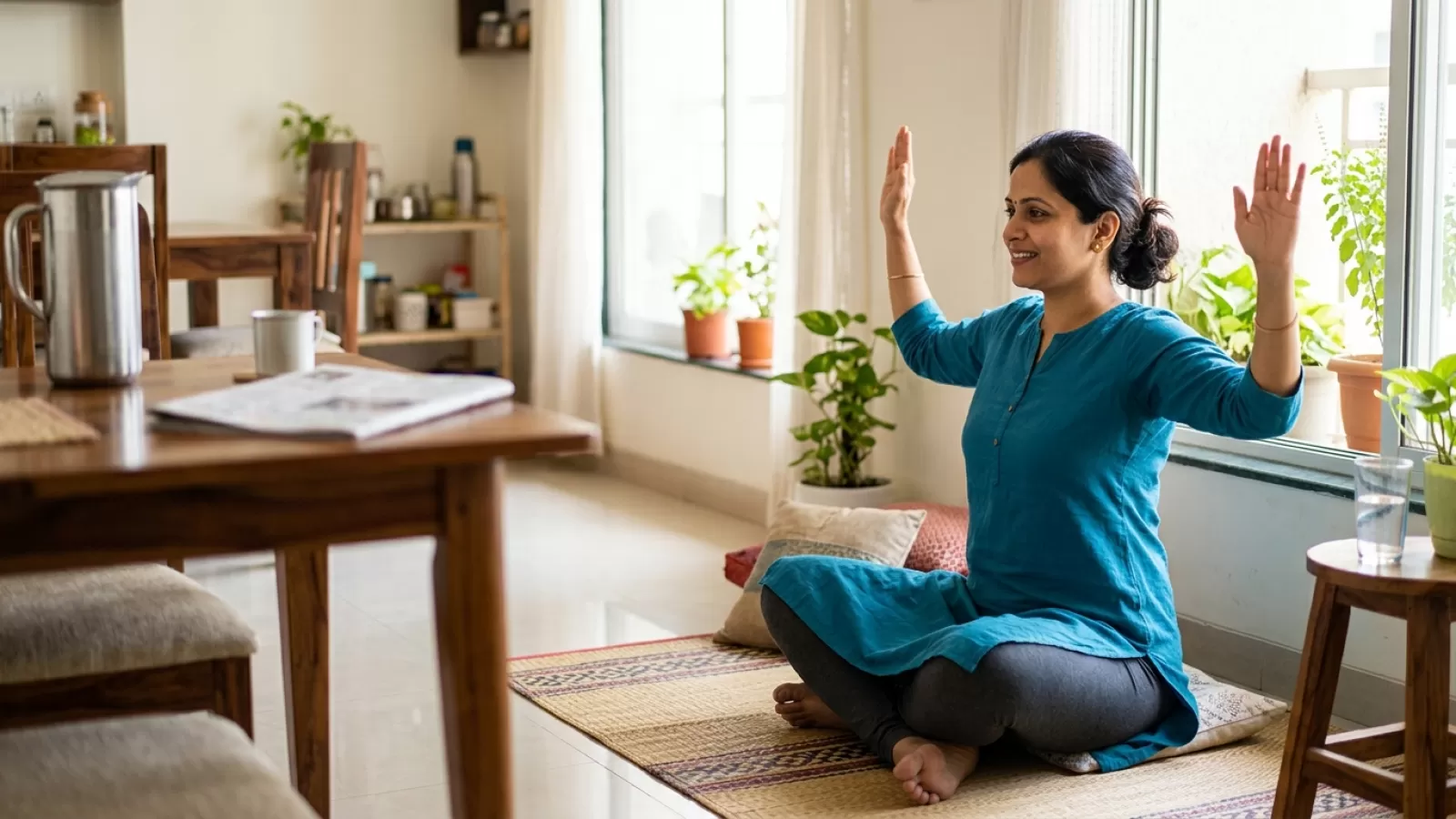
- Seated Cat-Cow. Sit upright, hands on your knees. Arch your back and lift your chest (cow), then round your back and drop your chin (cat). This stretches the spine and keeps it mobile. Many homemakers like to do this after lunch or before starting evening chores.
- Doorway Chest Stretch. Stand in a doorway, place your forearms on the sides, and gently lean forward. This stretches tight chest muscles, which often pull the shoulders forward after hours of slouching.
These posture exercises home India residents can practice need only five to ten minutes a day. The real trick is regularity—doing a little, often, rather than trying to fix everything in one go.
How Slouching and Fixing It Show Up in Everyday Indian Life
In many Indian families, the day starts early. A kitchen in Nagpur at 6am is filled with the aroma of boiling chai and the sizzle of tadka for dal. Someone sits at the dining table replying to WhatsApp messages, shoulders hunched, elbow propped. The kids ask for breakfast, and before you know it, that same person is bent over the sink, then back at the table for a quick work email, then on the sofa cradling a cup of tea. The body moves between sitting, standing, bending—but rarely in ways that strengthen posture.
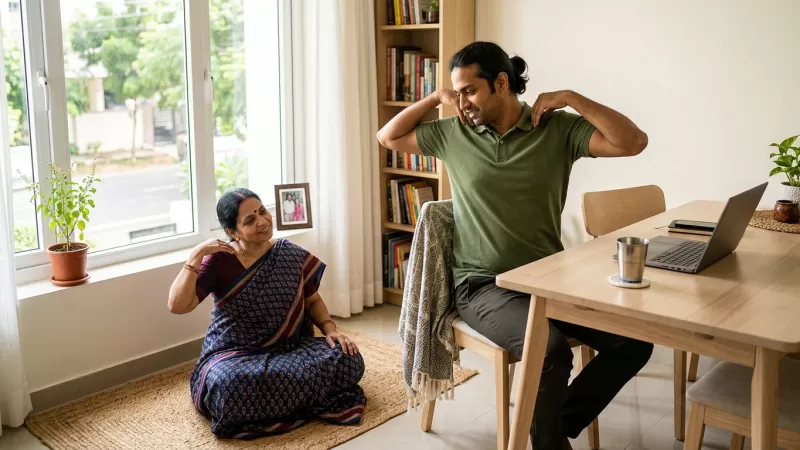
By mid-morning, the stiffness creeps in. After lunch, a quick nap on the sofa sometimes feels like the only relief. In homes with elders, the pattern is even more pronounced—long hours sitting with the newspaper, a pillow stuffed behind the back, yet the slouch remains. Many families quietly discover that posture exercises home India-style (done around daily chores, in small bursts) are the only realistic way to fix slouching at home India-wide.
When Home Exercises Aren’t Enough
If you find that pain is persistent, or if there’s tingling, numbness, or weakness in your arms or legs, it’s time to speak to a doctor or physiotherapist. While most mild to moderate posture issues respond to regular Indian adult slouching exercises, severe discomfort may need expert guidance. Sometimes, underlying conditions (like a slipped disc or arthritis) can mimic posture problems. It’s always safer to check if the discomfort doesn’t ease after a few weeks of steady practice.
Common Questions
Most Indian homes have their own rhythms, and fitting posture exercises into a busy day can feel overwhelming at first. The questions below come up often—from young professionals to retired elders. Here’s what tends to work well in our unique routines.
What are the most effective home exercises for Indian adults to correct slouching at a desk or sofa?
Wall Angels, Chin Tucks, Scapular Squeezes, and Doorway Chest Stretches are practical for Indian homes. Many find that combining these with Seated Cat-Cow (done at your dining table or on the sofa) fits naturally into household breaks. For those managing chores, even standing tall and rolling the shoulders back while waiting for milk to boil can help. Posture exercises home India routines work best when slipped into moments you already have, rather than as a huge separate workout.
How long does it take for posture exercises to change the body's default position?
On average, you might start noticing small changes in 2–4 weeks with regular practice. Most adults in India, especially those who have worked from home or at a desk for years, find that it takes at least a few months for upright posture to feel natural again. It’s a bit like making chapati—awkward at first, easier with repetition. The more consistent you are, the faster your body adapts, but don’t stress if progress feels slow.
Can a severe slouch in an Indian adult be meaningfully improved through home exercises alone?
Many adults with mild to moderate slouching—say, rounded shoulders and forward head—see improvement with home exercises. But if the slouch is severe (very stiff, painful, or affecting daily function), it’s wise to consult a physiotherapist. Sometimes, long-standing tightness needs professional hands-on help. For most, though, posture improvement exercises Indian desk workers use daily can make a clear difference, especially when practiced regularly.
Which muscles specifically need strengthening to correct the forward head and rounded shoulder posture common in Indian desk workers?
The upper back (especially the muscles between the shoulder blades), the deep neck flexors (front of the neck), and the lower back all need attention. The chest and front shoulders usually become tight and need stretching. Scapular Squeezes, Wall Angels, and Chin Tucks target these areas well. Many people in India notice that even a few weeks of strengthening these muscles makes sitting upright at the desk or sofa a lot less tiring.
How do you remember to practice posture exercises when working at home without interrupting concentration?
A working professional commuting in Bengaluru might set reminders on their phone or tie posture practice to daily habits—like doing shoulder squeezes before every chai break. Some families do a quick stretch together after dinner or before evening TV. Keeping a resistance band or small cushion in sight (say, on your work chair) can prompt you to squeeze in a few posture exercises home India-style, without needing a big time block or losing focus on work.