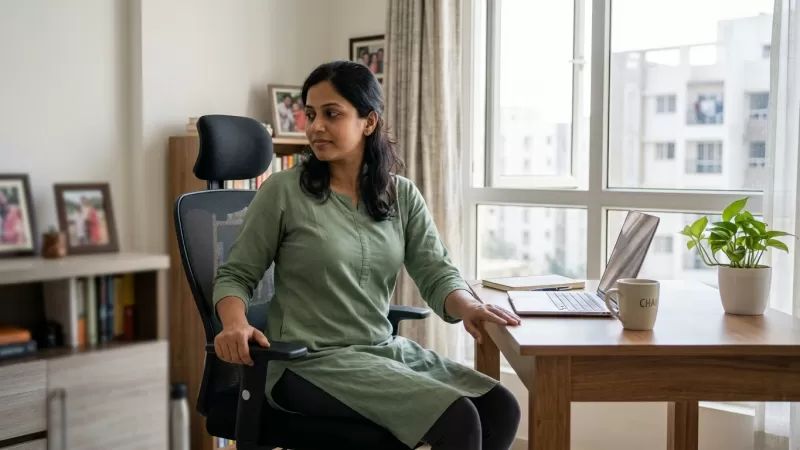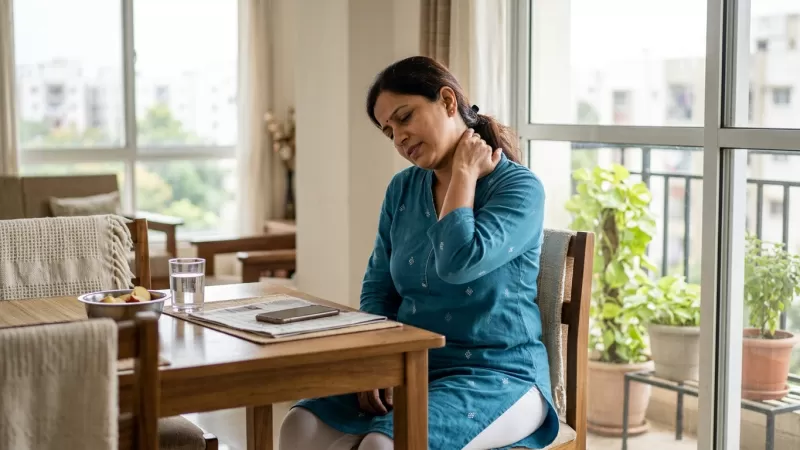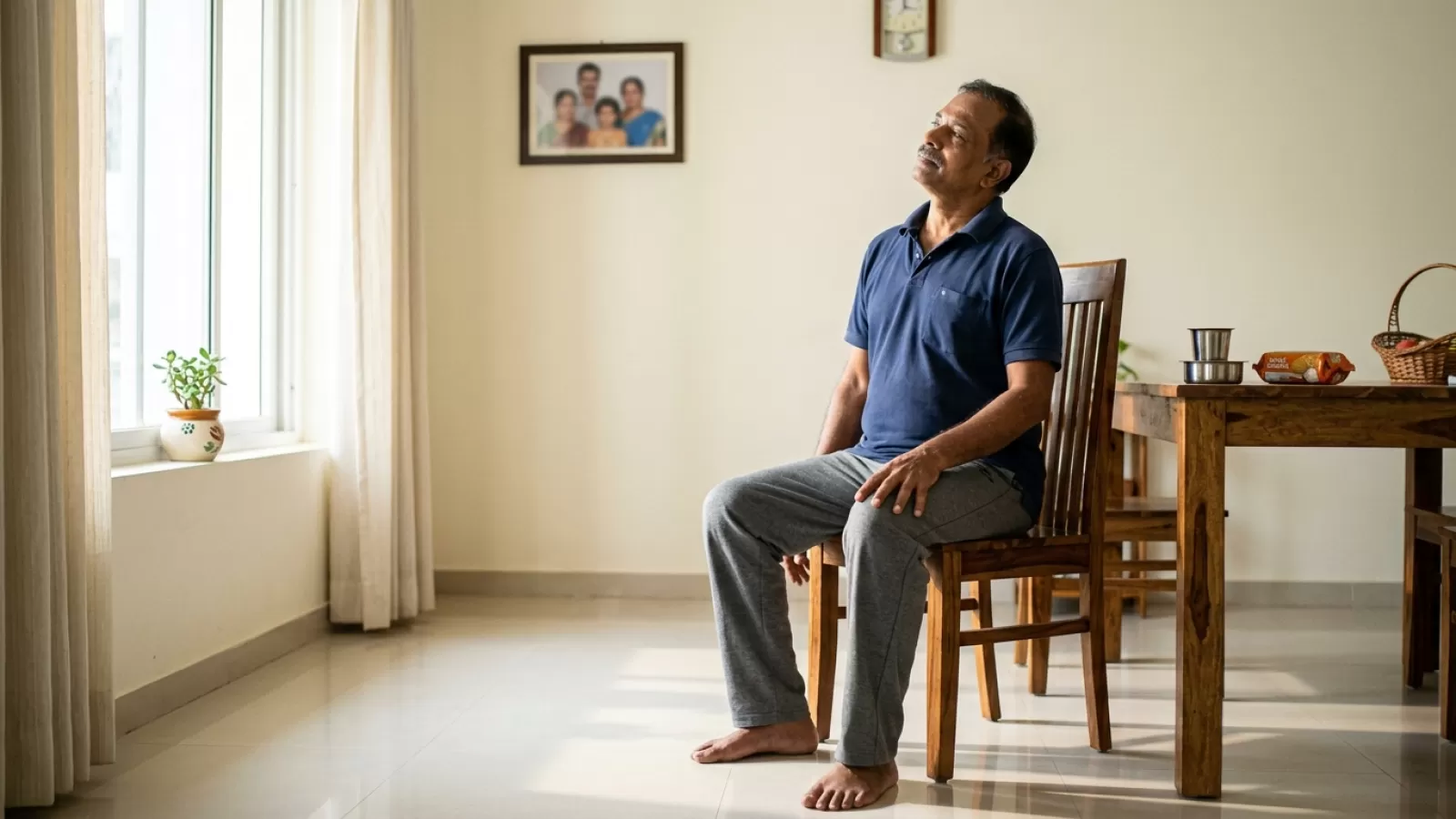
In many Indian homes—whether in the sticky heat of a Chennai summer or the early chill of a Delhi winter—the first few minutes after waking can feel heavy. The body often resists, joints complain, and the thought of leaping out of bed is almost laughable. Gentle morning movement in India for stiff waking is more about survival than ambition; most adults simply want to function, not break a sweat before chai.
What usually happens is a kind of negotiation with the body. You might shuffle from bedroom to kitchen, pausing to rub a sore knee or rotate your shoulders before tackling the day’s first tasks—packing tiffins, switching on the geyser, or checking if the inverter held up after another night of power cuts. Easing into morning exercises in India often looks less like a yoga class and more like small, consistent movements woven quietly into the rhythm of the home.
Why Indian Adults Wake Up Stiff and Ease In Slowly
Stiffness after waking is almost a given for Indian adults, especially those past forty. In joint families, you might see elders taking their time to rise, flexing fingers or rolling ankles before standing up. The younger lot, often glued to screens late into the night, wake up with necks tight from odd pillows or mattresses that have seen better days.
For many, this stiffness isn’t alarming—it’s just part of the morning. The tricky part is that the family routine starts early; school buses don’t wait, and office logins begin on the dot. There’s rarely time for formal stretches or workouts. The only movement available is whatever fits between making tea and sorting uniforms.
Morning movement for slow starters in India is usually practical: stretching while reaching for the pressure cooker, rotating wrists as you stir dahi, or side-bending when picking up a dropped sock. Gentle morning movement in India for stiff waking often happens in these tiny in-between moments, not as a special routine.
What Makes Stiffness So Persistent for Indian Adults?
Several factors tend to keep morning stiffness alive in Indian homes. First, our floors—whether marble, tile, or the occasional hard cot—don’t always offer cushioning. People who sleep on traditional mats or thin mattresses may wake up feeling every joint. Sometimes, it’s just the humidity or cold air sneaking through windows, making muscles sluggish and slow to warm.
Diet plays a role too. Meals heavy on rice or roti, often late at night, can leave the body feeling heavy in the morning. And with so many adults sitting for long hours (in offices or in front of TV serials), muscles stiffen from lack of movement. Family responsibilities can also leave little time for self-care; movement becomes an afterthought rather than a priority.
Physiotherapists working with urban Indian families often find that stiffness is seen as a sign of age or a normal part of life, not as something that can be gently changed with small, mindful movement. That said, when adults do make time for easing into morning exercises in India—even if it’s just a few minutes—the difference is noticeable.
Clues You’re Experiencing Morning Stiffness
- Needing extra time before standing up: Many adults find it takes a few minutes before their knees or hips feel ready to support them.
- Tightness in the neck or shoulders: This is especially common in those using thick pillows or sleeping in air-conditioned rooms.
- Slow, careful movements: Walking from the bedroom to the kitchen feels cautious, not automatic.
- First steps feel heavy or awkward: The initial walk to the bathroom can feel stiff, with joints needing time to loosen up.
- A sense of ‘warming up’ as the housework begins: As you fold clothes or sweep, the body gradually feels lighter and more responsive.
Small Morning Movements That Make a Real Difference
- Gentle bed stretches: Before sitting up, try a slow side-to-side neck rotation or gentle shoulder circles. Three minutes here can help the body wake up kindly.
- Deliberate transitions: Instead of jumping out of bed, roll onto your side, pause, then push up with your hands. This simple step protects the back and allows joints to adjust.
- Standing side bends while brushing teeth: Two or three gentle bends each side can release tension from the night and kickstart circulation.
- Slow ankle rolls during chai-making: While waiting for the water to boil, roll your ankles ten times each. This is especially helpful if you sleep on a low bed or floor mattress.
- Hand and wrist stretches while prepping tiffin: Interlace your fingers and stretch your arms overhead, or gently pull back each finger. These small movements add up, especially for those who chop vegetables or type all day.
Most of these don’t require a yoga mat or special equipment. The key is to make them part of your existing routine, not something extra to fit in. Over time, easing into morning exercises in India this way can help you move from stiffness to comfort without pressure or guilt.
How Gentle Morning Movement for Stiff Waking Looks in Indian Homes
Across India, the morning is rarely peaceful. In many households, an adult might be up before sunrise, tiptoeing past sleeping children to start the day. The body is slow, but the tasks pile up—putting on the pressure cooker, checking WhatsApp for school updates, making sure the inverter is still humming.
Some families have quietly discovered that gentle morning movement for India’s stiff waking fits best into these routines. A quick neck circle while waiting for milk to boil, or a few shoulder shrugs as you fold yesterday’s laundry, become small anchors. During humid monsoon days, you may find yourself doing gentle stretches near the window for a whiff of fresh air.
In apartments with little space, easing into morning exercises in India sometimes means stretching in the hallway, or pausing for a deep breath before scooping up a toddler. For seniors, a slow hand massage and a few wrist circles while sitting on the bed can make those first steps to the bathroom much easier.
When to Consider Asking for Help
If your morning stiffness lasts beyond half an hour most days, or if it’s paired with swelling, pain, or difficulty moving, it might be time to check with a doctor. In most homes, adults tend to ignore these signs or chalk them up to age, but sometimes, a gentle nudge from a family member is what helps someone seek support. Don’t wait for things to get worse; a quick visit to a local clinic can often bring peace of mind.
Common Questions
Many Indian adults find themselves quietly wondering about the aches and slowness that greet them each morning. If you’re reading this while waiting for your chai to brew or before your first meeting of the day, know that you’re not alone. Let’s address some of the most common questions families ask about morning stiffness and gentle movement.
Why do Indian adults wake up stiff so consistently and is it a sign of a deeper problem?
Waking up stiff is often linked to lifestyle patterns common in Indian homes—sleeping on hard surfaces, late dinners, and limited movement during the day. For many, it’s just part of busy routines and aging. However, if stiffness is severe or lasts more than 30–45 minutes daily, it could suggest something more, like joint inflammation or arthritis. Most families ignore mild stiffness, but persistent discomfort or swelling deserves a doctor’s attention, especially if it disrupts daily chores or work.
What are the most effective gentle movements to do immediately on waking before getting out of bed?
The easiest gentle movements for Indian adults who wake up stiff are simple: slow neck rotations, gentle shoulder circles, and soft side bends while lying down. Stretching arms overhead (like a big morning yawn) and gently rolling ankles and wrists can also help. These take just a few minutes and fit neatly into everyday routines—before checking your phone or calling out to the rest of the family. It’s best to keep movements slow and steady, letting your body ease in without pressure.
How long should it take for morning stiffness to resolve after gentle movement and when does it take too long?
For most adults, gentle movement should bring relief within 10–20 minutes. If you find that you’re still stiff or sore after half an hour, or if the stiffness returns throughout the day, it may be time to check with a healthcare provider. In many Indian homes, some stiffness fades as you make chai or sweep the floor. But if it lingers past the first round of household chores, don’t ignore it—especially if it’s new or getting worse.
Does sleeping on an Indian mattress or floor affect morning stiffness differently than a Western bed?
Sleeping on a hard mattress or the floor is common in India, and it can both help and worsen stiffness. Some people feel better supported, while others wake up sore, especially if the mattress is old or too thin. Western beds, being softer, may feel more comfortable but can cause their own aches if the back isn’t supported well. Many families find that rotating mattresses or adding a thin extra layer helps. If you keep waking up stiff, you might want to experiment with your bedding or ask others in your home what works for them.
What is the most important daily habit for reducing morning stiffness in Indian adults over time?
The one habit that changes mornings most for Indian adults is consistent, gentle movement woven into daily routines. This could be a few bed stretches before rising or making a point to move every hour during the day—while cooking, doing laundry, or even during TV time. The more regularly you move, the less the body stiffens overnight. It’s not about doing a dedicated workout; it’s about finding small, repeatable ways to keep the body active, even on the busiest days.