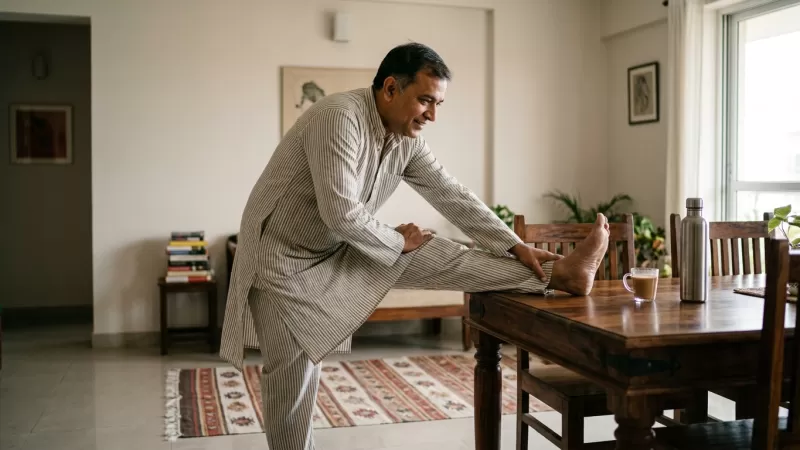
Shoulder stiffness is something almost everyone who cooks in an Indian home faces at some point. Whether you’re rolling out chapatis for a big family dinner, stirring sabzi over a hot stove, or prepping vegetables for the week, those repetitive movements and long hours on your feet can leave your shoulders feeling tight and heavy. It’s not a serious problem most of the time, but it’s uncomfortable and can quietly make the rest of your day feel a bit harder.
Why Shoulders Get Stiff During Kitchen Work
Many Indian kitchens are full of action. There’s chopping, stirring, lifting heavy pressure cookers, reaching up for masalas, and sometimes even grinding chutneys by hand. These movements use your shoulder and neck muscles over and over, often without you realizing it until you pause. You might notice that after an hour or two of continuous cooking—especially during festivals or big family gatherings—your shoulders feel sore or stiff.
It’s not just the movement; it’s also the posture. Many people tend to hunch slightly forward while working at the kitchen counter, or keep their arms raised for long stretches. Over time, this tightens the muscles around your neck and shoulders, making them feel tired and achy.
This is quite common, especially in homes where one or two people do most of the kitchen work. Standing in one place, with little chance to sit or stretch, adds up. You’re not alone if you feel a bit weighed down after meal prep.
The Benefits of Gentle Shoulder Exercises
Here’s the good news: you don’t need a big gym routine or special equipment to ease shoulder stiffness. Small, gentle movements can help restore blood flow and relieve tightness. These simple exercises fit easily into your daily routine—even in a small kitchen or crowded home.
The main benefits of these exercises are:
- Reducing muscle tightness and discomfort
- Improving shoulder mobility and flexibility
- Helping you feel lighter and more energetic
- Breaking the cycle of stiffness before it turns into a lasting ache
Many families quietly deal with these aches, but adding a few shoulder movements during or after kitchen work can make a real difference, especially over time.
When and How Often Should You Exercise Your Shoulders?
There’s no fixed rule, but most people find it helps to do these movements:
- After long stretches of cooking (like during lunch or dinner prep)
- During quick breaks (while something simmers or boils)
- At the end of your kitchen work, before sitting down to eat or relax
For most, 3–5 minutes is enough. The idea isn’t to turn it into a chore, but to slip these movements into your normal routine, just like you might stretch your legs after sitting too long. In busy homes, you might only have time once or twice a day, and that’s usually enough to feel some relief.
Shoulder Rolls: The Classic Reliever
Shoulder rolls are one of the easiest and most effective ways to ease tightness. You don’t need much space, and you can do them standing or sitting.
Here’s how:
- Stand or sit comfortably, arms relaxed by your side.
- Gently lift both shoulders up towards your ears.
- Roll them backward in a big, slow circle, then let them drop down.
- Repeat this movement 5–8 times, moving slowly and focusing on the feeling.
- Now, try rolling your shoulders forward in the same way, 5–8 times.
This movement helps release tension, especially after you’ve been chopping or stirring for a while. It’s simple, but surprisingly effective.
Arm Circles and Reaching Movements
You’ve probably noticed that reaching up for jars or placing utensils on a shelf gives a gentle stretch to your shoulders. Arm circles and reaching movements build on this natural action.
To do arm circles:
- Stand with your feet shoulder-width apart.
- Extend your arms out to the sides, parallel to the ground.
- Slowly make small circles with both arms, moving forward 8–10 times.
- Reverse, making circles backward 8–10 times.
For an easy reaching stretch:
- Lift both arms straight up above your head as if you’re reaching for the ceiling.
- Hold for 3–5 seconds, then relax and bring your arms down.
- Repeat 3 times.
These movements encourage circulation and gently wake up tired muscles, especially after repetitive motions like rolling or chopping.
Neck and Upper Back Relief
Sometimes, what feels like shoulder pain actually starts in your neck or upper back. Reaching forward or looking down while working with vegetables or dough can make these areas tight too.
A simple neck stretch can help:
- Sit or stand comfortably.
- Slowly tilt your head to one side, bringing your ear towards your shoulder (don’t force it).
- Hold for 5 seconds, then return to center and repeat on the other side.
- Do this 2–3 times on each side.
For your upper back, try clasping your hands in front of you and gently stretching your arms forward at shoulder height. You’ll feel a gentle pull between your shoulder blades—this usually feels good after a long kitchen session.
Just remember, never overdo it. The goal is comfort, not strain.
Fitting Shoulder Ease Into Busy Indian Routines
Some days, the kitchen feels like a non-stop assembly line—especially in the morning rush or when extra family members visit. Finding even a few minutes for yourself can be tricky. But these exercises don’t require you to leave the kitchen or change clothes, and you don’t need to find a quiet room. You can do a few shoulder rolls while waiting for the dal to boil or between kneading dough and cleaning up.
Here are a few practical tips that work in many homes:
- Link a quick shoulder movement to an existing habit—like after washing your hands or before wiping the counter.
- If you work alongside a family member, remind each other to stretch. It can turn into a shared, light moment.
- Don’t worry if you forget sometimes. Doing these exercises even a few times a week can help.
Everyone’s routine is different. Some days you’ll manage five minutes; other days, only one. That’s okay.
Small Household Tweaks for Shoulder Comfort
While exercises help, a few small changes in how you work can also reduce shoulder strain. These are things you might already do, but it helps to be more aware of them:
- Change tasks every 20–30 minutes if possible—alternate between chopping, stirring, and arranging.
- Keep heavy items (like big pots or mixer jars) on lower shelves to avoid too much lifting and reaching.
- Stand up straight and try not to hunch over the counter—sometimes a small footstool or anti-fatigue mat can make standing easier.
- If you spend long hours in the kitchen, a short break to sit down and relax your shoulders can help more than you’d think.
The tricky part is, these small changes often slip our minds when we’re busy, but over time, they can make kitchen work feel lighter and less tiring.
Listening to Your Body and Knowing When to Pause
Many people tend to ignore stiffness or pain, thinking it’s just part of daily life. While minor aches are common, it’s important to listen when your body asks for a break. If you find your shoulders or neck are especially stiff after certain tasks, try pausing and doing a few gentle movements before continuing.
If you feel sharp pain, weakness, or numbness, it’s best not to push through. Most everyday stiffness eases with rest and movement, but anything that feels unusual or severe shouldn’t be ignored—sometimes, it’s your body’s way of saying it needs more care.
In many Indian homes, taking a break for yourself can feel like an indulgence, especially with busy schedules or guests. But those few moments to ease your shoulders can help you carry on with less discomfort through the rest of your day.
Shoulder stiffness is almost a quiet companion in many kitchens, but a little awareness and a few simple movements can go a long way. Your everyday comfort matters—just as much as the meals you prepare for others.