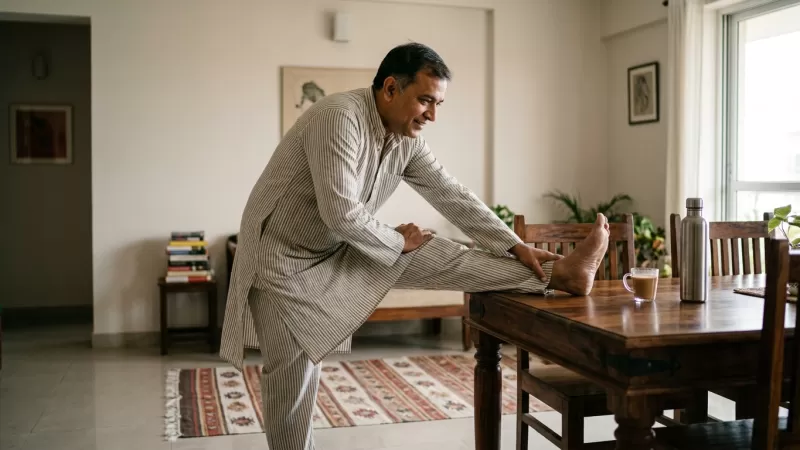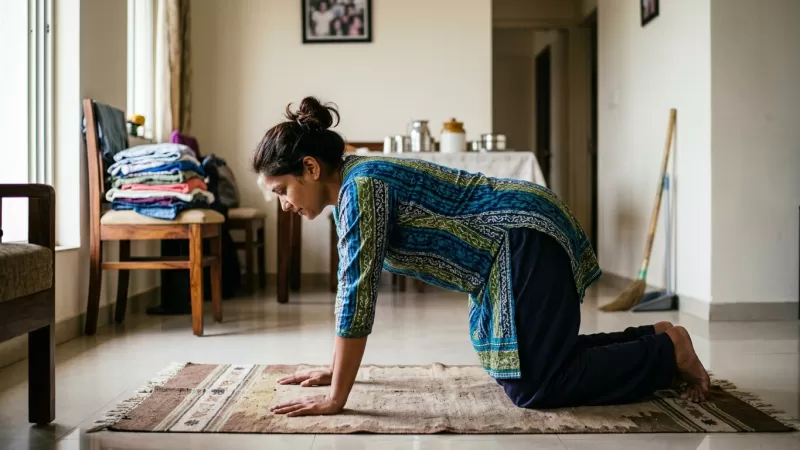
Most Indian homes run on a rhythm of daily chores—cutting vegetables, folding laundry, washing dishes, or sweeping floors. These routines keep things ticking, but they also mean our bodies often stay in the same few positions for long stretches. Over time, you might notice a stiff back after cooking, sore shoulders from hanging clothes, or just that familiar tiredness that settles in by the evening. It’s something almost every homemaker, professional, or senior has quietly felt, especially in homes where help is limited or days are packed with both work and housework.
Why Movement Matters Between Chores
When you’re repeating similar motions—chopping, bending, or standing—certain muscles and joints hardly get a break. This isn’t just about comfort; it’s about keeping your body feeling light and flexible throughout the day. Many people believe chores themselves are enough exercise, and in some ways, that’s true. But the tricky part is, these movements often use the same muscles while neglecting others.
That’s where short, gentle movement exercises come in. They don’t need extra time set aside, fancy clothes, or equipment. The idea is to sprinkle them in naturally, right in between your daily tasks—almost like a quiet reset button for your body. This way, you can help prevent that stiffness or ache that often shows up without warning.
Think of these movements as small acts of self-care that fit right into your routine. No need to feel guilty about taking a minute or two for yourself—it’s not a luxury; it’s just a practical way to feel better by the end of the day.
Common Chores That Strain the Body
Every home is different, but certain household tasks tend to put the same stress on our bodies, day after day. For example, long stretches of standing while cooking or washing dishes can tire out your lower back and feet. Bending over to sweep under the furniture or mop can leave your hamstrings and knees feeling stretched, sometimes a bit too much.
Here are a few chores and the body parts they often affect:
- Cooking and washing dishes: Shoulders, lower back, neck, wrists
- Folding laundry or ironing: Upper back, neck, wrists
- Sweeping or mopping: Knees, lower back, legs
- Carrying groceries: Arms, wrists, shoulders
- Sitting for long hours (work-from-home): Hips, back, neck
It’s easy to ignore these aches, especially when there’s always something else to do. But over weeks and months, they can quietly add up.
The Philosophy of “Short and Simple” Movements
Let’s be honest—most people don’t have the time or energy for long exercise routines during the day. That’s why the focus here is on brief, easy movements that fit into daily life, especially when you’re already on your feet. You don’t need to change into exercise clothes or set aside a special window in your packed schedule.
These little movements aren’t meant to replace a walk or your usual exercise, but they do offer a gentle way to break the pattern of repetitive tasks. You can do them in your kitchen, living room, or even the balcony, sometimes just holding onto a chair or countertop for support.
Here’s the catch: the biggest benefit comes from doing them regularly, not perfectly. If you forget, that’s fine. Just try again the next time you remember. Over time, it becomes almost a habit, like washing your hands or stretching while waiting for the cooker’s whistle.
Easy Movements for the Kitchen
The kitchen tends to be the busiest part of the home. Whether you’re making chai in the morning or cleaning up after dinner, you’re mostly standing. That can make your legs, back, and neck feel tight, especially during festivals or when guests are over.
- Countertop calf raises: Stand with your hands on the counter, slowly lift your heels to stand on your toes, hold for a moment, then lower. Repeat 5–10 times. This wakes up your legs and improves circulation.
- Shoulder circles: Roll your shoulders forward and backward 8–10 times. It’s a quiet way to ease neck and upper back tension, especially after chopping or stirring.
- Gentle side bends: Stand with feet hip-width apart, raise one arm overhead, and gently lean to the opposite side. Hold for a few seconds and switch sides. This stretches the sides of your body, which often get tight from reaching or bending.
You can slip these in while waiting for the cooker, or when you pause between preparing dal and sabzi. No one even needs to notice.
Movements for Sitting Tasks and Desk Work
These days, many people spend hours at the computer or on their phone, especially with work-from-home routines. Even seniors, after a round of chores, might rest in a chair while reading or watching TV. The problem is, sitting too long in one position often leads to stiff hips and a sore lower back.
- Seated ankle rolls: While sitting, lift one foot and gently roll your ankle in circles, both clockwise and anti-clockwise. Good for blood flow and preventing that pins-and-needles feeling.
- Neck stretches: Slowly tilt your head to one side, hold for a breath, then the other. Repeat 3–5 times. This helps, especially after looking at screens or reading for a while.
- Seated spinal twist: Sit tall, place your right hand on the left knee, gently twist your upper body to the left, hold, then switch. It feels quite nice on a stiff back, especially if you’ve been working or folding laundry at the table.
Some families make a habit of doing these during TV ad breaks or just before afternoon tea. It becomes a small, shared routine.
Quick Movements After Carrying or Lifting
Carrying heavy grocery bags, shifting gas cylinders, or moving buckets of water—all these can leave your arms and shoulders feeling tired, sometimes even causing a dull ache that lingers. It’s very common, especially if you’re managing things alone.
- Arm shakes: Simply stretch your arms out and gently shake them for 10–15 seconds. It relieves tension and gets blood flowing.
- Wrist circles: Make circles with your wrists, both directions. This is especially useful if you’ve been wringing clothes or twisting open jars.
- Chest opener: Stand tall, clasp your hands behind your back, and gently lift your arms while opening your chest. Hold for a few breaths. This undoes some of the hunching from lifting or carrying.
Even a short pause to do one of these can make the next task feel lighter on your joints.
Movements That Fit Into Cleaning Breaks
Cleaning—whether it’s sweeping, mopping, or dusting—often means bending down or reaching up repeatedly. This can tire out your knees, back, and even your hands. Many people don’t realize how much strength these tasks quietly require, especially in larger or joint families.
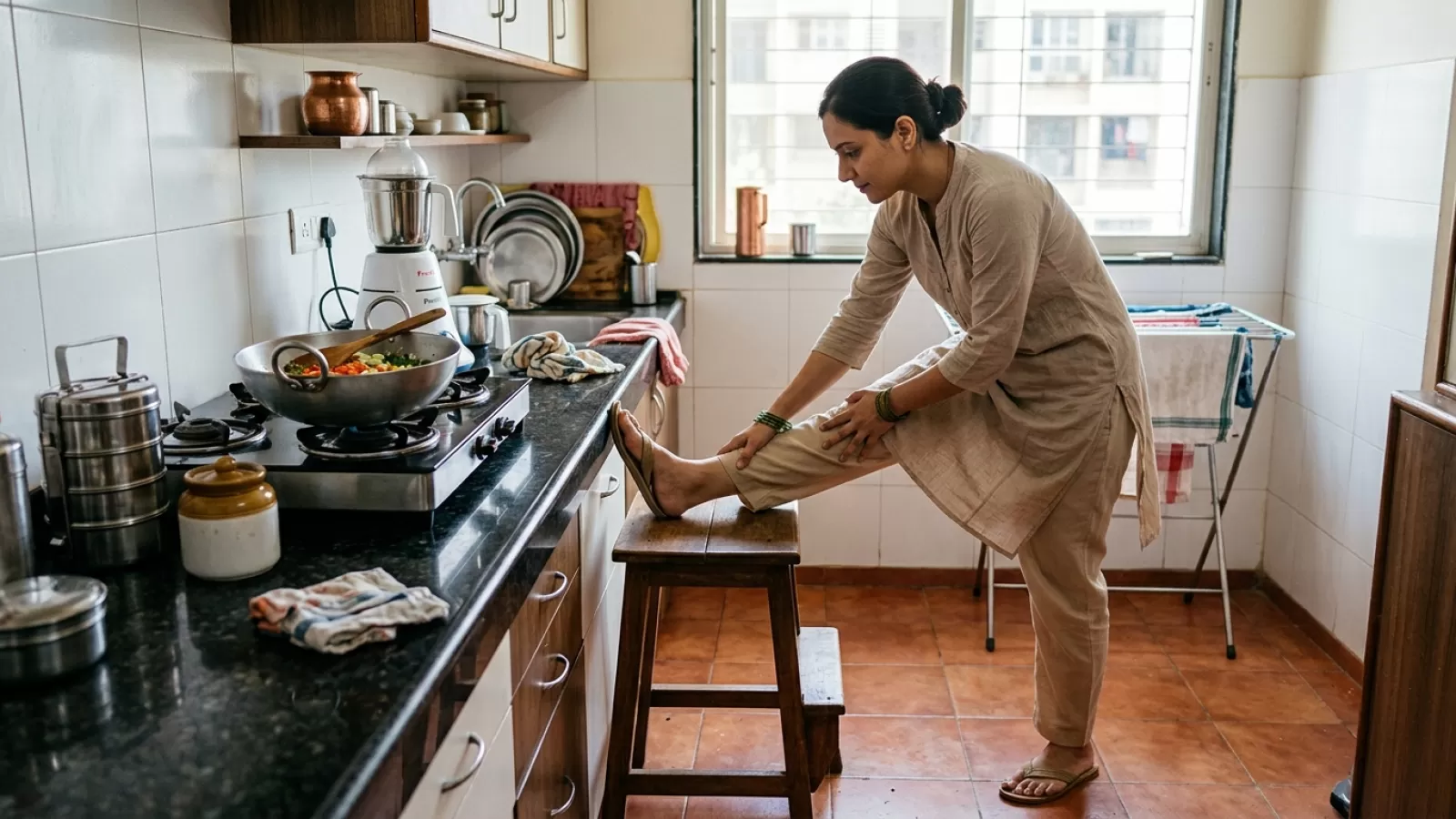
- Standing hamstring stretch: Place your heel on a low stool or step, keep your leg straight, and gently lean forward. Hold for a few breaths, then switch legs. It helps release tightness in your legs after sweeping or mopping.
- Gentle squats: Stand with feet apart, bend your knees and lower your hips slightly as if sitting back, then stand up. Do 5–8 reps. It’s a way to build strength without much effort, and you can hold onto a chair for support if needed.
- Finger stretches: After gripping broomsticks or scrubbing, stretch your fingers wide, then make a fist and release. Repeat a few times to ease hand stiffness.
These can be done in between moving from one room to another, or just before washing your hands after cleaning.
Making Movement a Natural Part of the Day
It’s easy to forget these small movements in the rush of daily life. But the nice thing is, you don’t have to do them all or even in a set order. Pick one or two that feel comfortable, and try to link them to activities you already do—like stretching your arms while waiting for your tea to brew, or rolling your shoulders before starting the next round of chores.
Some families find it helpful to remind each other, especially older parents or children who tend to sit for long stretches. It doesn’t have to be formal—a gentle nudge or even doing a few movements together can make it more enjoyable.
Remember, it’s not about perfection. Even if you only manage one or two movements in a busy day, that’s still better than none. Over time, these little pauses for movement can quietly add up to a body that feels less stiff and more ready for whatever the day brings.
Listening to Your Body and Being Gentle
One thing to keep in mind: these movements are meant to be gentle and comfortable. There’s no need to push or force yourself. If something feels painful or too difficult, it’s perfectly okay to skip it or try something else. Bodies change with age, health, and mood—what feels easy one day may feel tough the next.
Many people feel shy or self-conscious about moving or stretching in front of family. But in truth, most families understand the aches that come from daily work. If you’re not comfortable, just do these quietly when you have a moment alone. It’s your own time.
And if you ever feel unsure or have ongoing pain, it’s always wise to speak to someone you trust or a medical professional. The idea is to feel better, not add any extra worry to your day.
In most Indian homes, life is busy and sometimes a little chaotic. But these short, simple movements—tucked between chores—can help your body feel cared for, a few minutes at a time. That’s usually enough.