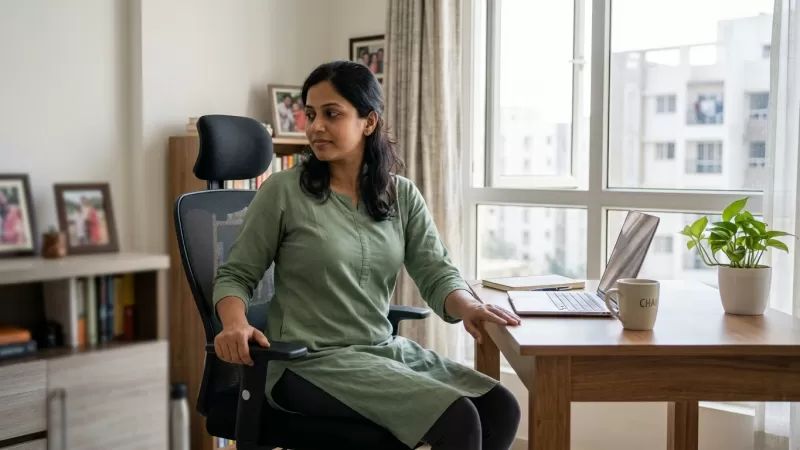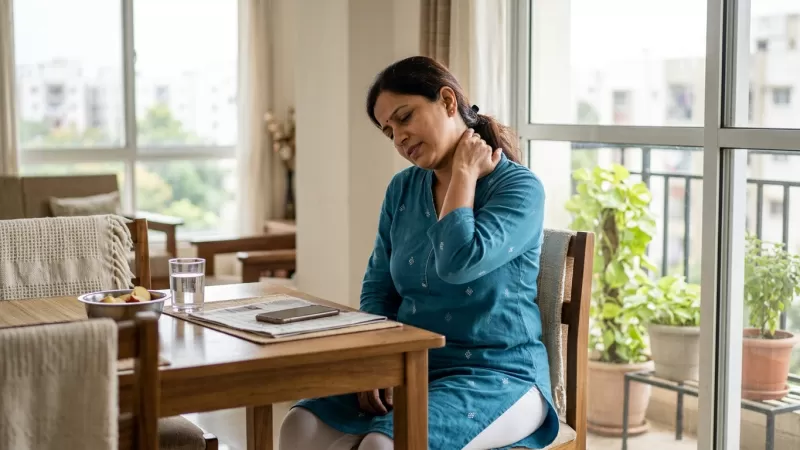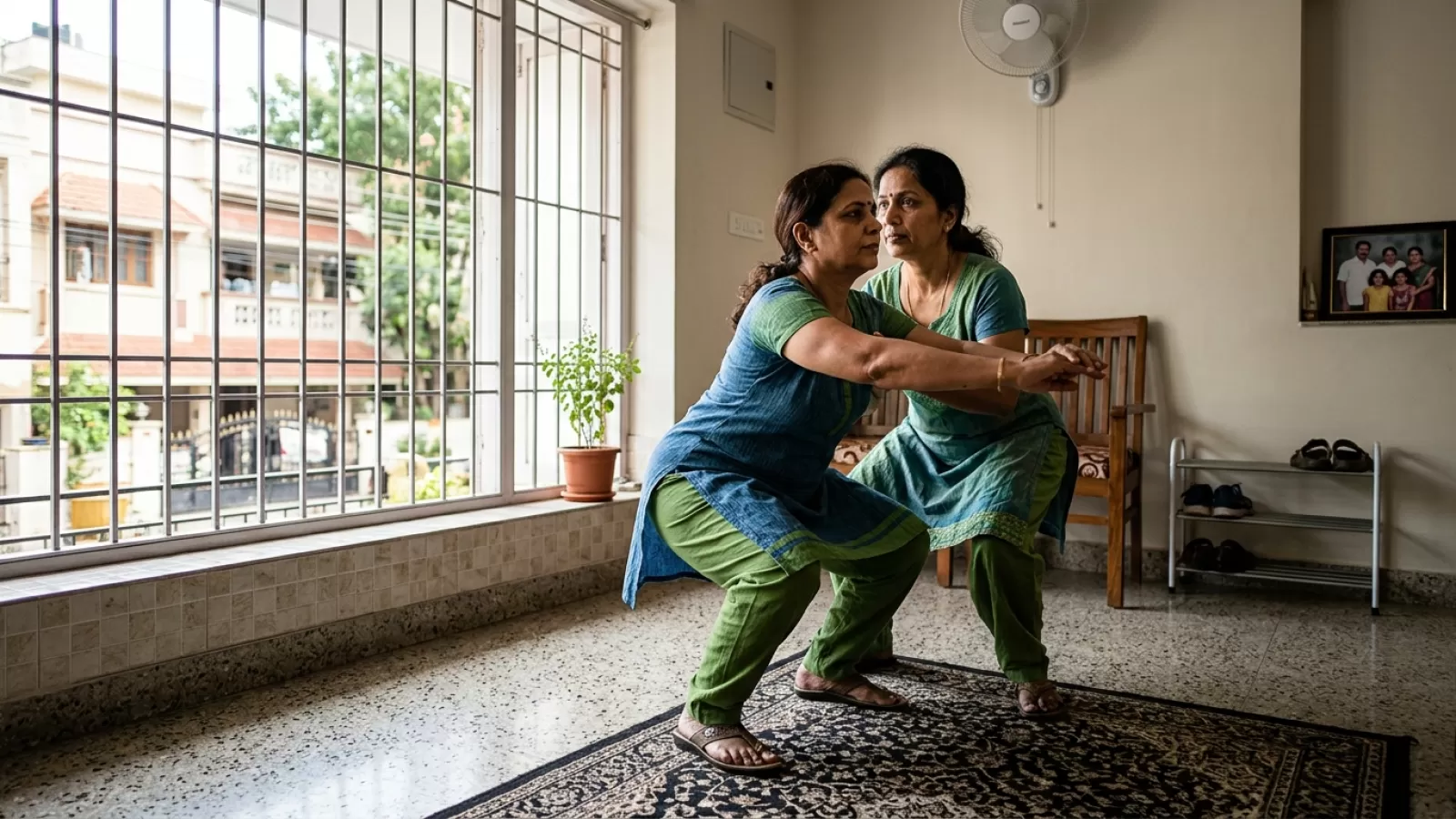
It’s a humid evening in Chennai. Fans whir, kitchen smells linger, and someone in a cotton kurta quietly stands up from the sofa, stretches a bit, and leans against the wall. A gentle push, arms bent—one, two, three wall push-ups before the next ad break. For many adults in Indian homes, beginner bodyweight exercises India can look just like this: simple moves in everyday clothes, right in the middle of a busy home, with no equipment or fancy gear in sight.
Building strength at home India-style often begins with tiny shifts—sitting a little straighter on the diwan, squeezing shoulder blades together while waiting for tea to boil, or lifting one leg at a time during a WhatsApp call. The first goal is not some abstract idea of “fitness,” but just weaving a bit more movement into the fabric of regular, sometimes chaotic, Indian life.
Why So Many Adults in Indian Homes Start From Zero
In many Indian families, structured exercise is something that happens for children at school, or for the young and sporty. For everyone else, especially adults managing work, home, and family, it can feel like there’s no space (or time) for exercise. Days get filled with chores, office calls, school runs, and kitchen duty. After all that, who really wants to get into gym clothes and do a full workout?
That said, there’s a growing realisation—often after a health scare or just stiffness in the morning—that bodies need some form of movement. The tricky part is that restarting after years of no exercise can feel intimidating. Many wonder if home strength exercises for beginners India are even possible, especially when floor push-ups and squats seem out of reach. In joint families, shared living spaces and the constant coming and going add another layer of challenge, making it hard to claim a spot for yourself.
The magic, though, often starts when someone realises they can try Indian adult bodyweight workout beginner moves in their regular clothes, wherever they are. It’s not about looking fit; it’s about feeling a bit stronger, a bit more at ease, in your own body.
Why Structured Exercise Often Feels Out of Reach
There are a few reasons why beginner bodyweight exercises India can feel difficult to start. Many adults in Indian homes grew up hearing that hard work in the kitchen or running errands is enough movement. Exercise is often seen as extra—something for those with a lot of free time or for young people trying to "bulk up." The idea that you might do squats in the living room or stretches in the kitchen is still new in many families.
Work-from-home setups, especially after the pandemic, have added both opportunities and obstacles. On one hand, you’re at home and can in theory squeeze in a few moves between meetings. On the other, it’s easy to get swallowed by endless tasks, with movement falling to the bottom of the list. Experts in community wellness often find that most Indian adults only consider exercise after a health nudge—like a stiff back, knee pain, or a friend's doctor visit—rather than as a daily habit.
There’s also the matter of climate and space. During peak summer, even thinking about exercise can feel too much. Small flats, crowded rooms, and joint families make privacy rare for a workout. Most people don’t have yoga mats or resistance bands lying around; they need exercises that work in whatever space and situation they already have.
Everyday Clues That Movement Is Missing
- Feeling stiff or achy in the morning: Many notice that getting out of bed takes more effort than it once did, with knees or backs complaining after long periods of sitting or sleeping.
- Struggling with household tasks: Lifting a bucket, carrying groceries, or even getting up from the floor during pooja can start to feel harder than it should.
- Low energy in the afternoons: Some find themselves needing extra cups of chai or coffee just to get through the day, especially after lunch.
- Breathlessness after a flight of stairs: Whether it’s running up to hang clothes during a power cut or chasing after a school bus, breathlessness can be a wake-up call.
- Reluctance to move: If you find yourself avoiding movement—preferring the lift over stairs, or skipping outings because it feels like too much effort—that’s a sign the body is craving gentle, regular exercise.
Practical Ways To Begin With Bodyweight Exercises At Home
- Start with movements you can do in regular clothes: Wall push-ups, seated knee lifts, shoulder rolls, and gentle squats can all be done in a saree, pyjama, or work-from-home attire. No need to change or find special gear.
- Use existing routines as reminders: Pair a movement with something you already do—perhaps five wall push-ups before brushing teeth, or ten seated leg lifts during phone calls. This habit-stacking approach often works well when building strength at home India-style.
- Keep sessions short and simple: Five minutes here, three minutes there—scattered through the day. Many families find that making it "too easy to skip" is better than aiming for long, demanding sessions that never happen. Over time, these small amounts add up.
- Choose exercises that feel possible: If floor push-ups are too hard, start with wall push-ups. If squats are challenging, sit and stand from a chair. The goal for Indian adult bodyweight workout beginner routines is to make success feel easy at first.
- Listen to your body, but keep moving: Soreness can happen, especially in the first few days. But if you stick to gentle, doable moves, your body will usually adjust without overwhelming pain. If pain is sharp or lasting, it’s a good idea to check with a doctor.
How Movement Quietly Fits Into Indian Household Rhythms
Many families in Indian cities have quietly discovered that beginner bodyweight exercises India can slip into daily routines without much fuss. A working professional commuting in Bengaluru might use a few minutes before the morning call to do wall push-ups against the kitchen door. A homemaker in Surat could try seated leg raises while chatting with her mother-in-law, or calf raises while stirring dal. Seniors often join in, doing gentle arm circles during the evening news.
On mornings when everything runs late, even two minutes of stretching before the first chai can make a difference. Some families now do a quick movement "round" together before dinner—just a few squats, toe touches, or wall sits. These tiny pockets of movement become part of the day, not something extra or burdensome. Over time, even these small shifts help with building strength at home India-style, making daily tasks easier and more comfortable.
Knowing When a Little Help Is Needed
If movement causes sharp pain, swelling, or persistent discomfort that doesn’t settle after a day or two, it’s wise to check with a doctor. The same goes for dizziness, chest pain, or any new health concern when trying new exercises. Most of the time, gentle bodyweight moves are safe, but everyone’s health is different. For those with long-standing medical conditions, a quick chat with a doctor before starting anything new gives peace of mind. In many homes, having a family doctor or trusted local clinic as a resource makes it easier to start—and stick with—beginner bodyweight exercises India safely.
Common Questions
Starting something new in the middle of daily routines can bring up a lot of doubts. Many adults wonder if these beginner bodyweight exercises India are really effective, or just a passing fad. Let’s look at some common concerns, anchored in the reality of Indian homes and busy schedules.
What are the most effective bodyweight exercises for Indian adults who are starting from absolute zero fitness?
The most effective moves are those that feel possible from the start. Wall push-ups, chair squats, seated knee lifts, calf raises, and gentle shoulder shrugs work well for Indian adults at zero fitness. These can be done in a bedroom, kitchen, or even while waiting for chai. Many find that these moves build confidence and strength without needing special clothes or equipment. Over time, these basics become the foundation of a reliable Indian adult bodyweight workout beginner routine.
How long before beginner bodyweight exercises in India produce visible or noticeable results?
Results tend to show up in small ways within 2–4 weeks for most people. You might notice daily tasks—like lifting a bucket or climbing stairs—becoming easier. Clothes may fit a little better, and morning stiffness often reduces. Visible changes, like firmer arms or better posture, usually take a few months. The key is consistency: a few minutes most days, rather than long sessions once in a while. Indian homes often see the biggest difference when movement becomes part of regular routines, not an extra chore.
Is bodyweight training sufficient to build meaningful strength or does an Indian adult eventually need to add weights?
For many Indian adults, bodyweight exercises are enough to build meaningful strength, especially for everyday needs—carrying groceries, climbing stairs, or playing with grandkids. As you get stronger, you can make moves more challenging (like moving from wall to floor push-ups). Some choose to add weights later, but it’s not necessary for most. If your daily life feels easier and you’re able to do more, that’s a good sign your home strength exercises for beginners India are working well.
How do beginner Indian adults avoid the muscle soreness that makes them want to stop after the first session?
Start slow and stick with gentle, doable moves. Many find that beginning with a few wall push-ups, seated leg lifts, or shoulder rolls helps the body adjust without much soreness. If you feel a little ache, gentle stretching and warm showers can help. The soreness usually fades after a week or two. In Indian homes, spreading movement throughout the day—rather than doing all at once—reduces the discomfort and makes it easier to stick with building strength at home India-style.
What is the right progression from complete beginner exercises to more challenging movements in a home setting?
Begin with moves that feel easy—wall push-ups, seated knee lifts, or supported squats. Once these feel comfortable, try more repetitions or add a second set. After a few weeks, you can move to slightly harder versions, like floor push-ups or deeper squats. Many Indian adults add new exercises slowly, testing what feels right in their space and clothes. The best progression is one that fits into your daily life, so it becomes a habit rather than a chore.