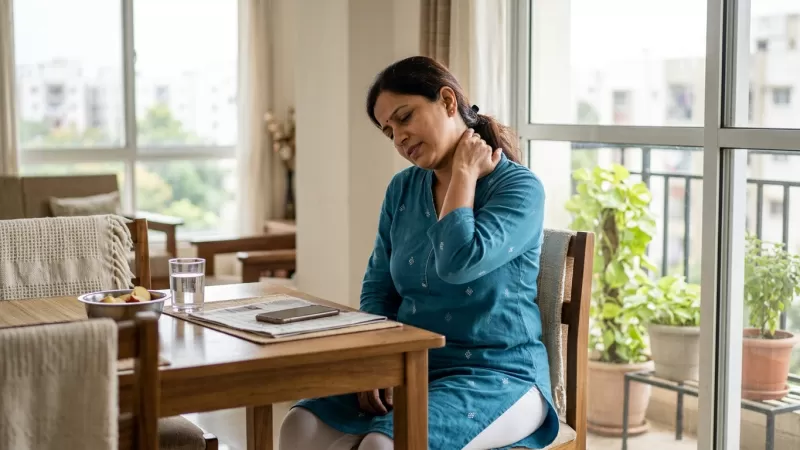
There’s a familiar moment in many Indian homes: the alarm rings, you shift under the fan or AC, and as your feet touch the floor, there’s a sudden creakiness. Your knees or back might feel oddly heavy, and the first few steps to the bathroom feel like your body aged overnight. This morning body stiffness isn’t just about age—it’s a natural result of being still for hours, whether you sleep on a floor mattress, a thick spring bed, or an old wooden cot.
That said, most people find that gentle morning movement—just five minutes of simple stretches or home exercises—can bring real relief. These morning stiffness relief exercises India households try aren’t about twisting into impossible yoga poses. They’re about getting joints and muscles moving, so you can start your day with less discomfort and more energy.
Why Morning Stiffness Is So Common in Indian Households
Morning body stiffness in India is almost a household ritual. It isn’t always about growing older. In many homes, everyone from young parents to seniors experiences that tightness after a night of sleep. The body settles into whatever position it finds most comfortable on the mattress, the floor, or even the sofa, and remains there for hours without much movement.
During winter, especially in North India, the cold air sneaks into bedrooms and makes muscles feel even stiffer. In humid summers, the ceiling fan or AC may help with the heat, but the body’s stillness continues. Busy families—whether in apartments or independent houses—usually get up and start moving without thinking much about this stiffness. For many, the first few steps in the morning are slow and deliberate, especially before chai or the first cup of coffee.
Most Indian adults don’t consider this a medical issue. It’s just part of the day, like waiting for the geyser to heat or the milkman’s bell. But ignoring it can make morning chores, school drop-offs, or the first meeting of the day more uncomfortable than necessary.
Why Sleep Stillness Leads to Aches and Creaks
Here’s the catch: your body isn’t meant to be in one position for six to eight hours. Muscles relax, joints get less lubrication, and blood flow slows down a bit during deep sleep. When you wake up, everything needs a gentle nudge to get going again.
Fitness coaches who train working adults often find that most movement in Indian homes comes from daily tasks, not planned exercise. So, when you’re sleeping, you’re really not moving at all. That stillness, especially if the mattress is very soft or very hard, can leave your back, hips, and shoulders feeling stiff. If you sleep curled up, your knees and ankles might feel it. If you sleep flat, your lower back might protest.
Many families use traditional cotton mattresses (gadda), foam, or even thin mats on the floor. Comfort varies, but the common factor is that movement during sleep is limited. And with busy days, most people skip any morning routine for body stiffness morning India could benefit from. The result? Those first few minutes after waking can feel harder than they need to be.
Everyday Signs Your Body Is Stiff in the Morning
- The first steps are slow or uncomfortable: Many adults notice a heaviness or tightness in the lower back, knees, or feet when getting up, especially after a cold night or a long sleep.
- Bending feels awkward: Whether picking up a dropped towel or reaching for slippers under the bed, the body resists quick, smooth movement.
- Chores start slowly: Brushing teeth, making chai, or packing tiffin can feel clumsy or awkward in the first 10–15 minutes after waking.
- Morning aches ease up after moving: The stiffness usually fades after a bit of walking around, washing up, or stretching, which is a sign it’s related to inactivity, not injury.
- Seniors need extra time: Older adults in joint families may take a little longer to get going, often sitting on the bed for a few minutes before standing up, especially during winter or rainy months.
Gentle Morning Exercises That Fit Indian Home Routines
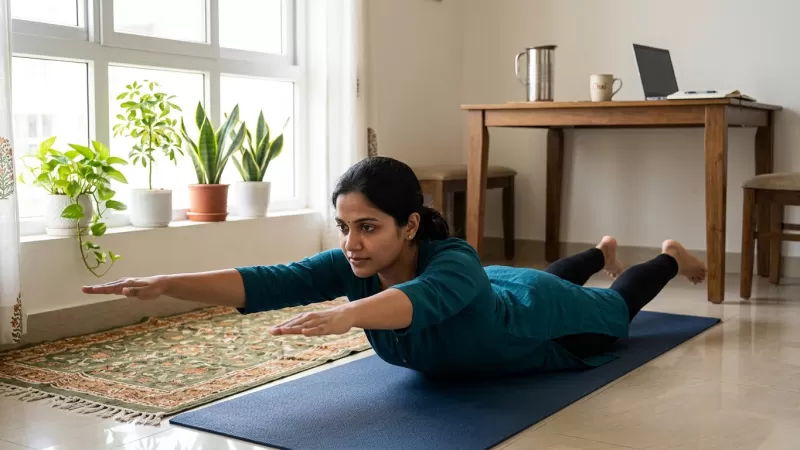
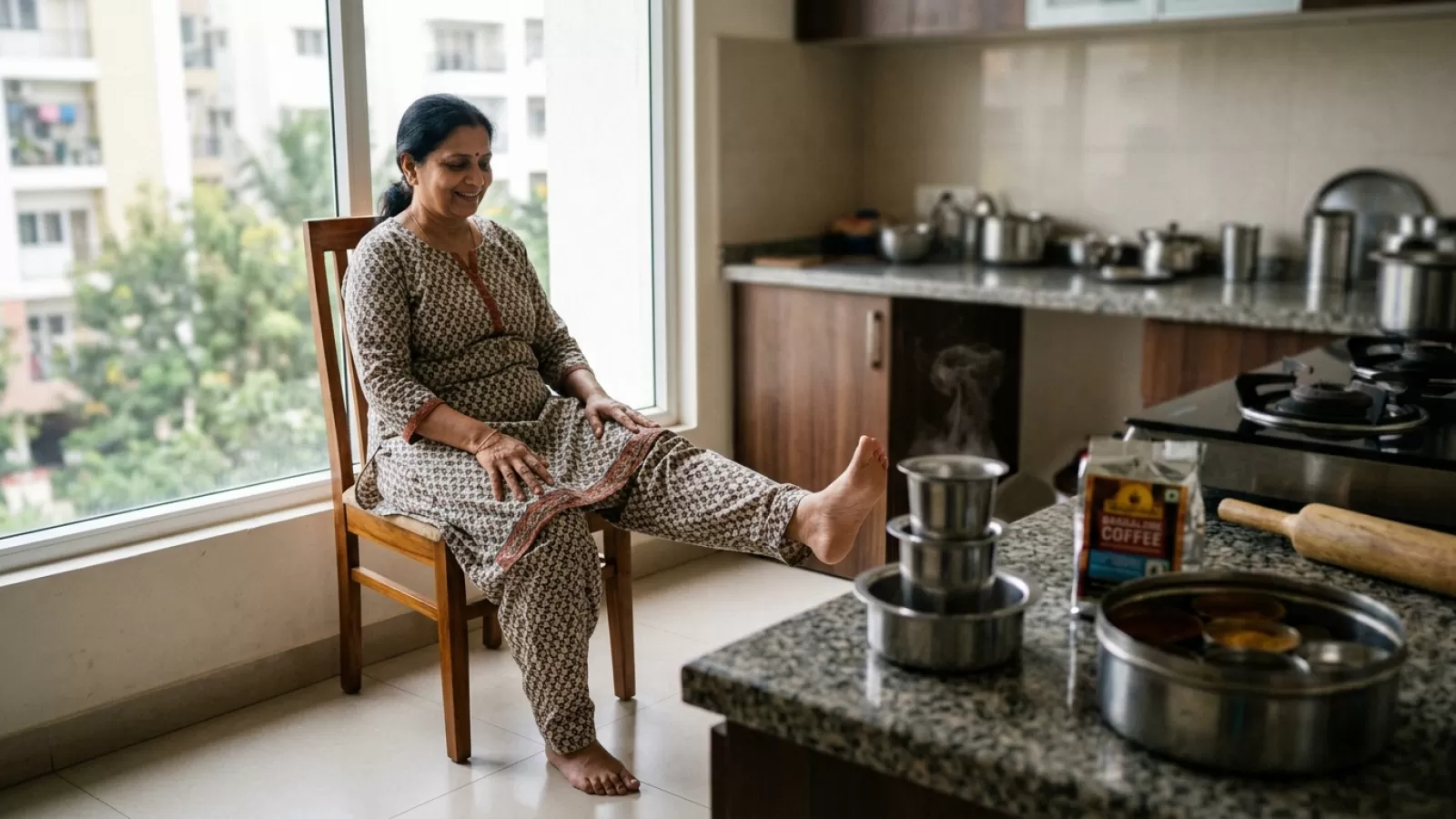
It doesn’t take long to loosen up—just five minutes of home exercises for morning stiffness India has quietly adopted in many cities. Here are a few simple, no-equipment moves you can try before you reach for your phone or head to the kitchen:
- Ankle Circles (1 minute): Sit on the bed and move your feet in slow circles—clockwise and then anti-clockwise. This wakes up the joints and helps with balance.
- Knee Hugs (30 seconds–1 minute): Pull one knee gently to your chest while lying on your back, then switch. This eases the lower back and hips, especially for those who sleep curled up or on their side.
- Cat-Cow Stretch (1 minute): On your hands and knees (use a mat or bedsheet), arch and round your back slowly. This yoga-inspired move is popular for morning body ache relief exercises in Indian homes with seniors and working adults alike.
- Shoulder Rolls (1 minute): Stand or sit and make big, slow circles with your shoulders. This is especially good after sleeping on one side or on a pillow that doesn’t quite fit.
- Gentle Spinal Twist (1 minute): While sitting, turn your upper body gently to each side. This opens up the back and helps with overall mobility.
The tricky part is making this routine a habit. You don’t need to do every exercise every day. Pick two or three moves that feel good. Most people notice their body stiffness morning India style—creaky, slow, a little heavy—improves within minutes. There’s no need for fancy gear or a yoga instructor, just consistency.
A Kitchen in Nagpur at 6am: Where Stiffness Meets Routine
The sun isn’t up yet. In a small kitchen in Nagpur, the tiled floor feels cool. The smell of soaked chana and last night’s leftover sabzi is faint. Someone stands by the gas stove, shifting weight from one foot to the other, rolling their shoulders as the chai boils. There’s a brief pause before reaching for the steel dabba of tea leaves—a subtle, almost unconscious stretch.
This is how morning stiffness relief exercises India has made its own: not as a separate ritual, but woven into the small movements of getting ready. Whether it’s a gentle twist while opening a spice box or stretching to reach the upper shelf, these micro-movements add up. In many homes, relief is found not only in formal routines, but in these everyday actions that slowly wake up the body before work even begins.
When Morning Stiffness Needs a Closer Look
Most morning stiffness in Indian adults fades within 10–15 minutes of gentle movement or simple morning body ache relief exercises. But if you notice the stiffness is lasting for more than an hour, worsening over days, or coming with swelling, redness, or pain that doesn’t go away, it might be time to check with a doctor. This is especially true for people with chronic health conditions, or those who notice new symptoms that interfere with daily life. It’s always better to have a quick word with a medical professional to rule out anything more serious.
Common Questions
Many Indian adults wonder how much movement is enough, which exercises actually work, and whether their mattress or sleeping style makes a difference. Let’s look at some of the most common questions that come up in homes across India, from busy mornings in Bengaluru to quiet dawns in semi-urban towns.
What are the most effective exercises for reducing morning body stiffness in Indian adults?
In most Indian homes, the best exercises are the ones you can do without any equipment or special setup. Ankle circles, gentle knee hugs, simple spinal twists, and shoulder rolls are all highly effective for easing morning stiffness. On a cool winter morning, even just sitting and moving your wrists, ankles, and neck gently while waiting for the chai to boil can help. These movements encourage blood flow and wake up joints, making daily routines like sweeping, cooking, or walking to the bus stop more comfortable.
How many minutes of movement in the morning is enough to address stiffness before the day begins?
Usually, just five minutes of movement is enough for most Indian adults to ease morning stiffness. This can be as simple as a series of stretches done on the bed or standing while waiting for the pressure cooker’s first whistle. The key is to focus on gentle, steady movements rather than forcing the body. On busy days, even a few stretches between kitchen tasks or while getting ready can make a noticeable difference.
Are certain Indian adults more prone to morning stiffness and why?
Yes, adults who are less physically active during the day, those with desk jobs, or seniors tend to feel more stiffness in the morning. In joint families, you might notice grandparents taking a little longer to get moving, especially in colder regions. People with previous injuries or those who have been sleeping on very hard or soft surfaces can also be more prone to body stiffness morning India households experience. Lifestyle and sleeping habits play a big role.
Does sleeping on a traditional Indian mattress or floor affect morning stiffness levels?
Sleeping on a traditional Indian mattress (gadda) or directly on the floor can affect how stiff you feel in the morning. Some people find that a hard surface supports the back, while others wake up with more aches. In many Indian homes, the choice of bedding is based on family tradition or climate rather than personal comfort. If you notice persistent discomfort, it may be worth trying a different type of mattress or adding a layer for cushioning. Sometimes, even a simple change like a thicker bedsheet can help.
When does persistent morning stiffness in an Indian adult become something worth discussing with a doctor?
If morning stiffness lasts more than an hour, comes with swelling, pain, or does not improve even after gentle movement or morning stiffness relief exercises India adults usually find helpful, it’s wise to consult a doctor. For example, if an office worker in Mumbai notices that morning aches are getting worse and interfering with their commute or work, it’s time for a professional check-up. Persistent or worsening symptoms should never be ignored, especially if they disrupt your daily life.