In many Indian homes, a sturdy dining chair is usually pushed against the table, waiting for meal times, card games, or chai breaks. But these days, with floor exercises feeling impractical—especially for those with joint stiffness or limited space—the humble chair is quietly becoming an unexpected hero for daily movement. Chair exercises at home India now fit right into the rush of busy mornings, WFH setups, and even those late-evening living room routines when everyone else is watching TV.
The beauty of using a chair is that you don’t need to clear out the room or draw attention to yourself. A few minutes of ankle rotations or gentle marches while waiting for the dal to simmer can make all the difference. For many, seated home exercises for Indian adults are the only realistic way to stay mobile, especially in small flats where space is tight and privacy is rare. Here is how this simple practice is helping people move more, feel stronger, and reclaim some comfort—one chair session at a time.
Why Chair-Based Movement Works So Well in Indian Households
The need for chair workout small space India routines is not just about age or injury. In Indian cities, homes are often packed with furniture, family members, and a never-ending list of chores. For seniors, getting down to the floor for stretches or yoga may be uncomfortable or even impossible. For working adults, there’s hardly a free moment—let alone a full room—for exercise between meetings, cooking, and helping children with homework.
Chairs offer a safe and stable base. You can do mobility exercises Indian home chair routines without anyone noticing—just a few seated leg lifts, side bends, or gentle upper-body stretches between tasks. For many, this feels less intimidating than a full workout, and is much less likely to be interrupted by family members needing the space.
You also don’t need fancy gear. Any sturdy, non-rolling chair—think dining room or plastic balcony chairs—can support most movements. No need for mats, weights, or apps. And because the chair is always there, you can fit in a few moves while waiting for the pressure cooker’s whistle or during an ad break on TV.
What Keeps Many Adults from Floor-Based Exercises
Joint pain, stiffness, and a lack of privacy often keep people from exercising on the floor. In many homes, the living room doubles as a play area, workspace, or even a sleeping area for visiting relatives. Pulling out a yoga mat or lying on the floor isn’t always possible—or comfortable. The tricky part is, even those with good intentions often skip movement altogether because the setup feels too complicated or embarrassing in a shared space.
Fitness coaches who train working adults often find that routines are most successful when they require little preparation and no extra space. In many Indian families, a quick seated home exercise is more likely to become a habit than a 45-minute gym-style session.
There’s also cultural hesitation. Many people still see exercise as something you do outdoors, at a park, or in a gym. Moving on a chair, quietly and without fanfare, feels less showy and more practical—especially in joint families where everyone is watching.
Recognising When Chair Exercises Are Needed
- Difficulty getting up from the floor: If you find yourself avoiding floor tasks—folding laundry, playing with grandchildren, or looking under the bed for missing chappals—because it’s hard to get up, chair-based movement can help maintain strength and confidence.
- Stiffness after long periods of sitting: Those working long desk hours, often in WFH setups, tend to notice tight hips, sore backs, and numb legs. Simple mobility exercises using a home chair can ease this stiffness.
- Feeling out of breath with minor effort: If climbing stairs or walking to the market leaves you winded, it might be time to add a few chair-based leg marches or arm movements to your day.
- Reduced balance or occasional unsteadiness: Some adults become wary of standing exercises after a minor fall or near-miss. Chair exercises at home India routines provide gentle movement with added safety.
- Reluctance to exercise where others can see: Many people, especially in joint families, prefer to exercise discreetly rather than take over the living room floor. Chair routines are subtle and easy to blend into the day.
Simple Chair Exercises That Fit Everyday Life
- Seated Marches: While sitting upright, gently lift one knee at a time, as if marching in place. This gets the blood flowing and warms up the legs. Done while waiting for your chai to brew or during TV breaks.
- Ankle Circles: Extend one leg and make slow circles with your ankle. This improves circulation and reduces swelling, especially after long periods of sitting—perfect for desk workers or anyone used to sitting cross-legged during meals.
- Torso Rotations: Sit up straight, cross your arms over your chest, and gently rotate your upper body side to side. This helps loosen a stiff back and can be done quietly during a video call when your camera is off.
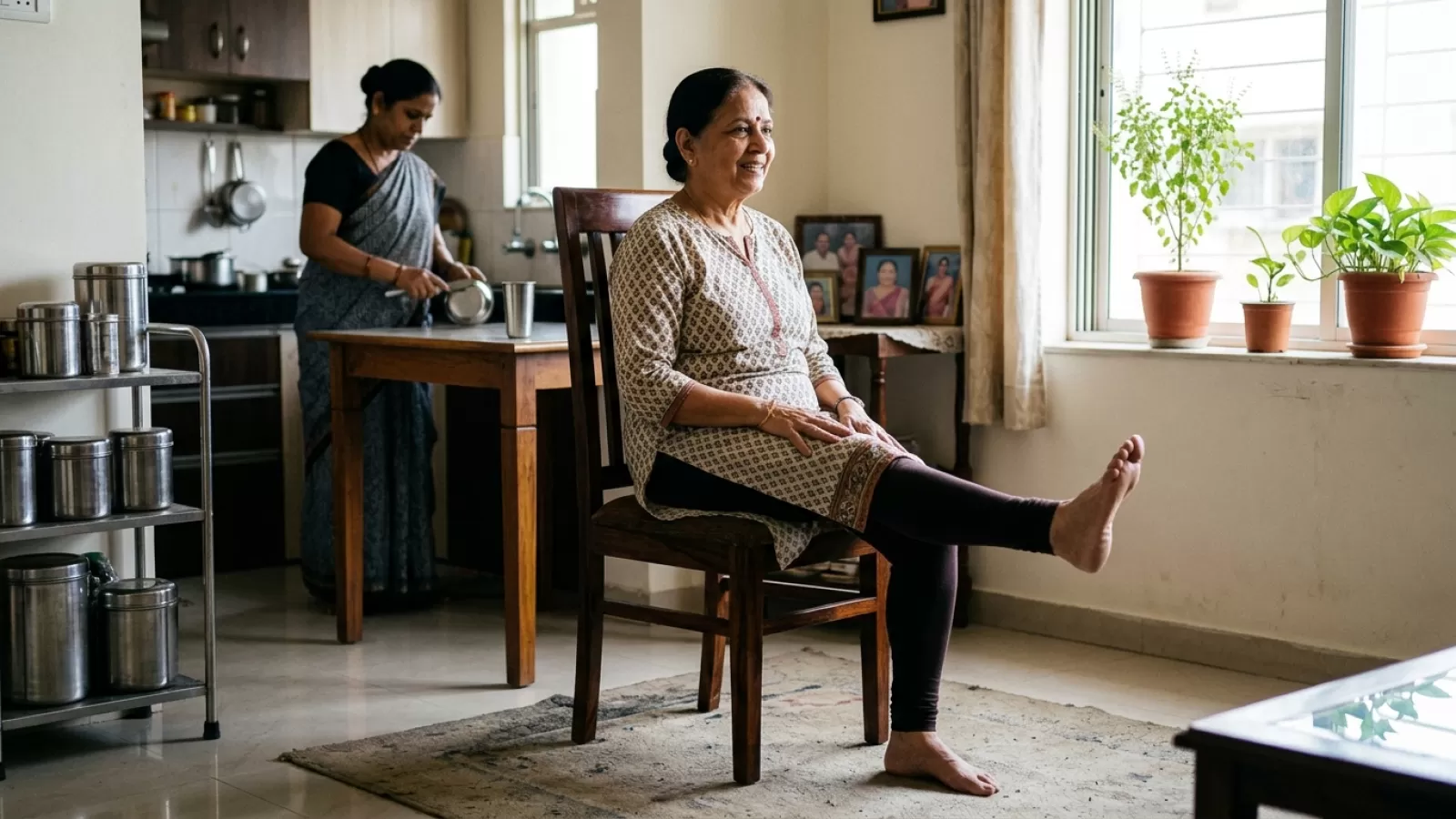
- Seated Leg Lifts: Lift one leg straight out in front, hold for a moment, and lower it gently. Alternate legs. This strengthens thighs and hips—helpful for anyone who finds it hard to get up from low sofas or the floor.
- Shoulder Rolls and Arm Circles: Roll your shoulders forward and back, then stretch your arms out to the sides and make gentle circles. This relieves tension from long hours of cooking, typing, or carrying groceries.
The key is to start with a few repetitions and build up gradually. Even five minutes, two or three times a day, can make a noticeable difference over time.
Chair Exercises Blending Into Everyday Indian Home Rhythms
In a typical apartment in Pune, it’s common to see a senior reading the newspaper at the dining table, tapping their toes or rolling their ankles under the glass top. In Bengaluru, a working professional might squeeze in a few torso rotations while on a muted conference call, blending movement seamlessly into the workday.
Late evenings in a joint family home may find a retired uncle quietly doing seated marches as the rest of the family chats over dinner. No one thinks twice about it; it’s just part of the routine now. On humid afternoons, when the power goes out and the fan slows down, gentle stretches on a chair offer relief without the need for a full workout.
What stands out is how these movements—small, subtle, and often unnoticed—are helping people maintain mobility and strength in spaces where traditional exercise just doesn’t fit. Many families have discovered that chair exercises at home India routines are not just for the elderly or injured. They’re for anyone who wants to keep moving without turning their home upside down.
When a Little Extra Help Is Needed
If you have ongoing pain, recent injuries, or any chronic health conditions, it’s wise to check with a doctor before starting new exercises—even chair-based ones. Some movements might need to be adapted for your comfort and safety. If you find that you’re feeling dizzy, unusually breathless, or having trouble with basic chair exercises, it’s a good idea to pause and ask for guidance from a health professional.
Common Questions
Chair exercises at home India routines often start with small steps and a little curiosity. If you’re wondering how to make these movements work for your family, you’re not alone. Many adults find themselves asking the same questions—especially when floor-based workouts no longer feel practical or safe.
What are the most effective chair exercises for Indian adults who cannot comfortably exercise on the floor?
For those who find floor exercises tough, focus on movements that build strength and keep joints moving. Seated leg lifts, ankle circles, gentle marches, and torso rotations are simple but effective. Many Indian homes also benefit from upper-body moves like arm circles and shoulder rolls—especially for those who spend long hours cooking, typing, or doing household chores. These exercises support mobility without needing lots of space or equipment.
How many chair exercises per day constitute a meaningful contribution to physical health?
Even two or three sessions of five to ten minutes each can make a real impact. In many families, adults fit in short bursts—before breakfast, mid-afternoon, or while watching TV. Starting with a few different movements and gradually increasing repetitions is a realistic way to build the habit. The key is consistency, not perfection. If you’re doing something daily, it’s already a meaningful step for your body.
Can chair exercises genuinely maintain strength and flexibility or are they too easy to produce real results?
Chair exercises can absolutely help maintain—and even improve—strength and flexibility, especially when floor-based routines aren’t possible. In many Indian homes, people discover that regular chair exercises lead to easier stair climbing, better balance, and less joint stiffness. The trick is to focus on slow, controlled movements and to challenge yourself a bit more as you get comfortable. For extra results, try holding some positions for a few extra seconds or adding light household items as weights.
Which chair exercises are most important for the specific physical needs of Indian adults who sit all day at work?
For those in desk jobs, ankle circles and seated marches keep the legs active and reduce swelling. Torso rotations and gentle back stretches ease stiffness from long hours at a computer. Shoulder rolls and arm circles relieve tension from typing or phone use. These movements are easy to do at your desk or dining table, making them ideal for busy workdays when you can’t leave your seat.
How do you build a varied chair exercise routine that does not become repetitive and boring after a few days?
Many families keep things interesting by mixing up the moves and timing. Try different sequences—start with leg lifts one day, focus on arm exercises the next. Use music as a cue, or do your routine during TV ad breaks. Some people even turn it into a family challenge. The trick is to keep it light and flexible—if it starts feeling boring, swap in a new movement, or change the order to keep your mind and body engaged.
A kitchen in Nagpur at 6am is quiet except for the gentle clink of a spoon in a steel glass. The pressure cooker is just starting its low whistle. At the dining table, the plastic chair creaks as someone circles their ankles under the table, warming up stiff joints before the rest of the family wakes. The tiled floor is chilly, but the movement feels good—private, practical, and just a part of the morning.