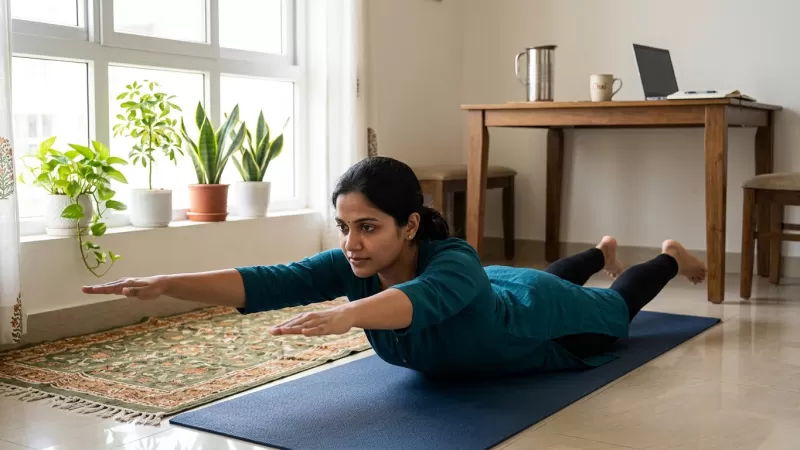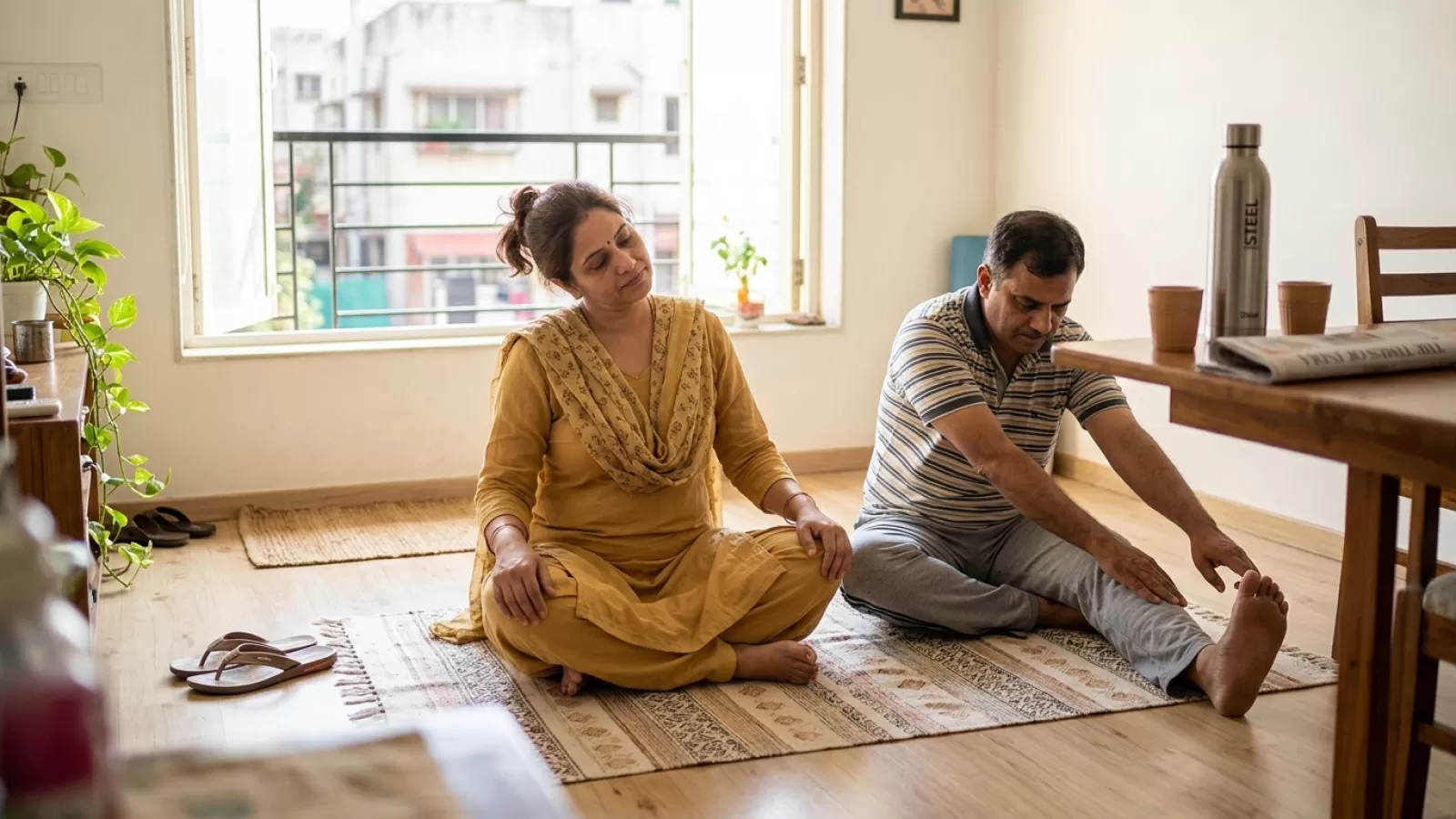
In many Indian homes, mornings start with the familiar ache—the lower back that complains as you swing your legs down from the bed, or the neck that feels rigid from sleeping on a high pillow or the wrong angle. Morning pain relief exercises India are something most adults have heard about, but rarely find time for. Usually, the first instinct is to power through, get dressed, and start the day, especially when chai is waiting in the kitchen and the rest of the house is already awake.
That said, these aches and stiffness tend to linger. A few minutes of gentle movement can make a surprising difference, but most of us push through, thinking that the pain will fade on its own—or that it's just part of growing older. In truth, home exercises morning stiffness and pain India are often skipped because the household routine feels too packed to fit in one more thing.
Waking Up With Pain: The Everyday Experience in Indian Homes
For many adults, especially after a restless night or a late dinner, morning pain is almost a routine part of waking up. It might be the dull throb in the lower back from sleeping on a sagging mattress, or the stiff shoulder that aches after carrying heavy bags up four flights of stairs the night before. Even a simple activity like rolling out rotis or mopping the floor can leave its mark, especially if done in a hurry.
There's often a reluctance to slow down and address these aches. The pressure to get everyone ready, manage the tiffin boxes, and start work (whether at home or in an office) means the first steps of the day are taken with tightness and discomfort. Many quietly accept this as normal, even though five minutes of pre work pain relief exercises Indian adults could bring real relief.
Why Morning Pain and Stiffness Are So Common
Several things come together to make morning pain and stiffness almost universal in Indian households. For one, sleeping surfaces are not always ideal. In joint families or rented flats, you might end up on a mattress that’s too soft, or even the floor. Add in late-night screentime or falling asleep on the sofa, and it’s easy to wake up with a crick in the neck or a sore back.
Fitness coaches who train working adults often find that most movement in Indian homes comes from daily tasks, not planned exercise. This means muscles are used, but not always stretched or strengthened in the right way. Long commutes, heavy bags, and even hours spent at a WFH desk on a plastic chair all add up. During humid summers, dehydration can make joints feel even stiffer, especially after sleeping in an air-conditioned room all night.
One more thing—there’s a cultural tendency to just "manage" pain, especially when everyone is expected to keep the household running smoothly. The tricky part is, ignoring these signals usually makes the pain last longer through the day. That’s why morning body pain exercises at home can be such a quiet game-changer, even if you start with just a few stretches while waiting for the geyser to heat up.
Everyday Signs Your Morning Routine Isn’t Helping Your Body
- Your first steps out of bed are stiff or awkward. Many adults feel their lower back or hips protest, often blaming the mattress or their age.
- You move your neck slowly while brushing your teeth. A stiff neck or shoulders often shows up when looking down at your phone or reaching for a towel.
- Bending down to pick up slippers or switch off a fan feels uncomfortable. If simple movements bring a twinge, morning stiffness is likely lingering longer than it should.
- You catch yourself doing gentle shoulder circles while waiting for your turn in the bathroom. Many don’t realise these small movements are actually pre work pain relief exercises Indian adults do without thinking.
- The pain or stiffness fades only after your first chores are done—often around mid-morning tea. This slow "warming up" is a sign your body needs more intentional movement first thing.
Five-Minute Home Movements That Make a Difference
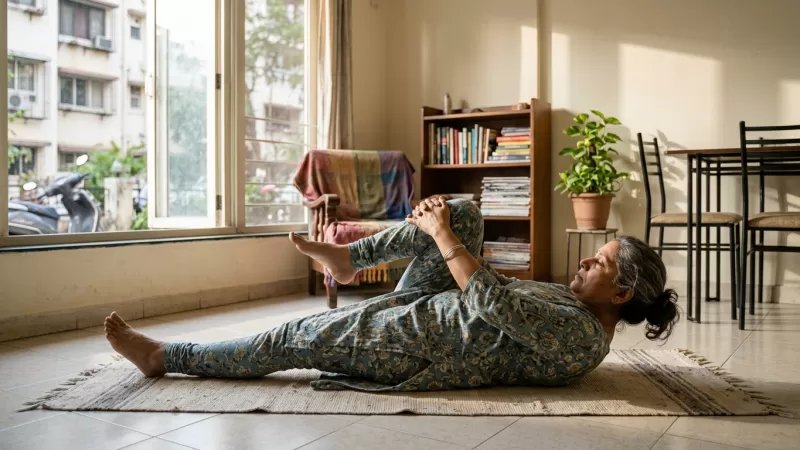
- Knee-to-Chest Stretch (on the bed): Before you get up, gently hug each knee towards your chest. This helps loosen the lower back and hips—especially after a night spent on a soft mattress or hard floor.
- Neck Rolls: While sitting on the bed or a chair, slowly roll your neck in circles. Drop your chin to your chest, then tilt gently to each side. This movement is often done in Indian homes almost unconsciously, but doing it with attention can release neck and shoulder stiffness quickly.
- Seated Cat-Cow Movement: Place your hands on your knees and arch your back, then round it forward. This is a simple way to wake up the spine, especially if you’re not keen to get down on a yoga mat before chai.
- Shoulder Blade Squeezes: While waiting for tea to boil, stand or sit tall and gently squeeze your shoulder blades together, then release. This can be done even while reading the day’s WhatsApp messages.
- Ankle Circles and Toe Flexes: If you often wake up with stiff legs or feet, rotate your ankles and flex your toes before standing up. This is especially helpful for those who sleep without a pillow under the knees or have swelling in the feet after long days.
Most of these morning pain relief exercises India don’t need a mat or special clothes. You can do them in your nightwear, in the few minutes between waking and starting the day. The key is consistency—making these movements a daily habit, even when mornings feel rushed.
How Morning Pain and Stiffness Shape Daily Life
In a typical Indian household, the rhythm of the morning is fast and often unforgiving. Someone might be kneading dough for parathas with a stiff wrist, while another person shuffles down the corridor with a sore back, hoping the pain will fade by the time they’re dressed. On mornings when everything runs late, there’s little space for self-care. Still, many families have quietly discovered that just a few minutes of morning body pain exercises at home—done right after waking or while waiting for the bathroom—can make a real difference. The pain doesn’t vanish overnight, but the day feels lighter, and movement comes more easily.
It’s common to see working professionals in Bengaluru or Pune stretching their arms and rolling their shoulders during WFH meetings, or retirees in smaller towns taking a brief walk on the terrace before sitting down for chai. These small routines, woven into everyday life, are often the only time set aside for morning pain relief exercises India. The rest is managed through the day, sometimes with quiet determination, sometimes with a sigh and a hot water bottle in the evening.
When Morning Pain Means It’s Time to Speak to a Doctor
Most morning stiffness and pain in Indian homes responds well to gentle home movement. But if your pain is sharp, lasts more than a few weeks, or starts affecting your ability to do basic chores (like bathing or walking), it’s wise to check with a doctor. The same applies if you notice swelling, numbness, or tingling that doesn’t go away. Sometimes, what feels like a simple ache could be something more. Use your judgement—if the pain feels new or worrying, don’t wait. Indian adults often try to "manage" pain for too long, but getting support is sometimes the best thing you can do for your family and yourself.
Common Questions
Lots of Indian adults wake up with aches and stiffness, but it’s not something most of us talk about during breakfast. If you’re wondering which home exercises morning stiffness and pain India responds to best, or how to know when to reach out for help, you’re not alone. Here are some of the most common questions that come up in real homes, with practical, everyday answers.
What are the most effective home exercises for the specific morning pain points most common in Indian adults?
For lower back pain, knee-to-chest stretches and gentle twists done on the bed help a lot. For neck stiffness, slow neck rolls and gentle side stretches work well, especially if you sleep in an odd position or with a high pillow. Shoulder blade squeezes are helpful for those who mop floors or carry heavy bags. Many adults in Indian homes find that these morning body pain exercises at home can be done in just five minutes before the day really starts—sometimes even while sitting on the bed or waiting for tea to boil.
How do you know whether morning pain in India is something that home movement can address versus something requiring medical assessment?
If your pain is mild, improves with movement, and doesn’t stop you from doing daily chores (like making breakfast or walking around the house), it’s likely just stiffness or minor strain. Most home exercises morning stiffness and pain India improves with are safe to try first. But if you have pain that is severe, comes with tingling or numbness, or gets worse each day, it’s time to check with a doctor—especially if you can’t manage basic tasks or the pain wakes you at night.
Is morning pain in Indian adults getting more common and why?
Yes, many families in Indian cities have quietly discovered that morning aches are more common now. Long hours at WFH desks, less walking, and more screen time all play a part. Older mattresses, shared sleeping spaces, and late-night routines don’t help. Even younger adults are noticing stiffness after late dinners or long commutes. The good part is, pre work pain relief exercises Indian adults can do at home really help counteract this pattern if made a regular habit.
What is the most important morning movement for Indian adults with lower back pain on waking?
If you wake up with that familiar lower back ache, the knee-to-chest stretch is your friend. Lying on your back and gently hugging each knee towards your chest helps release tension from the lower spine and hips. In many homes, doing this before even getting out of bed—while the rest of the house is still quiet—makes the first steps of the day much easier. Pair this with slow, gentle twists if you have a little more time.
How long should it take for morning pain to respond to consistent home movement practice?
For most adults, a week or two of daily morning pain relief exercises India can make a noticeable difference, especially if you’re consistent. Some people feel better in just a few days, while others need a few weeks. The key is to keep the movements gentle and do them every day, even on rushed mornings. If you’re not seeing any improvement after a few weeks, or the pain is getting worse, it’s a good idea to reach out to a doctor for a closer look.