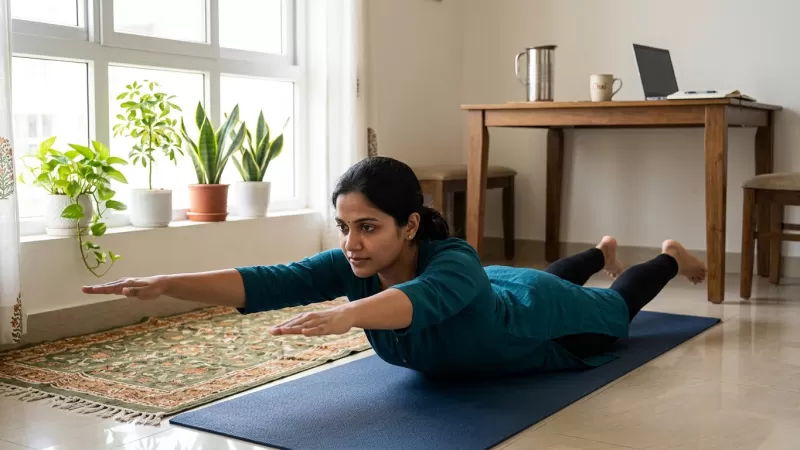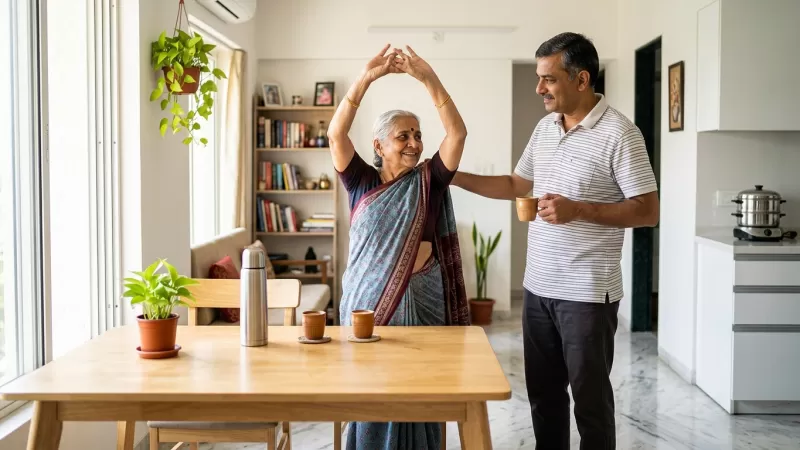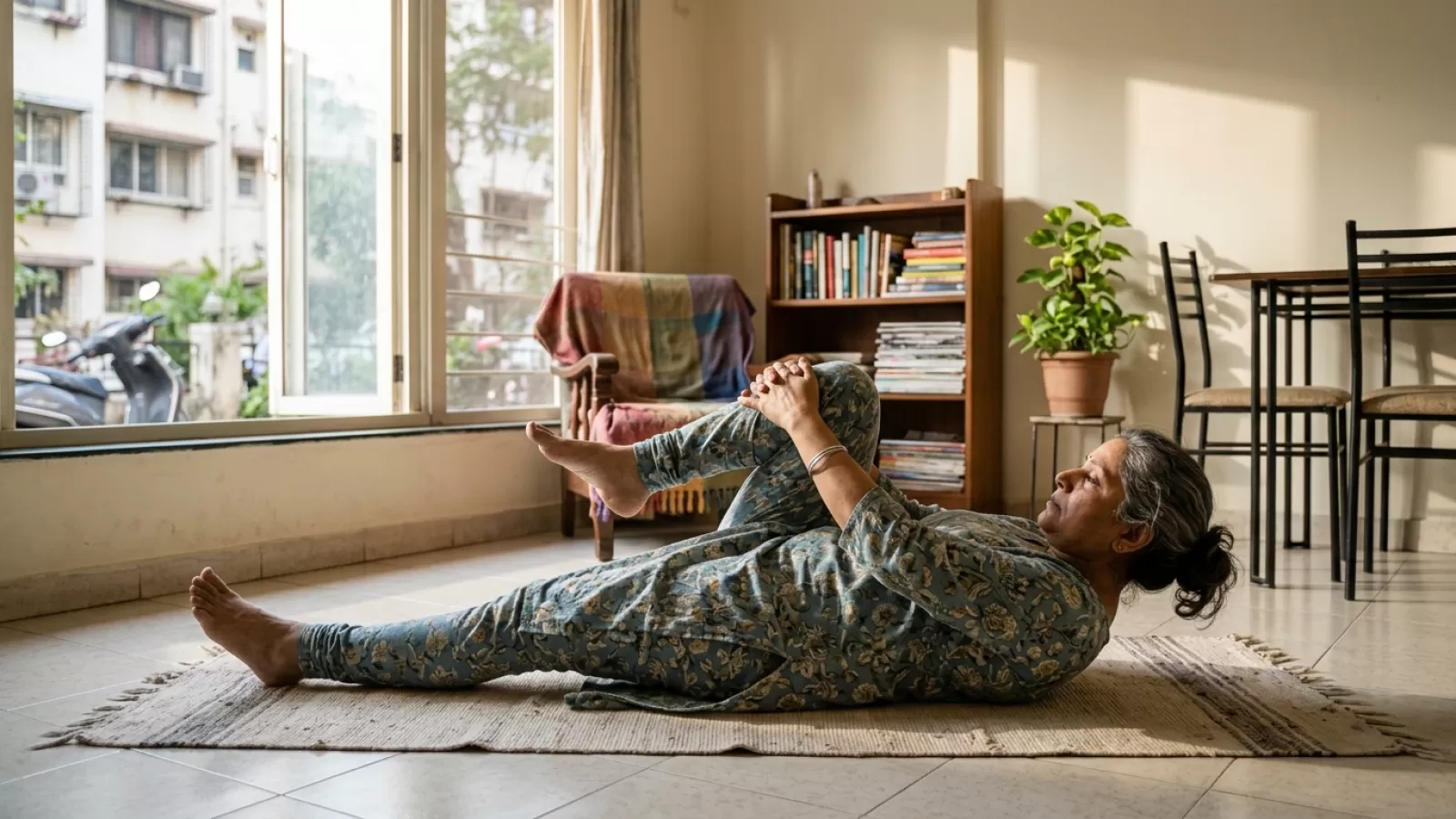
On a humid Monday morning, the familiar ache in your lower back greets you before the first sip of chai. For many Indian adults, this isn’t rare. After long hours at a desk or scrolling through the phone on the sofa, the muscles around the spine—especially the lower back and hips—feel stiff, almost as if they’ve forgotten how to move. Lower back pain exercises at home India are not just useful; they’re becoming essential in households where sitting has quietly become the main physical activity.
In most Indian homes, the pattern looks surprisingly similar. You wake, stretch, get through the day, and by evening, the lower back pain from sitting seems worse than ever. While quick fixes like hot water bags or a few minutes lying flat offer temporary relief, the real change begins with a handful of targeted home exercises for back pain Indian adults experience almost daily.
Why Lower Back Pain Becomes So Common When Sitting All Day
It’s not just IT professionals in Bengaluru or Mumbai who complain about it—these days, even homemakers and retired seniors notice the same dull ache after hours of TV or long phone calls with relatives. The trouble is, most Indian homes are not designed for ergonomic sitting. Sofas slump, dining chairs are rarely supportive, and makeshift work-from-home setups often mean you’re sitting on the bed with your laptop balanced on a pillow.
Long hours of sitting—whether at a desk, on the floor, or rewatching old cricket matches—put the hip flexors and lower back muscles in a shortened, inactive position. Over time, the core muscles that should be holding your spine upright get weaker because they’re barely used. The tricky part is, most people don’t notice this until the pain begins to interfere with daily life, like bending to pick up a dropped coin or standing up from the floor after poha breakfast with the family.
In many Indian families, it’s common to treat this pain as a normal part of adult life, something you live with rather than address. But the pattern is clear: sitting tightens some muscles, weakens others, and leaves the spine poorly supported. That’s where home exercises for back pain Indian adults experience can start making a real difference.
The Real Reasons Lower Back Pain Follows a Predictable Pattern
After a week of busy workdays, it’s easy to believe you haven’t moved much at all. On weekends, the movement often drops even further—no commute, no climbing stairs at the office, just longer stretches hunched over the sofa or lying down with the kids watching a movie. Physiotherapists who see working families often find that most movement in Indian homes comes from everyday chores—sweeping, mopping, cooking—not from formal exercise.
The muscles that support your lower back, especially the core and glutes, rarely get challenged during sitting. Meanwhile, hip flexors—the muscles at the front of your hips—get tight and shortened because they’re always bent. Over time, this pulls the pelvis forward, arching the lower back unnecessarily and making those muscles work overtime just to keep you upright. The result: back pain relief exercises India sitting become not just helpful, but necessary.
Another reason this pattern is so widespread is that most Indian adults don’t realize how much sitting they do, or how much their home setup contributes to it. Between work, meals, family TV time, and evening WhatsApp calls, it’s easy to rack up 10–12 hours in a chair or on the bed. The body adapts to whatever you do most, and if that’s sitting, the muscles for standing, lifting, and bending get neglected.
Clues That Your Sitting Habits Are Hurting Your Lower Back
- Morning stiffness in the lower back: Many adults wake up feeling stiff, especially after a weekend of less movement. That tight, achy sensation often improves after you start moving but returns after long periods of sitting.
- Pain after bending or standing: If you notice discomfort while sweeping, picking up toys, or even reaching for the dahi in the fridge, your back muscles may be underused and overstretched.
- Difficulty sitting cross-legged: Traditional Indian seating often reveals hidden back weakness. If it’s become harder to sit comfortably on the floor or get back up, your hips and core may need attention.
- Relief with movement: The pain often feels better after a gentle walk or light household chores, which signals that inactivity is part of the problem rather than overuse.
- Recurring pain after long sitting: Desk worker back pain exercises India are most needed when pain returns like clockwork after each workday or TV binge, not from any single injury.
Small Home Exercise Habits That Actually Help Indian Adults
- 10-minute morning stretch routine: Before chai or checking your phone, spend a few minutes stretching the hips, hamstrings, and lower back. Cat-cow, child’s pose, and gentle spinal twists are easy to do on a mat or even the floor.
- Strengthening your core with simple moves: Exercises like pelvic tilts and bridges can be done in the living room, no equipment needed. These target the deep muscles that support your spine, not just the surface abs.
- Counteracting tight hip flexors: Try standing lunges or the low lunge stretch (anjaneyasana) for a minute or two each side. This is especially helpful after hours at the dining table or desk.
- Mini-breaks during work: Set a reminder to stand, walk, or gently stretch every 60–90 minutes. Many families in Indian cities have quietly discovered that a short round of joint rotations or touching the toes can reset your posture and ease tension.
- Using household props: Roll up a towel under your lower back while lying down for a minute, or use a sturdy chair for gentle seated twists. These small adjustments add up over time.
Consistency is the secret—doing these lower back pain exercises at home India style, even for just 10 minutes a day, can start to shift the pattern of pain.
Lower Back Pain in Everyday Indian Routines
In many homes, lower back pain becomes most obvious after festival weekends or family gatherings. All those hours sitting on the floor, chatting, eating laddoos, and then cleaning up afterward—it takes a toll. For working professionals, the ache often creeps in late at night, just as you sink into bed after a day at the computer and a long commute.
Even homemakers who move around the house all day find that their movement tends to be repetitive and doesn’t always activate the core or stretch the hips. Seniors, especially, notice back stiffness after long conversations with relatives on the phone or during evening TV time in the drawing room. The pattern repeats: long sitting, short bursts of work, and a nagging ache that keeps coming back.
Some families have started making small changes. For example, a Bengaluru joint family replaced one evening chai with a 10-minute group stretch on the terrace. Others keep a mat rolled out in the corner of the bedroom as a reminder to do a few simple back pain relief exercises India sitting has made necessary.
A Kitchen in Nagpur at 6am: How Lower Back Pain Shapes the Morning
The kitchen is quiet except for the distant hum of a ceiling fan. On the cold tile floor, someone stretches before starting the day—fingers reaching gently toward the toes, breathing slowly in and out. The smell of soaked dal and fresh coriander hangs in the air. Before the first task, a few gentle cat-cow movements loosen up the spine. The light is soft, the world is still, and for a moment, the back feels strong again—ready for all the sitting, standing, and bending ahead.
When Lower Back Pain Means You Should Pause
Most mild to moderate lower back pain from sitting responds well to gentle movement and home exercises for back pain Indian adults use every day. But if the pain is sharp, shoots down the leg, or is linked with numbness, weakness, or changes in bladder or bowel habits, it’s time to check with a doctor. Sudden severe pain or pain after a fall needs attention too. For everyday aches and stiffness, though, slow and steady exercise is usually safe—and often far more effective than complete rest.
Common Questions
It can be confusing to know which lower back pain exercises at home India style actually help, especially when pain has become a background noise in daily life. Many Indian adults want to stay active but worry about making things worse. Here are some answers grounded in the way real homes and bodies work.
What are the most effective home exercises for the lower back pain that Indian desk workers and sedentary adults most commonly experience?
The exercises that bring relief tend to be simple and can fit into busy routines. Cat-cow stretches, child’s pose, pelvic tilts, and bridges help loosen tight muscles and build strength. Gentle hip flexor stretches and glute bridges are especially useful for those sitting at desks or on sofas all day. Many families find that doing these moves right after waking up or before dinner helps the most. If you have a yoga mat or even a clean bedsheet, you can start in your own drawing room or bedroom.
How do you safely exercise through lower back discomfort that is not severe enough to stop movement?
Most mild lower back discomfort feels better with gentle movement rather than rest. It helps to start slow—focus on light stretching and avoid any exercise that makes your pain worse. You might feel some stiffness at first, but as you move, the back usually loosens up. If you notice sharp pain, tingling, or weakness, pause and talk to a doctor before continuing. In many Indian homes, people find that frequent, gentle movement (like walking during a power cut or stretching while waiting for chai) helps pain more than lying down all day.
Which specific muscles most need to be strengthened to prevent the lower back pain caused by extended sitting in Indian adults?
The deepest core muscles, glutes (hips), and back extensors need the most attention. Sitting for long hours weakens these groups, making the spine less stable. Exercises like bridges, bird-dog, and gentle planks help rebuild this support. Many Indian adults also benefit from stretching the hip flexors, which get tight and pull the pelvis forward. Even simple moves done regularly—between kitchen chores or while watching TV—can make a noticeable difference over weeks.
How quickly can home exercises reduce lower back pain for Indian adults who have been living with it for an extended period?
In many homes, people notice small improvements within the first week of consistent exercise. The pain may not vanish overnight, but stiffness usually lessens and daily activities feel easier. Some working professionals report that their two-year back ache faded after just seven days of a regular 10-minute routine. The key is consistency—set aside a few minutes each day, even if it’s just before breakfast or after dinner. If pain is stubborn or worsens, check with a physiotherapist for personalised advice.
When does lower back pain in an Indian adult indicate something that should be evaluated medically before home exercises begin?
If lower back pain is severe, comes on suddenly after a fall, radiates down the legs, or is linked with numbness, weakness, or changes in bladder or bowel habits, it’s time to see a doctor before starting any exercise. For most everyday aches linked to sitting, home exercises are usually safe. But if there’s any doubt, or if pain persists despite regular movement, getting medical advice is the wise next step. Many Indian adults start with gentle home stretches, but know to pause and check in with a doctor if their symptoms don’t match the usual pattern.