Long, busy days on your feet can leave your legs and feet feeling as heavy as bricks. Sometimes, even sitting down for a bit doesn’t quite bring the relief you’re hoping for—especially after hours of running errands, standing at the stove, or even just pottering around the house. You’re not alone in this. In many Indian homes, tired legs are a quiet, daily complaint, especially in the evenings or after festivals, when movement is non-stop. The good news is, you don’t need fancy equipment or a gym membership to ease this fatigue. With a few gentle, thoughtful movements, you can bring comfort back to your feet and legs, right in your living room.
Why Do Legs and Feet Feel So Tired?
It’s common to wonder why your legs feel so heavy by the end of the day, even when you haven’t done anything strenuous like jogging or hiking. For most people, especially homemakers and professionals, it’s the quiet strain of standing for long stretches—cooking, cleaning, waiting for the bus, or shopping at the sabzi mandi. The blood flow slows down, fluid can pool in the lower legs, and muscles get tired from holding your weight all day.
Another thing: Indian homes often have hard floors, and not everyone wears supportive slippers indoors. Walking barefoot on marble or tile can make the problem worse. Even those who work from home these days might find themselves sitting for hours, which, oddly enough, can also cause swelling and a heavy feeling in the legs.
The tricky part is that we don’t always connect these day-to-day habits with the discomfort we feel later. But paying attention to small signals—like aching calves after chopping vegetables or tingling feet when you finally lie down—can be a helpful start.
Simple Foot Movements You Can Do While Sitting
Let’s start with the easiest place: your sofa or your favourite chair. You don’t always need to stand up or lie down to bring relief. These movements are gentle and can be done while watching TV or chatting with family:
- Toe Wiggles: Spread your toes wide apart, then squeeze them together. Repeat slowly, 10–15 times. This helps wake up tired foot muscles.
- Ankle Circles: Lift one foot and slowly rotate your ankle in big, lazy circles—first clockwise, then anti-clockwise. Do each side for 10 rotations. It’s surprisingly soothing.
- Heel and Toe Lifts: With your feet flat on the ground, lift just your heels and hold, then lower. Next, lift your toes up instead, keeping heels down. Repeat for a minute. This gently pumps blood back towards your heart.
You might notice some gentle cracking or stiffness at first—that’s normal. If you’re feeling very tired, even just a few minutes of these movements can make a difference.
Comfortable Stretches to Release Tension
Stretching doesn’t have to mean yoga mats and complicated poses. Sometimes, a few simple stretches in the living room can do wonders. If you have a sturdy wall or a chair, even better. Here are a few to try:
- Calf Stretch at the Wall: Stand facing a wall, put your hands on it, and step one foot back, keeping it flat. Lean forward gently until you feel a stretch in your calf. Hold for 15–20 seconds, then switch sides.
- Seated Hamstring Stretch: Sit on the edge of a chair, extend one leg with the heel on the floor, and gently reach towards your toes. Hold for a slow count of 15, then switch legs.
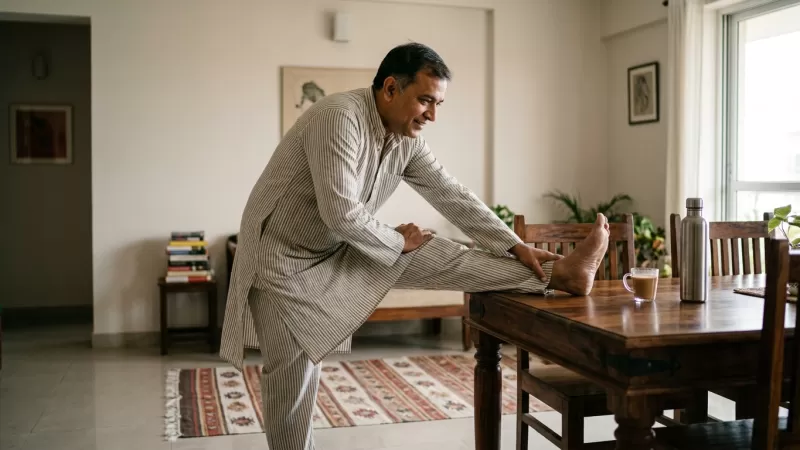
- Standing Quad Stretch: If your balance allows, stand near a wall for support, bend one knee, and hold your ankle behind you. This opens up the front of your thigh.
There’s no need to force anything. The goal is gentle comfort, not struggle. Sometimes, the body just needs a nudge to let go of the day’s tension.
Leg Elevation: Giving Your Feet a Break
One of the simplest ways to ease heavy, swollen legs is to elevate them. You’ve probably seen elders put their feet up on a stool after coming home; there’s real wisdom in that.
Try this: Lie down on your bed or sofa and prop your feet up on a couple of pillows, so they’re above the level of your heart. Even 10–15 minutes can help the swelling go down and bring a sense of lightness. If lying down isn’t possible, resting your feet on a chair while seated can also help, though it may not be as effective.
Some people do this every evening, especially in summer when legs tend to swell more. Just one word of caution—don’t keep your legs up so high or for so long that it feels uncomfortable.
Foot Massage: A Simple Pleasure at Home
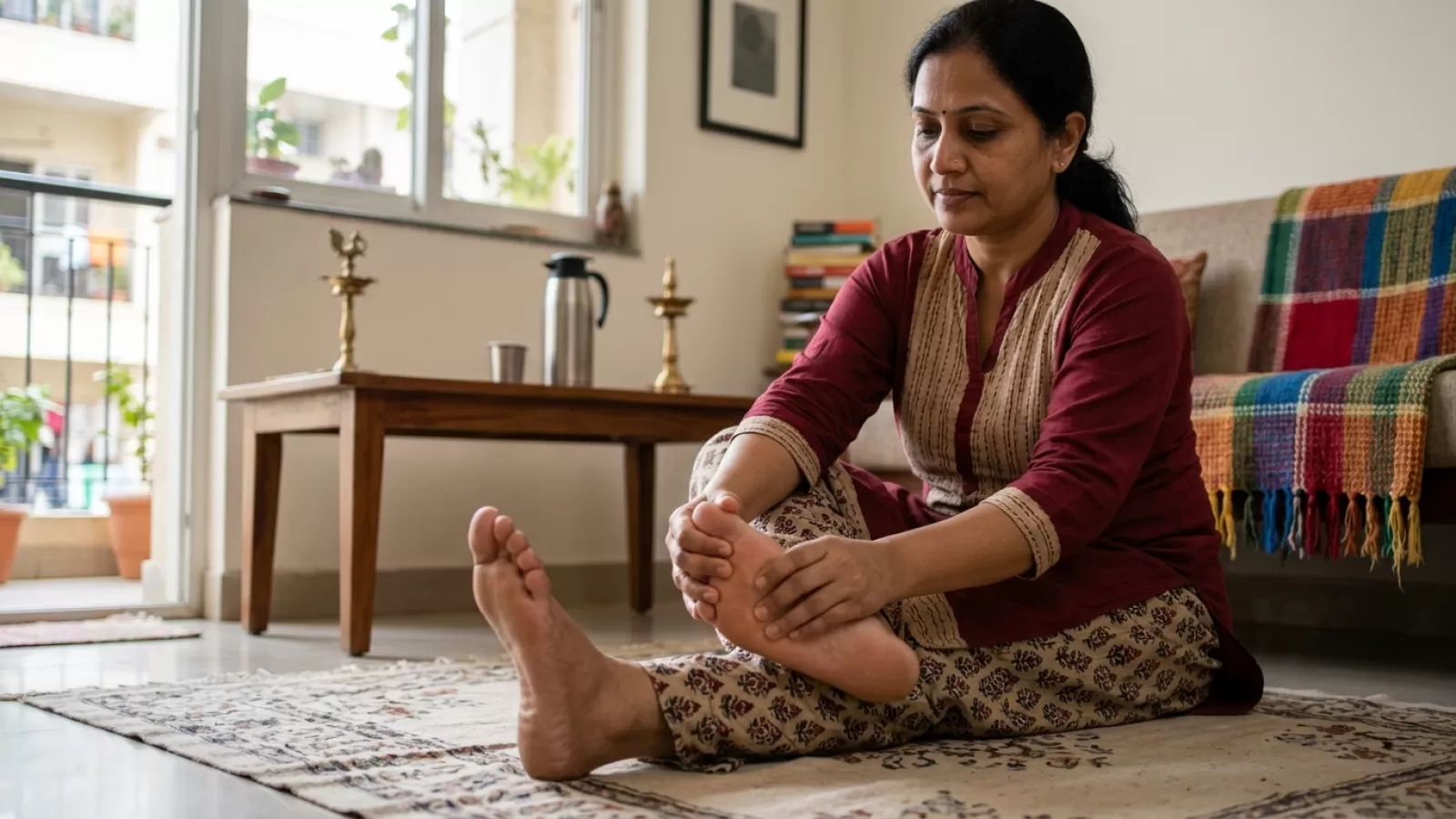
There’s something about a gentle foot rub that relaxes the whole body. In many Indian families, massaging tired feet is a quiet evening ritual, especially for elders. You don’t need fancy oils or special techniques—a little coconut oil or plain lotion will do.
Start at your toes and work your way up in slow circles, focusing on the heels, arches, and balls of your feet. Use your thumbs to press gently into tight spots. If you have a rolling pin or even a bottle, you can roll it under your feet while sitting, which feels quite nice for sore soles.
It’s normal for your feet to feel warm and tingly after a massage. That’s just the blood flow waking up again. If you’re not comfortable doing this yourself, sometimes asking a family member or helping each other out can be a small act of care.
When to Rest and When to Move
Here’s where things get tricky: Sometimes, your legs feel heavy because you’ve stood too much, and sometimes, it’s because you’ve sat too long. Modern routines—especially with long commutes or work-from-home jobs—can make it hard to find the right balance.
If you’ve been on your feet all day, a short rest with your legs up often brings relief. But if your work involves long hours sitting (like in front of a laptop), your legs may feel stiff or swollen simply from lack of movement. In that case, even a two-minute stroll around your home every hour or so can help.
There’s no perfect formula. Listen to your body’s signals. If rest isn’t helping, try gentle movement. If you’ve been moving all day, give yourself permission to take it easy for a while.
Ways to Bring Comfort Into Your Routine
Some small, regular habits can make a difference, even if you’re not able to do a full routine every day. Consider these little changes:
- Change Positions Often: Try not to stand or sit in one spot for too long. Shift your weight, sit down for a few minutes, or take a small walk every hour.
- Use Slippers or Supportive Footwear: Walking barefoot on hard floors, especially in Indian homes, often adds to fatigue. Soft, well-fitted slippers can help.
- Hydrate: On hot days, make sure you’re drinking enough water. Dehydration can make legs feel heavier.
- Foot Soak: A quick soak in warm water with a handful of salt can feel surprisingly good after a long day. Many people quietly swear by this old remedy.
It’s not always possible to do everything, every day. Even if you can add just one of these habits, it’s worth it.
Gentle Movement for Every Age
Whether you’re a busy parent running after children, a professional on your feet all day, or a senior who finds walking a bit of a chore, these gentle movements can be adapted for almost everyone. The most important thing is to move within your comfort zone.
For elders, especially, gentle ankle circles and foot massages are usually safe and easy. For those with knee or back pain, sitting movements work better than standing ones. If you’re caring for someone who is bedridden or has very limited mobility, even small, assisted movements of the feet and ankles can help prevent stiffness.
One last thought: It’s easy to ignore tired legs and feet, thinking it’s just part of life. But a bit of daily care, even if it’s as simple as stretching your toes or putting your feet up for a few minutes, often makes the next day a little bit lighter.