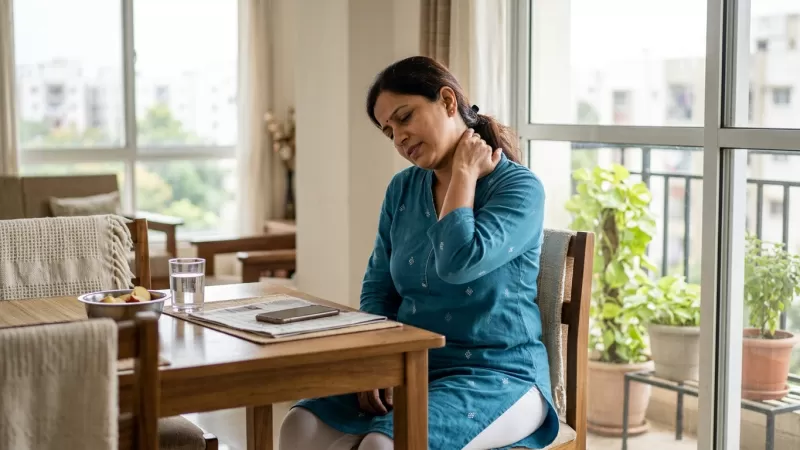
It happens quietly in many Indian homes. One day you see a family photo and realise your shoulders are rounded, your head juts forward, and your back is hunched. The posture that crept in during late-night laptop sessions, long commutes, and hours spent scrolling on your phone has quietly become your default.
Home exercises for better posture in India are often introduced out of necessity, not vanity. Most adults who sit for long hours at work or while studying notice aches between their shoulder blades, tightness in their neck, or a constant urge to stretch by late afternoon. The good part is, these patterns are so common that the fixes are surprisingly simple—and they don’t require a gym, fancy equipment, or carving out a special time slot in your busy day.
Why Poor Posture Is So Familiar in Indian Homes
In urban apartments and semi-urban houses across India, the rhythm of daily life often means sitting for extended periods. Working professionals at their WFH setups, students hunched over textbooks, and even homemakers checking recipes on their phones—all find themselves in similar positions for hours. The typical Indian desk worker posture, with rounded shoulders and a forward-leaning neck, has become almost a household signature.
Chairs and tables in many homes are rarely designed for prolonged sitting. Dining table chairs double up as workstations; beds become makeshift offices. Air conditioning isn’t always available, so you may end up slouching to catch the fan’s breeze. And in joint families, shared spaces mean you settle wherever there’s room, not where your back is happiest. These factors, mixed with the reality of back-to-back meetings or online classes, mean that slouching can become the norm—sometimes before you even notice.
Why Sitting All Day Tightens and Weakens Certain Muscles
The tricky part is, our bodies are designed to move, not to stay parked in one position. Sitting for long stretches—whether at a Bengaluru IT job, during a Mumbai local commute, or while helping kids with homework in the evening—leads to a predictable muscle pattern. Certain muscles, like those at the front of your shoulders and hips, become tight. Others, like your upper back and core, become weak from lack of use.
Fitness coaches who train working adults often find that most movement in Indian homes comes from daily tasks, not planned exercise. This daily pattern doesn’t naturally activate the muscles that keep posture upright. Over time, the body adapts to the slouch: the chest muscles shorten, the back muscles lengthen and weaken, and the neck cranes forward in search of comfort. Many adults only notice when the aches start interfering with sleep or daily routines.
Clues Your Posture Needs Attention
- Frequent aches between the shoulder blades. Many notice a dull, nagging pain by mid-afternoon, especially after long calls or meetings.
- Soreness in the lower back or neck. On busy workdays, a slight ache in the lower back can become a constant presence.
- Rounded shoulders in photos. Family gatherings or festival selfies sometimes reveal a habitual slump you don’t see in the mirror.
- Fatigue after sitting. Instead of feeling rested, you feel more tired after hours at your desk or kitchen table.
- Difficulty standing up straight. After long periods of sitting, you might find it hard to pull your shoulders back and stand tall without effort.
Everyday Exercises That Fit Indian Household Routines
- Shoulder Blade Squeezes
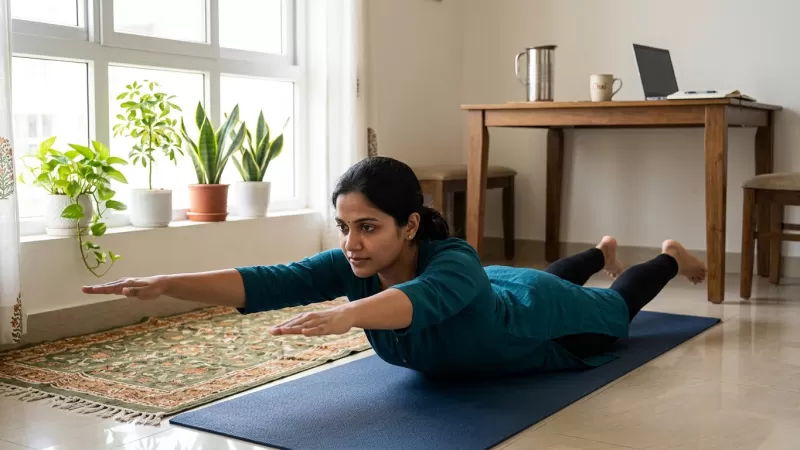
Anytime you’re waiting for chai to boil or the pressure cooker to finish, gently squeeze your shoulder blades together and hold for 5–10 seconds. This simple movement wakes up the upper back muscles that tend to get lazy during long sitting spells. - Wall Angels
Stand with your back to a wall, arms raised like a goalpost. Slowly move your arms up and down, keeping elbows and wrists against the wall. This exercise is a favorite posture improvement exercise for Indian adults because it can be done in a narrow hallway or even the living room corridor between chores. - Seated Chest Opener
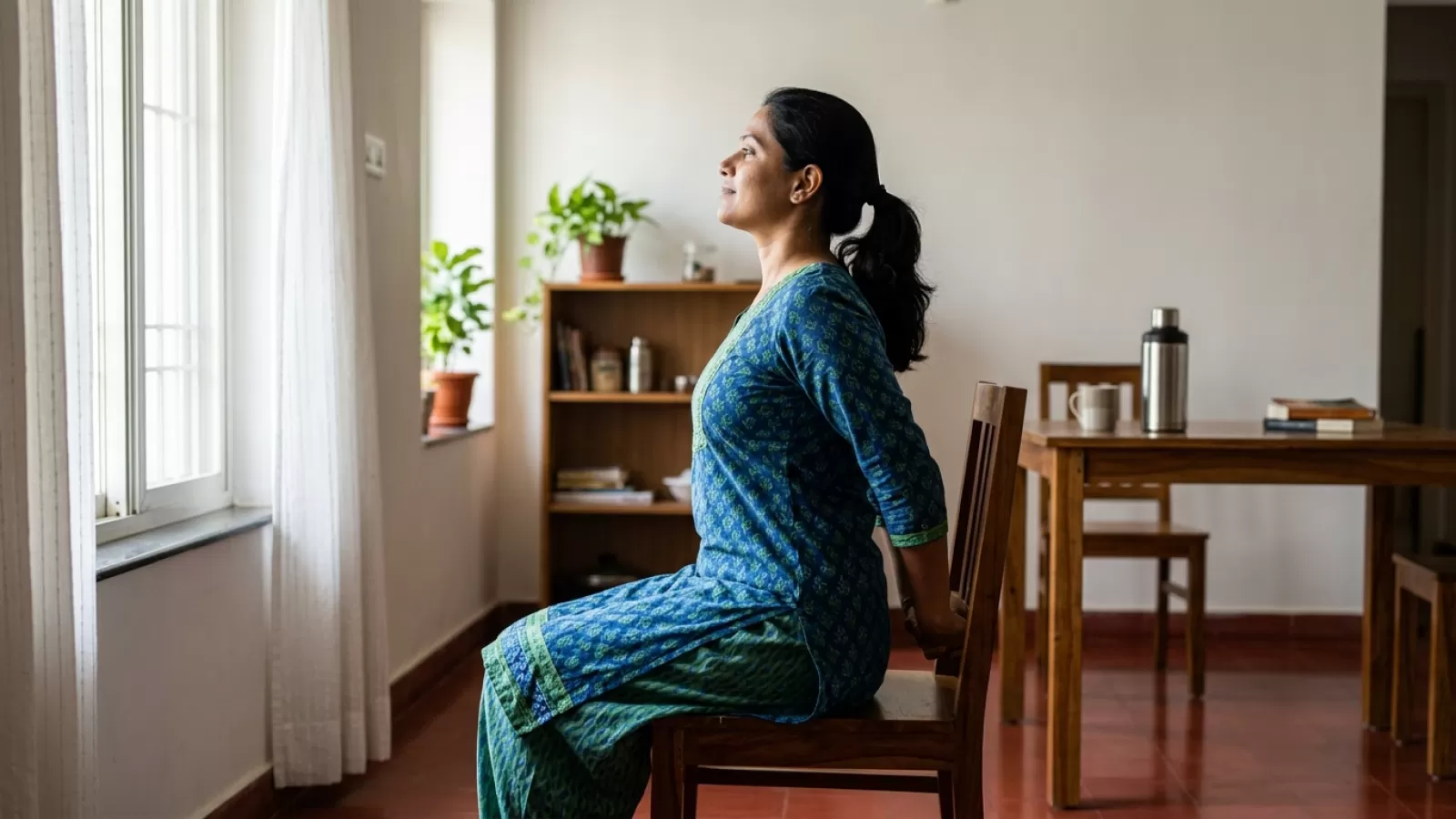
While sitting at your desk or on the floor, clasp your hands behind your back and gently pull your shoulders back. You’ll feel a stretch in your chest and the front of your shoulders. Useful anytime you catch yourself hunching over your phone or laptop. - Hip Flexor Stretch
Long hours on a dining chair or bed can tighten the front of your hips. Kneel on one knee, with the other foot in front, and gently shift your weight forward to feel a stretch at the hip. This is a classic sitting all day posture fix in India, especially after a long day in front of a screen. - Core Engagement
Many Indian desk worker posture exercises forget about the core. Try gently pulling your belly button towards your spine and holding for a few seconds—no one else will even know you’re doing it, whether you’re on a call or waiting for the lift.
How Posture Challenges Sneak Into Daily Indian Life
In a kitchen in Nagpur at 6am, the first cup of chai is brewing. The day’s WhatsApp messages are already pinging, and someone is half-perched on a plastic chair, scrolling through news. Shoulders are rounded, spine curved, chin poking forward. This is how most mornings begin for many—before the day’s real sitting even starts.
All across India, these little patterns repeat: the student slumped on the bed with a laptop, the accountant balancing files at the dining table, the grandmother helping grandchildren with homework while seated on the floor. Even movement, like sweeping or chopping vegetables, doesn’t always undo the hours of slouching. Poor posture isn’t about laziness—it’s an adaptation to the way our homes and routines are set up.
That said, many families have quietly discovered that home exercises for better posture in India work best when they are woven into existing routines. A few minutes here and there—during tea breaks, between meetings, or after dinner—can, over time, retrain the muscles and make standing tall feel natural again.
When It Might Be Time To Speak To A Doctor
If you notice numbness, tingling, or sharp pain that doesn’t improve with gentle movement, it’s wise to check with a medical expert. Same for any pain that wakes you at night or makes daily tasks difficult. While most posture issues can be improved with simple home exercises for better posture in India, some symptoms need professional attention.
Common Questions
Most Indian adults have quietly wondered about posture at some point—usually when aches or tiredness start interfering with the day. It’s easy to feel overwhelmed by the advice out there. Let’s tackle the most common questions with practical, real-life answers that fit how Indian homes actually work.
What are the most effective home exercises for improving posture in Indian adults who sit all day?
Shoulder blade squeezes, wall angels, chest openers, hip flexor stretches, and gentle core engagement are the most effective posture improvement exercises for Indian adults. These can be done while waiting for the kettle to boil, standing in a queue, or even sitting at your desk. Many working professionals in cities like Pune or Chennai find these moves easy to fit into tea breaks or after a round of household chores. The key is consistency, not perfection.
How long does it take to see a real improvement in posture through home exercises?
Most people who stick to simple home exercises for better posture in India notice small changes within 2–4 weeks—less stiffness, easier standing, and fewer aches. That said, it can take a few months for your new posture to feel truly natural, especially if years of slouching have made it your default. Many adults feel encouraged when family members or coworkers start to notice the difference first.
Can posture genuinely improve in an Indian adult or does it get progressively worse with age?
Yes, posture can improve at any age if you gently retrain the right muscles. Many older adults in Indian homes have found that regular Indian desk worker posture exercises help them stand taller and feel less tired, even after decades of sitting. Of course, age may mean progress is a little slower, but it’s never too late to start. If you have medical conditions or pain that doesn’t improve, talk to a doctor.
Which specific muscles need to be strengthened to address the posture problems caused by Indian desk work?
Strengthening the upper back (especially the muscles between the shoulder blades), core, and glutes is essential for Indian desk worker posture exercises. Stretching the chest, front shoulders, and hip flexors is also important. Many adults who spend long hours sitting in makeshift home offices find that a balanced approach—mixing strengthening and stretching—works best.
How do you make posture exercises a natural part of the Indian working day without setting aside separate time?
Try pairing posture exercises with daily routines. Do shoulder blade squeezes while waiting for your tea to steep, chest openers between Zoom calls, or wall angels before lunch. Many families make it a group activity—kids join in after homework, or elders stretch while watching evening TV. The most effective sitting all day posture fix in India is the one that fits quietly into your typical day, not a special workout session.