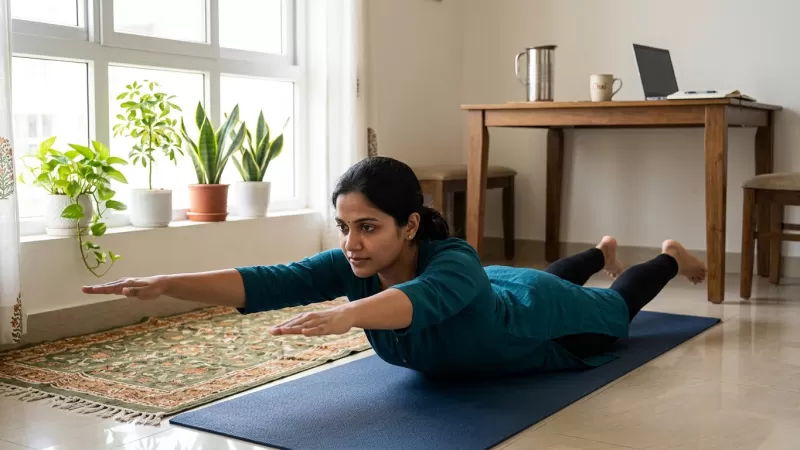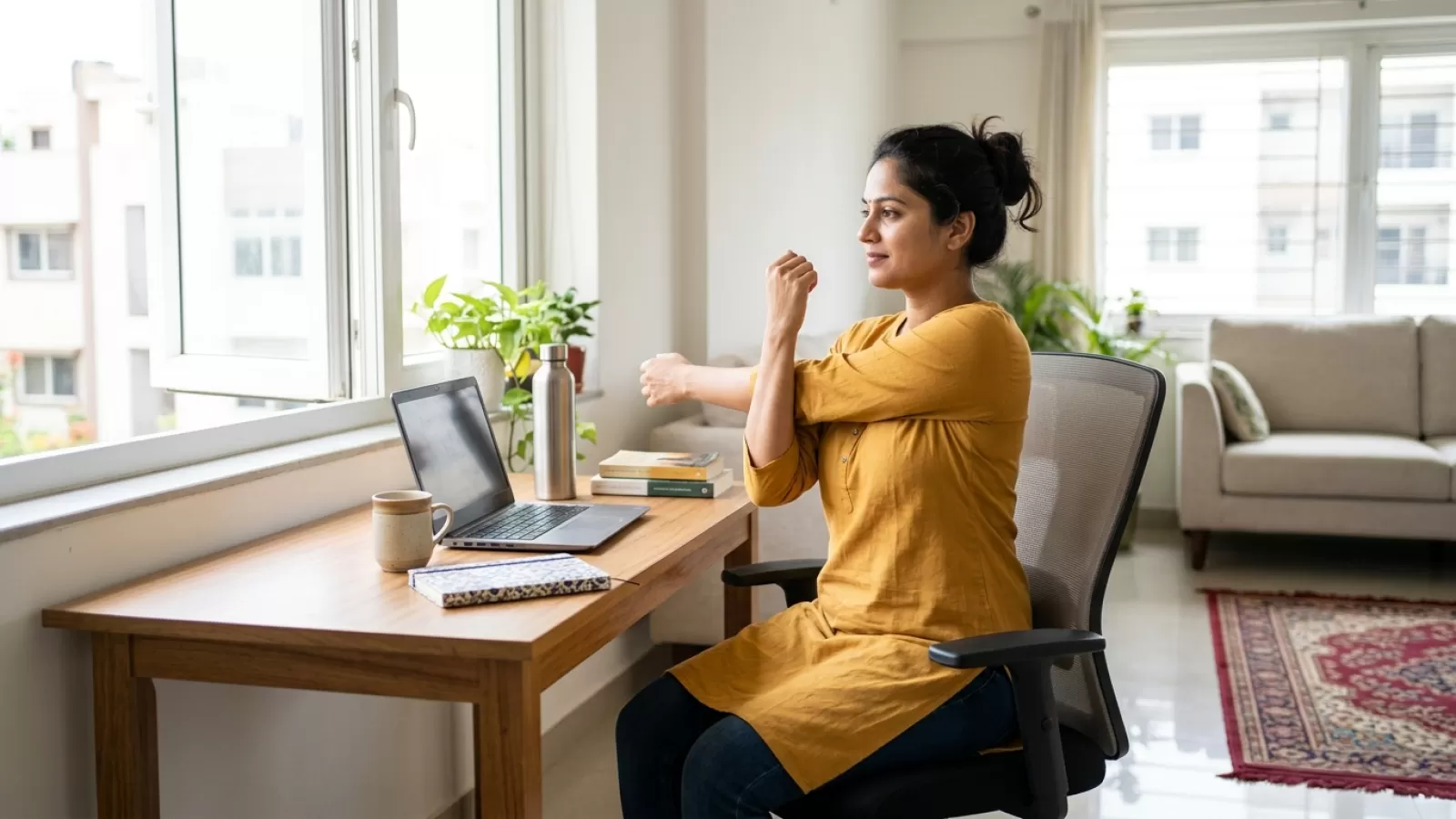
Evenings in many Indian homes now look similar: a laptop on the dining table, chai getting cold, someone hunched over a screen with barely a pause since breakfast. Chair desk exercises Indian office workers use to loosen up between meetings are quietly becoming a small act of self-care—sometimes squeezed in during a late call, sometimes forgotten entirely. But for those sitting all day, exercises at desk India-style are more than just a box to tick—they’re a real way to change how your body feels after long hours in the same spot.
The tricky part is, Indian desk worker exercises have to do more than just stretch the arms or legs. After a full day—maybe a Bengaluru software professional on their tenth hour of screen time—the forward head position, tight hips, and a lower back that’s compressed from hours in the chair can leave you feeling stiff, heavy, maybe even irritable. Office chair exercises India workers actually do aren’t about dramatic change, but small, targeted moves that fit around the reality of Indian office routines.
Why Desk Work in Indian Offices Leaves the Body Stiff and Sore
In Indian homes and offices, a usual day involves sitting for hours, sometimes on a dining chair that isn’t really built for desk work. It’s not just about being inactive—it's about the specific positions you hold for too long. The head leans forward to read WhatsApp messages or type emails, shoulders round in as you reach for your chai, and your hips rarely move out of that 90-degree angle all day. The lack of movement isn’t just about not walking; it’s about repeated strain on certain muscles and joints, while others are left switched off.
Busy professionals in cities like Hyderabad, Mumbai, or Gurgaon often work from home at makeshift desks, sharing space with kids’ homework or a spouse’s video call. That means the chair might be too low, the table too high, and the day too packed for a proper break. In many Indian homes, lunch is eaten at the same desk, and chai breaks happen without ever leaving the seat. Over time, these patterns build up into tightness and discomfort that a weekend walk or even a gym workout doesn’t always undo.
How Specific Sitting Patterns Create Aches and Pains
The forward head and rounded shoulders come from reaching towards screens or paperwork for hours, especially when the monitor is placed too low. This puts strain on the neck, upper back, and even the eyes, leading to headaches or that heavy feeling in the head at the end of the day. Shortened hip flexors happen when you sit with your knees bent all day—think of the classic Indian office lunch, eaten quickly at the desk, legs tucked under the chair.
Fitness coaches who train working adults often find that most movement in Indian homes comes from daily tasks, not planned exercise. The problem is, when those daily tasks shrink—thanks to food delivery, online shopping, and long online meetings—the body misses out on the natural stretching and bending it used to get. Over weeks and months, the lower back starts to feel compressed, especially after sitting through back-to-back calls or working late to meet a deadline. For many, the only movement comes from getting up for lunch or chai, which isn’t quite enough to reset the posture.
Common Clues That Desk Sitting Is Catching Up With You
- Persistent neck and shoulder tightness: By the end of the workday, the back of your neck feels stiff and your shoulders are sore, even if you haven’t carried anything heavy.
- Low back discomfort after long calls: The lower back aches when you finally stand up, especially after sitting through a long meeting or working late into the night.
- Feeling of heaviness or swelling in the legs: Your legs feel heavy, tired, or slightly swollen after a day of not moving from your chair, especially during humid summer afternoons.
- Frequent headaches or a heavy head: Staring at screens with a forward head posture often leads to headaches or just a dull, heavy feeling in the head by evening.
- General fatigue that lingers: Even after a cup of chai or an evening snack, there’s a sense of sluggishness that doesn’t fully go away unless you stretch or walk.
Targeted Moves That Fit Into the Indian Workday
- Seated neck retraction: When your head has drifted forward for hours, gently pull your chin straight back (not down), creating a double-chin. Hold for 5 seconds, repeat 5 times. This helps reset the neck and upper spine—many find doing this during a call makes a surprising difference by evening.
- Shoulder blade squeezes: Sitting tall, squeeze your shoulder blades together, hold for 5 seconds, and release. Do this 8–10 times. This move is easy to do while reading a document or listening to a meeting, and it can cut through that rounded, hunched feeling.
- Seated leg extensions: Straighten one leg at a time and hold for 5 seconds, then switch. Try 10 repetitions per leg. These are quiet enough to do during calls and help with leg heaviness, especially if you sit on a dining chair with no support for your thighs.
- Hip flexor release (standing variation): After long periods seated, stand beside your chair, step one foot back, and gently shift weight forward to stretch the front of the hip. Hold for 10–15 seconds per side. This one is great after lunch or before your last work call.
- Wrist and finger stretches: Stretch your fingers wide, then make a tight fist, repeating several times. Rotate your wrists slowly. Helpful when you’ve been typing or scrolling for hours.
The catch? You don’t need to do them all at once. Even picking two or three and repeating them twice a day can noticeably ease tension for most office chair exercises India workers try.
Where These Movements Slip Into Everyday Indian Routines
In many homes, the day begins with a rushed breakfast—poha or toast eaten standing, then hours pass with barely a stretch. By afternoon, you might see an office worker rolling their shoulders during a long call, or extending a leg under the table while waiting for a file to load. Some have discovered that doing neck retractions right after lunch helps beat the post-meal slump, while others quietly squeeze in shoulder blade moves during the evening chai break.
It’s in these small, almost hidden moments that chair desk exercises Indian office workers actually make a difference. One day the energy feels better, the next the backache doesn’t show up, and over weeks, these little rituals become as natural as refilling your chai cup or switching on the fan during a power cut.
Knowing When It’s Time to Get Professional Help
If you find that pain is sharp, persistent, or worsening—especially if it starts to interfere with daily movement—it’s wise to check with a doctor or physiotherapist. Most of the time, regular, gentle movement helps. But if you have numbness, tingling, or weakness in your hands or legs, or if the aches do not get better with home exercises, don’t ignore it. Sometimes, what feels like a simple desk ache could be something more that needs expert advice.
Common Questions
Many Indian families are curious about how to fit these movements into their busy routines, especially when space, motivation, or privacy is in short supply. Whether you’re managing late meetings, sharing your work spot with family, or just trying to shake off that end-of-day heaviness, these answers might help you start or stick with a chair desk routine.
What are the most effective desk exercises for Indian office workers to counteract hours of computer work?
The best movements are those that directly undo the stress of sitting: neck retractions (to counter forward head), shoulder blade squeezes (to open rounded shoulders), and seated leg extensions (for tired legs). Many Indian office workers find these easiest to slip into their routine—even during calls or while reading documents. Adding a simple hip flexor stretch after lunch or evening chai can help reset the hips. These moves don’t require special equipment, and most can be done right at your desk or dining table.
How often during an office day should Indian desk workers do chair exercises for the best physical result?
For most, doing 2–3 short sets spread through the day works well—perhaps one set in the late morning, another after lunch, and a final round before ending work. In Indian homes where calls and tasks run back-to-back, even a quick stretch during a slow-loading file or while waiting for chai can help. The key is consistency, not perfection. Aim for a few minutes at a time, rather than one big session.
Do desk exercises genuinely counteract the effects of sitting or do they just provide momentary relief?
The honest answer is: they help more than you might expect if done regularly. While chair desk exercises Indian office workers use cannot replace all-day movement, they directly target the muscles and joints that stiffen from desk work. Many families have seen that days with even a few stretches feel lighter, with less pain or fatigue. Over weeks, these small habits can prevent discomfort from building up, not just provide a quick fix.
Which specific movements address the most common physical problems created by Indian desk work?
Neck retractions help with the forward head and reduce neck aches. Shoulder blade squeezes open up rounded shoulders and upper backs. Seated leg extensions and hip flexor stretches help your legs and hips feel less tight after many hours of sitting. Wrist and finger stretches are useful after a long day of typing or scrolling, especially when work and home life blend together at the same table.
How do you build a desk exercise habit that actually happens during the working day rather than being repeatedly postponed?
The trick is to tie the movement to something you already do—like stretching your neck during a mid-morning chai, or squeezing your shoulder blades while waiting for a file to upload. Some Indian office workers write a sticky note on their laptop or set a gentle alarm. In homes where everyone is busy, doing a quick movement together before lunch or after a long call can help make it feel less like a chore and more like a shared ritual. Over time, it becomes part of the daily rhythm.