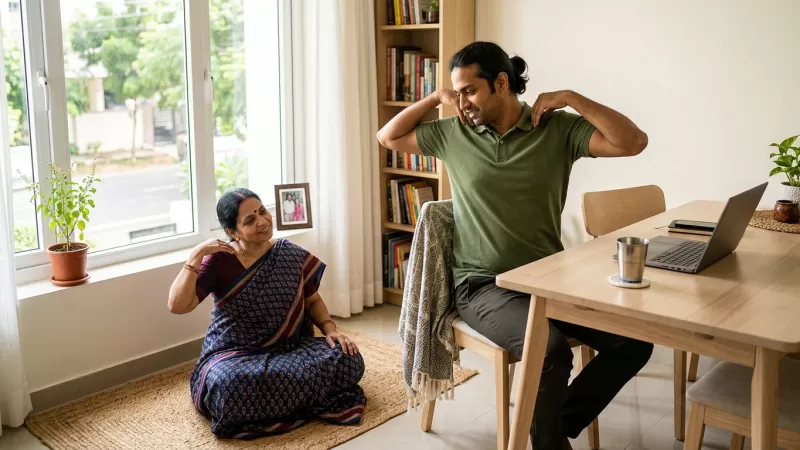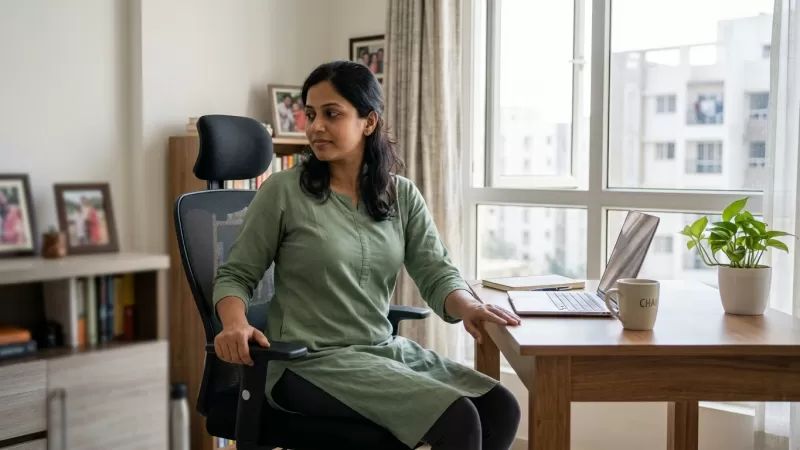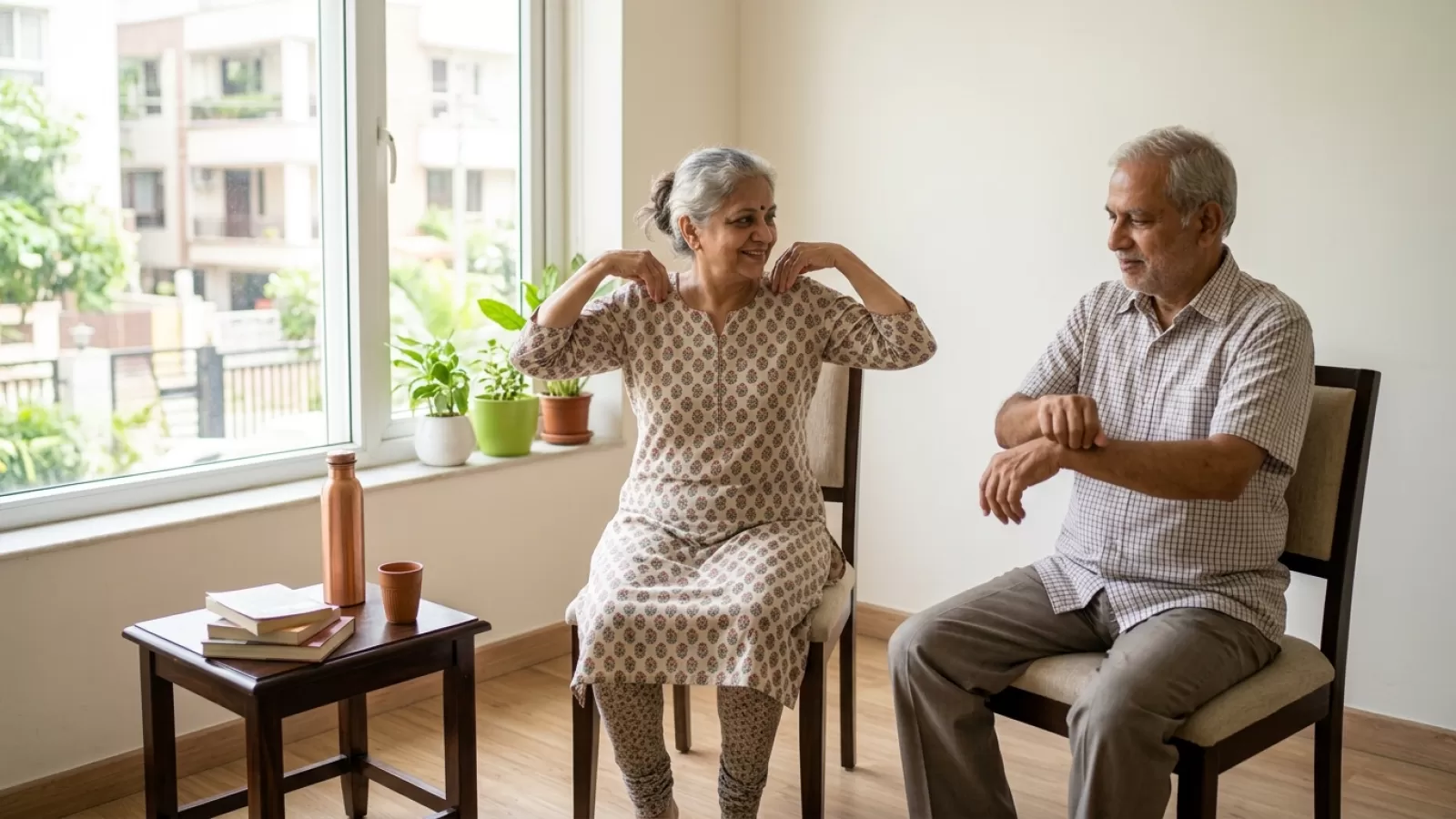
In many Indian homes, you’ll find elders starting their morning with a quiet cup of chai, looking out into the garden or balcony. Some haven’t sat comfortably on the floor in years. The joints that once folded easily for pooja, cross-legged meals, or grandchild play are now stiff — not because of a sudden injury, but because gentle, regular movement slowly faded from their routines. These days, simple joint health exercises for Indian seniors at home are quietly making a difference, even in small flats and busy joint families.
The tricky part is, intense activity isn’t what keeps joints flexible in older age. It’s the daily, gentle nudges — slow rotations, easy stretches, bit-by-bit movements. When joints are moved through their full range every day, they stay better lubricated and less stiff. But when weeks go by without bending, rotating, or stretching, the body quietly starts to adapt to that smaller range. Many Indian seniors discover this when a festival or wedding calls for sitting on the floor, and suddenly the knees and hips won’t cooperate.
Why Gentle Movement for Joints Is Often Overlooked in Indian Homes
Across Indian households, it’s common for elders to gradually avoid movements that feel uncomfortable. The floor is swapped for the bed, stairs are climbed less often, and routines like sweeping or squatting for pooja are quietly skipped. This isn’t laziness or neglect. It’s usually a mix of fear (what if I fall?), discomfort, and the hope that if a movement hurts, it’s better not to push it. Many families, out of care, encourage rest rather than movement when joints act up.
That said, the routines in most Indian homes—whether it’s making chapatis, folding laundry, or walking to the sabziwala—once gave elders natural movement. But as families become more urban, with help for chores and fewer reasons to sit on the floor, natural opportunities for flexibility exercises for the elderly in India quietly shrink. Over time, seniors notice that everyday tasks—like reaching for a jar, squatting to water a tulsi plant, or bending to tie shoelaces—become awkward or even impossible.
Joint health exercises for Indian seniors at home are rarely formal. Instead, they show up in small moments—shoulder rotations while waiting for chai to boil, gentle ankle circles after a nap, or arm stretches before folding away a bedsheet. But when these little things stop, so does the natural lubrication and flexibility of the joints.
Why Do Joints Lose Flexibility Over Time?
Our bodies are designed to keep what we use and quietly let go of what we don’t. When a senior stops sitting cross-legged because the knees ache, the body adapts by slowly tightening around that smaller range. Over months or years, the joint’s natural lubrication decreases, and the tissues around it stiffen. The less a joint moves, the less it “remembers” how to move.
Physiotherapists who visit Indian homes often find that seniors haven’t lost strength as much as they’ve lost confidence and everyday flexibility. For example, a senior who stands to do pooja loses not just the ability to kneel, but also the comfort of getting up from low seats, or even the habit of stretching. In many cases, this is not a sudden change but a slow, nearly invisible one. Gentle home exercises for Indian elderly joints are designed to keep these everyday movements familiar and safe, rather than forcing anything.
Many seniors also worry that pain means they should stop moving altogether. The catch is, complete rest often leads to more stiffness. What works better is gentle, controlled movement—never forcing, always listening to the body. Over time, these small movements help keep joints mobile, lubricated, and less painful during daily chores.
Everyday Signs That Joint Mobility Is Quietly Shrinking
- Difficulty sitting on the floor: Many seniors stop sitting cross-legged for meals or pooja because the knees or hips feel tight or sore. Over time, this becomes a habit and then an inability.
- Hesitating to climb stairs or steps: Even a couple of stairs at the entrance become a challenge, so elders avoid them whenever possible. This is often the first sign that knee and ankle joints aren’t moving as freely.
- Struggling to reach for high shelves or overhead cupboards: Shoulder stiffness creeps up slowly. A jar of achaar on the top shelf starts feeling out of reach, leading to more dependence on others.
- Noticing joint stiffness after sitting for a while: After watching TV or taking a nap, it takes a few minutes of careful movement before the knees or hips loosen up.
- Changing daily habits to avoid bending, twisting, or squatting: Instead of sweeping under the bed, elders sweep only what’s easy to reach. Instead of tying shoelaces, slip-on sandals become the norm.
Simple Daily Movements That Make a Big Difference
- Gentle joint rotations: Every morning, while waiting for chai or sitting on the balcony, try slow circles with the wrists, ankles, shoulders, and neck. These gentle home exercises for Indian elderly joints help keep the range of motion alive without strain.
- Knee and hip flexion and extension: Sitting on a chair, slowly straighten and bend one knee at a time. For hips, gentle marches or leg lifts while holding onto a stable surface can maintain flexibility.
- Shoulder circles and arm lifts: Raising arms overhead and making slow circles can help seniors reach overhead cupboards with less discomfort. This is a key part of flexibility exercises for elderly India.
- Seated toe taps and ankle circles: Especially helpful for seniors who spend long periods sitting. Moving the feet up and down or in circles helps keep ankles and knees from stiffening.
- Wall-supported squats or sit-to-stand practice: Using a sturdy chair, practice standing up and sitting down slowly. This mimics daily movements like getting up from the sofa or bed, and helps maintain knee and hip strength without deep squatting.
It’s not about doing all these at once. Even five minutes, a few times a day, can keep the joints moving. Many families find that adding these to everyday moments—while watching the news, chatting on the phone, or after meals—makes it easy to stick with.
Everyday Scenes: How Joint Mobility Affects Indian Family Life
A kitchen in Nagpur at 6am. The fan turns slowly, fighting the early summer heat. An elderly woman sits by the window, rolling out rotis. Years ago, she would squat on the floor for hours, but now she sits on a plastic stool. She pauses, rotates her shoulders, and stretches her legs before starting. The dough is soft, but her wrists feel stiff from a night’s rest. She circles them gently, then flexes her ankles as the first roti puffs on the tawa. These small movements—unnoticed by younger family members—are her way of keeping the joints alive for another day of household rhythms.
In many flats, seniors wait for the lift rather than climb one flight of stairs. A working professional in Bengaluru notices his father rarely bends to pick up fallen keys, and his mother avoids sweeping under the sofa. Over time, small changes like these quietly add up, shaping what elders can and cannot do independently. Gentle home exercises for Indian elderly joints help seniors reclaim these everyday abilities—sometimes slowly, but often noticeably within weeks.
When Does Home Support Need Extra Help?
Usually, gentle home exercises for Indian elderly joints are safe for most seniors, as long as movements are slow, controlled, and never forced. But if a joint is swollen, hot, or severely painful, or if there’s a recent injury, it’s best to check with a doctor before trying new movements. Also, if after a few weeks of daily movement there’s no improvement at all—or if mobility keeps shrinking—professional assessment can help rule out other causes. Family support goes a long way, but sometimes a little outside guidance is needed to find what’s safe and helpful.
Common Questions
Many Indian families are curious about what gentle exercises really work, how often movement is needed, and what to do if a senior resists the idea. Here are some warm, practical answers based on daily life in Indian homes.
What gentle home exercises most specifically maintain joint health and flexibility in Indian seniors?
In most Indian households, the most helpful joint health exercises for Indian seniors at home are simple movements like slow shoulder circles, wrist and ankle rotations, knee extensions while seated, gentle marches (lifting knees up one at a time), and arm lifts overhead. These moves mimic everyday tasks—like reaching for dahi in the fridge or getting up from a chair. Adding these to daily routines—such as while sitting for evening chai or after a nap—tends to keep joints more mobile and comfortable for regular Indian household activities.
How often do Indian seniors need to move their joints to maintain the range of motion necessary for daily Indian household life?
In many Indian homes, the best results come from moving the joints gently every day, even if it’s just for a few minutes at a time. Short sessions—morning and evening, or before and after meals—help maintain flexibility. Unlike occasional intense exercise, daily gentle movements keep joints lubricated and ready for tasks like bending, reaching, or sitting cross-legged. Even seniors who start with just a few repetitions notice that everyday chores become easier and less painful with consistency.
Can genuinely restricted joint mobility in Indian seniors be improved through home exercises or does it require professional intervention?
Often, mild to moderate stiffness or loss of flexibility can improve with regular gentle home exercises for Indian elderly joints. For example, seniors who start daily shoulder circles or knee bends usually notice some improvement in a few weeks. However, if a joint is very stiff, swollen, or painful, or if progress stalls, it’s wise to check with a doctor or physiotherapist. Sometimes, a little professional support is needed to guide safe, gradual improvement, especially after injuries or surgeries.
Which joints in Indian seniors are most commonly affected by reduced mobility and which home exercises best address each?
Knees, hips, shoulders, and ankles are usually the first to lose flexibility in older adults across India. Knee and hip movements—like seated knee extensions, gentle marching, and sit-to-stand practice—help with sitting, standing, and floor activities. Shoulder circles and overhead arm lifts help with reaching and daily activities like hanging clothes or getting things from shelves. Ankle circles and toe taps are great for seniors who sit for long periods, keeping ankles and knees supple.
How do Indian families support elderly parents in maintaining joint health through movement when the parent resists the idea of exercise?
In many families, elders resist the word "exercise" but enjoy practical movement woven into daily life. Instead of formal routines, encourage small actions—like ankle circles while watching TV, or shoulder shrugs before folding laundry. Doing these together, or making it a part of pooja or evening chai time, often feels less intimidating. Some families gently remind elders by joining in or turning on favorite music. The key is to keep things light and routine, not a chore or medical task.